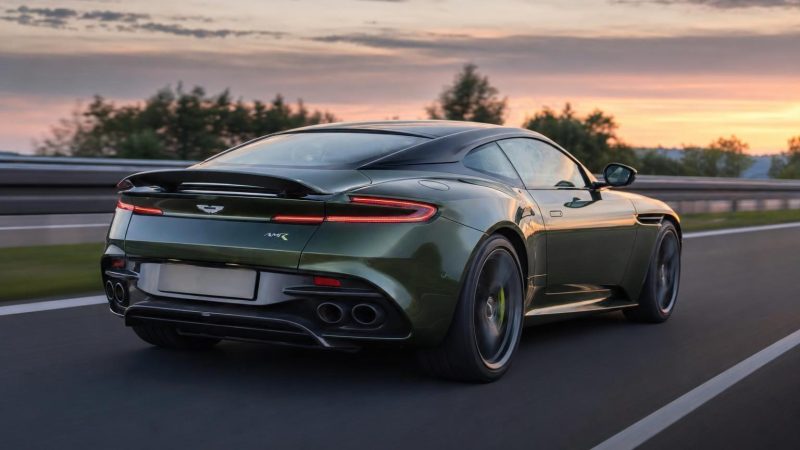
Valen unveiled at Monterey: 850 PS, 1000 Nm, ZF 8-speed gearbox derived from GT4, carbon bodywork and 150 units. Deliveries slated for Q2 2027.
Valen arrives at Monterey as the new benchmark for front‑engined Astons, and our guide covers the essentials: 850 PS, 1000 Nm, 150 units, a ZF 8‑speed gearbox inspired by GT4 and carbon bodywork cutting 110 kg. We explain what these technical choices change in concrete terms versus the series‑production V12, and how this model sits in the Valour–Valiant lineage, with first deliveries scheduled for the second quarter of 2027.
Monterey 14 August 2026: why Aston Martin chose California to reveal its most powerful model
According to Astonmartin.com, the brand unveiled on 14 August 2026, at Monterey Car Week, “the most powerful front‑engined production car in the brand’s 113‑year history”. The setting is anything but incidental: California brings together collectors, sales channels and international media in a single focal point. It is also the informal show where special series naturally find their audience.
Presenting this coupé at Pebble Beach highlights the culture of limited editions and the clientele that frequents them. Monterey’s staging immediately legitimises the model’s positioning, between assumed exclusivity and direct ties to motorsport, in a language this audience understands very well: numbers, materials, and technical heritage.
The message is twofold. On the one hand, the most powerful front‑engined road‑going Aston fits within the brand’s grand tourer DNA. On the other, the Monterey context amplifies the model’s collectability, flagging restricted production and a tight delivery timetable.
850 PS and 1000 Nm: how the 5.2‑litre V12 surpasses previous versions
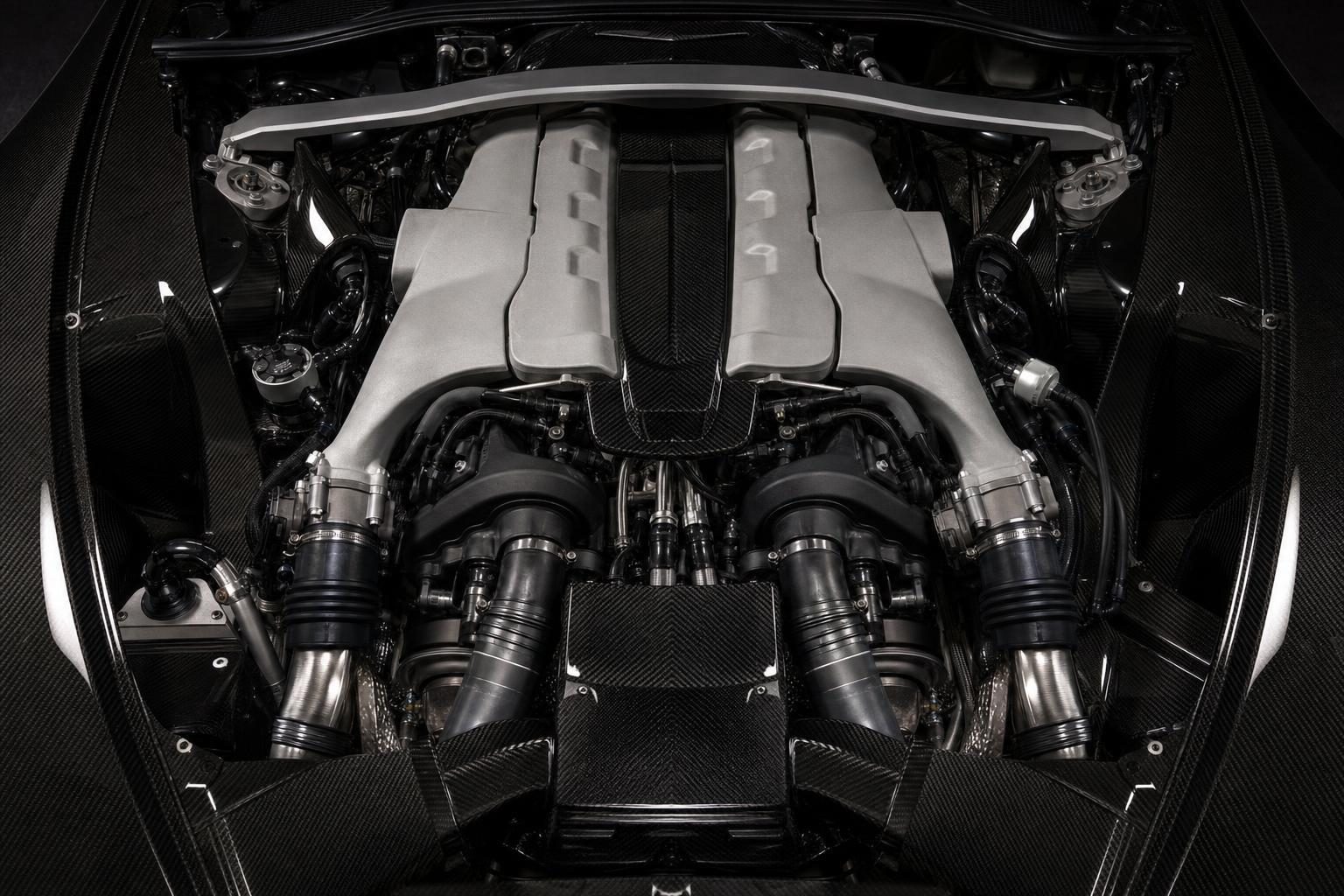
Media.astonmartin.com sets out the spec sheet: twin‑turbo 5.2‑litre V12, 850 PS and 1000 Nm available from 2,500 rpm, with 0–60 mph in 3.0 s and a 214 mph top speed. Beyond the numbers, the essence lies in the torque curve, flat and usable very early, transforming mid‑range response and traction. The powertrain is not chasing peak power alone: it targets continuous availability.
This step places the car above recent series‑production V12s in specific output and exploitable efficiency. Early torque access reshapes character: less waiting, more traction, and crisper punch out of corners. An evolution that serves both road and the occasional track day.
In practice, the twin‑turbo charging and associated thermal management are among the technical breaks versus the high‑volume V12. The result claimed by the brand is clear: supercar performance, GT architecture, and tuning that prioritises consistency under duress, mile after mile.
ZF 8‑speed gearbox and GT4 logic: what the racing programme brings to the road car
Another key point from Media.astonmartin.com: the ZF 8‑speed gearbox adopts shift logic borrowed from the Vantage GT4 programme. In concrete terms, the algorithm prioritises stability under load, secure downshifts and robust thermal management, rather than chasing dramatic upshift fireworks. It is the fruit of competition learning, applied to the road without caricature.
This “race” calibration delivers three tangible benefits. First, coherence between the V12’s massive torque and the shift maps, to maintain traction. Next, increased component endurance thanks to optimised clutch pressures and torque ramps. Finally, predictable reactions in manual mode, close to a competition ’box but without the jolts that tire on long journeys.
Compared with series‑production V12 transmissions, the break lies less in the number of ratios than in the control intelligence. The GT4 borrow is no styling flourish: it is a calibration philosophy that narrows the gap between driver demand and powertrain delivery, particularly on sinuous roads.
Full carbon body and −110 kg: materials and their impact on dynamics
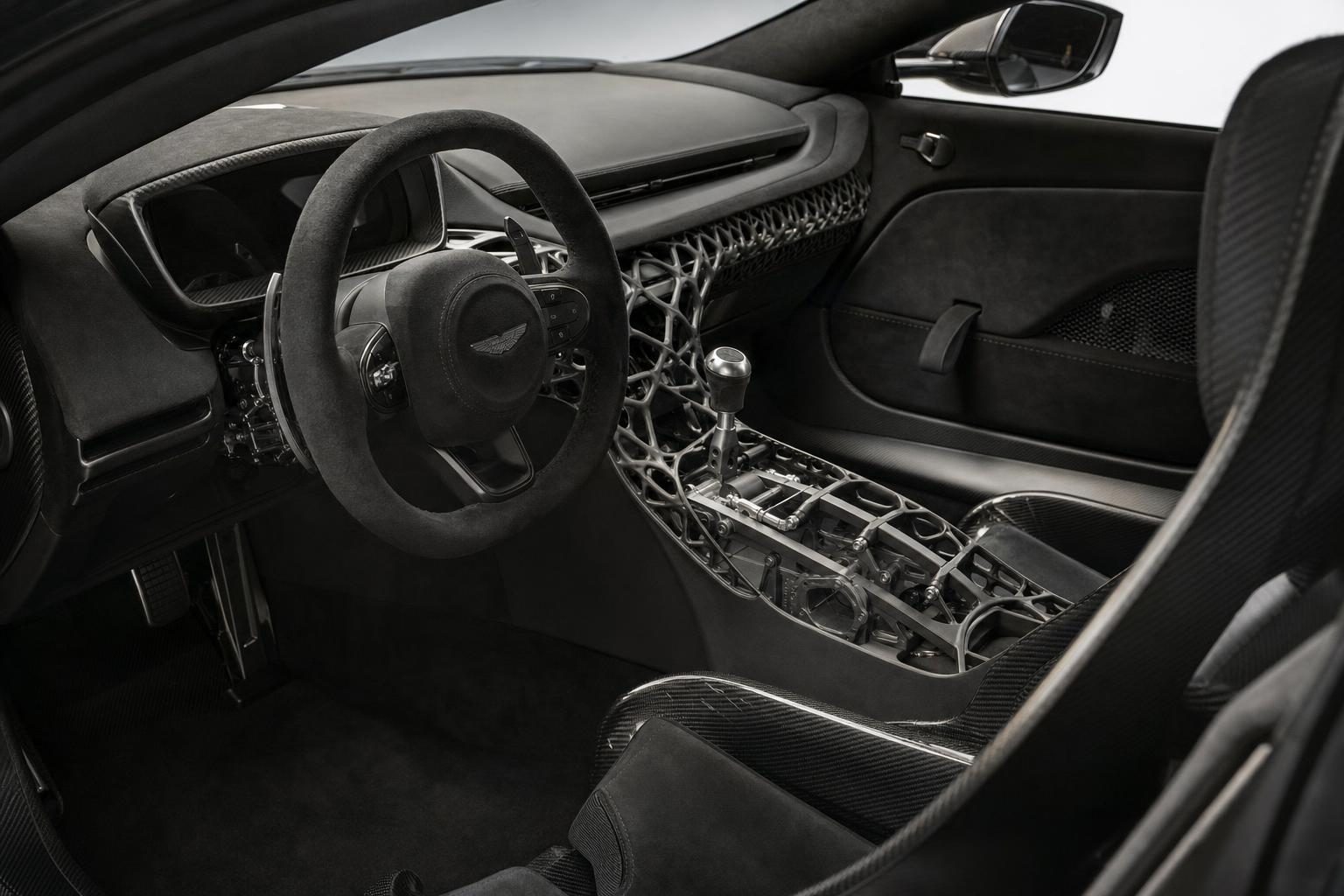
Astonmartin.com announces a body made entirely of carbon fibre and up to 110 kg saved versus the series‑production V12 platform. The benefit goes beyond simple mass. Carbon allows a lower centre of gravity, improved weight distribution and stiffening of key zones, enabling finer chassis tuning to enhance support precision.
This diet is felt everywhere. Under braking, reduced inertia curbs unwanted weight transfer. In direction changes, structural rigidity delays the onset of parasitic movements. At brisk pace, the chassis operates with a broader band of useful grip, letting tyres and suspension do their job without sacrificing ride filtering.
Versus “high‑volume” V12s, the qualitative leap comes from material‑architecture integration: not only does the body lighten, it also guides air and stabilises flow. In a super‑GT, the dynamic signature is read as much in figures as in the neutrality felt at the wheel. Here, materials set the tone.
150 units and first deliveries Q2 2027: where Valen sits in the Valour–Valiant lineage
Production is limited to 150 units, says Astonmartin.com, a figure corroborated by HiConsumption, which adds first deliveries slated for the second quarter of 2027. The same outlet mentions an estimated price between $1.7 and $2 million before options, a range not officially confirmed. The order of magnitude matches a very limited run with a high content of specific components.
According to Aston Martin’s pressroom, this project is the final opus signed Q by Aston Martin and executed by the new Special Vehicle Operations (SVO) department, continuing Valour and Valiant, alongside exercises like the DBR22. The shared philosophy: start from in‑house DNA and distil, in small series, the quintessence of style and engineering, with freedoms mass production does not allow.
In this light, the model’s positioning clarifies the lineage. Against a production V12 GT, there are four major breaks: power/torque and their availability (850 PS, 1000 Nm at 2,500 rpm), the GT4‑derived gearbox logic, the carbon body and 110 kg saved, and the SVO/Q anchoring that opens the door to off‑catalogue set‑ups and finishes. As many points that justify reduced volumes and a sequenced delivery schedule.
- 150 units confirmed, deliveries targeted Q2 2027 (HiConsumption).
- SVO programme and Q by Aston Martin for design and execution.
- Position within the Valour–Valiant line, with a sharper focus on usable performance.
To set this against the brand’s recent history: readers can revisit the evolution of in‑house V12 GTs, from the role of limited editions to the hybrid ambition of the Valhalla in the supercar range, and the traditional place of the Vanquish in the GT universe.
Conclusion: what Valen really changes
In view of the data published by Aston Martin and the SVO roadmap, Valen moves four key levers that the series‑production V12 did not push as far: torque availability, GT4‑derived transmission intelligence, structural lightening via carbon bodywork, and a limited‑series execution orchestrated by Q and SVO. The sum of these parameters creates a front‑engined super‑GT that promises to be as rapid as it is readable to use.
The figures — 850 PS, 1000 Nm, 3.0 s 0–60 mph, 214 mph — set the scene. The rest is coherent engineering choices, revealed in the right place at the right time. For fans of the Valour–Valiant line, Valen is not just a peak of power: it is a method and a signature.
For more detail, see our analysis of V12 innovations applied to series GTs in our dedicated feature on the Vanquish V12 and its technical innovations. And for official specifications and unveil context, consult the announcement published by Aston Martin and the technical pressroom, as well as HiConsumption’s Monterey recap, which details volumes and delivery schedule.