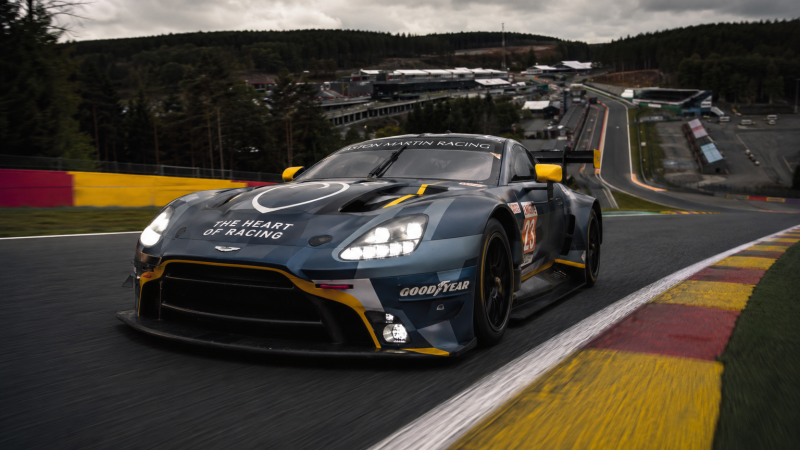
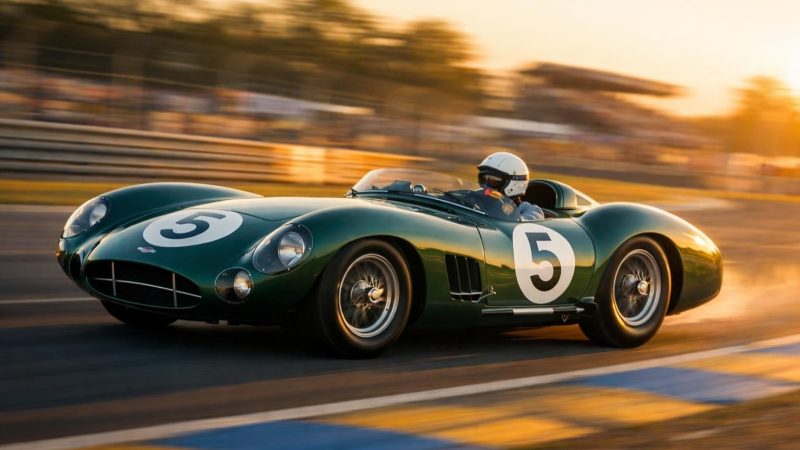
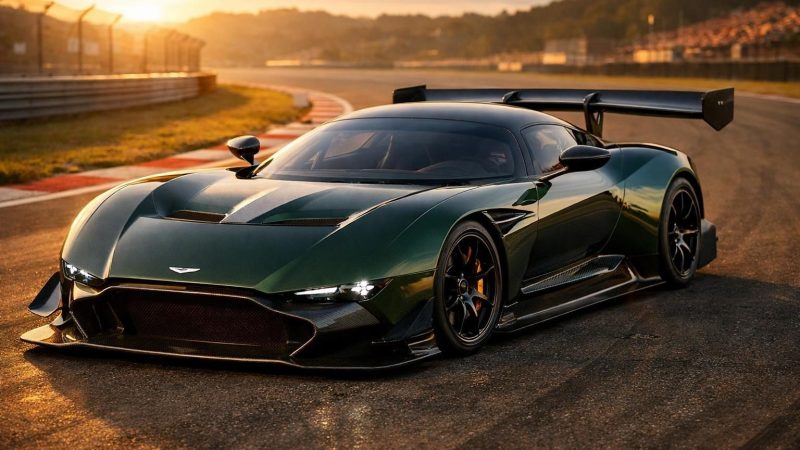
coulisses WEC 2026 entre Imola et Spa, Road to Race suit Aston Martin THOR et la Valkyrie AMR-LMH, des stands aux chronos, à l’aube des 24 Heures.
The WEC 2026 behind the scenes take on a very concrete dimension with season 2 of Road to Race, which plunges into the heart of Aston Martin THOR between Imola and Spa. In two acts, the video captures a team in accelerated shakedown mode, a prototype with a strong character, and a rise in performance which, backed by the numbers, reshuffles the deck as Le Mans approaches.
What follows is neither an ode nor a storyboard: it is the snapshot of a pivotal moment. According to the official description on YouTube and information from fiawec.com, the episode covers the 6 Hours of Imola (19 April) and the 6 Hours of Spa (10 May), which became the real opener and the second round of a 2026 campaign capricious in its calendar. Between set-up, strategy and human management, the essentials are decided in the precision of details – and a few deliberate technical choices.
THOR season 2: why Imola and Spa really mattered – WEC 2026 behind the scenes
The geopolitical postponement of the opening round initially planned in Qatar made Imola the gateway to the 2026 World Endurance Championship, according to the page dedicated to the 2026 calendar on Wikipedia. This shift had a simple consequence: in mid-April, everyone was discovering their strengths and blind spots at the same time, under increased pressure. For the Aston Martin THOR team, this meant validating the fundamentals of the Valkyrie AMR-LMH in race conditions before tackling Spa, the reference circuit par excellence.
The documentary Road to Race | Season Two, published on YouTube, frames these stakes precisely. Its rhythm is that of garages and briefings, its narrative that of engineers and drivers. The camera focuses on the muscular routine of the Hypercars more than on track spectacle: useful for gauging the learning curve of a still-young programme, already tested at Le Mans 2025 but facing in 2026 a dense and varied field.
Imola and Spa therefore carry more weight than their six hours apiece: one opens the season in spite of itself, the other serves as a performance thermometer at high speed. In the background, the objective remains unchanged. At Le Mans, everything is decided by a sum of small margins; that is exactly what Road to Race explores, in immersion.
The Valkyrie AMR-LMH under the microscope: a non-hybrid Cosworth V12 against the field
The singularity of the Valkyrie AMR-LMH lies first in its architecture. Powered by a 6.5-litre naturally aspirated Cosworth V12 – an engine capable of revving to 11,000 rpm in road guise – it plays the card of mechanical purity. In WEC Hypercar configuration, output is regulatorily capped at 500 kW (680 PS), remind media.astonmartin.com and the Wikipedia page dedicated to the Valkyrie AMR-LMH. The car entrusts its shifts to a 7-speed Xtrac sequential, an unambiguous racing choice.
More notable still: the total absence of hybridisation. According to Wikipedia, the Valkyrie AMR-LMH is the only current Hypercar racing without a hybrid system in the WEC. This technical choice isolates Aston Martin’s prototype in the field, with very concrete implications for energy management, stints and low-end traction. An advantage in mass and simplicity, a trade-off in recuperation and deployment: a different equation to solve, especially in traffic.
This racing car also remains the only Hypercar directly derived from a homologated road car to line up in both the WEC and IMSA in 2026, notes astonmartin.com. A deliberate bridge to the road lineage, which readers can place via our feature on the Valkyrie model and its origins. This road-to-track dialogue imposes a unique engineering framework, but also a promise of character, which the video captures well.
In this context, Imola and Spa serve as full-scale test benches. The team tunes V12 exploitation, aero and tyre windows to the second. Absolute performance will matter at La Sarthe, but consistency and reliability often make the difference. In this game, the clues accumulated between April and May speak volumes.
Imola, round 0: double finish and first points of the season
Imola wasn’t supposed to open the ball. It did. First rendezvous, first answers. According to the Aston Martin release dated 5 May 2026, Harry Tincknell and Tom Gamble reached the flag in 9th place in the No. 007 Valkyrie, scoring their first shared point in the World Championship. A detail on the results sheet, a major marker for a duo expected to spearhead the programme.
This “round 0” above all validated a method. After a 2025 Le Mans run completed without mechanical trouble – two Valkyries classified 12th and 14th, first Hypercar points in the Constructors’ standings, according to media.astonmartin.com – the 2026 challenge is to convert robustness into race pace. Imola, with its heavy braking and traffic management, offered a frank arena to test exploitation of the non-hybrid V12 over tight stints.
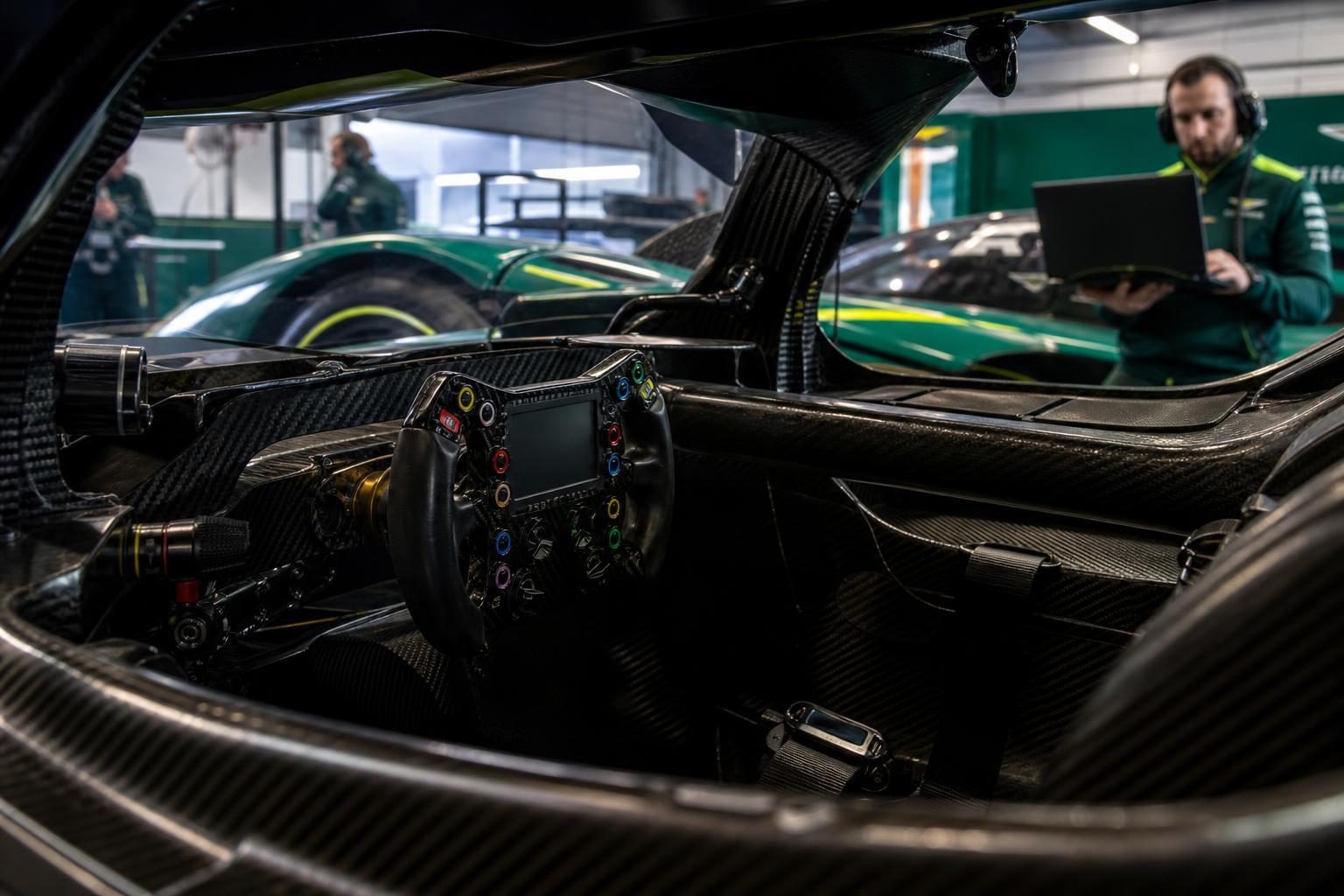
Beyond the result, Road to Race captures the assembly work: refined procedures, pitwall communication, tyre calls. The No. 007 finishes in the points; the team banks clean laps and precise feedback. At this stage you don’t win Le Mans. You mostly avoid losing it in April.
To place this progression in the brand’s recent endurance history, you can revisit our retrospective on the Vantage GTE and Aston Martin’s wins in the WEC and at Le Mans. The move to Hypercar imposes different yardsticks, but the house culture remains the same: method, consistency and execution.
Spa-Francorchamps: fourth place five seconds off BMW, Aston Martin’s best-ever WEC result
A month later, the No. 007 Valkyrie delivered the expected launch ramp at Spa. According to fiawec.com (article by Adam Carter, 9 June 2026), Tom Gamble and Harry Tincknell took 4th place, just five seconds behind the winning No. 20 BMW. It is the best WEC result in Aston Martin THOR’s history, achieved on a circuit that magnifies aero efficiency and high-speed stability.
The video shows the flip side of that result: smooth execution, clean stints, controlled stops. Energy management – without hybridisation on board – imposes a different discipline; Spa confirms the car can sustain a front-running pace over distance. The top five here is no statistical accident. It validates a concrete performance window.
The context enhances the significance of the result. Spa is the traditional barometer before Le Mans. To fight to five seconds of the winner there is to acquire certainties about chassis–aero balance and the tyres’ operating range. The rest of the calendar will say if this trend settles; but on Spa’s evening, the team, for the first time, had a base for measured ambition.
To recontextualise the episode, refer to Adam Carter’s piece on fiawec.com which synthesises the brand’s competitive DNA. You can read the thread that leads from the workshop to the track, precisely illustrated by Road to Race.
Le Mans in sight: what the video doesn’t say but the times reveal
There’s what you see, and what you infer. On 7 June 2026, during the Test Day, Tom Gamble set the outright Hypercar best in 3:26.293 in the No. 007, ahead of Toyota, reports fiawec.com (Test Day wrap). Not a prophecy, but a strong signal: the performance window exists, and the Valkyrie knows how to enter it. Between Imola, Spa and La Sarthe, the thread is coherent.
On the strict technical front, nothing changed in the regulations: 500 kW maximum deployed power, aero constrained by BoP, energy management to be imagined without hybrid. Within this framework, the No. 007 showed it could convert clean stints into consolidated pace. The documentary doesn’t deliver the spreadsheets; the lap times do the talking. And they dovetail with the trajectory laid down since 2025, when both cars reached the flag without hiccups – a not insignificant reserve of confidence.
The progression also fits the broader context: the Valkyrie AMR-LMH is, according to astonmartin.com, the only Hypercar derived from a homologated road car to race in both the WEC and IMSA in 2026. This double programme imposes clear choices in operating correlation. That is precisely what makes these workshop and pitwall images instructive: you can read the method as much as the result.
For the Spa sequences and the in-between, you can revisit the Aston Martin release published before Spa, useful for gauging the objectives announced and the result obtained. And, to complete the perspective, the documentary is available in full via the documentary Road to Race | Season Two.
Conclusion: from WEC 2026 behind the scenes to Le Mans promises
At the end of these WEC 2026 behind the scenes, one truth: Imola and Spa were not mere stages, but revealers. The foundational 9th at Imola, then 4th at Spa just five seconds off the winner, chart a credible path. Add a Test Day topped on the stopwatch, and you have momentum. Without grandiloquence, Aston Martin THOR has turned learning into tangible potential.
The Valkyrie AMR-LMH, with its Cosworth V12, no hybrid and Xtrac ’box, is asserting itself in a heterogeneous field. The Road to Race video shows the method; the times confirm it. To deepen the previous chapter, our look back at Le Mans 2025 for the Valkyrie AMR-LMH sheds light on the origins of this rise in form. What remains, in June, is to convert this capital into 24 useful hours: the ultimate truth of a programme that has chosen its path, and its tone.
As we close these WEC 2026 behind the scenes, a simple note: this model does not need effects to convince. The facts suffice, and here the road truly leads to the race.