Lagonda Taraf, de Dubaï à l’arrêt à 120 unités : prix, V12, VH et stratégie mondiale. Analyse des 4 paris et des chiffres parfois divergents.
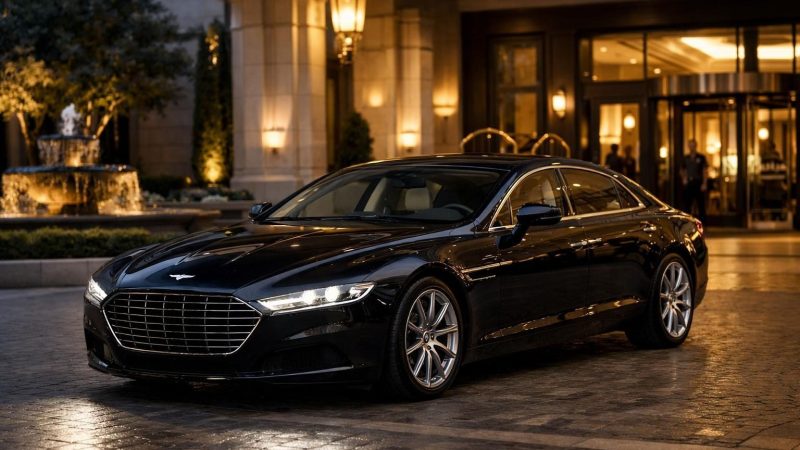
Lagonda Taraf: here is how a limousine born for the Gulf attempted a global career before bowing out at 120 examples. We revisit, facts in hand, four bets — confidential launch, market expansion, technical choices and pricing — that explain the gap between ambition and reality.
Dubai November 2014: a world debut reserved for a handful of clients
According to Wikipedia (Lagonda Taraf), the presentation took place in Dubai in November 2014, with a highly targeted framework: a launch conceived for the Middle East and its collectors. The official objective announced then was clear yet cautious: 100 units reserved for the region, a limited series in the literal sense, with no promise of Western distribution.
The initial strategy, then, banked on geographical as much as numerical rarity — Bet No. 1. This choice followed the Lagonda tradition of singular, commission-led limousines while accommodating assembly capacity. Production would only begin in 2015 at Gaydon (Wikipedia), validating a progressive and controlled ramp-up.
In this first phase, the Lagonda Taraf played the private-club card: understated communication, prospect selection and a schedule aligned with artisanal manufacture. A proven method for gauging real demand before opening the floodgates — if indeed that was desired.
From 100 to 200 units: how commercial ambition followed European demand
Very quickly, the story accelerated: Wikipedia notes that CEO Andy Palmer extended Lagonda Taraf markets to Europe, the United States, Singapore and South Africa, and revised the target to 200 examples. This is Bet No. 2: turning a Gulf series into a global product, driven by European clients coming forward despite homologation constraints and an out-of-the-ordinary positioning.
This scale change confirmed a reality: there was a clientele for a rolling V12 salon bearing the Lagonda name beyond the dunes. In parallel, it created new tension between the announced volume and the workshop structure of such a programme. Production remained discreet yet noteworthy.
In the end, figures vary by source. Wikipedia puts the total at 120 cars built, well below the revised objective. Specialist Nicholas Mee & Co tactfully sums up the industry rumour: “most sources cite less than half of 200.” Divergence acknowledged, then, but the same strategic reading: going global did not convert all intentions into firm orders.
VH platform and carbon bodywork: what the Taraf owes to the One-77
Technically, Wikipedia indicates that the Lagonda Taraf rests on the VH platform, shared with the DB9 and Rapide. This tried-and-tested Aston Martin architecture reconciles elegant proportions, rigidity and a longitudinal V12. For fans of the Rapide and its related chassis, the kinship is no flaw: it is a guarantee of dynamics and technical integration.
The other inheritance lies in the place and know-how. According to Aston Martin’s official press site, the Lagonda Taraf was assembled at Gaydon in the building previously dedicated to the One‑77, and design director Marek Reichman speaks of “lessons” learned from that programme, including a remarkably swift execution: eight months between the first sketch and a full-size model. This is the coachbuilt version of a modern manufacturer: limited series, specific tooling, and a short circuit between design and workshop.
This crossover — rationalised VH platform and exception-level process inspired by the One‑77 — neatly defines the Lagonda Taraf’s positioning. An engineer’s Aston, clothed and assembled like haute couture. To delve into the lineage’s origins, our feature on the Lagonda from 1976–1990 puts Lagonda’s DNA within Aston Martin into perspective.
A million dollars for what, exactly: engine, performance and equipment
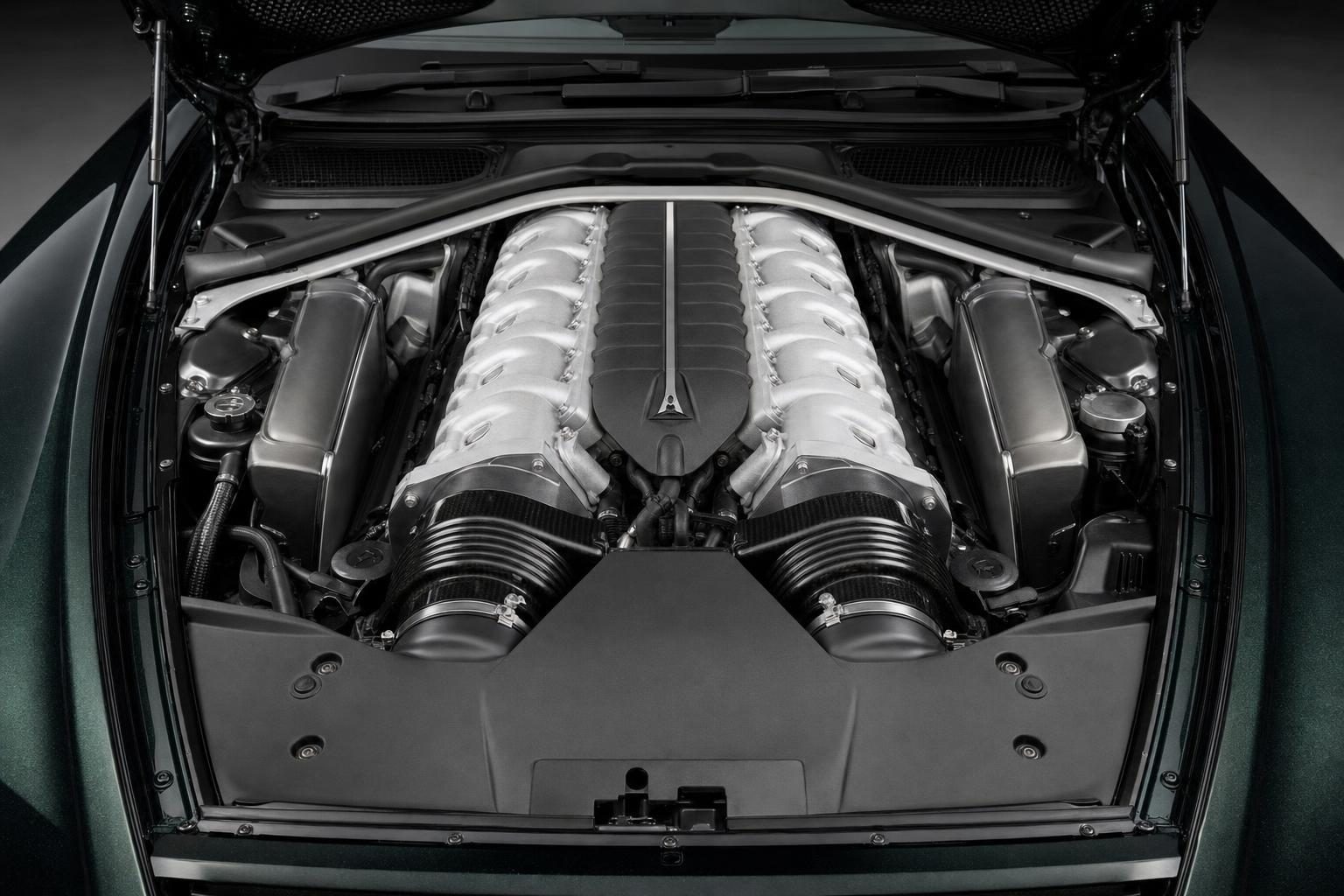
Mechanically, Wikipedia recaps a no-nonsense spec sheet: a naturally aspirated 5.9‑litre V12, paired with a ZF 8‑speed gearbox. This propels the Lagonda Taraf from 0 to 100 km/h in 4.4 seconds and on to 314 km/h. For a four-door limousine, the promise is clear: grand touring ease at very high speed, the melody of an old-school twelve‑cylinder.
Then there is the question of price and orders of magnitude. Wikipedia mentions an entry ticket above one million dollars. In the UK, Autocar cites £685,000, while another source mentions £696,000 — a marginal gap illustrating the variety of configurations and markets. The essence lies elsewhere: the Lagonda Taraf lays claim to the unique niche of a coachbuilt V12 limousine, a pairing as rare as it is costly to industrialise.
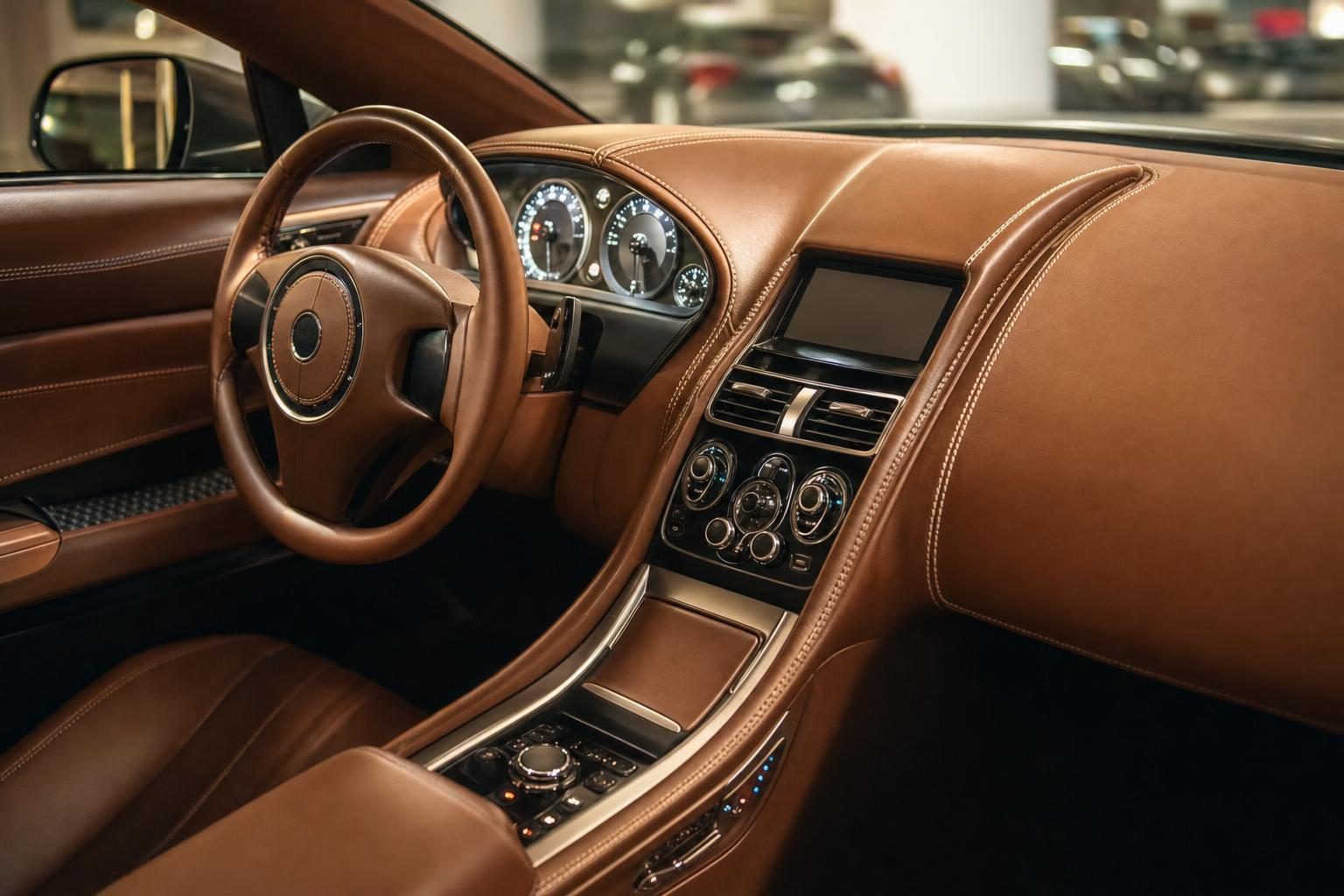
As for equipment, the brand logically kept the granularity of options for its clients. The intent, however, is plain: a very high-end execution, at the crossroads of British tradition and technical modernity, true to the Lagonda label. For official sources and references, see the dedicated Wikipedia page for the Lagonda Taraf, the Aston Martin pressroom for the model and Autocar’s pricing analysis.
120 examples and the question of the ‘last petrol Lagonda’
Back to the numbers and their significance. Wikipedia notes 120 examples produced, while professionals quoted by Nicholas Mee & Co cautiously suggest “less than half of 200.” In any case, the Lagonda Taraf fell short of its revised target. Why? Because each of the four bets was non-trivial: Bet No. 1, an elitist regional launch; Bet No. 2, global extension in a niche segment; Bet No. 3, coachbuilt-style assembly from a VH base; Bet No. 4, a ticket north of a million with a naturally aspirated V12 just as the zeitgeist was shifting elsewhere.
This last point also reveals a heritage value. Nicholas Mee & Co presents the Lagonda Taraf as “the last petrol Lagonda”. Without overplaying it, the signal is crystal clear for collectors: a lineage closing on a V12 in a world where electrification is gaining ground. A context that illuminates the initial demand, but also the difficulty of sustaining a broader cadence.
In the grand Gaydon narrative, the Lagonda Taraf remains a chapter apart: a highly exclusive saloon, set on the VH architecture, nourished by One‑77 experience and priced at the level of the rarest pieces. To place this flourish within the range, our dedicated Lagonda Taraf profile and the Rapide overview usefully complement the read.
Conclusion: why the Lagonda Taraf remains a discreet but decisive marker
The Lagonda Taraf thus materialised an audacious yet measured intuition: propose an ultra‑confidential V12 limousine, then cautiously confront it with the world. Between ambitions (200 examples) and reality (120 built according to Wikipedia), it reminds us that exceptional craftsmanship has industrial limits — and that the market sometimes prefers rarity to volume.
For Aston Martin, the imprint is clear: workshop know‑how inherited from the One‑77, a reasoned exploitation of the VH platform and a confident price positioning. So many markers that feed the brand’s upmarket strategy. And for enthusiasts, the Lagonda Taraf remains a desirable milestone: the last petrol Lagonda according to Nicholas Mee & Co, and a contemporary reading of a name that matters in Aston Martin’s history. To be continued on the official Aston Martin site and via the public summaries of Wikipedia Aston Martin, for the next chapter.