DB10 pensé pour Spectre : 10 exemplaires, VH modifiée, boîte manuelle, huit voitures pour le film et une enchère à £2,4 M. Les choix derrière le mythe.
DB10 and a tight schedule: here is how an Aston conceived exclusively for Spectre was designed in secret, shaped on a modified VH base, produced in ten examples and thrust under the spotlight — then under the hammer — without ever going near a showroom. From established facts, we shed light on the industrial and creative choices imposed by the film, and what this says about Aston Martin’s strategy.
December 2014, Pinewood Studios: a reveal framed as the ‘first cast member’
On 4 December 2014, on the 007 Stage at Pinewood Studios, Sam Mendes and Barbara Broccoli unveiled the new Aston destined for Spectre. According to Wikipedia, Mendes introduced it as the “first cast member”, an elegant way of announcing that here, the car truly is a character. The staging is no accident: revealing the sports car at the heart of Bond’s home turf immediately sets the project within a cinematic logic, not a dealership one.
This communication choice extends a design reality. On Aston Martin’s official website, the brand describes the DB10 as “our best kept secret for years”, specifying that it was produced exclusively for Spectre. The industry loves its prototypes, but here confidentiality takes on a narrative dimension: the car is hidden because it tells the film’s story as much as it hints at Gaydon’s future.
In this context, the media tempo follows the pace of filming. The Pinewood reveal does not anticipate a market launch; it accompanies a production. Cinema sets the measure, and Aston falls into step, without conceding on poise or on the house design language.
VH platform and manual gearbox: what the DB10 owes to the Vantage in development
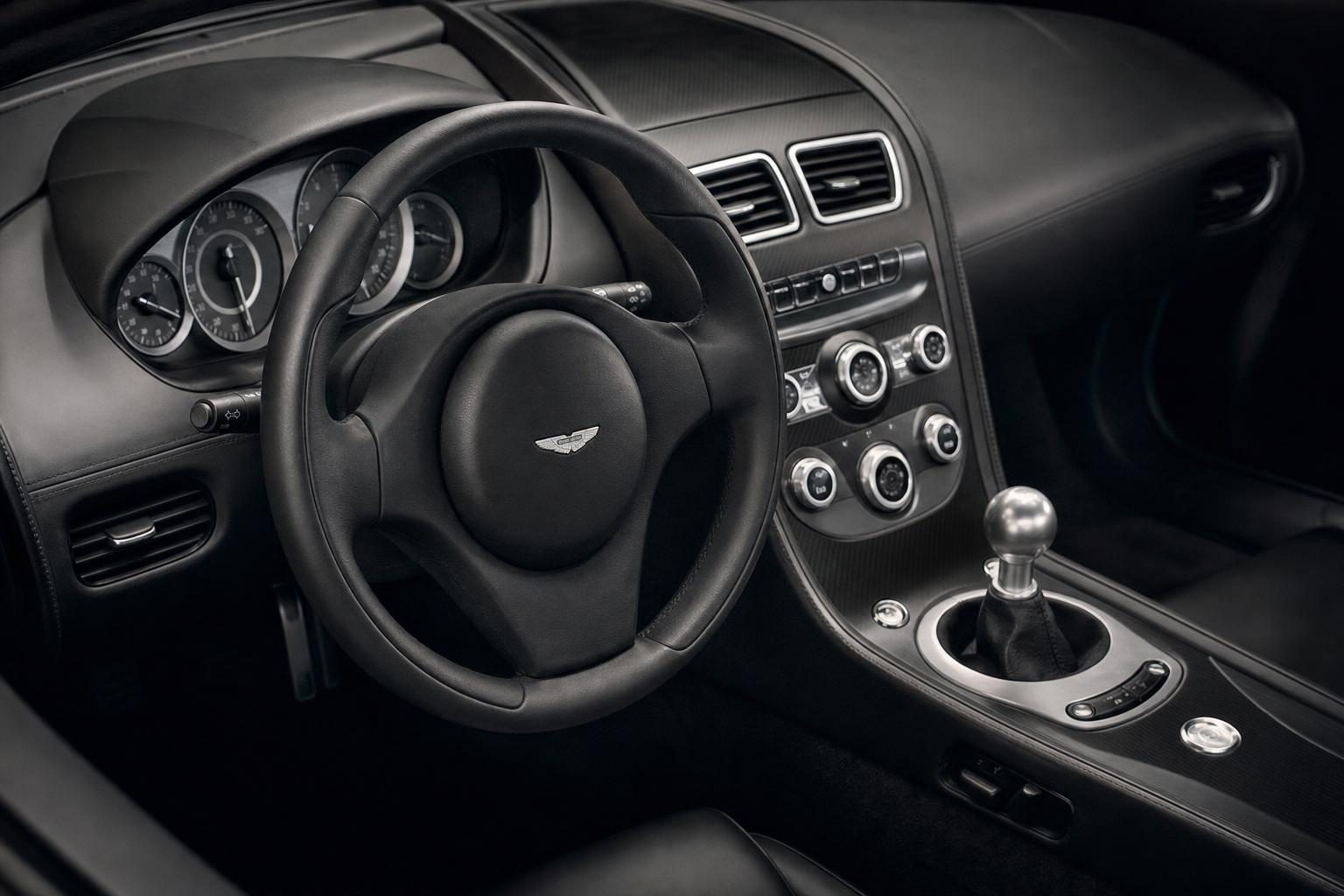
According to Wikipedia, the DB10’s chassis rests on a modified version of the VH Generation II platform, that of the V8 Vantage. Add a six-speed manual gearbox. In short, the car draws on a mastered foundation, capable of withstanding the demands of a film set while guaranteeing Aston Martin’s dynamic DNA.
Another determining fact reported by Wikipedia: it was later revealed that the DB10’s design masked the features of the new Vantage in development. The Spectre sports car therefore plays a double role: film star and rolling camouflage. It’s a shrewd production choice, capitalising on a proven base to serve both the story and the future of the range.
This technical choice meets two constraints. First, delivering a credible coupé for the screen on time without starting from a blank sheet. Second, preserving the confidentiality of the forthcoming road model. The DB10 thus permits proportions and a signature that announce, without revealing, what comes next. A British tightrope act.
10 examples, 8 for the film, 2 for promotion: the production logic in numbers
The numbers here set the strategy. Per Wikipedia, 10 examples were hand-built at Gaydon by the design and engineering teams. Eight served the filming, two were dedicated to promotion. This partition says everything about production guided by cinema: most for the action, a small reserve for the world tour.
This ratio tells the priorities. Eight cars destined for on‑set needs means buying the latitude to shoot quickly, multiply takes and face the unexpected — a prudent luxury when the schedule does not tolerate mishap. The two promotional examples play the public‑presence card without risking immobilising a working tool.
Place and method matter just as much. Building by hand at Gaydon with in‑house teams keeps control of every step, from styling to assembly, and ensures consistent quality across multiple units called to different roles. A tightened industrial logic, serving filming logistics.
The Rome chase: filming constraints and technical concessions for stunts
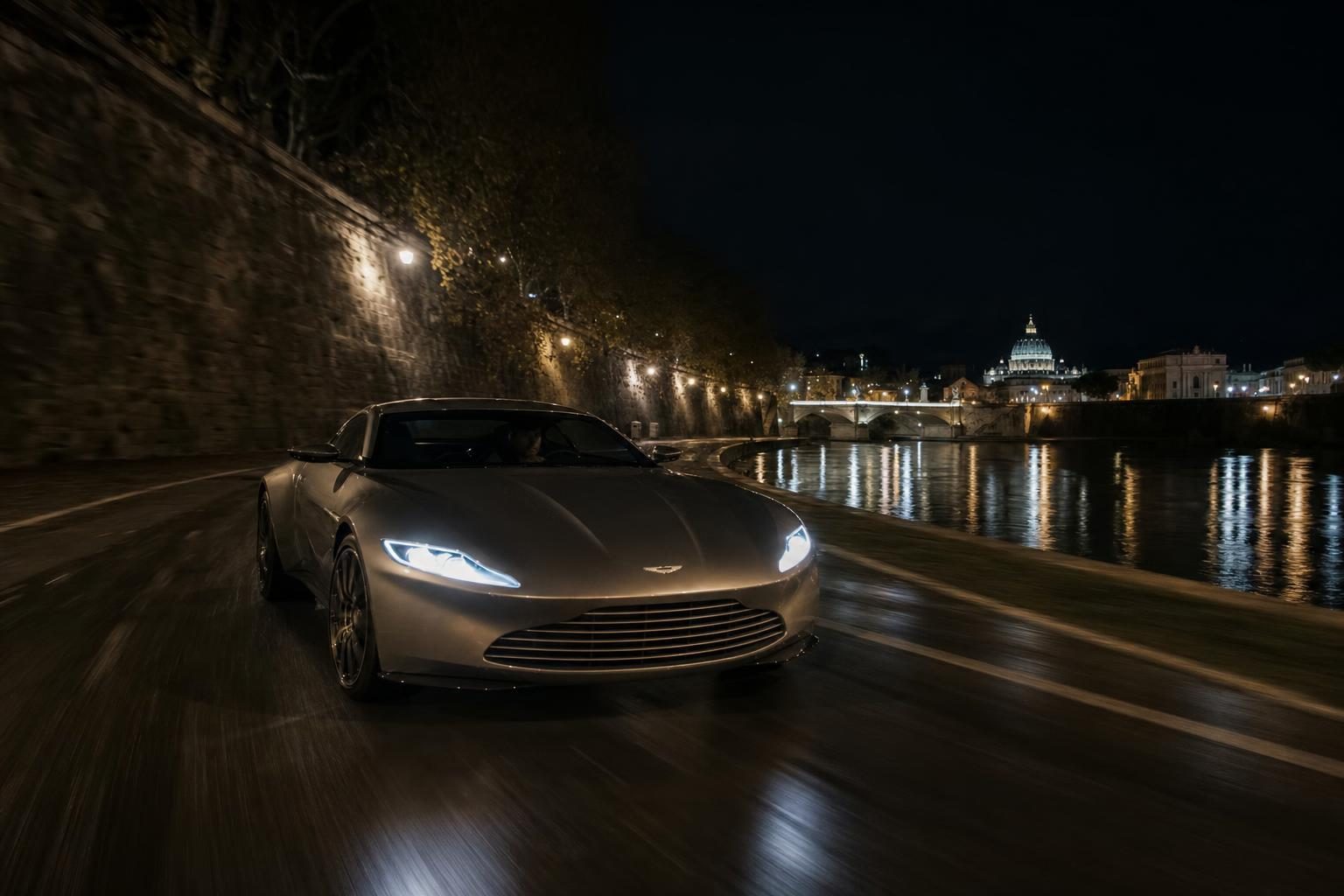
Wikipedia recalls the emblematic scene on the banks of the Tiber: the DB10 faces the Jaguar C‑X75. The production lines up 10 Aston Martins against 7 Jaguars. This balance of means gives the scale of the demands: choreographing a night‑time urban chase requires cars available, interchangeable and ready to replay the sequence.
Placing these volumes in parallel highlights a key constraint: the film demands cars able to withstand repetition and intensity. Relying on the modified VH platform and a six‑speed manual, as Wikipedia notes, is no accident. The bet is on a set‑up well known to Aston Martin engineers, fit to keep the pace without straying into the experimental.
This Roman sequence condenses the project’s compromises. The design masks the future Vantage, but the behaviour must serve the camera. The number of examples brings flexibility, yet the visual signature remains constant. Under constraint, the DB10 stays identifiable — and that is essential for a character credited in the unofficial cast list.
Christie’s 2016 sale: £2.4 million and what the price reveals about Bond values
On 19 February 2016, one example was hammered at £2.4 million at a charity auction organised by Christie’s, according to the BBC as cited by Wikipedia. This amount, for a car not homologated for the road and intended first for cinema, measures the pull of the Bond universe on the auction market.
The valuation does not reflect an unprecedented spec sheet, but a documented confluence of factors: absolute exclusivity (10 units), direct link with Spectre, and the aura of a design conceived to mask the next Vantage. The object is as much a witness to a brand moment as a memento from the set.
This price also affirms the relevance of the initial strategy. Producing exclusively for the film, as Aston Martin states, creates a one‑off piece, instantly collectible. And when Wikipedia recalls the unveiling on the 007 Stage, the circle closes: from studio to saleroom, the DB10 follows a trajectory written to win over discerning enthusiasts.
Conclusion: what the DB10 changes in the Aston–Bond grammar
At the end of this journey, the DB10 emerges as a deft response to the imperatives of a major shoot. The established facts — ten examples, eight dedicated to the film, VH Generation II V8 Vantage platform, manual gearbox, design acting as a screen for the future model — sketch a strategy in which cinema sets the tempo and Aston Martin keeps the pen.
Revealed at Pinewood as the “first cast member”, produced exclusively for Spectre and consecrated at £2.4 million at Christie’s, the DB10 illustrates a singular path: do not sell the star, but capitalise on its story, its image and its role as a bridge to the next Vantage. For aficionados, it’s a lesson in applied understatement — and a significant page in Gaydon’s culture.
To go further, our dedicated DB10 feature revisits its known characteristics and its exceptional status. To be placed in the line of modern James Bond cars via the Aston Martins of the Daniel Craig era, and, for perspective, compared with four reasons that tipped Casino Royale.
Useful sources: the model page on Wikipedia Aston Martin DB10, the official presentation on astonmartin.com, and the sale report by the BBC.