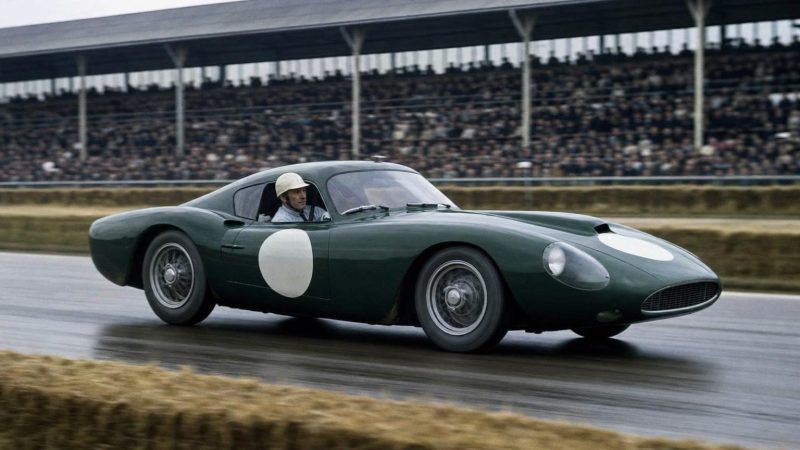
DB3S, the pivotal barchetta between DB3 and DBR1: 11 chassis, three Le Mans podiums and racing methods that prepared 1959 without the limelight.
DB3S is Aston Martin’s discreet yet decisive link between the DB3 and the future DBR1: a barchetta born in 1953, honed in the workshop, entered by both the works team and privateers, and one that lifted the marque onto the Le Mans podium before handing over the baton. Here is how this artisanal programme sharpened methods and people on the way to the outright victory of 1959, all while remaining in the shadow of its successor.
Origins: why the 1951 DB3 demanded a complete overhaul by 1953
In 1953, Aston Martin renewed its Sports Car effort with a deep rework of the 1951 DB3. The assessment was simple: the first generation, stemming from the contemporary Le Mans debut with the DB2 line in 1950–1951, had shown the way but needed to gain lightness, rigidity and aerodynamic efficiency. The answer was the DB3S, designed by Ted Cutting around a new tubular frame and a more sophisticated aluminium body.
This approach lightened the structure, reduced frontal area and refined airflow. The aim was twofold: to raise race pace while improving mechanical endurance over 24 hours. According to Wikipedia, the switch to a tubular chassis and a thinner aluminium skin became a technical marker that the company would adopt thereafter.
The strategy remained pragmatic: build on the experience gained with the DB3 while paving the way for solutions that, once tested, would be passed on to the next generation. The works accepted the compromise of measured, period-typical development, but pursued with clear ambition.
11 chassis: who built them, who entered them and in which events
In total, 11 chassis were produced. They left Aston Martin’s workshops and were divided between works cars and examples sold to private customers. This mix of entries met an accounting reality as much as a sporting one: multiply mileage, cross-reference feedback and increase presence on track without multiplying internal costs.
The works cars focused on the great classics, Le Mans foremost, with selected crews. The private entries, meanwhile, fed the playground of international and national events, expanding the technical database. The DB3S thus became an open-air training programme, where the factory observed, learned and updated the set-up from meeting to meeting.
This web of entries shaped Aston Martin’s Sports DNA: a culture of continuous development, close to drivers and customers, flexible in logistics yet firm on the essentials — reliability, stability and efficiency over long stints. In that sense, the DB3S was less a standalone model than a mechanism for collective progress.
Le Mans 1953–1956: the best results and the retirements that weighed on strategy
At Le Mans, the DB3S’s trajectory sums up its role as a bridge. The first appearances laid the groundwork; the 1955 edition delivered the high point with second place for Peter Collins and Paul Frère, behind the Mercedes 300 SLR. This podium, noted by Wikipedia, legitimised the barchetta on the grandest stage, despite an especially gruelling race context.
Even so, not everything ran in harmony. Retirements — inevitable in those endurance years when the machinery was laid bare — weighed on strategy. They validated certain choices (rigidity, weight reduction, cooling) and invalidated others (thermal margins, component tolerances), forcing the team to iterate between each outing. The DB3S became the platform for these rapid corrections.
As a result, the marque refined its priorities: hold front-running pace when the window opened, spare the car the rest of the time, and improve reliability subsystem by subsystem at the pace of feedback. Short of an outright triumph, the DB3S installed a method that would prove itself a few seasons later.
Engine and evolutions: from the 2.9-litre of 1953 to the 3-litre prepared by Ted Cutting
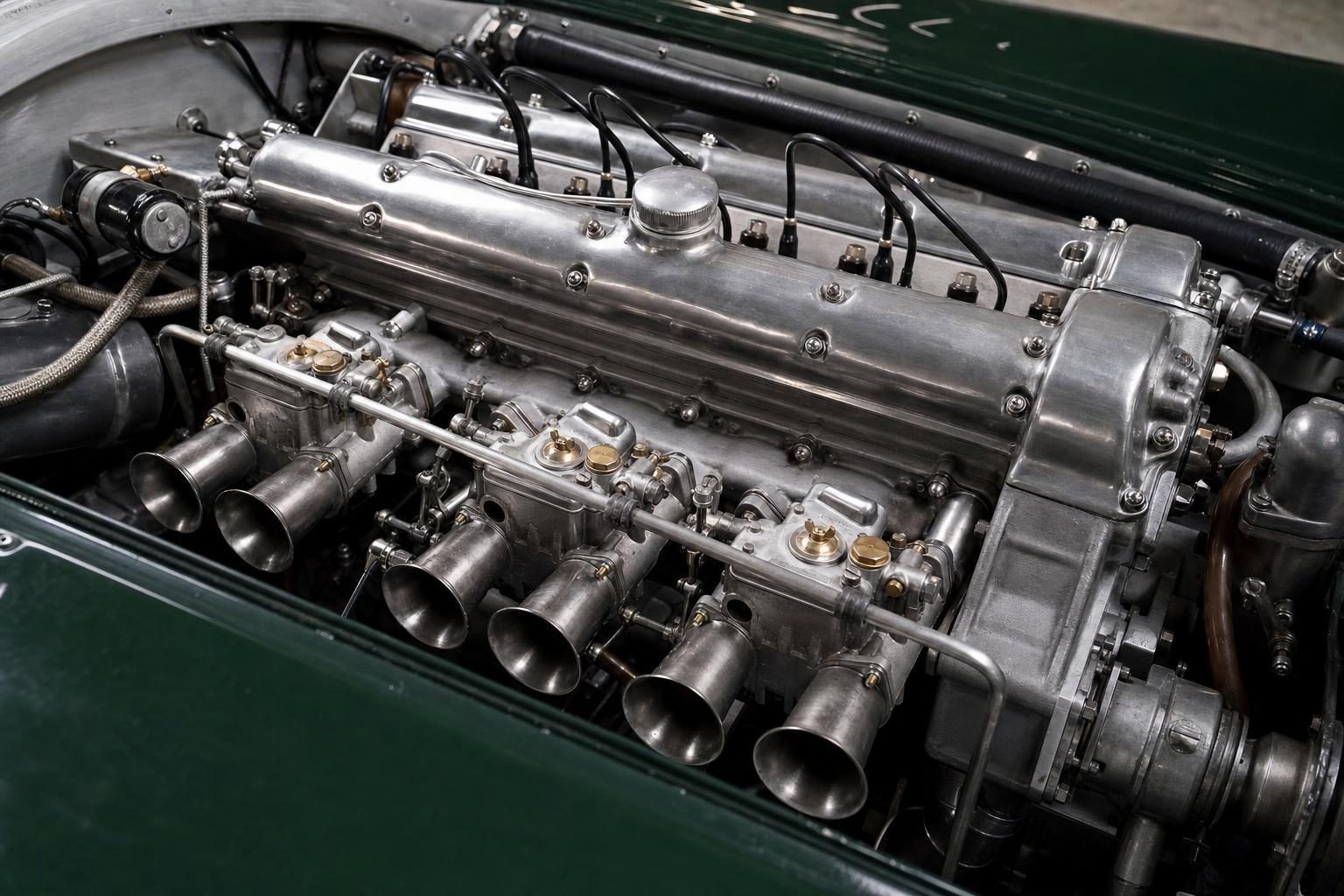
Under the bonnet, the inline six evolved from 2.9 to 3.0 litres over its career. The aim was not to revolutionise the architecture, but to increase breathing and robustness over long stints. The work focused as much on intake and cooling as on calibration, with the pragmatic rigour that defined the car.
Ted Cutting’s role was central. He orchestrated the coherence of chassis/engine/body, seeking the best compromise between sustained revs and thermal constraints. This move to 3 litres, mentioned by Wikipedia, fitted into a continuum: more useful torque, a tractable curve and increased endurance — vital notions at Le Mans and on circuits with marked elevation.
Thus strengthened, the DB3S breathed better in traffic and limited overheating in real conditions. It was a fundamental evolution rather than a headline-grabber, but precisely this sort of patient adjustment shapes a future winner — or sets the stage for the next.
What the DB3S passed to the DBR1: chassis, method and drivers
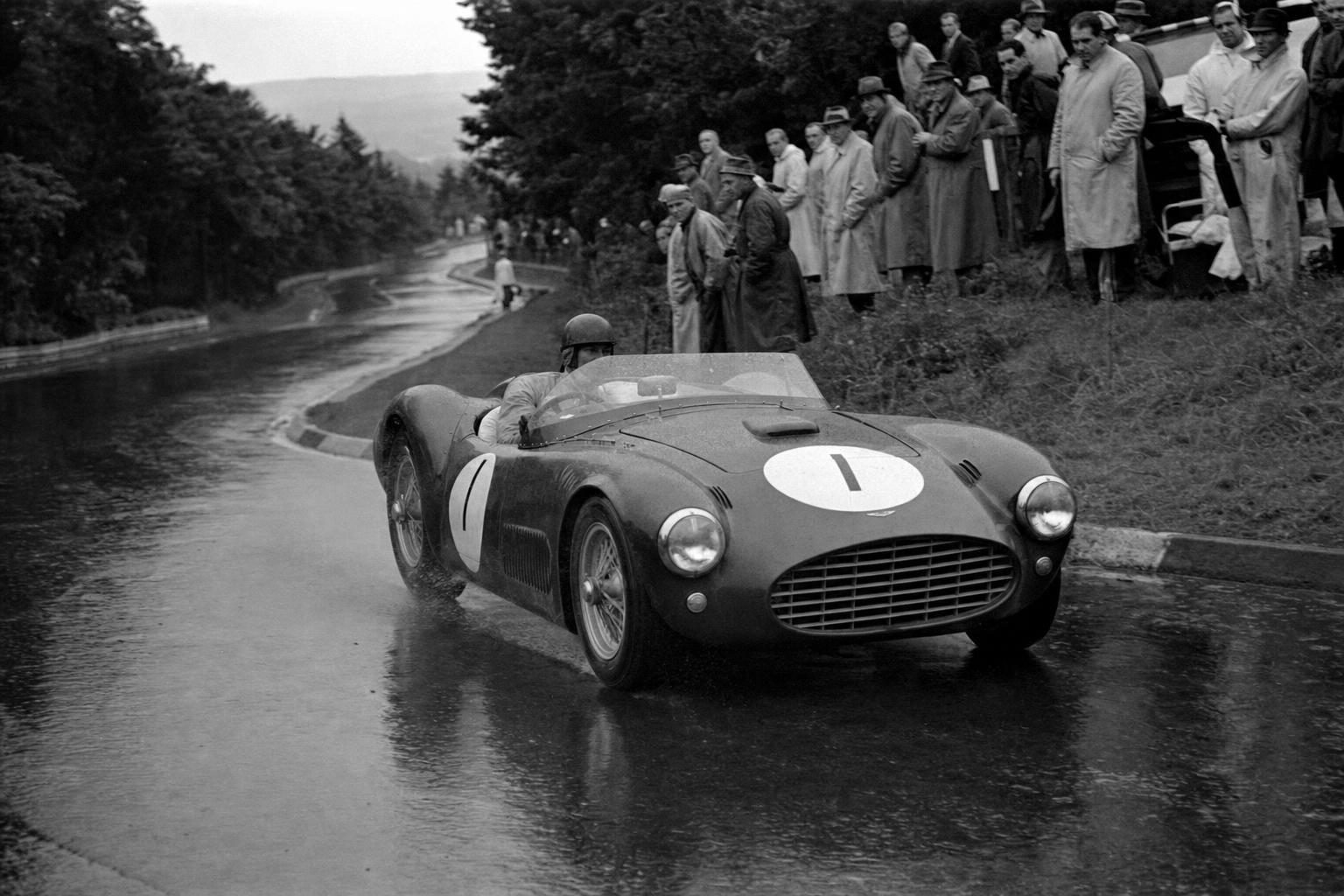
When the DBR1 entered racing in 1956 to replace the DB3S at the top level, the continuity was obvious. The light tubular frame, the sculpted aluminium skin, the obsession with weight and rigidity came directly from the school inaugurated by the 1953 barchetta. This fidelity to concepts accelerated the new model’s ramp-up.
The handover was not only technical but human. In 1956, Stirling Moss and Peter Collins drove the works cars, and Moss won the 1000 km of the Nürburgring in a DB3S. This victory underlined the step forward in method: sustained pace, economy of movement, optimised stints — the toolbox was ready for the next phase.
For the marque as a whole, the lesson was clear: develop fast, test everywhere, capitalise without delay. The DBR1 thus found cleared ground, with preparation and operational procedures already bedded in. The capital accumulated by the DB3S was no mere footnote: it was the foundation for what followed, even if history mostly remembers the 1959 crown.
Conclusion: restoring the DB3S to its rightful place
In Aston Martin’s story, the DB3S has often been eclipsed by the aura of the DBR1. Yet it built the technical framework (tubular frame, refined aluminium), consolidated a network of works/customer entries and delivered a benchmark Le Mans podium in 1955. It also validated the inline-six’s evolution to 3.0 litres and honed top-tier crews.
Placed back into the chronology opened by the DB2s at Le Mans 1950–1951 and, in part, concluded by the DBR1’s debut in 1956, the coherence is clear: a deliberate transition programme, artisanal in the best sense, forging the methods before consecration. For enthusiasts, giving it this place is not rewriting history — it is simply reading it precisely.
To delve deeper into the lineage, discover our analysis of the origins with the DB2s at Le Mans 1950–1951 and the brand’s foundations, as well as our dedicated DB2 profile. And for the logical sequel, our feature DBR1 1956: five examples, victories and method sets the DB3S’s direct legacy in perspective.
Useful sources: the reference page on Wikipedia for the Aston Martin DB3S and its international version in English; and for the broader picture, the overview of the competition department on the official site Aston Martin Racing.