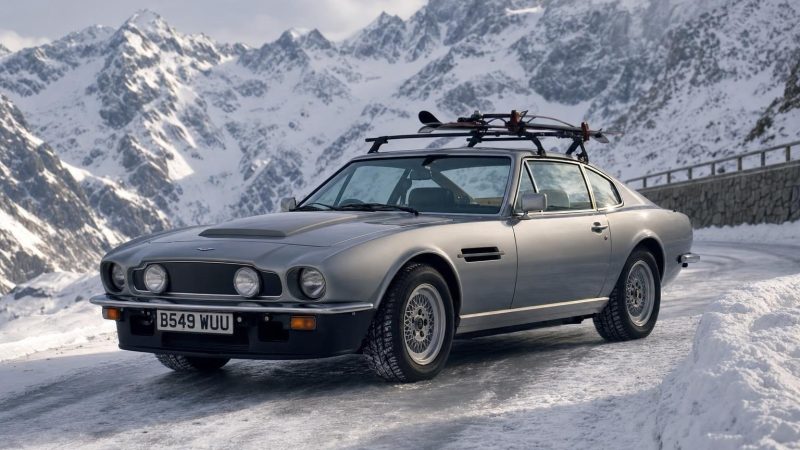
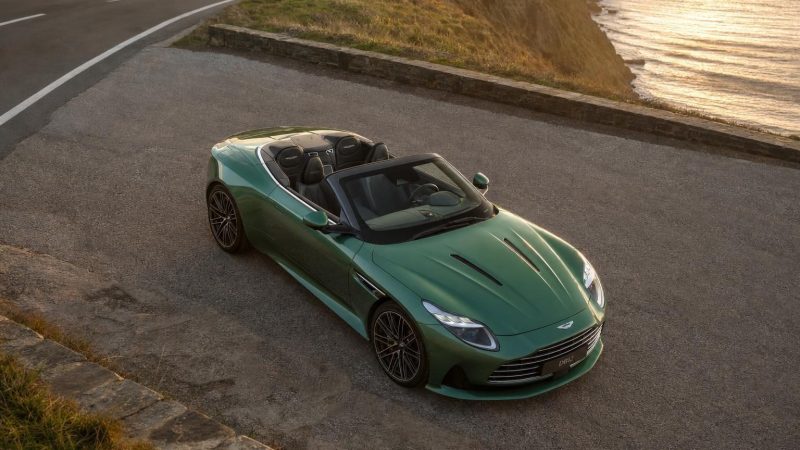
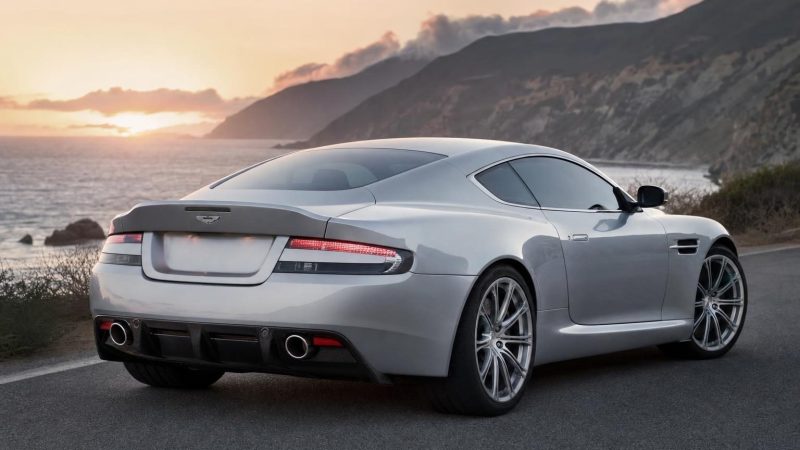
The Aston Martin DBS V12 Ultimate undoubtedly belongs to the second category. Announced in May 2012, built over the final two months of production, in June and July 2012, the DBS Ultimate is the farewell edition of the 2007-2012 generation DBS. One hundred examples in…
The Aston Martin DBS V12 Ultimate undoubtedly belongs to the second category.
Announced in May 2012, built over the final two months of production, in June and July 2012, the DBS Ultimate is the farewell edition of the 2007-2012 generation DBS. One hundred examples in total, coupés and Volantes combined. One hundred final cars to close a story that began with a grand GT derived from the DB9, spiritual heir to the Vanquish S, and replaced in 2012 by the new Vanquish. At Aston Martin, they call that the end of a career. In the real world, they call it a final glass of whisky in a leather-lined lounge.
The swan song — but with a V12
The DBS Ultimate is not a limited series designed to turn the car into a steroid-fed ballistic missile. No engineer was locked in a hangar with a 12 mm spanner and ordered to find twenty extra horsepower before tea. The Ultimate is a purely cosmetic edition. Mechanically, it remains a standard DBS. Which, let’s be honest, is exactly like saying Buckingham Palace is a decent house with a bit of potential.
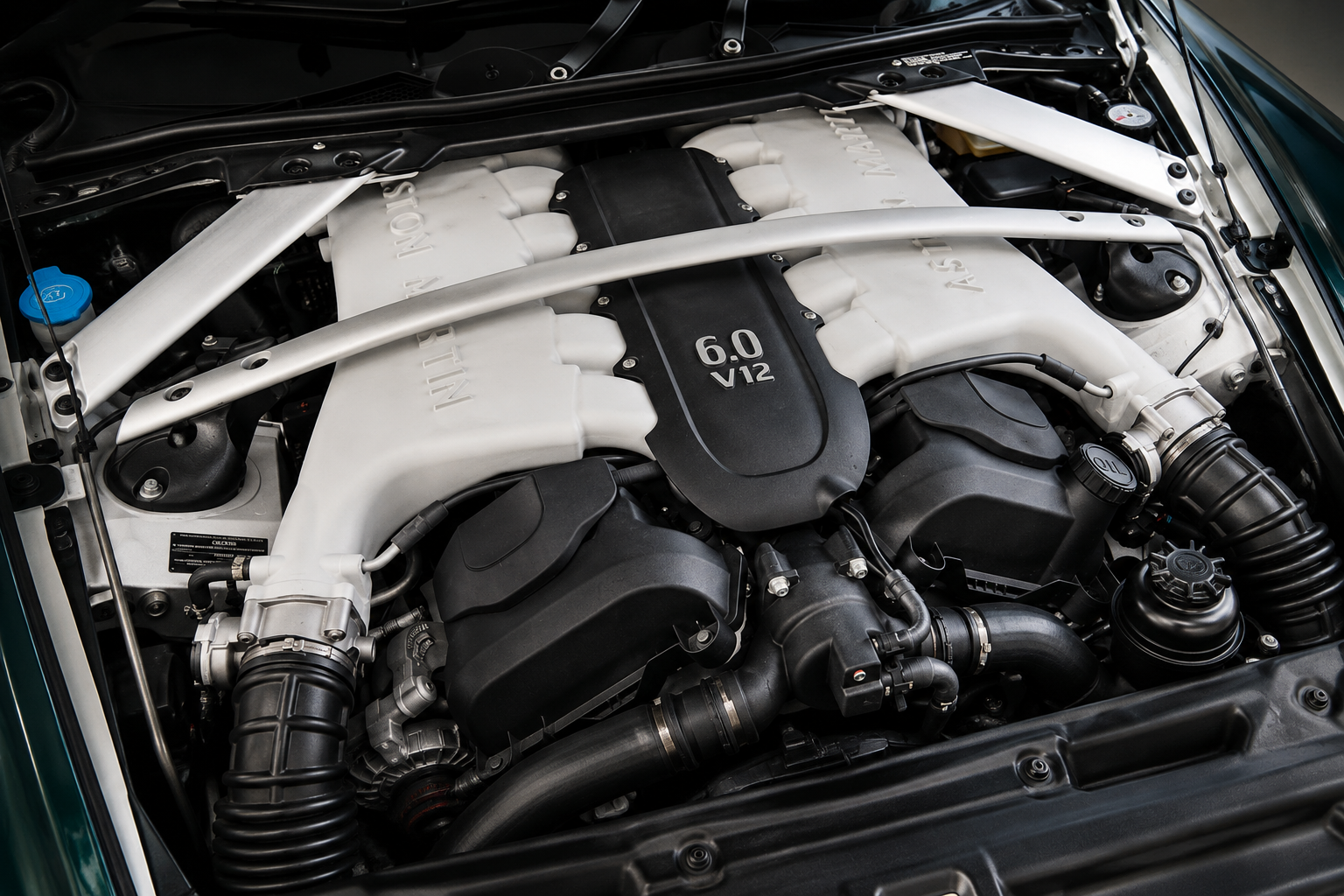
Under the long bonnet, then, sits the naturally aspirated 5.9-litre V12, 5,935 cm³ for people who organise their socks by cotton density, sometimes rounded up to 6.0 litres depending on the source. An AM08 engine with 48 valves, no turbo, no forced-induction trickery, none of that modern feeling that a computer is serving you power with pickle tongs. Here, air enters, fuel burns, the V12 sings, and the world immediately becomes more bearable.
Power is 517 PS, or 510 bhp, at 6,500 rpm. Torque reaches 570 Nm, or 420 lb-ft, at 5,750 rpm. The coupé runs from 0 to 100 km/h in around 4.3 seconds, and top speed is about 307 km/h, or 191 mph, with the manual gearbox. These are not numbers screamed by a marketing department on a caffeine drip; they are the figures of a great old-school Aston, from a time when British elegance could still do 307 km/h in a dinner jacket.
One of the last great naturally aspirated V12s
The emotion of the Ultimate lies mainly in this: it arrives at the twilight of the great naturally aspirated V12 at the top of the Aston Martin range. Careful, no panic, no proclamation carved in stone by an overexcited commentator: the Vanquish that succeeds it still keeps a naturally aspirated V12 for a while. But the DBS Ultimate clearly belongs to that end of an era, before the DB11 brought, in 2016, the 5.2-litre twin-turbo V12 into the Aston landscape.
So it is less “the very last” than one of the final great salutes. And perhaps it is more beautiful that way. Endings that are too neat smell of administration. This one carries the scent of an engine that revs freely, of a long bonnet under tension, of a quilted cabin and mechanical nobility that nobody needed to compress in order to make interesting.
Incidentally, do not confuse it with the DBS Carbon Edition, another end-of-career series. The Ultimate has its own role: to close the book, not by adding a technical chapter, but by underlining the final page in black ink.
 The outward signs of a successful farewell
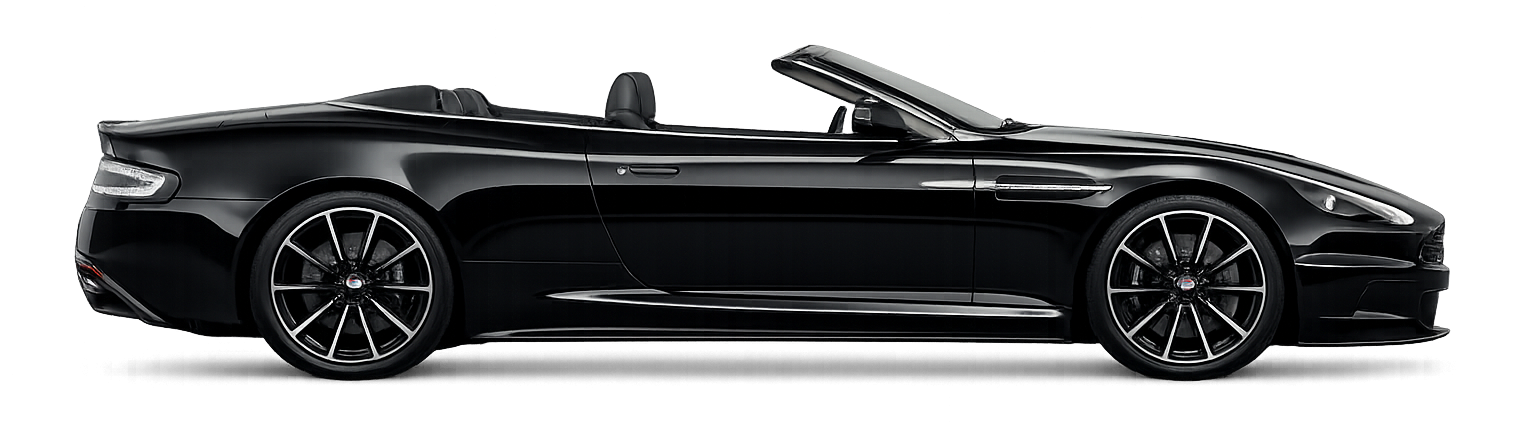
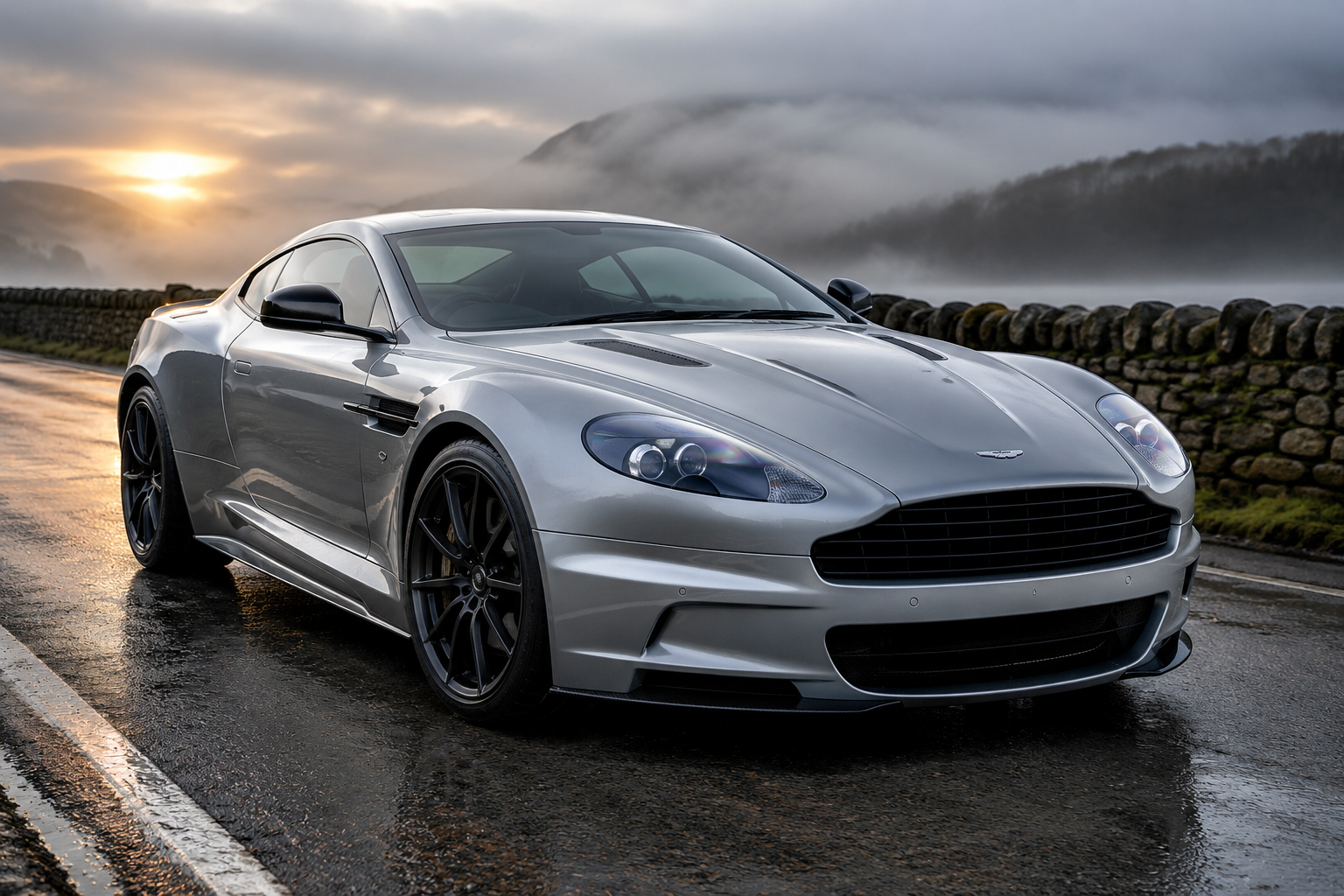
The Ultimate can be recognised by a series of details which, taken separately, might seem reasonable. Together, they turn the DBS into a statement of intent. Three colours were offered: Quantum Silver, Silver Fox and Carbon Black II. Three ways of saying “discretion” with the visual volume of a butler pushing open the door of a cathedral.
The grille is black. The rear diffuser is carbon fibre. The rear lights are smoked. The number plate surround is contrasting. The brake calipers could be chosen in three colours. This is exactly the kind of detail Aston Martin knows how to sell as if every option had been polished by a craftsman in a Warwickshire village while his dog was called Bentley. But on the DBS, it works. Everything works. The car does not look dressed up; it looks as though it chose its evening wear.
Inside, the treatment is just as theatrical, but with the restraint that prevents the whole thing from tipping into a Russian yacht lounge. There is diamond-quilted leather, an Alcantara headliner, a carbon-fibre fascia, “DBS Ultimate” badges and a numbered plaque. The kind of cabin that makes you want to speak more quietly, even alone, even at a standstill, even if you have merely dropped your glasses between the seat and the console.
One hundred examples, and a coughing calculator
The total is clear: 100 examples. The exact split, however, is less official. Enthusiast registers mention around 59 coupés and 41 Volantes. It should therefore be stated as such: an estimate, not a factory figure. Nobody at Aston seems to have engraved the coupé/Volante split on a silver plaque, which is a shame, but perfectly in keeping with the charm of the matter.
Almost all cars are believed to have received the Touchtronic 2 automatic gearbox. Manuals are extremely rare. Depending on the sources, there is said to be a single manual coupé, in the United States, presented as the last manual DBS ever built, and two American manual Volantes. In the collector world, this kind of detail has the same effect as throwing a rib of beef into a cage of greyhounds.
The coupé weighs around 1,695 kg, the Volante around 1,810 kg. Yes, it is not light. A DBS is not a track-day bathtub made of prayer fibre. It is a large V12-engined GT, built to cross countries while giving the impression that toll gates ought to open out of constitutional respect.
New price: the bill for the final bow
In the United Kingdom, the list price of the DBS Ultimate sat just below £187,000. The Ultimate pack added around £10,000 to the price of an ordinary DBS. Put another way, Aston was offering you the chance to pay the supplement of a nice small car to obtain the final ornaments of a great car. It is absurd, of course. But it is a wonderful absurdity, like buying cufflinks for a suit of armour.
No reliable American price specific to the Ultimate allows a clean figure to be stated. And since a beautiful story does not justify bad data, we shall stop there.
Current value: rarity, caution and a V12 in a dinner jacket
The current value must be approached with caution, because most of the available data concerns the DBS V12 in general, not the Ultimate specifically. In 2024, standard DBS examples sold at auction for around £60,200 for a right-hand-drive car with 23,000 miles in August, and around $95,000 for a left-hand-drive car in October.
Online valuation data dated 2026 indicates around £84,700 in average condition, with a public record stated at £241,250. For an Ultimate example, a Swiss coupé showing around 205 km, but requiring recommissioning, was sold for £97,750 by Bonhams. Once again, condition, specification, market, gearbox and history all carry considerable weight. A manual Ultimate, should one appear, clearly does not play in the same league as a more common Touchtronic DBS.
The trend in 2026 seems to be a slow rise, driven by several forces: the James Bond connection, its status as an Aston Martin flagship, the rarity of the Ultimate, and growing interest in large naturally aspirated V12s. Nothing hysterical, nothing that requires selling a Scottish county before Friday, but a gradual appreciation. The kind of climb that makes no noise, precisely because it has class.
Why it matters
The DBS V12 Ultimate is not important because it is more powerful, faster or more radical than the standard DBS. It is important because it understood its role. It does not try to correct the DBS. It celebrates it. It takes a grand GT that is already dramatic, already beautiful, already sonorous, and adds the final punctuation mark.
It is a farewell car. Not a fairground firework display, but a final note held by an orchestra that knows exactly when to stop. It marks the end of a generation, the last breath of a lineage before the new Vanquish, and one of the final moments when Aston Martin’s flagship still spoke through a naturally aspirated V12 without a turbo holding the microphone.
In that sense, the DBS Ultimate may be one of the easiest Astons to love. It does not need to be explained for three hours by a man in a quilted jacket. It simply says: this is what we knew how to do. A silhouette, an engine, a cabin, one hundred examples, and that very particular feeling that the car was not assembled to fill a box in a range, but to close an era with panache.
Sources
astonmartins.com — DBS Ultimate spec sheet
aston1936.com — Volante production registers
Bonhams Cars — Swiss Ultimate coupé lot
en.wikipedia.org/wiki/Aston_Martin_DBS_V12 — technical specifications