grand tourisme V12, le DBR9 hérite du bloc, des culasses et du châssis de la DB9. Trois saisons ALMS, 007 et 009, Le Mans 2006-2007, et la DB9 LM.
grand tourisme V12 at Aston Martin means technical continuity between road and track, and the DB9/DBR9 dossier provides a clear demonstration. Here we detail the four concrete links between the production DB9 and the DBR9, how three ALMS seasons honed the weapon before Le Mans, why the numbers 007 and 009 were chosen, what the 2006 second place changed, and finally how the 2007 class win echoed through production. In short, a panorama of English-style grand tourisme V12, without showiness but with solid facts.
What the DBR9 retains from the DB9 road car: block, cylinder heads and chassis structure
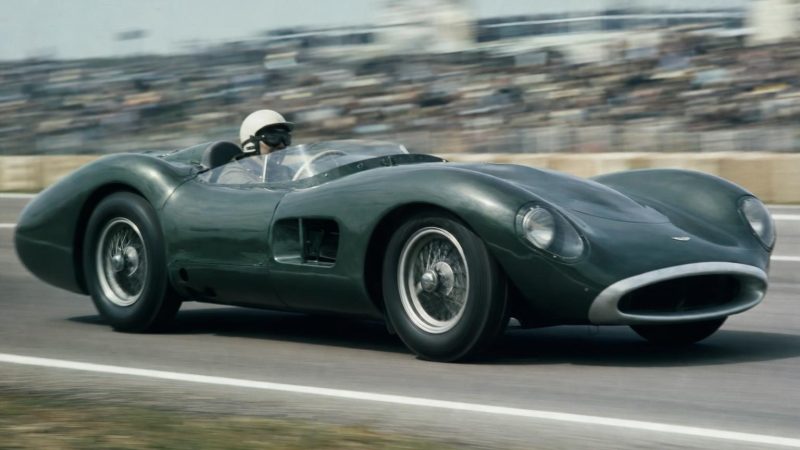
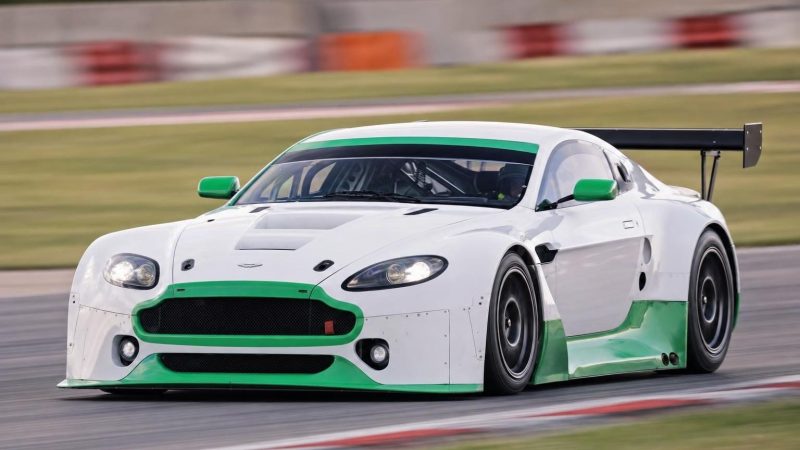
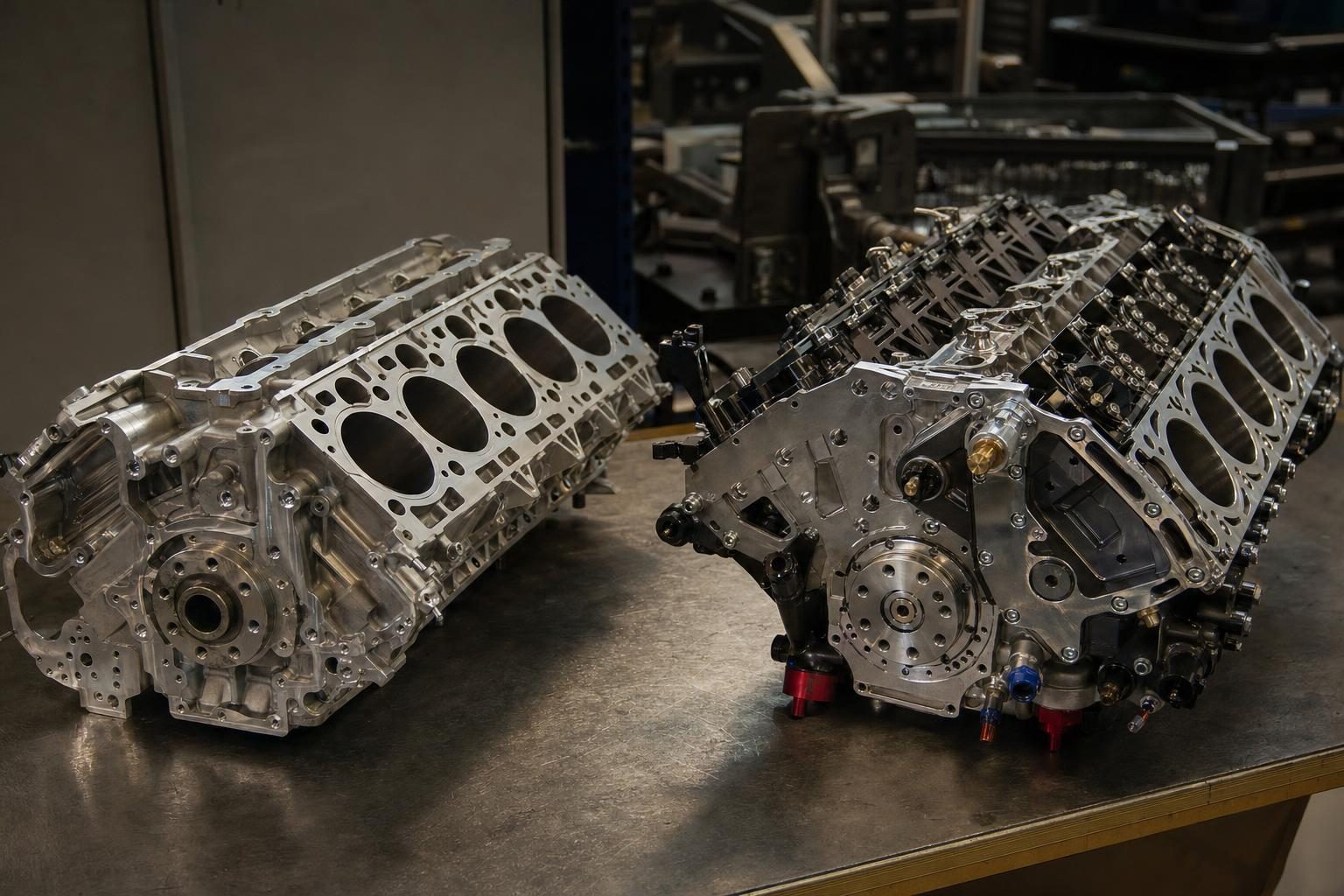
The lineage is not just about the design. According to the model page on Wikipedia Aston Martin DBR9, the prototype retains from the DB9 the V12 block, its cylinder heads, as well as the basic chassis structure. It is the very essence of grand tourisme V12 transposed into a GT1 context, with major components taken from the road car and then optimised for endurance.
This choice has a double benefit. First, it anchors the racing car in industrial reality: engineering does not start from a blank sheet, it capitalises on a road-proven engine-chassis package. Second, it ensures conversely that the DB9, Aston Martin’s grand tourisme V12 showcase, is not disconnected from competition. The mechanical link is not cosmetic; it is structural.
The bodywork, however, tips decisively to the track side. Again according to the same source, all DBR9 body panels are carbon fibre, with the exception of the roof. The contrast is deliberate: retain the framework and mechanical heart of the grand tourisme V12, while substituting a racing skin for gains in rigidity and weight.
For those wishing to revisit the basis of this kinship, the official DB9 presentation remains a useful key to Aston Martin’s grand tourisme V12, via the media page Aston Martin DB9 and the past models entry Aston Martin DB9. As for the DBR9’s pedigree, our model dossier provides a clear overview at the DBR9, results and technicals, mirroring the DB9 road car, basis of the project.
ALMS 2005-2007: the wins and losses that prepared the car for Le Mans
The foray into the American Le Mans Series served as a laboratory. In 2006, Aston Martin Racing finished second in the ALMS GT1 manufacturers’ championship, a season of chances taken and missed that refined the concept of grand tourisme V12 applied to GT. These regular, demanding confrontations established a base of set-up and reliability, a necessary step before La Sarthe.
The learning was not confined to the United States. In 2006, Larbre Compétition won the teams’ championship in LMES, with victories at Istanbul and the Nürburgring. This bundle of experiences crossed terrains and formats, strengthening what the grand tourisme V12 must withstand when it comes up against American and European GTs.
From 2005 to 2007, each meeting added a brick: temperature management, wear, safety cars, pace against Corvette. The sum of these details shaped a better-armed car. You do not conjure a Le Mans victory: you assemble it piece by piece, season after season, cultivating the robustness expected of a top-flight grand tourisme V12.
To place these campaigns in the marque’s history and gauge the bridge between ALMS and La Sarthe, our motorsport dossier Aston Martin, Le Mans and world championships offers a concise timeline.
The numbers 007 and 009: why Aston Martin Racing chose these race numbers in 2006 and 2007
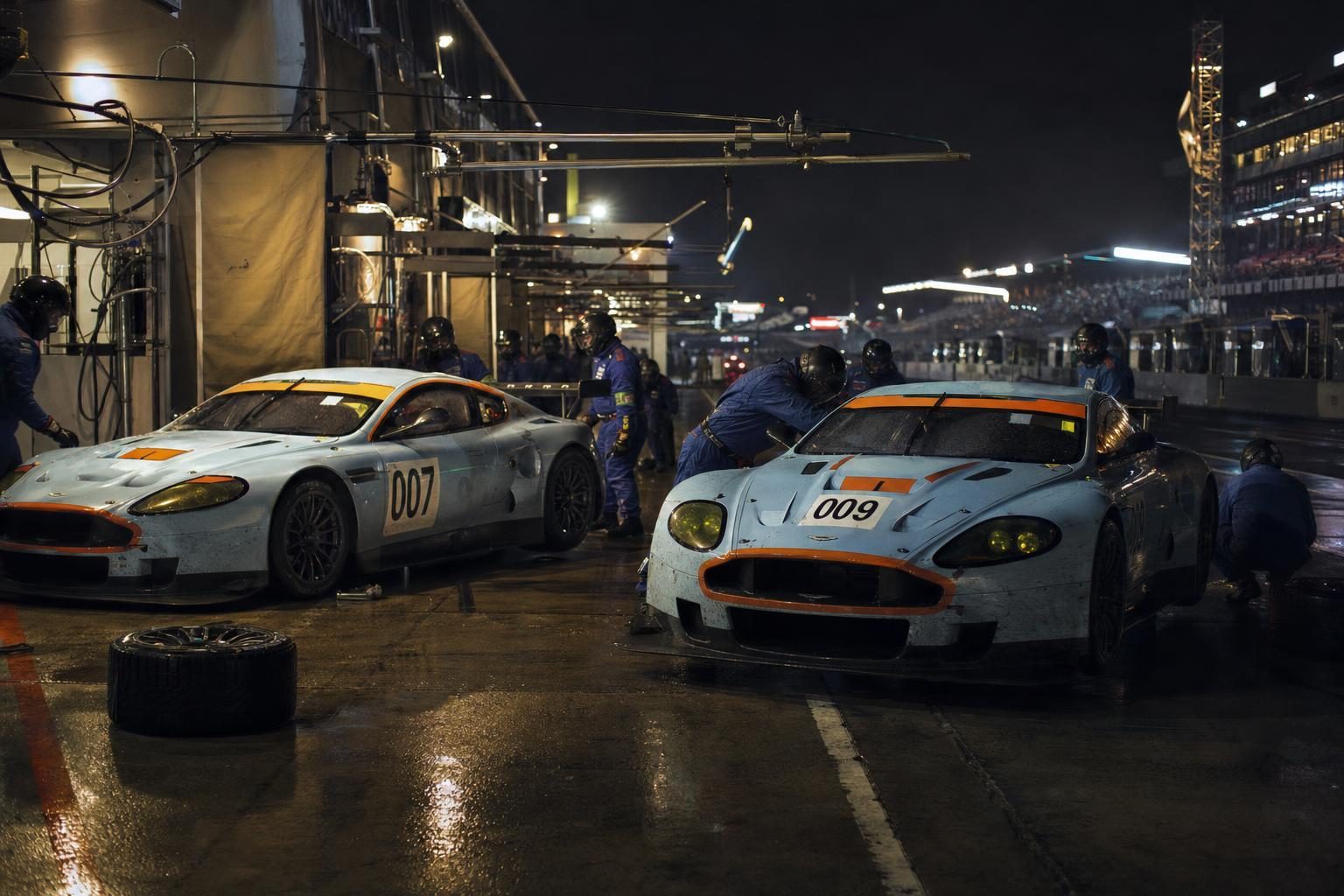
In 2006 and 2007, the DBR9s carried numbers 007 and 009. The homage to James Bond is explicit, again documented by Wikipedia Aston Martin DBR9. A well-judged nod, these race numbers link the track to the brand’s popular mythology without straying from the primary mission: to win in GT1.
This choice contributes to a coherent narrative. It recalls that grand tourisme V12 is not just about raw performance: it is also a culture, an identity, and at Aston Martin, agent 007 is part of the landscape. 007 and 009 become visual markers, points of reference in the mêlée of prototypes and GTs.
On the ground, these digits confer not a tenth. But they shape a story that accompanies the technical effort. When a grand tourisme V12 is pointing at over 280 down the Hunaudières, the symbolism does not change the fuel top-up, but it imprints a silhouette on memories — exactly what you expect from a house that tends its legends.
Between cultural heritage and engineering rationality, these numbers sign the balance sought: knowing where you come from to go faster. Grand tourisme V12 accommodates this extra soul well, so long as it does not tip the scales.
The 2006 season at Le Mans: second in class and what that setback changed for 2007
Le Mans 2006 offered a lesson. The DBR9 finished second in its class behind a Corvette. This result, recorded on Wikipedia Aston Martin DBR9, was not an end in itself: it was a tipping point. When you take to the track a grand tourisme V12 derived from the DB9, the gap to bridge is measured in consistency rather than absolute numbers.
This relative reverse prompted a tightening of fundamentals: making reliable everything that wears over 24 hours, rigour in pitstops, clarity of aerodynamic priorities. Nothing unprecedented, but a clear hierarchy between what wins and what merely entertains in the wind tunnel. This is where mechanical continuity with the DB9 worked in the project’s favour: a grand tourisme V12 designed to last on the road copes better with the passage of time in racing once it is lightened and cooled as required.
The carbon fibre bodywork, except for the roof, was part of this rationalisation. Save where you can, protect where necessary, in keeping with the grand tourisme V12 DNA. The 2007 target was clear: turn a good base into a class winner.
Ultimately, 2006 was the year of margins. The DBR9 learned to win slowly which, for a grand tourisme V12 derived from a DB9 road car, is almost a virtue: do not rush, but prepare the next step.
What the 2007 class win triggered in limited production on the road cars
17 June has a particular flavour when it ends with a trophy. In 2007, DBR9 number 009 won its class at Le Mans. This success, again referenced by Wikipedia Aston Martin DBR9, sealed the culmination of a method: deriving a series-production grand tourisme V12 into a GT1 without denying its key organs, and learning season after season.
Direct consequence on the road side: Aston Martin produced 60 DB9 LMs in Sarthe Silver to commemorate the victory. A limited series that materialised the to-and-fro between track and open road. Again, the symbol matters, because the DB9 LM recalls that grand tourisme V12 does not live only at Le Mans: it breathes every day, in more hushed comfort, with technical baggage enriched by endurance.
This bridge fed the credibility of the range. The victory was celebrated without fanfare, via a calibrated edition: 60 examples, not one more. The message was simple and effective, true to this vision of grand tourisme V12 that prefers substance to showboating.
Behind it all, the guiding idea remained: when the road car gives its engine, cylinder heads and structure to the racing programme, the road receives in return set-up know-how, assembly rigour, and an extra aura. It is the circular economy of grand tourisme V12, Aston Martin style.
Conclusion — grand tourisme V12, the DB9/DBR9 lesson
By retaining the DB9’s block, cylinder heads and basic chassis, the DBR9 built a credible bridge between road and track. Three ALMS campaigns, the symbolic 007/009, a second place in 2006 then the 2007 class win: the progression was linear, almost didactic. Above all, it enshrined an approach to grand tourisme V12 where series feeds racing and racing irrigates series — right through to the DB9 LM celebrating La Sarthe. When it comes to lessons learnt, the equation seems to hold: start from a solid grand tourisme V12, lighten it, harden it, then let Le Mans decide. In 2007, the verdict was favourable.