DB9 LM 2007, limited run of 60 units: Sarthe Silver livery, commemorative details and technical reality. Five insights to separate myth from fact.
The DB9 LM was born from a 2007 class win at Le Mans and presents itself as a rolling memento rather than a transformed DB9. Behind the tribute, the limited edition lines up a few visual markers — Sarthe Silver, DBS taillights, specific wheels and dedicated interior trim — but no earth-shattering mechanical promises. Here, in five sourced insights, is how this commemorative series celebrates the DBR9 while remaining, fundamentally, an exercise in style.
Sarthe Silver: the origin of the name and the colour the racing DBR9 didn’t wear
The first distinctive sign of the DB9 LM is its “Sarthe Silver” paint, explicitly named after the region of the 24 Hours of Le Mans circuit. According to the Wikipedia page dedicated to the DBR9, this colour underscores the commemorative spirit of the 2007 edition, conceived in the wake of the race car’s class victory. The nod is elegant and, let’s admit it, rather British in its restraint.
Paradoxically, the winning DBR9 did not wear this shade. Where the competition car appeared in team livery, the DB9 LM dons a specific silver created for the road. The message is clear: the inspiration comes from Le Mans, but the expression remains civil, almost ceremonial. It’s a consciously aesthetic stance, reminding us that a commemorative edition is not meant to mimic the race, only to salute it.
What the DB9 LM shares with the works DBR9 and what it never had
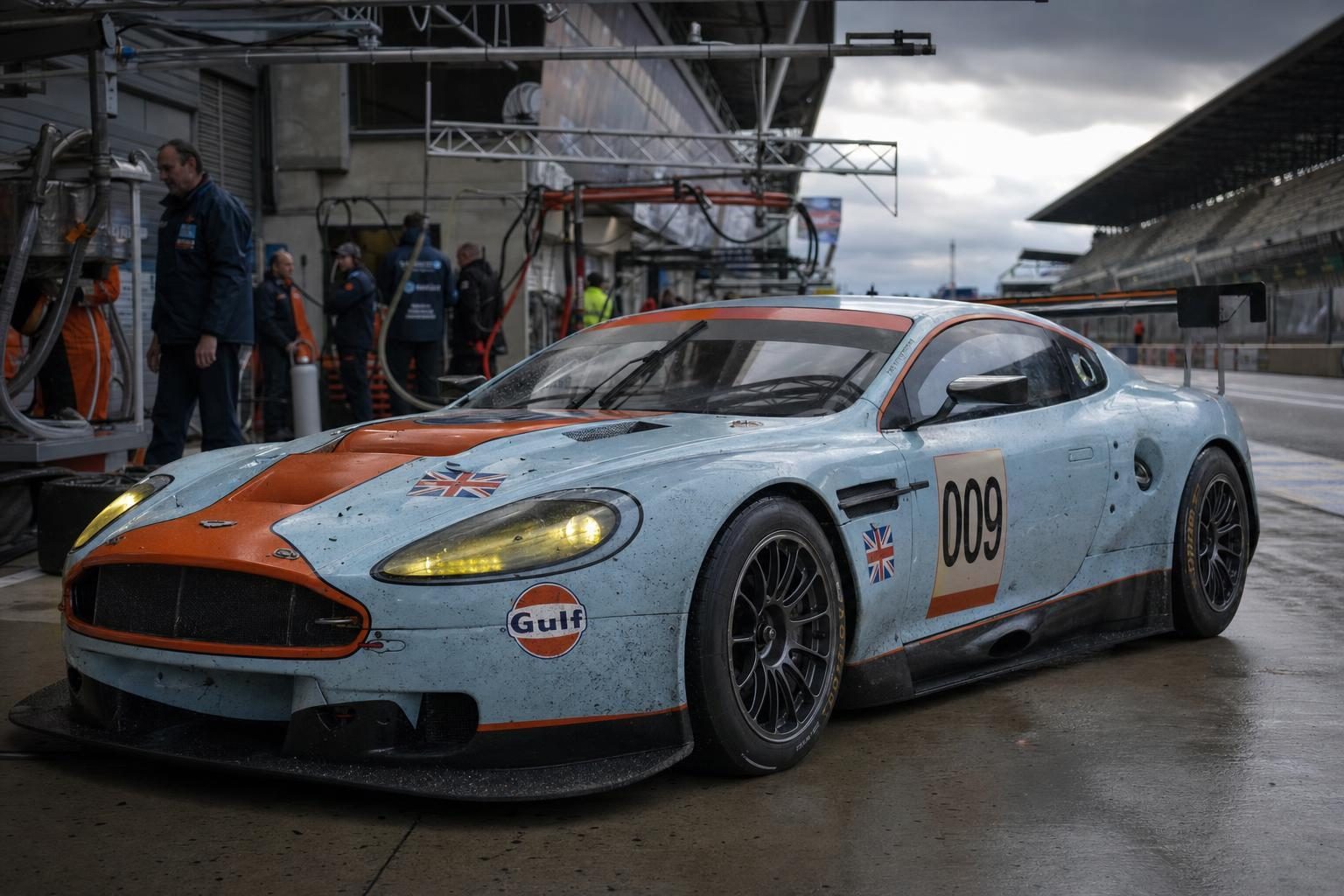
The most direct link between the DB9 LM and the DBR9 is the occasion that motivated the edition: the 2007 class victory, which the DBR9’s Wikipedia page identifies as the trigger for the project. You’ll find visual and nominal references (Sarthe, Tertre Rouge) and the obvious narrative: reminding the road-going driver of the feat of car 009 — the number carried by the victorious Aston Martin Racing entry.
By contrast, the DB9 LM does not claim a deep mechanical inheritance from the works car. The cited source speaks of an “ultra-exclusive cosmetic package” and lists no chassis, braking or engine developments linked to the DBR9. In other words, the edition pays homage without transplanting race technology. This is a common tightrope for commemorative series: the story matters as much as the hardware.
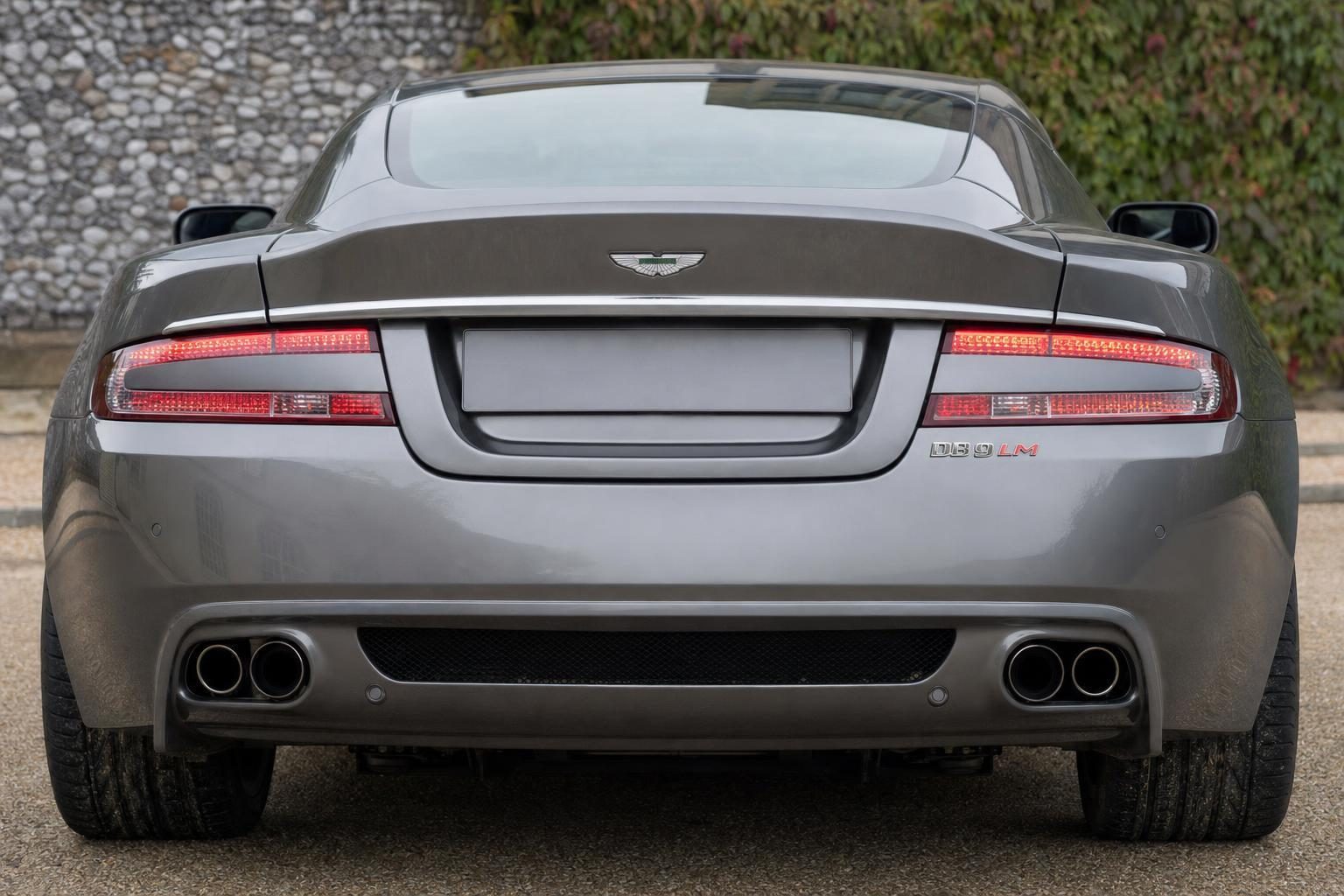
DBS taillights and Sport Pack: the only two documented technical differences
The facts documented by the DBR9’s Wikipedia page are precise about the distinguishing elements: the DB9 LM receives DBS taillights, specific “Magnum Silver” wheels and a cabin enhanced with red stitching and trim dubbed “Tertre Rouge”. These points form the core of the factory package.
The headline mentions a “Sport Pack”, but the chosen source does not confirm this for the DB9 LM. In other words, while rumour or period road tests may have attributed stiffer chassis settings to this series, they do not appear in the information sourced here. As it stands, the only explicitly mentioned difference with a technical flavour lies in the DBS-sourced taillights — the rest is primarily cosmetic, right down to the red top-stitching and the Le Mans theme of the cabin.
60 numbered examples: the production logic behind the figure
The series was limited to 60 cars, each individually numbered. Again, it’s the DBR9’s Wikipedia page that sets the data: “only 60 built”. The associated qualifier, “ultra-exclusive cosmetic package”, places the edition in a logic of symbolic rarity rather than a short-run piece of engineering.
Why 60 and not 59 or 61? The source does not specify. One can note, however, that this volume asserts rarity without tipping into the ultra-confidential, consistent with a commemoration intended to be visible. The number 009 of the winning DBR9 is well documented and feeds collectors’ imagination: sequential numbering on the road, an iconic identifier in racing — a duality that always works in the showroom as well as in the catalogue.
Resale value and market perception: why these 60 cars don’t behave like classic limited series
A limited series founded on aesthetics rather than performance finds a different market positioning. The facts available here — dedicated paint, DBS elements, specific wheels, themed upholstery and the absence of documented mechanical upgrades — suggest that the DB9 LM is collected as much for its narrative as for its spec sheet.
In this context, perceived value depends heavily on attachment to the 2007 Le Mans story, materialised by the “Sarthe” and “Tertre Rouge” nods and the echo of no. 009. Wikipedia describes the whole as a “cosmetic package”: a phrasing that, in itself, guides connoisseurs’ evaluation towards narrative rarity rather than a measurable dynamic advantage. The 60 numbered examples reinforce the appeal but do not, in themselves, induce “halo car” behaviour that transforms the technical equation.
Conclusion — DB9 LM: a factory memento, not a faster DB9
At the end of this inventory, the DB9 LM appears for what it is: a road-going DB9 carefully dressed to celebrate the DBR9’s 2007 class victory, with its Sarthe Silver finish, DBS lights, Magnum Silver wheels and “Tertre Rouge” interior. The 60 numbered examples set the rarity, while the source speaks of an “ultra-exclusive cosmetic package”, with no mechanical claims.
This commemorative coupé fulfils its brief with tact: prolonging Le Mans lustre without promising more speed. For those who love Aston Martin’s competition history, the DB9 LM ticks the boxes of a well-executed factory souvenir. For those seeking a leap in performance, the truth is in the name: the inspiration comes from the circuit; the execution remains civil.
- To revisit the road lineage, see our feature on the DB9 within the Aston Martin range.
- For the racing context, dive into the portrait of the DBR9 and the 2007–2008 Le Mans victories.
Useful and complementary sources:
- The Wikipedia entry for the Aston Martin DBR9, the basis for the information in this analysis.
- The official media page devoted to the DB9 to recontextualise the road model.
- The DB9 past models round-up on Aston Martin’s site to place the edition in the timeline.