DB12 2023 : une rupture calculée avec le DB11. Châssis affûté, V8 biturbo 680 ch, infotainment MBUX. Analyse des choix et de leurs enjeux.
DB12, or the most British way to make a clean break: three technical decisions — a reworked chassis, a 680 PS twin‑turbo V8, and new infotainment — shape a deliberate departure from the DB11. Unveiled at Cannes in May 2023, this model is far more than a facelift. It reconfigures Aston Martin’s grand touring brief and, on its own, explains the change of name. Here’s why.
Cannes 2023: why unveil a car at the Film Festival rather than Geneva — a positioning strategy
Showing the DB12 at the Cannes Film Festival in May 2023 wasn’t a social whim, but a signal. According to the page dedicated to the DB11, the brand’s recent history highlights the importance of narrative and launch context. By choosing the Croisette rather than a traditional motor show, Aston Martin anchors its new GT in a glamorous, international imagination, far from the neon of exhibition halls.
Cannes offers instant visibility with a global, trend‑setting audience. The DB12 there takes on an almost cinematic role, useful for a model claiming “super tourer” status. This staging also speaks to the brand’s confidence in a design and spec sheet capable of speaking for themselves, without the constant benchmarking a universal motor show imposes.
Finally, the timeline matches industrial realities: DB11 production officially ends in June 2023 (source: Wikipedia DB11), a few weeks after the DB12’s reveal. A clean break, dramatised at Cannes, to mark the generational change.
DB11 replaced but not replaced: what the DB12 keeps from the aluminium platform and what it reconfigures
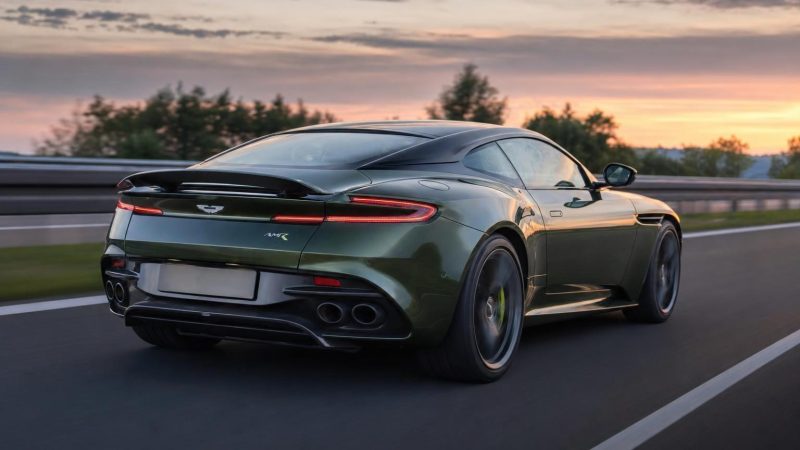
The DB12 does not start from a blank sheet. It carries over the aluminium architecture that underpinned the DB11 and the 2018 Vantage (source: Wikipedia DB11). This structural continuity ensures a low centre of gravity, controlled rigidity and restrained weight — pillars of Aston Martin driving dynamics.
What changes is how this base is exploited. Shared elements don’t reflect the breadth of recalibration: axle geometries, targeted stiffening and integration of more modern equipment. The intended result is a sharper GT, with crisper chassis response and greater stability at very high speed — essential qualities to accompany the power increase of the new V8.
This “evolution‑reinvention” approach also explains the name change. Preserving the aluminium DNA while profoundly reconfiguring road behaviour and the in‑car interface creates enough separation to justify DB12 rather than DB11. Subtle on paper, decisive on the road.
680 PS twin‑turbo V8 instead of V12: the technical and regulatory reasons behind a sensitive decision
Moving from the DB11’s V12 (600 PS, 630 PS in AMR) to the 4.0‑litre twin‑turbo V8 with 680 PS is the most discussed decision. Technically, the twin‑turbo V8 offers massive torque and a more eager response, with gains in thermal efficiency and heat management — advantages that have become indispensable. Regulationally, pressure on emissions and homologation cycles pushes manufacturers towards more compact, more efficient engines without sacrificing performance.
The DB11 V12 delivered 600 PS at 6,500 rpm and 700 Nm from 1,500 to 5,000 rpm for 0–97 km/h in 3.6 s (source: Wikipedia DB11). The DB12 claims 680 PS with its twin‑turbo V8 (source: Aston Martin — DB12). The power gap, potential weight saving over the front axle and aerodynamic optimisation make for a far more modern efficiency equation.
The emotional sensitivity remains: at Aston, V12 is not just a number, it’s a culture. That’s where the creative tension lies. But the brand hasn’t renounced mechanical nobility; it has redefined the hierarchy. In this model, the DB12, the balance between outright performance, compliance and pleasure clearly tilts towards the boosted V8. A rational decision, owned by the spec sheet.
This repositioning also sheds light on the rest of the range. For those wishing to revisit the V12, the DB11’s history and evolutions remain a useful reference — worth rediscovering via our feature on the complete DB11 journey.
The integrated Mercedes‑Benz infotainment system and revised cabin space: two compromises between modernity and identity
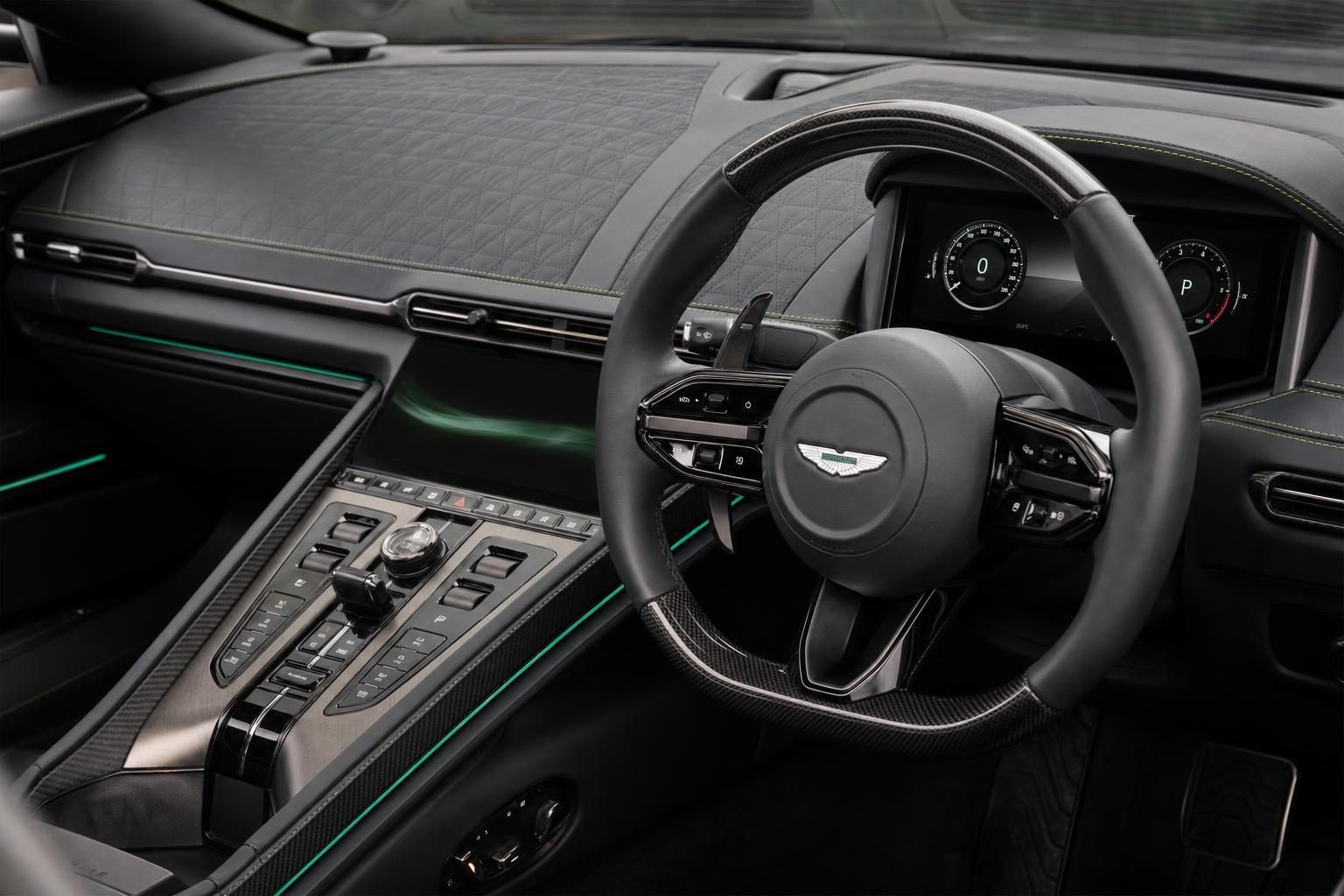
Another deliberate break: the DB12 adopts a Mercedes‑Benz infotainment system, based on the MBUX architecture with a 10.25‑inch screen (source: Aston Martin Media — DB12 and DB12 spec sheet). Compared with the DB11’s 8‑inch LCD, the technological leap is clear: faster interface, broader connectivity, modern navigation.
The trade‑off? Integrating German technology without diluting British character. Ergonomics and graphics are adapted to Aston’s design language, while the centre console and dashboard are rearranged to prioritise the driving position. The driver’s environment gains in clarity and precision, without lapsing into an overload of screens.
At the rear, adjustments to space and stowage serve grand touring use. The house spirit remains: a cockpit to devour kilometres at a brisk pace, with the right dose of comfort and technology, but without losing the mechanical connection loyalists seek.
For a comparison focused purely on dynamic upscaling, our analysis of the DB12 S version sheds light on later evolutions without muddying the reading of this first opus.
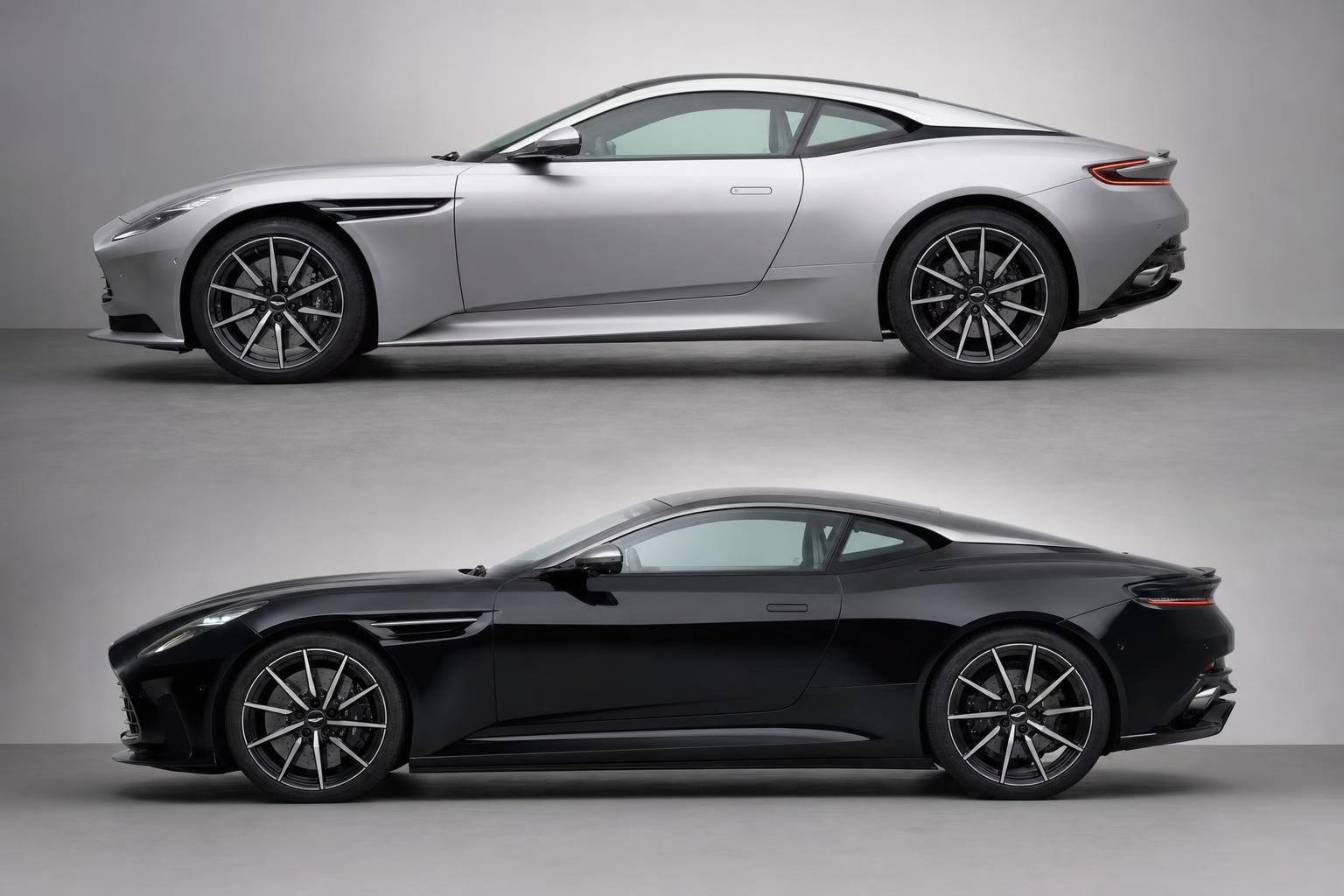
DB11 built until June 2023, DB12 in production since September 2016: overlap, positioning and lessons
The heading is confusing and needs clarification. Established facts indicate DB11 production runs from 2016 to June 2023 (source: Wikipedia DB11). The DB12 is unveiled in May 2023 at Cannes. None of the sources cited here attest to DB12 production in 2016. In other words, if there is any “overlap”, it is chiefly a calendar one between end‑of‑line DB11 and the DB12’s industrial launch, not a structural overlap over several years.
This brief overlap nonetheless has strategic meaning. It lets the brand honour the final DB11 orders — a model crowned with the 2017 Golden Steering Wheel as the most beautiful car of the year — while pivoting communications to the DB12. An elegant way to close a chapter without slamming the door.
- Perceived quality: the memory of Andy Palmer personally inspecting the first 1,000 DB11s recalls the standards set for the lineage (source: Wikipedia DB11).
- Positioning: DB12 moves up in power and technology, without disowning the aluminium platform.
- Lesson: changing the name here isn’t cosmetic; it acknowledges three decisions that alter the GT’s nature.
For an up‑to‑date overview of specifications and options, our page dedicated to the DB12 model sheet usefully completes this perspective.
Conclusion — a DB12 of measured rupture
The DB12 breaks from the DB11 with three structuring choices: a reworked aluminium chassis, a 680 PS twin‑turbo V8 instead of a V12, and a more ambitious MBUX infotainment. Unveiled at Cannes to underline this repositioning, the model embraces the tension between tradition and modernity. At Aston, emotion doesn’t hinge on cylinder count, but on the rightness of the whole — and the DB12 proves it, discreetly.
To go further, explore the full timeline of the DB11 and its evolutions, along with official information on the DB12 on Aston Martin’s website and the dedicated media kit. What’s next? A growing family, to be followed with restraint and curiosity.