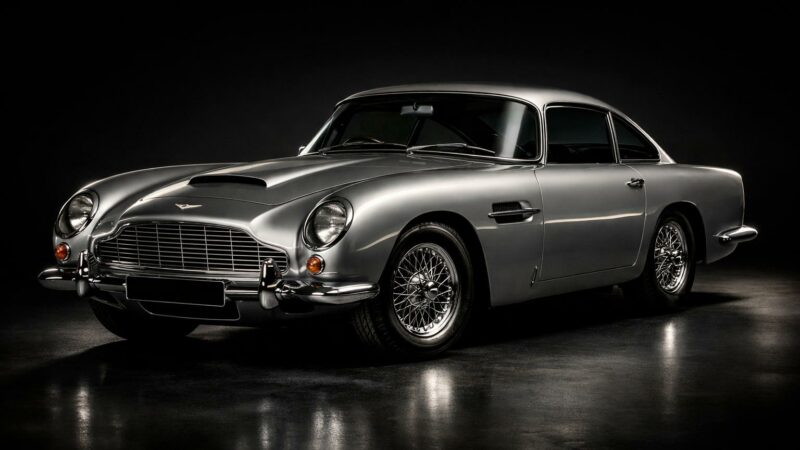
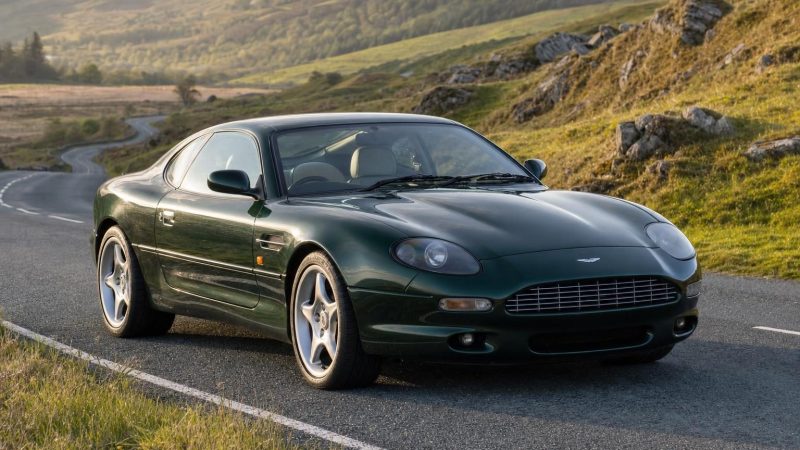
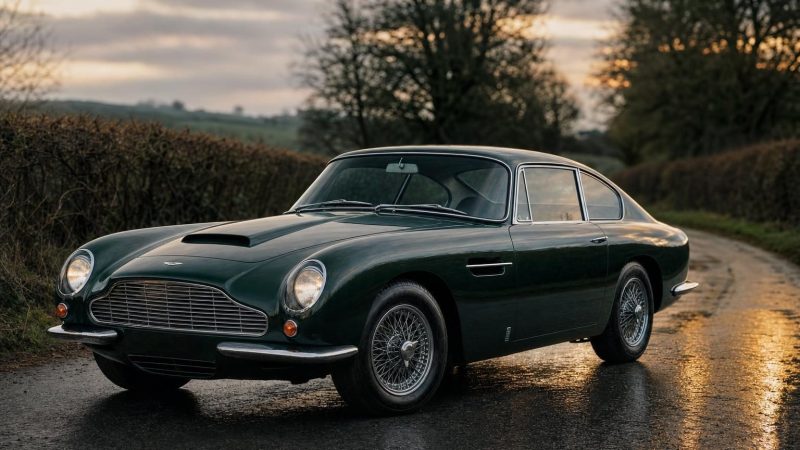
DB2 Le Mans, three decisive races: 1949-1951 set Aston Martin’s DNA between road and circuit, class double, 1951 podium and Lagonda engine.
DB2 Le Mans is no historical frill: it is the moment when a modern Aston was born, in equal parts on the road and on the circuit. From 1949 to 1951, three successive entries sealed a method – prototype even before pre-series, development in competition, immediate feedback to the road model – which would become the Newport Pagnell signature. Here is why these results, sometimes tragic, often brilliant, are far more than a footnote.
Le Mans 1949: three DB2 prototypes as a preview, even before production
Even before its public unveiling and start of manufacture, the DB2 appeared at Le Mans in 1949 as three prototypes. According to the dedicated Wikipedia page (Aston Martin DB2), one was powered by a Lagonda straight-six while the other two received the Aston Martin 2-litre four-cylinder. This dual mechanical path, undertaken from the outset, reflects engineering pragmatism and post-war urgency: move fast, but validate in real conditions.
The race spares no one. Again according to the same source, the Lagonda-engined prototype retired with overheating related to the water pump and Pierre Maréchal lost his life in an accident. A baptism could hardly be worse. Yet this early entry before production shows David Brown’s conviction: the DB2 must be born in the field, not merely on a drawing board.
This gamble placed the DB2 squarely at the heart of a “road through racing” logic. It is not a marketing ploy, it is a development shortcut. Cooling issues, transmission loads, suspension endurance: everything that breaks in the Sarthe feeds back into the fine-tuning of the production coupé.
1950: 5th and 6th overall, class one-two — DB2 Le Mans: what these results meant
In 1950, the tune changed. According to Wikipedia, the DB2s finished 5th (Abecassis/Macklin) and 6th (Brackenbury/Parnell), taking 1st and 2nd in the 3-litre class. For a car from a still-evolving project, it was an eloquent calling card. The overall performance, as much as the authority in class, signalled an extremely sound base: enduring chassis, pragmatic aerodynamics, effective powertrain.
The symbol goes beyond the results column. The DB2 was shown at the New York Auto Show in April 1950 (again per Wikipedia), at the very moment these results legitimised its vocation. The coherence is crystal clear: international exposure of a road coupé, endurance proof over 24 hours. Customers grasped that this “road” Aston shared the essentials with the “racing” Aston, and not the other way round.
The Vantage option also appeared in April 1950 and raised power to 125 PS via larger carburettors and a higher compression ratio, as documented by the same source. Without triumphalism, this was an immediate transfer of know-how: endurance demands breathing and consistency, and the Vantage option distilled a measured yet tangible road version of that.
1951: 3rd overall with Macklin and Thompson, the high point of the series
In 1951, the DB2 turned promise into accomplished fact. According to Wikipedia, Lance Macklin and Eric Thompson took 3rd overall, with Abecassis and Brian Shawe-Taylor 5th. A Le Mans podium is not obtained on the cheap: it reveals a fast car, frugal in mechanical stresses and perfectly exploited by the crew and the team.
This result closed a founding triptych. 1949 defined the testbed, 1950 proved the robustness of the architecture, 1951 delivered sporting stature. In a marque where consistency often reveals more than flash, the DB2 strung together three seasons that anchored a method and a tone. One can glimpse, in filigree, the trajectory that would lead a decade later to the victorious DBR1 in 1959, a subject we detail in our analysis of the keys to the 1959 Le Mans triumph.
Note that road production ran until April 1953, for a total of 411 examples (source Wikipedia). This figure, modest in absolute terms, is a reminder that volume was not the point, but the rightness of the tool: a refined coupé, born of the field, built to endure.
The Lagonda 2.6-litre straight-six: the centrepiece inherited from the 1947 acquisition
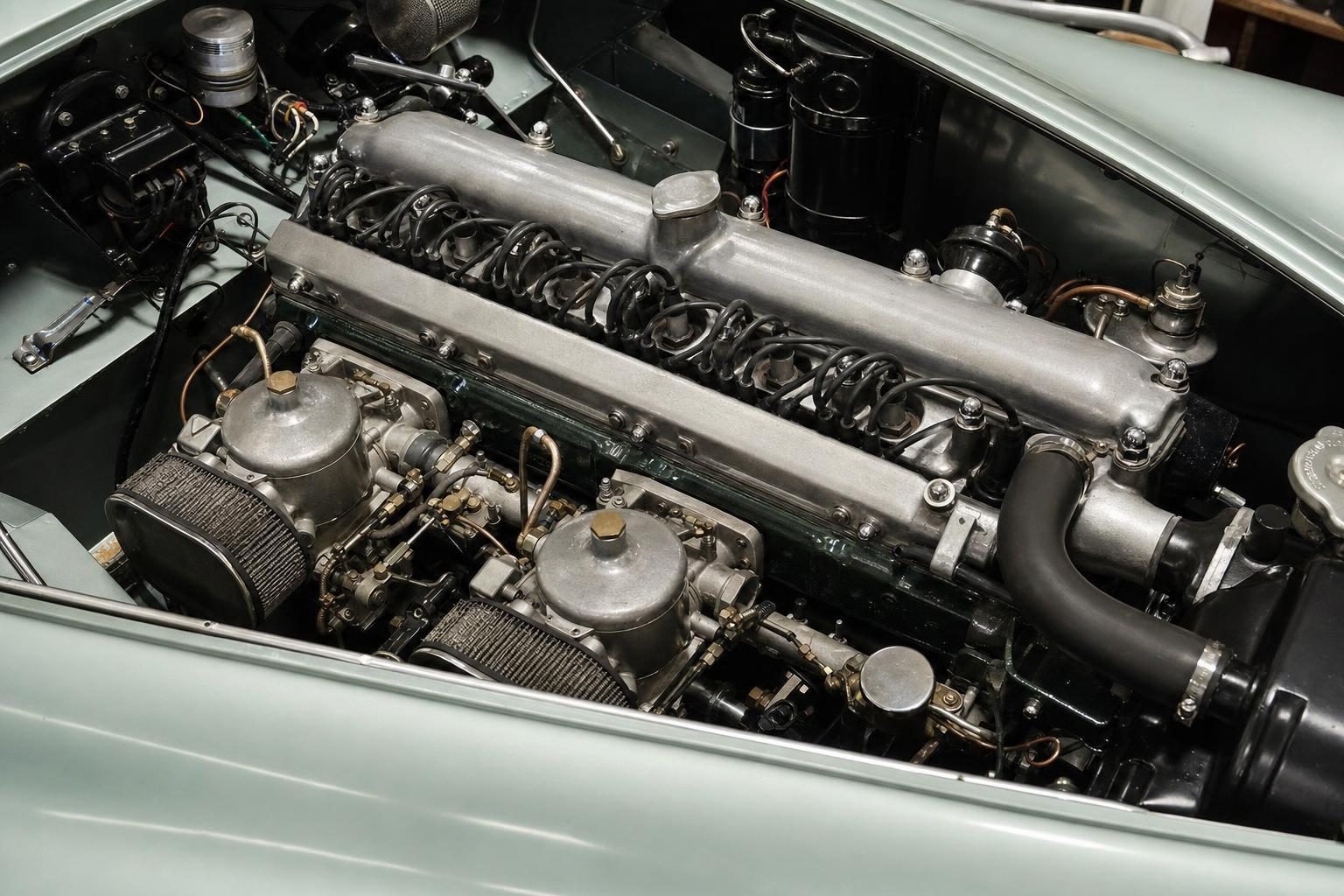
None of this without the 2.6-litre Lagonda straight-six, designed by W.O. Bentley. According to Wikipedia, David Brown acquired Lagonda in 1947 and thereby got his hands on this engine which would become the heart of the DB2. It is an architect’s choice: lengthen inertia, gain smoothness, and offer endurance a durable torque rather than a peaky temper.
In the DB2, this unit set the development axis. It withstood the demands of the 24 Hours, inspired the Vantage option and gave the road version a distinct personality: relatively discreet acoustics, progressive delivery, constant pull. The Lagonda–Bentley lineage also brought a mechanical culture in which precision trumps theatrics.
To grasp the importance of this graft, one can place the DB2 within Aston Martin’s history, which we trace here: Aston Martin history, marque and legend. Read between the lines how the 1947 acquisition ordered the present and planted the future, in particular the ability to bind grand touring and endurance.
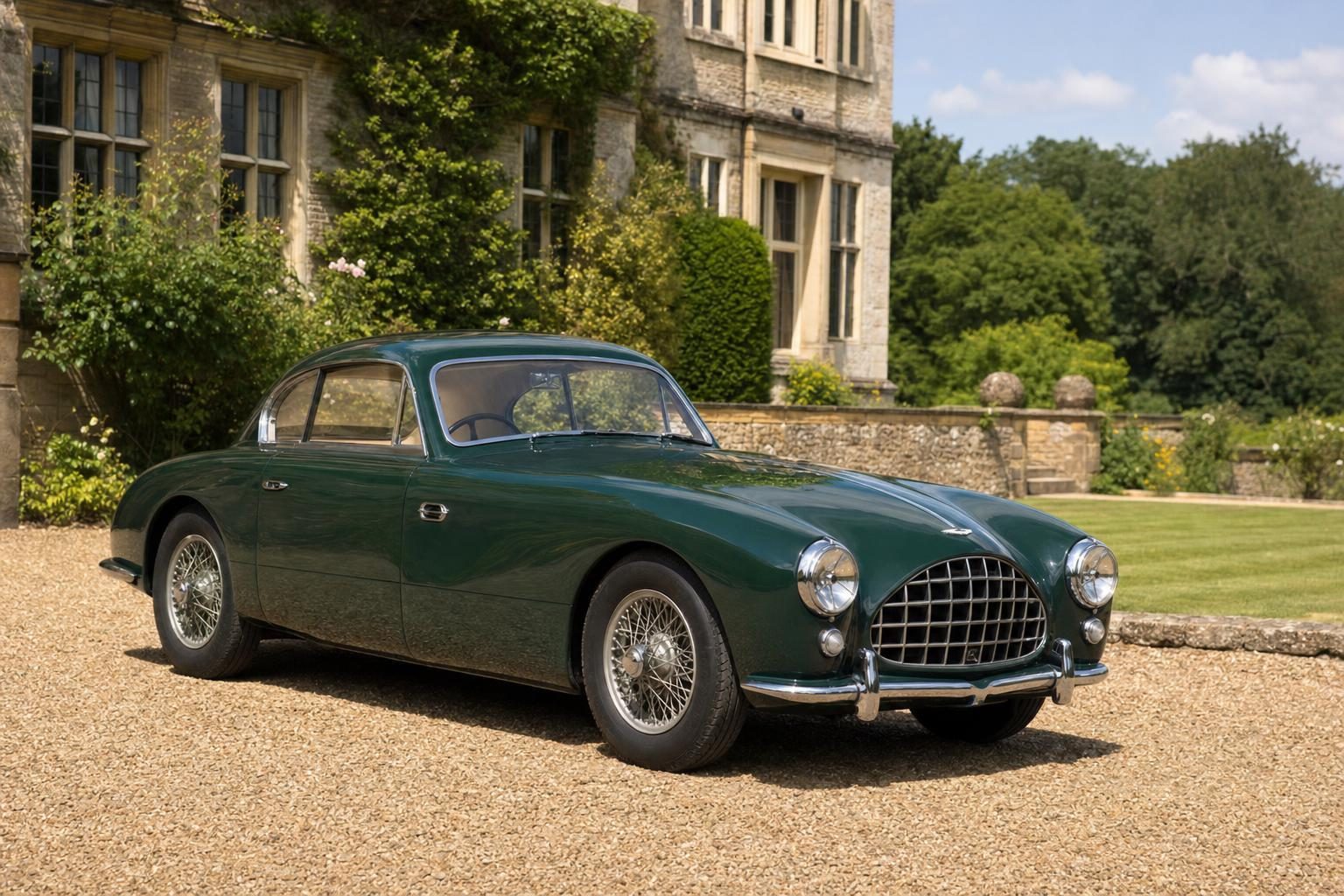
From DB2 to DB3: how racing directly steered road development
The DB2’s trajectory naturally led to the DB3. Without extrapolating beyond the facts, one can say that the 1949–1951 experience validated a principle: start from a coherent base, reinforce it through racing, and transpose, without folklore, what improves reliability, breathing and high-speed stamina. The DB3 would push the slider towards the track, while the roadgoing DB2 capitalised.
This “dual road/circuit logic” set the DB2 apart from many contemporaries. The car was not simply derived from a competition programme: it lived in a constant back-and-forth between pitlane and workshop. The 1950 and 1951 results – class one-two, then 3rd overall – were not trophies on a shelf, but technical milestones.
The 1950 customer could visit an American show, discover the DB2, read that the Vantage option delivered 125 PS, and, in the same breath, see the same lines circle for 24 hours in France. This unvarnished coupling shaped Aston Martin’s reputation: elegance on the road, endurance in competition. Two sides of the same coin.
Conclusion: what DB2 Le Mans engraved in Aston Martin’s DNA
Beyond the numbers – 5th and 6th plus a class one-two in 1950, 3rd and 5th in 1951, 411 units built to 1953, Vantage option at 125 PS – the DB2 Le Mans story fixed a method. Enter early, learn fast, convert honestly to the road model. Seventy years on, the tune is recognisable: an Aston is judged by elegance, but it is won in endurance.
To delve deeper into the DB2’s specifications and journey, consult the maker’s dedicated page Aston Martin DB2 and the historical summaries on Wikipedia in French as well as on Wikipedia in English. Also see our reference feature on the model DB2, history, models and uses.