DB7 Zagato, 99 exemplaires, V12 et AR1 : retour sur la genèse 2000-2002, les choix techniques, la production confidentielle et une cote encore singulière.
DB7 Zagato is the story of a 99-unit coupé that encapsulates the 2000s appetite for well-conceived limited runs: unveiled in Paris in 2000, built at a gentle pace and already a collector’s item at launch. We revisit how orders were sealed within days, what Milan tweaked on the 6.0-litre V12, the discreet AR1 offshoot and today’s values versus the standard DB7 Vantage and the DB9.
Paris 2000: how all 99 orders were signed before the end of the show
The September 2000 Paris Motor Show provided the stage for the official resumption of Aston Martin–Zagato dialogue, paused since the so-called 1991 Sanction II series. According to information compiled by EN Wikipedia on the model, the 99 planned examples of the DB7 Zagato were all reserved before the show closed. For a marque then producing the DB7 in “series” form, the speed of take-up validated both the design and the strategy of rarity.
This figure of 99, frequently cited by the brand’s general sources, was more than a marketing device. It created a discreet sense of urgency: enough cars to be seen, too few to become commonplace. The positioning was clear: a coupé with specific bodywork, signed by a historic Milanese coachbuilder, delivered to clients in the order of purchase contracts. A classic method, executed here with formidable efficiency.
This success illuminated the market at the time: informed buyers were ready to commit quickly to a limited series, provided that Aston Martin DNA was legible and the Zagato touch added just the right tension to the lines. The DB7 Zagato ticked those boxes: a quick profile, shortened tail, voluptuous haunches, and a “coachbuilt” spirit claimed without grandiloquence.
The DB7 Vantage’s 6.0-litre V12: what Zagato kept and what it changed
Under the bonnet, the base was familiar: the 6.0-litre V12 from the DB7 Vantage, quoted at around 435 PS according to the EN Wikipedia sheet. Milan did not reinvent the engineering: the value of such a project lies in the coachwork, the mass tuning and the feel of a “coachbuilt” object. However, the aluminium bodywork – a specificity of this model – altered perception: rigidity, a crisper soundtrack, and a tightened gran turismo character.
Assembly was carried out at Bloxham, the factory already responsible for the DB7. This choice ensured continuity of processes and perceived quality, while integrating the formed panels for the specific body. In short, what Zagato kept: the proven architecture and mechanicals. What Zagato changed: the proportions, the skin, and therefore the sense of rarity, without breaking with the grand touring comfort expected of an Aston.
At the wheel, owners report – broadly consistently across general sources – an experience very close to the DB7 Vantage, but with the visual signature and extra flutter of eyelashes that comes with bodywork shaped for 99 people. In the Aston universe, that is often enough to move the needle of desire. For the curious, our dedicated DB7 Zagato model sheet sets this coupé within the marque’s chronology.
The DB7 AR1 (American Roadster): the variant few sources mention
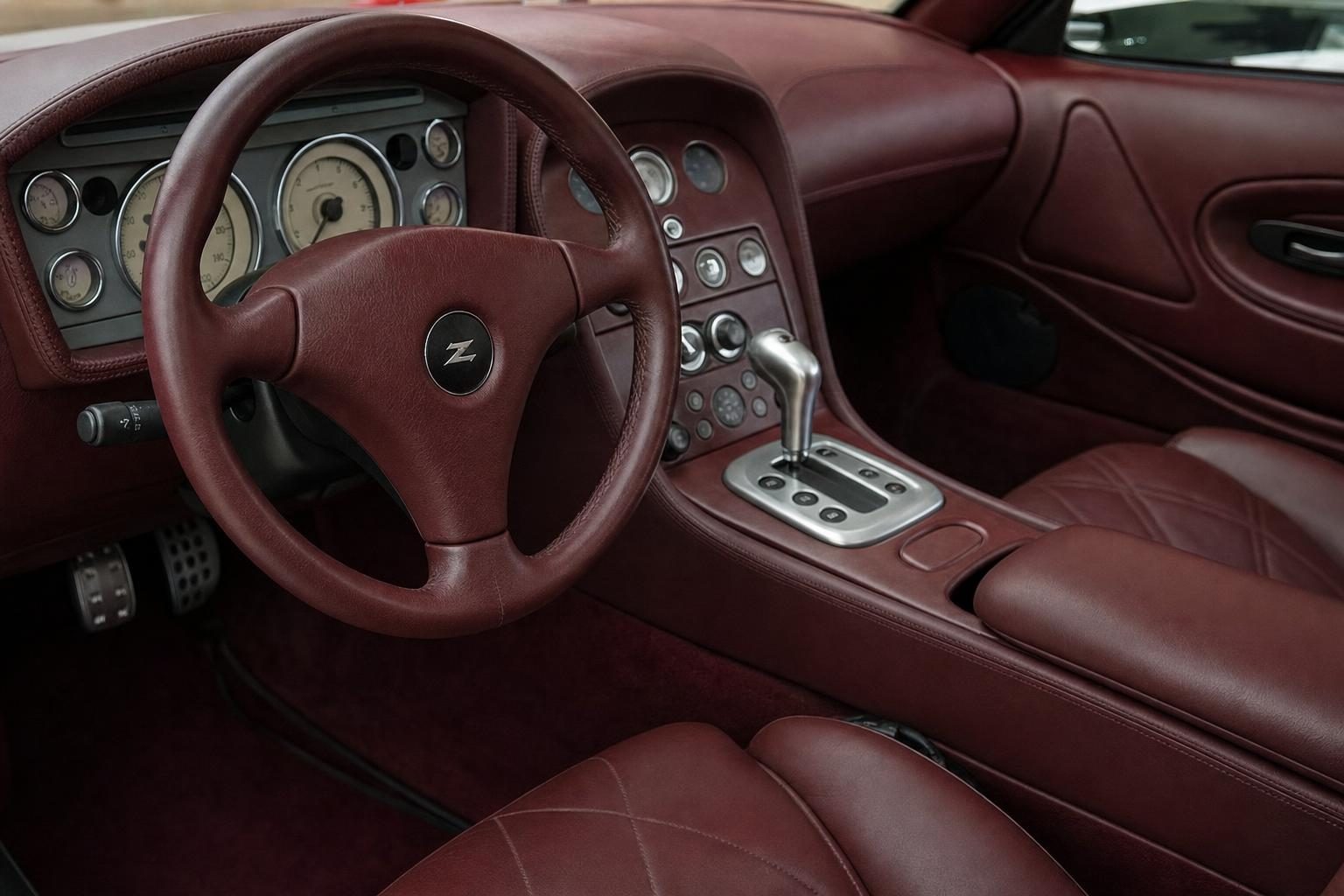
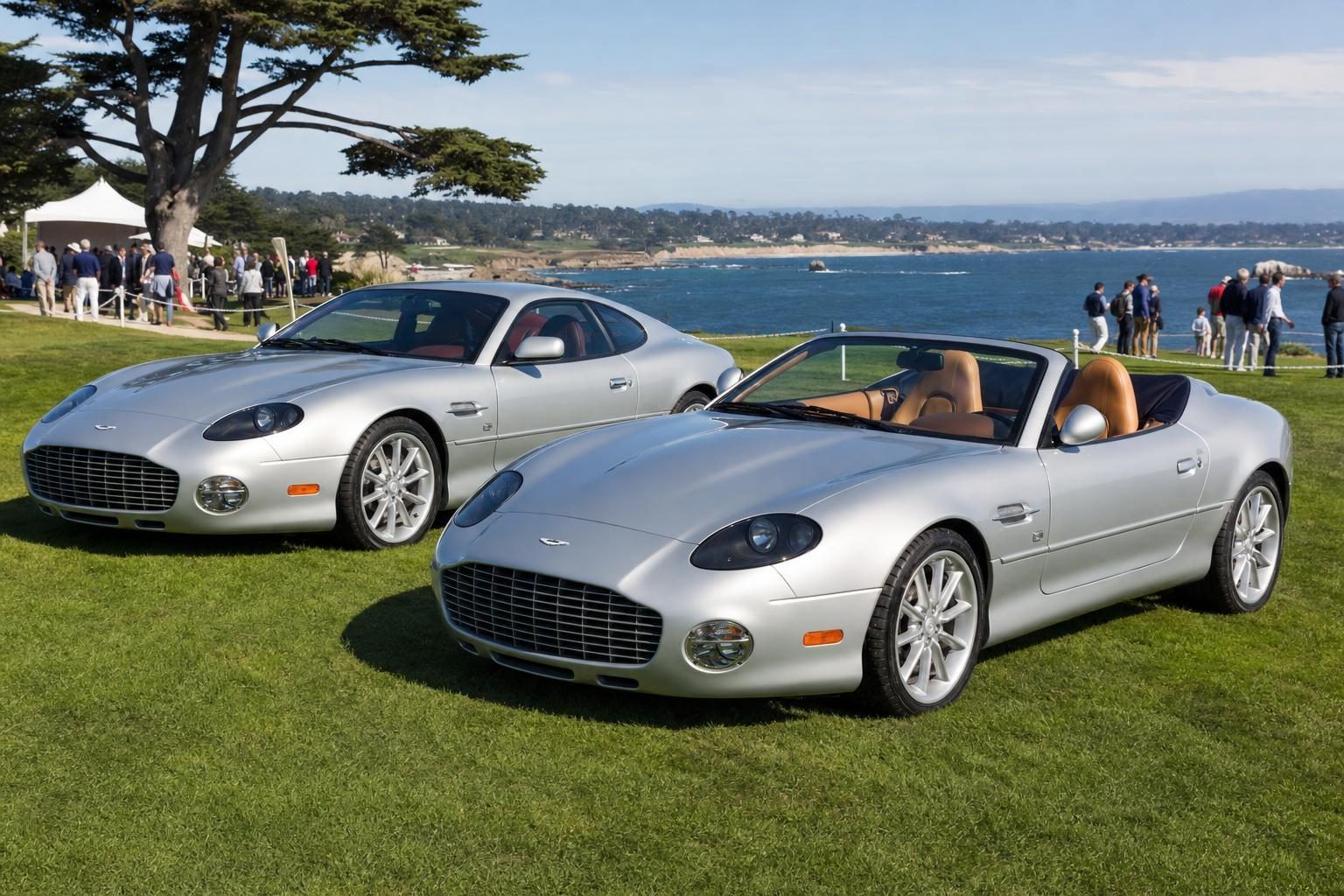
In parallel with the coupé, a roadster derivative was developed: the DB7 Zagato AR1, for American Roadster. Intended primarily for the North American market, it was produced in around 99 examples as well, according to general brand information cross-checked by EN Wikipedia. Seldom cited, this chapter nonetheless shows the scope of the project: beyond a styling gesture, it was a genuine twin-bodywork programme designed for two clienteles.
This roadster took a more hedonistic stance: the spirit of the DB7 remained, as did the timbre of the V12, but the experience was lived under open skies. The AR1 confirmed that the Aston Martin–Zagato collaboration was no mere show exercise: it gave birth to two body styles, each pulling on the same thread of rarity.
To place the AR1 within the lineage, it is worth consulting the reference page on the DB7 Zagato and, on the official range side, the presentation of Aston Martin models. Enthusiasts wishing to trace the technical origins can revisit the DB7 model sheet and the history of the marque’s most-produced model.
The DB7 Zagato’s values today versus the standard DB7 Vantage and the DB9
On the used market, DB7 Zagato values sit above a standard DB7 Vantage, but below a well-kept DB9. That is the consensus of general sources; beyond that, caution: transactions are rare and therefore hard to quantify. Rarity attracts, but it also makes valuation trickier, since each example has its own story.
This positioning is logical. Against the DB7 Vantage, the Zagato-bodied coupé adds the “coachbuilt” dimension and the run of 99, two decisive ingredients for collectors attentive to a project’s authenticity. Against the DB9, newer and more numerous, the hierarchy reflects the pull of modernity and ease of use, even if the Milanese signature retains a distinctive charm.
At brand level, this hierarchy says the essentials: a DB7 Zagato concentrates the virtues of a well-sorted DB7, augmented by an auteur body. It does not seek to rival the DB9 on numbers; it claims something else: rarity, line, and the discreet satisfaction of driving one of the 99.
To set these values in the long view, one can also consult the page devoted to the DB7, which sheds light on the transition to the next generation. Reading across helps explain why the market supports the Milanese coupé while also rewarding the modernity of a well-maintained DB9.
Conclusion: DB7 Zagato, a return to auteur coachwork that hit the mark
The DB7 Zagato, unveiled in Paris in 2000 and produced in 99 examples, proves that marrying a proven technical base with dedicated aluminium bodywork can seduce immediately. Orders signed before the end of the show, the DB7 Vantage’s V12 retained and staged differently, the AR1 derivative, and a singular set of values today make a coherent picture: that of a collaboration relaunched with precision.
At the turn of the 2000s, this model captured the market’s desire for credible limited runs, made to be driven as much as collected. Twenty years on, it remains a refined reading of Aston Martin’s DNA by Zagato: few effects, plenty of intent, and that very British way of letting the facts speak.