grand tourisme, Vanquish Mk1 vs Mk2 : trois différences clés entre fabrication, transmission et V12 pour guider un choix de collectionneur éclairé.
Grand touring at Aston Martin has never been a simple question of power. Between Vanquish Mk1 (2001–2007) and Vanquish Mk2 (from 2013), confusion lurks on the market; yet three structural gaps clearly steer the choice for a savvy collector. We review them, without grandiloquence, to place each generation in the history and usage of a grand tourer worthy of the name.
Newport Pagnell versus Gaydon: how birthplace changes construction
According to Wikipedia, the Vanquish Mk1 was assembled at Newport Pagnell from 2001 to 2007, while the Mk2 was born at Gaydon from 2013. Two addresses, two eras: the former points to Aston Martin’s historic workshop, the latter to the modern industrial tool. For a grand tourer collector, this simple fact already frames the buying and ownership experience.
Newport Pagnell is heritage and a measured cadence. The Mk1 thus bears the hallmark of a more artisanal production cycle, rooted in tradition. By contrast, Gaydon expresses the ramp-up and the controlled standardisation of a more recent era. In practice, we are not talking absolute value, but a construction character that one chooses as much as one buys.
This geographic shift is also a cultural one: from a relaunch flagship to a statement coupé. Reading the Vanquish dossier on Wikipedia sheds light on this passing of the baton, useful for framing expectations and uses of a long-haul grand tourer.
The 2001 ASM/SSM automated manual: pioneering yet criticised, and why the Mk2 changed tack
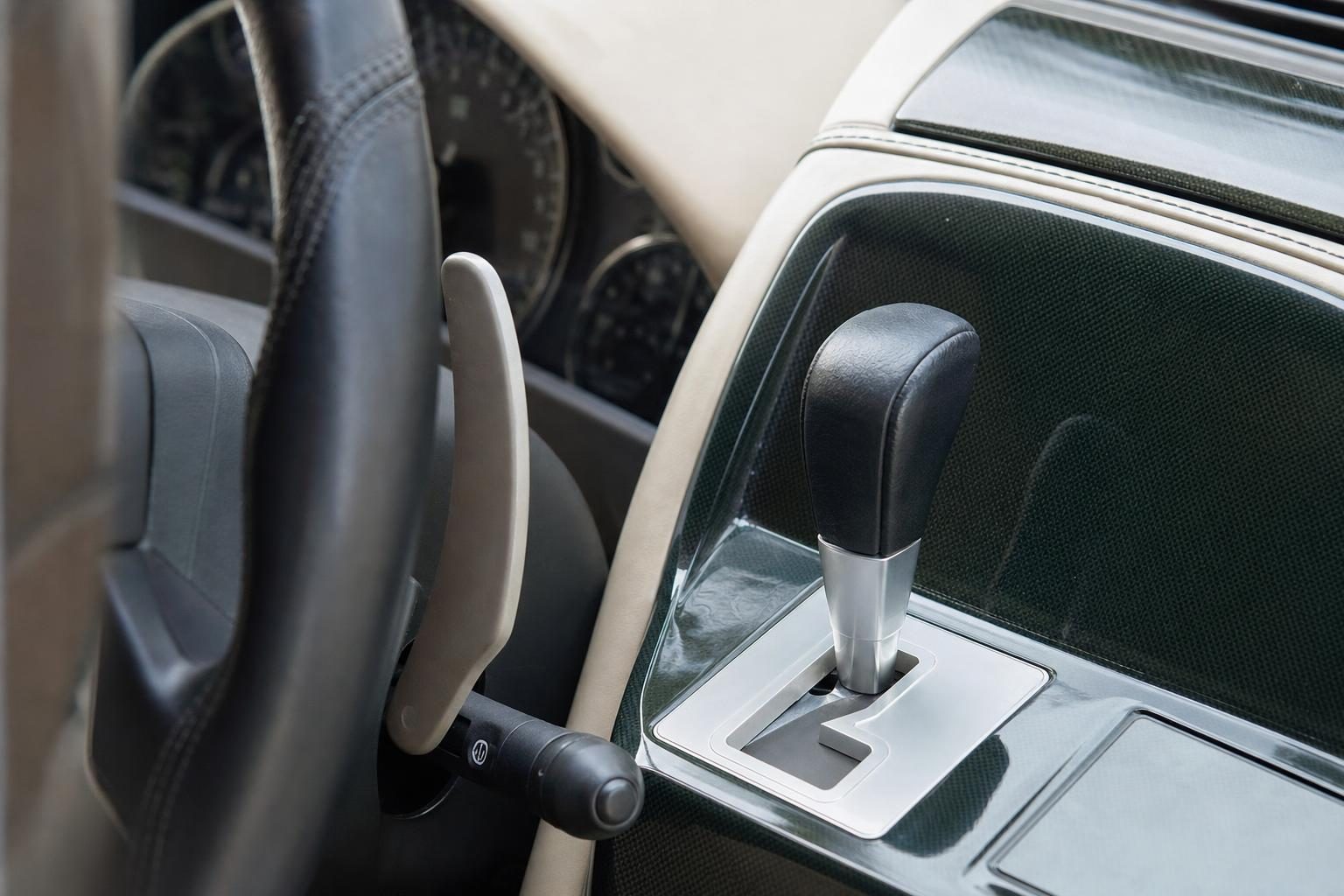
According to Aston Martin’s historical page on the Vanquish, the Mk1 inaugurated an electrohydraulically actuated manual transmission, known as ASM/SSM (Auto Shift Manual / Select Shift Manual). A bold choice at the time: the rigour of a manual gearbox, the ease of automation, in theory. In reality, demanding calibration and sometimes jerky manners sparked debate among purists.
The Mk2 changed school with a Touchtronic automatic, clearly positioning the car for a smoother grand touring use without denying performance. The message is clear: day to day and over long distances, the second generation prioritises smoothness and consistency, where the Mk1 offers a more mechanical experience, sometimes more involving, sometimes more demanding.
To clarify each generation’s specifics, the manufacturer resource devoted to the period Vanquish and Vanquish S recalls the nature of this ASM/SSM and the later shift to an automatic, a useful marker before a test drive or purchase.
The naturally aspirated 6.0‑litre V12 versus the revised 6.0‑litre V12 of the Mk2: same initials, different characters
On the powertrain, both generations share the 6.0‑litre V12 architecture, but not the same temperament. According to Wikipedia, the Mk1 develops 460 PS, lifted to 520 PS on the Vanquish S, with a naturally aspirated, forthright tone. The Mk2 adopts a revised version of the same unit, fitted with dual variable valve timing (dual VVT) and raised to 565 PS, signalling heightened mechanical refinement.
At the wheel, this translates into two readings of the grand tourer. The Mk1 favours attack and a more “analogue” climb to the red line, while the Mk2 capitalises on ease, availability and breadth of use. Same displacement, same nobility, but a score rewritten for long-distance travel.
To place these choices within the line of Aston Martin flagships, the “Vanquish at 25” dossier sets three generations of performance and engineering in perspective: read it on the official Aston Martin media site, alongside the Wikipedia article on the Vanquish.
Ian Callum’s style versus Marek Reichman’s: two readings of Aston Martin’s visual DNA
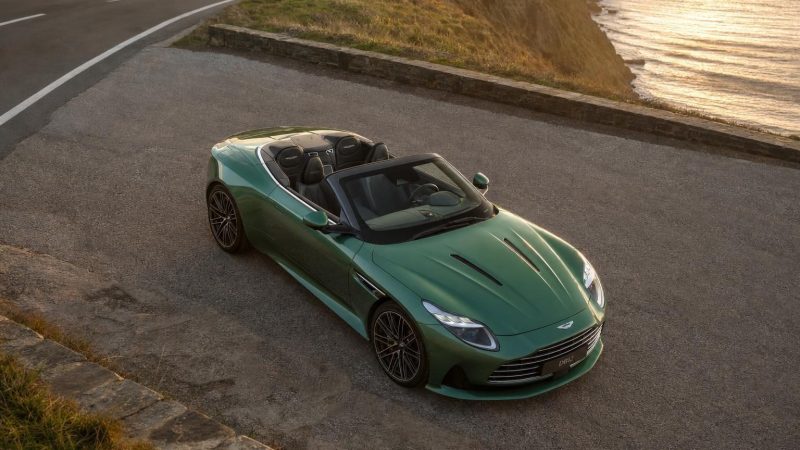
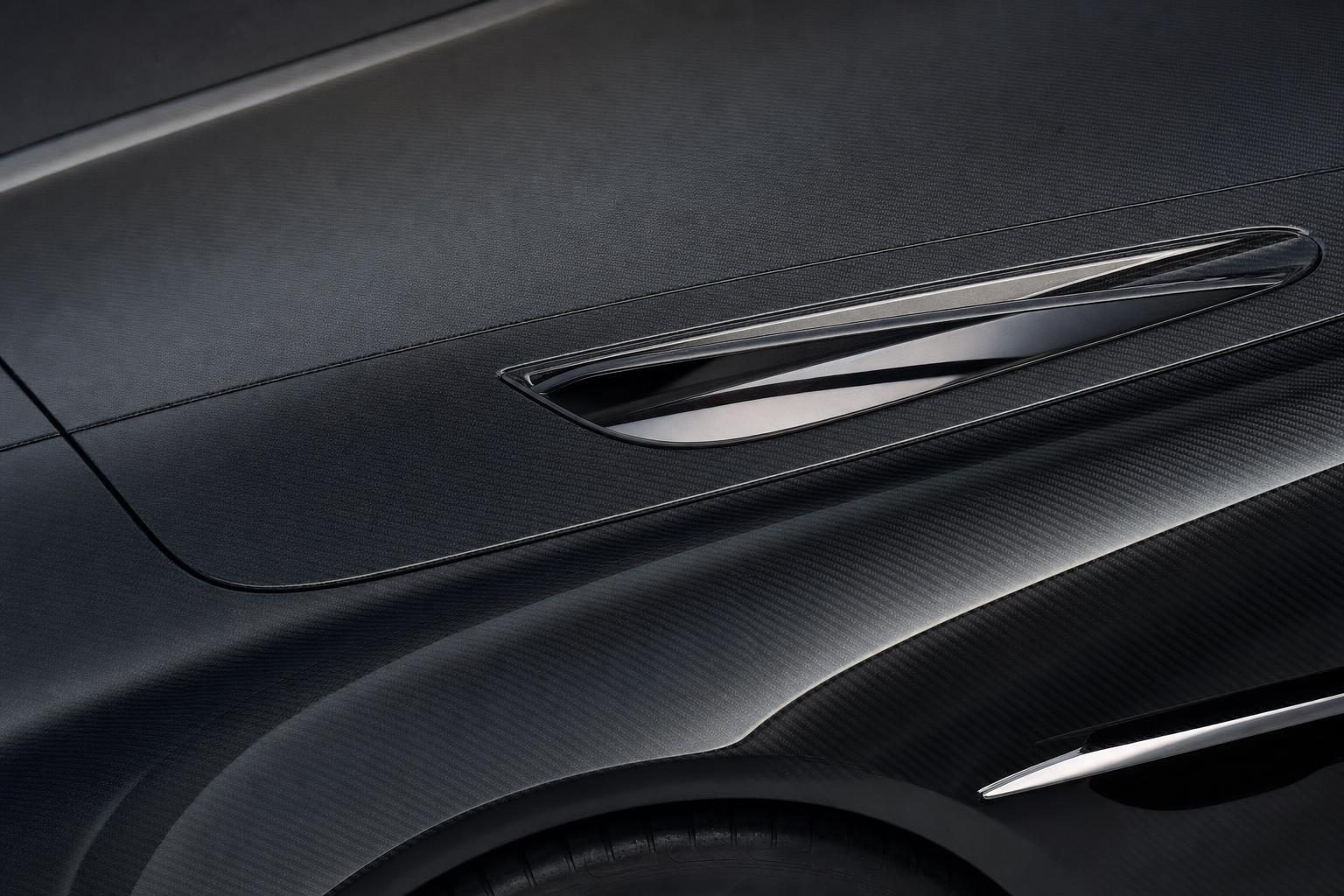
The Mk1 is signed by Ian Callum; the Mk2, Marek Reichman (source: Wikipedia). From the outside, the kinship is obvious, but the intent differs. The former stands out through its status as a break with the past in the early 2000s; the latter embraces the culmination of a modernised design language, influenced, according to Wikipedia, by the One‑77 and its aerospace-inspired carbonfibre panels.
In a collection, one speaks of revival, the other of assurance. The Mk1 appeals with its pioneering silhouette, the Mk2 with its maturity and executional detail. Two interpretations of the same badge, useful for choosing the face of your grand tourer according to aesthetic sensibility.
The kinship with the One‑77 finally underlines the Mk2’s positioning: an upmarket synthesis of the house codes, distilled for the road with advanced materials. The DNA remains common, the staging evolves.
What each generation says about its moment: 2001 as turning point, 2012 as confirmation
The timeline tells the context. The Vanquish Mk1, produced from 2001 to 2007 at Newport Pagnell (Wikipedia), embodies a revival unafraid to dare: automated manual transmission, a naturally aspirated V12 with unfiltered character, a flagship stance. Grand touring here is still very “mechanical”, sometimes abrupt, often exhilarating.
The Mk2, launched in 2013 at Gaydon (Wikipedia), confirms a strategy: overall amenity, a fully assumed automatic, a revised V12 that is more powerful and more supple. A coupé to cover large distances at a high pace with newfound serenity, extending the grand touring ideal through consistency rather than provocation.
Before deciding, a tour of our dedicated dossiers helps to frame the test drive and the budget: the detailed Vanquish Mk1 spec sheet, the Vanquish Mk2 presentation, and our take on the V12’s technical innovations in 2024.
Conclusion: choose your grand tourer by use and sensibility
Between Newport Pagnell and Gaydon, ASM/SSM and Touchtronic, “original” naturally aspirated V12 and revised V12, the grand tourer choice is made without dogma. The Mk1 brings the appeal of a watershed piece and the mechanical thrill; the Mk2 offers the poise, power and ease of an assured maturity. The ideal remains to try both, with a clear view of what you expect from a grand tourer day to day as well as in a collection.