VH platform, la stratégie d’Ulrich Bez déclinée en 5 familles, a réduit les temps d’assemblage et accru la rigidité ; un châssis clé de 2003 à 2016.
The VH platform marked a strategic turning point for Aston Martin: in 2001, Ulrich Bez bet on a common architecture capable of carrying an entire range and putting Gaydon back on a sound industrial footing. Between 2003 and 2016, this bonded aluminium base indeed gave rise to five families of series-production models and a few limited runs, while cutting assembly times and increasing rigidity. Here, model by model and metric by metric, is what this VH platform really changed.
Ulrich Bez in 2001: the bet on a single architecture for the entire Gaydon range
Appointed CEO in July 2000, Ulrich Bez launched in 2001 the development of a unique modular architecture for vehicles of different sizes. According to Wikipedia (VH platform), the ambition was clear: a common technical base, adaptable vertically and horizontally, to rationalise costs and speed up development. The VH platform was born from this logic: a bonded and riveted aluminium skeleton, designed to last and to adjust to several wheelbases and widths.
This VH platform was not intended to be a simple platform for one model, but the foundation of almost all series production at Gaydon for more than a decade. The challenge was as much industrial as product-related: reduce complexity, share sub-assemblies, and ensure dynamic coherence while preserving the brand’s distinctive elegance.
The strategy would be proven on the factory floor. The stated assembly target dropped to 30 minutes per unit for key structural modules, versus 4 hours previously on the earlier-era V12 Vanquish, again according to Wikipedia (VH platform). The VH platform thus provided a framework to hold that course, without betraying the hand-built ethos so dear to Aston Martin.
DB9, Vantage, DBS, Rapide, Vanquish: how one aluminium chassis serves 5 different silhouettes
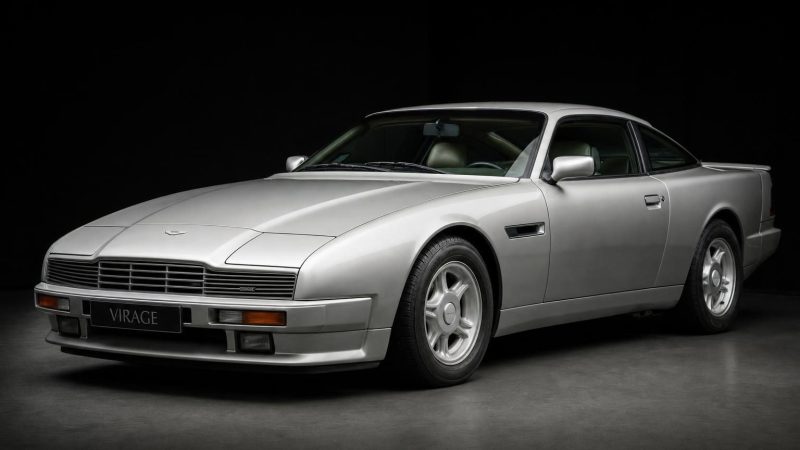
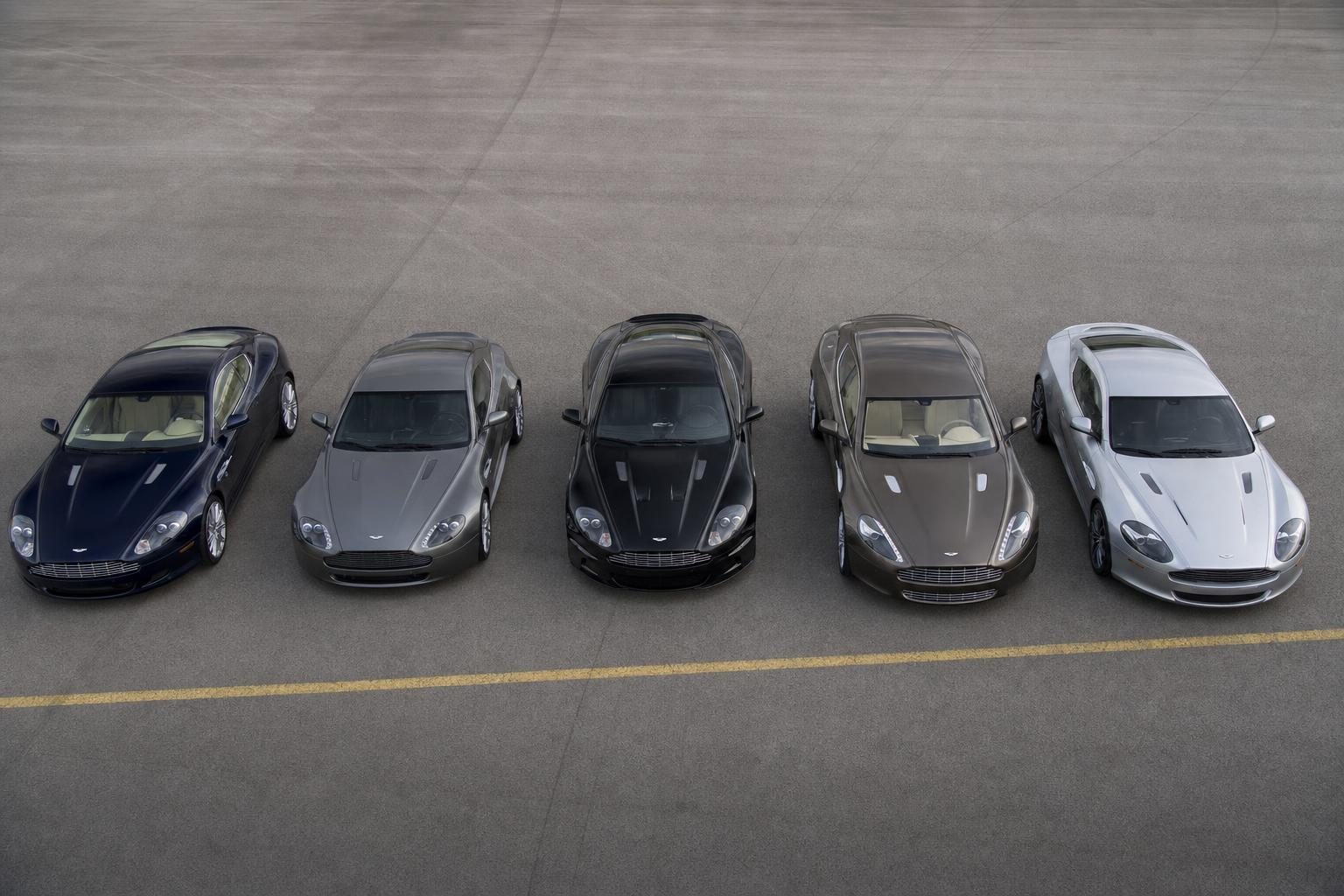
From 2003 to 2016, the VH platform underpinned almost all series-production Aston Martins: DB9, Vantage, DBS, Rapide and Vanquish. It also served as a base for limited-run derivatives, including the Virage, DB10 and Lagonda Taraf, notes Wikipedia (VH platform). In practice, one and the same architecture, adjusted proportions, and a formal vocabulary that remains faithful to Gaydon’s identity.
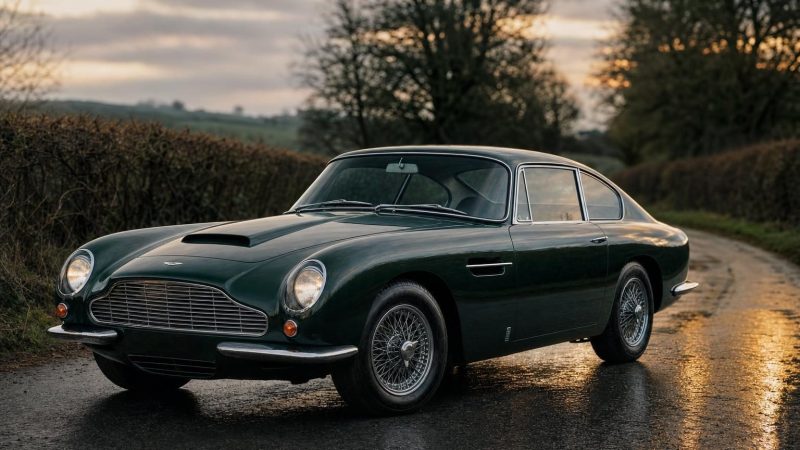
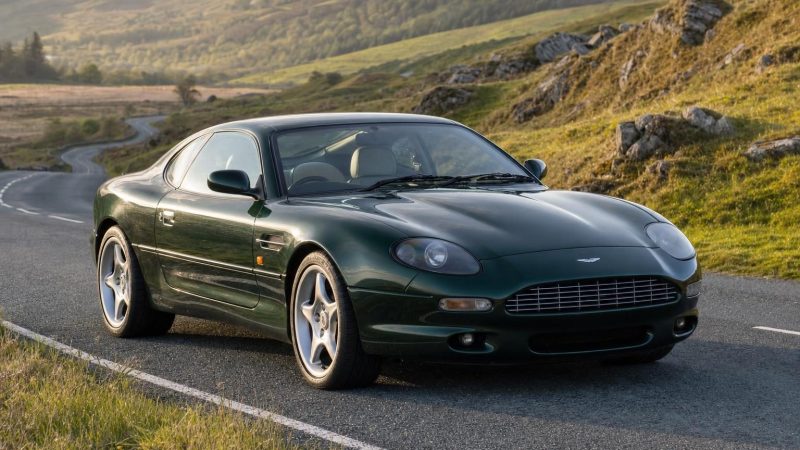
The DB9 kicked things off at the 2003 Frankfurt Motor Show, with production launched in January 2004 at Gaydon. It would remain the backbone of the VH platform: the coupé body weighs 25% less than that of the DB7 while offering double the torsional rigidity, according to the official release Aston Martin (DB9). Over twelve years, up to the final DB9 GT, 16,500 examples rolled off the lines (figure mentioned by Aston Martin – past models: DB9 and Wikipedia via the DB11 page), a longevity that validates the base’s modularity.
The 2005 Vantage inaugurated the 2nd generation of the VH platform, more compact, while the 2012 Vanquish adopted the 3rd generation, reinforced by a carbon subframe, according to Wikipedia (VH platform) and Wikipedia (Vanquish 2012). 2+2 coupés, strict two-doors, four-door Rapide style or high-performance GTs: the same framework, several silhouettes, a shared driving signature.
For readers wishing to dive into the icon that launched the Gaydon era, our DB9 feature provides additional insight into the model’s genesis and its place in Aston Martin history: the DB9 and the aluminium platform, history and stakes.
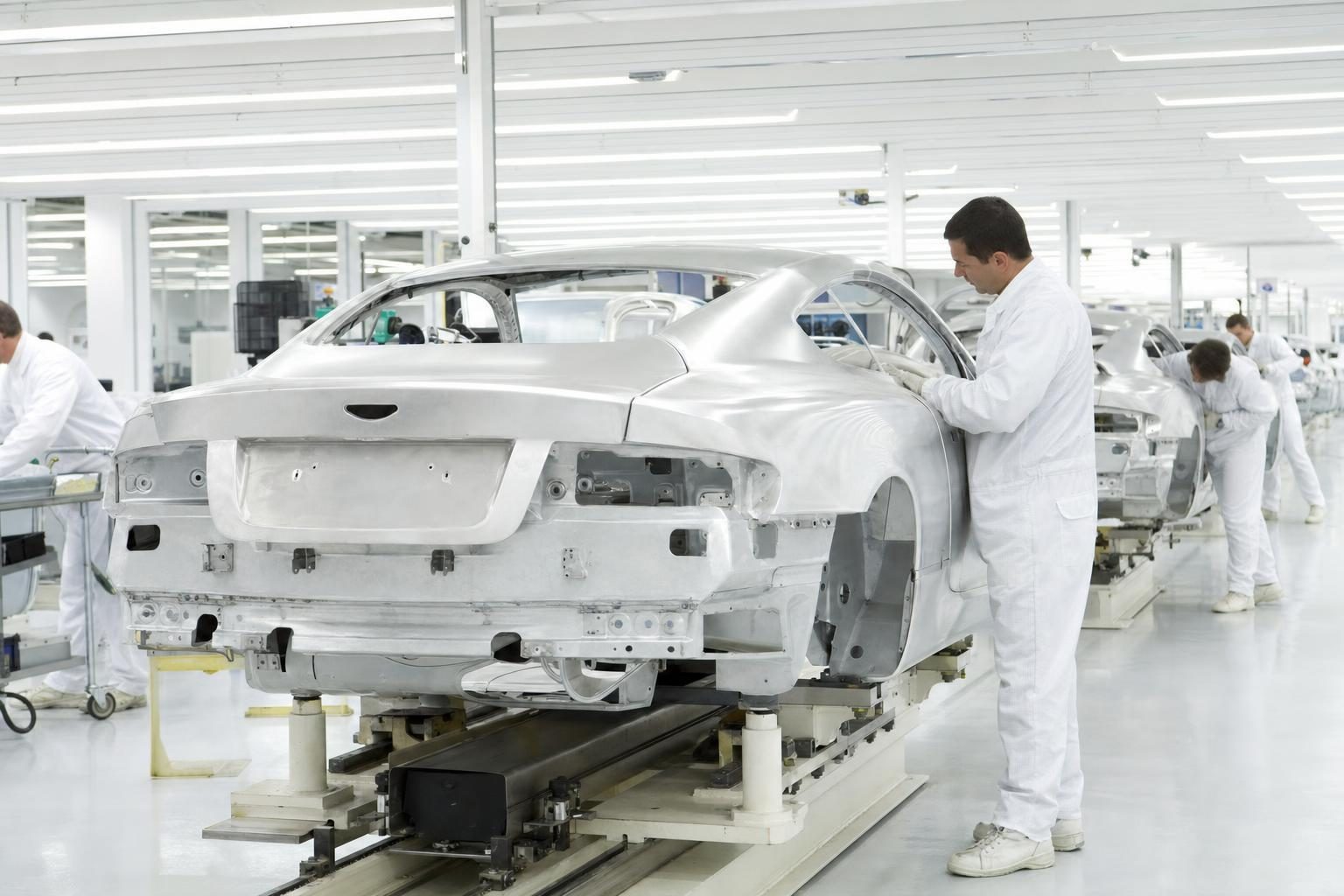
Bonded aluminium and composite: what the VH platform changed in Gaydon’s assembly process
The heart of the VH platform is bonded and riveted aluminium. This technique reduces the number of welded parts and simplifies joints, which directly supports the industrial objective: target 30 minutes of assembly per unit for structural modules, versus 4 hours previously on the V12 Vanquish, according to Wikipedia (VH platform). Operational repeatability improves, and tooling becomes standardised from one model to another.
As the VH platform evolved, the use of composite components expanded: the 2012 Vanquish, third generation, added a carbon-fibre subframe to increase local rigidity without excess weight, according to Wikipedia (Vanquish 2012). The strategy remained the same: use aluminium for the primary structure and reserve composites where the gain is decisive.
Practically, the VH platform translates on the line into shared jigs and assembly cells. Outer panels vary, structural modules converge. It is this discreet parts-sharing, invisible at first glance, that facilitated the coexistence of several body styles at Gaydon without diluting each model’s personality.
Rigidity, weight, safety: the 3 key metrics of a platform designed to last 13 years
Three metrics guided the VH platform: rigidity, mass and safety. The textbook case remains the DB9: 25% lighter than the DB7 at body-in-white level, and twice as torsionally rigid, according to Aston Martin (DB9). This structural advance translates into a stable base for road behaviour and expansion potential towards higher-performance versions.
The drop in mass combined with the rise in rigidity also opens integration margins for safety equipment. With the VH platform being common, validations of energy absorption and impact load management could be capitalised from one model to another. Here again, the benefit is twofold: engineering efficiency and homogeneity of results.
The VH platform’s durability is evident in its timeline: launched in 2003, it supported the main range until 2016 for models like the DB9 and Lagonda Taraf, then until 2018 for the last Vantage and Vanquish according to Wikipedia (VH platform). Thirteen to fifteen years of service, depending on the silhouette, without reneging on rigidity and safety standards: longevity as proof.
For those who closely follow Gaydon’s lineages, we offer detailed model portraits, notably the Vanquish (MK2) of 2012 and its carbon evolution and the DB9, pioneer of the aluminium era, to put the measurable contribution of the common platform into perspective.
DB10 and Lagonda Taraf in limited production: two discreet extensions of a platform at the end of its life
At the end of its cycle, the VH platform still served as a base for two low-volume projects. The DB10, designed for cinema, and the Lagonda Taraf, a luxury saloon, discreetly extended the architecture beyond 2016, again according to Wikipedia (VH platform). These programmes illustrate the final flexibility of a base capable of stepping outside strict series production.
The Taraf also marked the official twilight of the VH platform on the four-door side in 2016, while other silhouettes, such as the Vantage and Vanquish, continued until 2018 before handing over to a new generation. A gradual transition, true to Aston Martin’s engineering culture: finish properly what you start.
In design terms, the DB9, pioneer of the era, remains an interesting case: Ian Callum and Henrik Fisker are both credited depending on the sources, their contributions coming at different stages of the project, notes Wikipedia (VH platform). A shared parenthood that does nothing to undermine the VH platform’s technical clarity.
Conclusion — VH platform: the architecture that set Gaydon back on time
In thirteen years of service, the VH platform enabled Aston Martin to build five major families — DB9, Vantage, DBS, Rapide, Vanquish — and orchestrate limited derivatives such as the Virage, DB10 and Lagonda Taraf, according to Wikipedia (VH platform). The bonded aluminium framework and targeted use of composites supported a threefold promise: reduce assembly times, increase rigidity, and share parts intelligently across silhouettes.
The demonstration is as quantitative as it is qualitative: 30 minutes targeted for modular assembly where the former V12 Vanquish required 4 hours; 25% less mass and double the torsional rigidity on the DB9’s body compared with the DB7, according to Aston Martin (DB9). All concrete indicators that explain the VH platform’s longevity until 2016, or even 2018 depending on the models.
For the brand, the VH platform’s legacy comes down to a simple lesson: a well-born architecture, evolution-friendly and sparing in complexity, can save a factory and give coherence to a whole decade of cars. Ulrich Bez’s bet delivered on its promises, with the elegance of a chassis that preferred restraint to showiness.