DB9 design, entre Callum et Fisker : chronologie du projet AM802, rôle du Jaguar Design Centre et contraintes de la plateforme VH pour comprendre la paternité.
DB9 design: a question that seems simple, yet the answer is nuanced. Who truly shaped the Gaydon coupé revealed in 2003? By tracing the documented timeline of project AM802, the handover between Ian Callum and Henrik Fisker in 2001, and the role of Jaguar’s Whitley Design Centre, we find shared parentage rather than an ego duel. Add the demands of the VH platform and you get a final design where engineering weighs as heavily as the pen. What follows recentres the facts and lets the style speak for itself.
Ian Callum and project AM802: what he had drawn before Fisker arrived
Before 2001, Ian Callum was leading project AM802, the future production coupé built at Gaydon. According to the Wikipedia page dedicated to the DB9, his initial appointment as design director allowed him to set the stylistic direction, while splitting his time with Jaguar after the sudden passing of Geoff Lawson in 1999. This set-up explains an early, clearly defined design language: GT proportions, long bonnet, set-back cabin and a grille faithful to Aston Martin’s DNA.
These milestones did not come out of nowhere: continuity with the DB7, while aiming for a technical step up, created a visual foundation. Callum anchored project AM802 in understated elegance, ready to accommodate an entirely new architecture. The approach was pragmatic: a pared-back, readable design, able to survive back-and-forth between studios and the constraints to come.
This early work was not an end point, but a template. When the design leadership changed, it offered a sufficiently clear canvas to be taken forward without betraying the initial intent. This is one key to the DB9 design debate: the “first draft” mattered.
Henrik Fisker appointed design director in 2001: what this change altered in the final drawing
In 2001, Henrik Fisker took over as head of design. Wikipedia sums up the direct effect of this appointment: it “allowed Callum to focus primarily on Jaguar”. In practice, Fisker inherited an advanced project and took it through to reveal. His contribution can be read in the clean-up of the volumes, the honing of the surfaces and the precision of body details, in line with the initial vision but with a tauter execution.
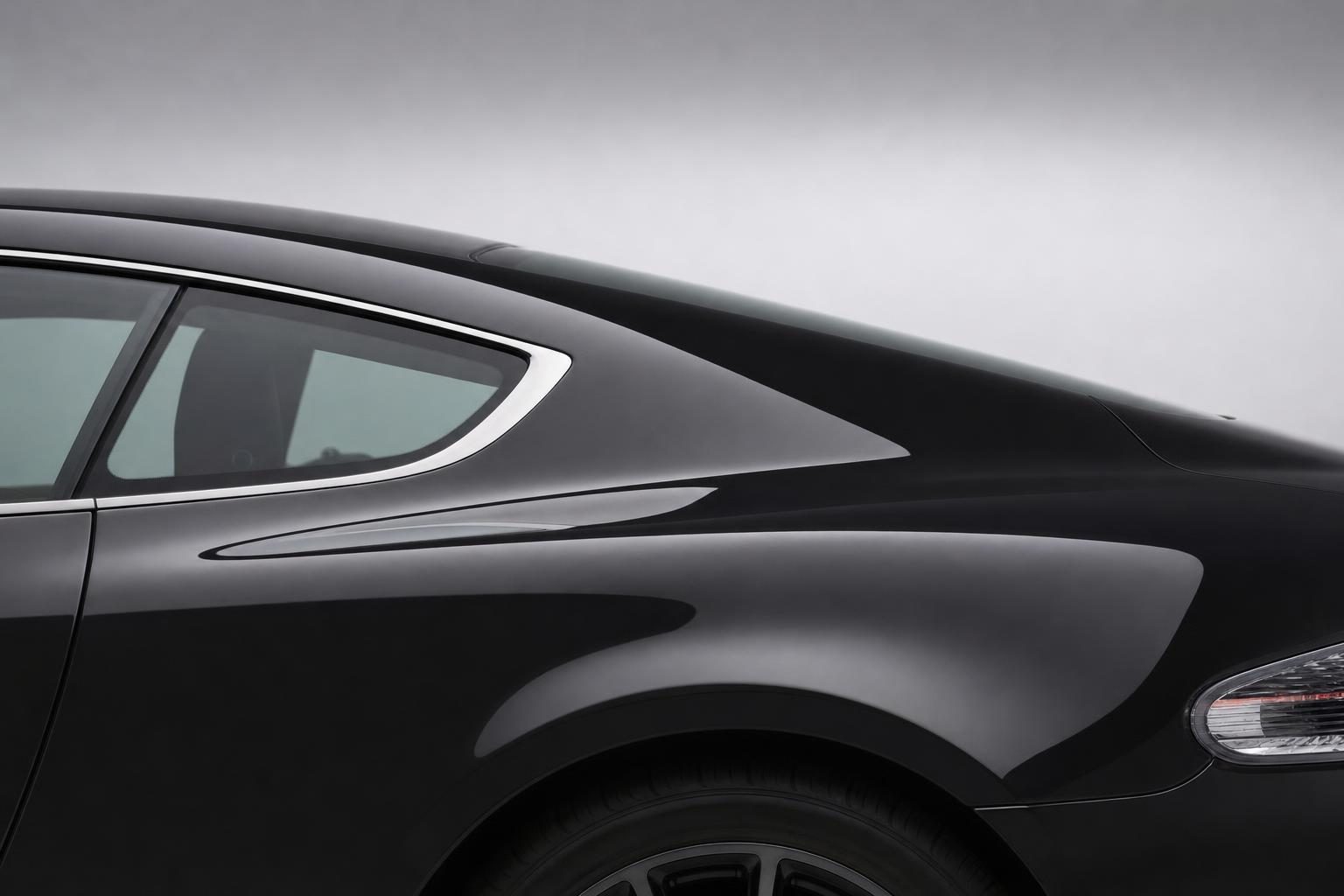
The final DB9 design thus draws on continuity guided by a new eye. Picking up a well-structured package, Fisker consolidated the proportions and clarified the flank graphics, while ensuring manufacturability. The handover did not erase the previous pen; it tightened it. This layering of creative input explains why assigning sole authorship sits uneasily.
The result would be unveiled at the Frankfurt Motor Show in 2003, before production started at Gaydon in January 2004, as specialist Nicholas Mee recalls. The gap between intent and realisation remained narrow: a sign that the aesthetic course was held despite the change of hand.
The Jaguar Design Centre at Whitley: why the DB9 was largely conceived outside Aston Martin’s walls
Another piece of the puzzle: much of the work took place at Jaguar’s Whitley Design Centre, according to Wikipedia. Ford’s industrial context, as the then-parent company, rationalised resources and talent. It becomes clearer how designers juggled programmes and brands, and why the DB9 design was refined in a shared location.
This creative geography had consequences: shared methods, tools and engineering standards fostered rapid surface maturation and coherence with production processes. Working at Whitley also meant benefiting from a well-oiled validation chain, from physical models to digital, which served final precision without diluting Aston Martin’s identity.
Far from a paradox, this detour via Whitley highlights the robustness of project AM802: a studio seasoned in British GTs, close proximity to engineering teams, and governance able to preserve the brand’s DNA within a pooled framework. Aesthetic singularity does not depend on the postcode, but on the clarity of the brief and the discipline of execution.
The VH platform and its constraints: how the architecture weighed on stylistic choices
The DB9 inaugurated the VH platform and became the first car assembled at Gaydon, as the official Aston Martin spec sheet notes. This modular aluminium structure shaped the footprint and proportions: wheelbase, tracks, scuttle height and mechanical hard points guided the designer’s hand. The DB9 design was therefore born as much from technology as from the stroke of a pen.
Figures published by Aston Martin Media set the scale of ambition: a body 25% lighter than the DB7’s, with torsional rigidity doubled. These gains imposed material and assembly choices that influenced edges, radii and panel junctions. The calm, flowing aesthetic here expresses a structural requirement: clean lines, crisp volumes, precise joins.
This constant dialogue between style and engineering weighed on every visible decision: wing thicknesses, the compact tail, a long bonnet without apparent heaviness. It also explains the overall cohesion: a coupé whose visual purity serves mass and rigidity targets, rather than the other way round. That is why attributing the DB9 design to a single hand ignores the decisive role of the platform.
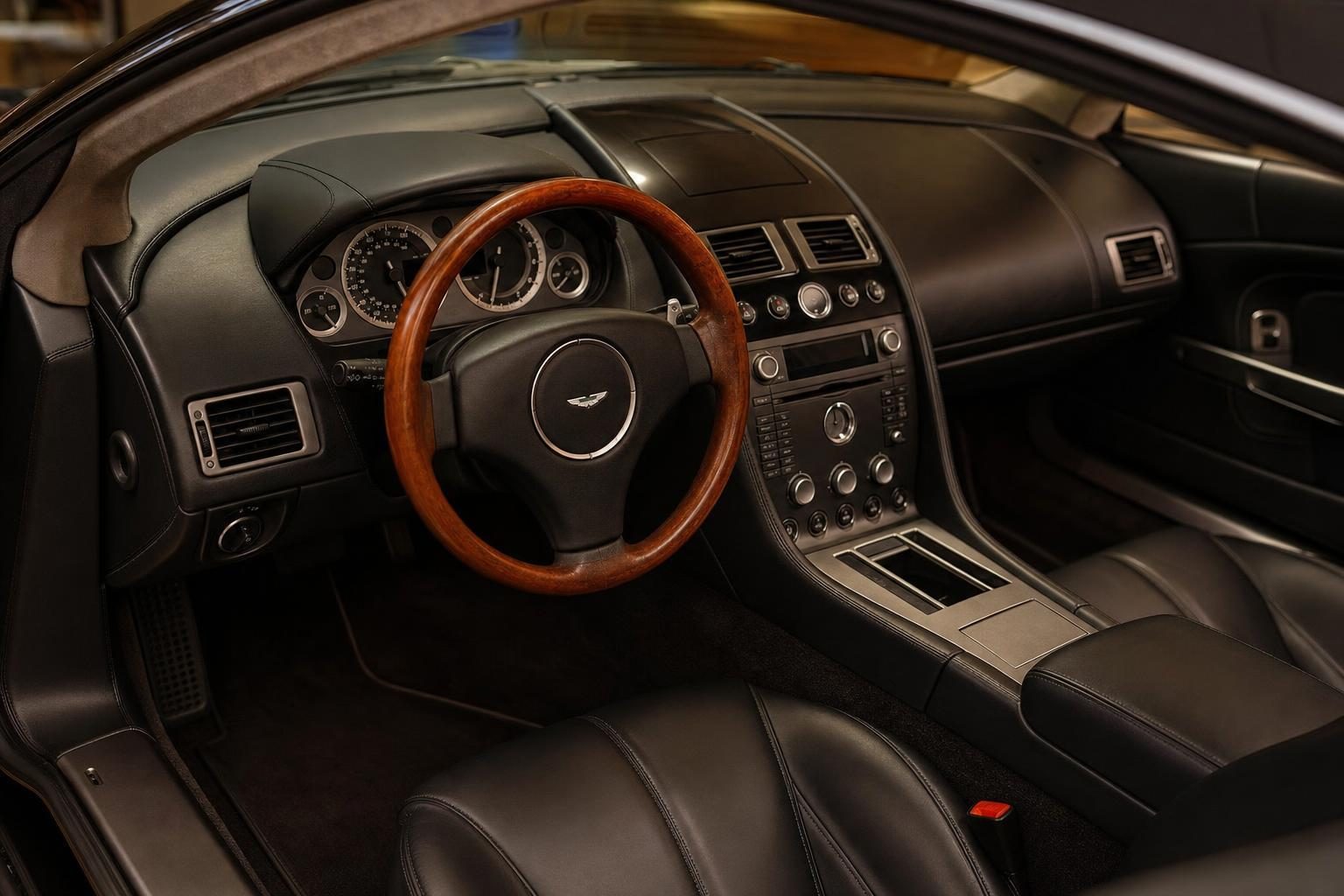
The DB9 as seen by critics in 2003 and today: a line that hasn’t aged, according to whom
Presented at Frankfurt in 2003 and produced from January 2004, the DB9 immediately marked a new technical and industrial era, as verified by the official sources cited above. Without claiming to distil “the critics” into a formula, we can at least observe that its silhouette stems from a clear brief and methodical execution.
This observation, supported by public data on the VH platform and the body, is enough to explain the perception of enduring elegance: classic proportions, tightened by rigidity and mass constraints, lend themselves well to the long term. In other words, the sense of timelessness comes from the process as much as from the brush.
To gauge the ground covered, we can compare the DB9 with its predecessor and the brand’s historical record. Our dossier on the model is a good starting point, as is the official page for past models. They allow the design to be set in its lineage, without imposing outside judgements or extrapolating beyond established facts.
Conclusion — DB9 design, shared parentage more illuminating than a duel
At the end of this timeline, the DB9 design appears as the product of a well-held relay: Callum set the intent for project AM802, Fisker finalised and tidied it, Whitley provided the methodological framework, and the VH platform sculpted the fundamentals. Shown at Frankfurt in 2003, built at Gaydon from January 2004, first of the new VH era: the milestones are clear and sourced.
Rather than choosing between two signatures, the fairest view is to accept the co-parentage of a design shaped by its technical constraints and industrial context. That is often how long-lasting GTs are born: from a dialogue between idea and structure, more than from a single stroke of genius.
- To explore: our detailed dossier on the DB9 to place the design within its career.
- Compare with its predecessor: the history and data sheet of the DB7 shed light on continuities and breaks.
- Designer portrait: Henrik Fisker at Aston Martin, three signature models and their context.
Useful sources: the official DB9 page, the Aston Martin Media dossier and the Wikipedia summary for timeline and context.