Grand tourer DB5 1963: 4 technical leaps — 4-litre engine, ZF 5-speed gearbox, Girling brakes — that made Newport Pagnell a world benchmark.
The 1963 grand tourer DB5 didn’t just tweak the DB4 Series V recipe: it redefined how Newport Pagnell engineered, assembled and presented its flagship coupé. We go back, without gadgets or smoke screens, over four technical breaks that explain why this GT marked a turning point — from the Tadek Marek engine to the ZF gearbox, from Girling brakes to the range structure and its valuation, sixty years after its first public appearance in Frankfurt.
From DB4 Series V to DB5: why Aston Martin changed the name and not just the engine
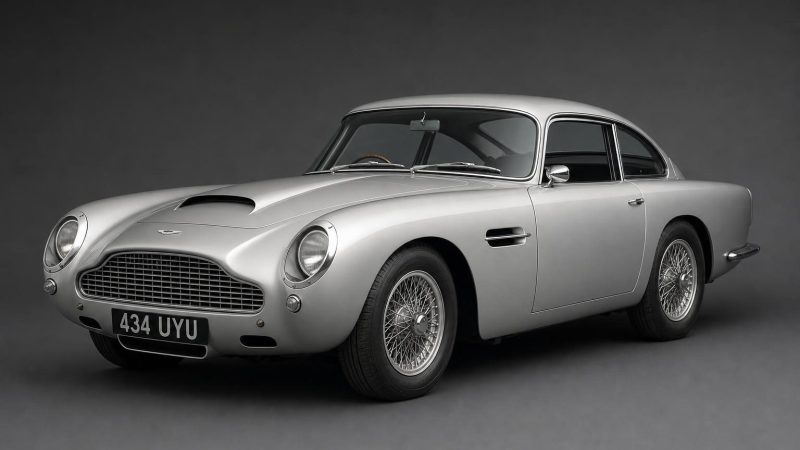
Officially unveiled at the Frankfurt Motor Show in September 1963, the DB5 follows the visual continuity of the DB4 Series V while asserting a clear repositioning of the house grand tourer. According to Aston Martin, this evolution was driven by substantial mechanical changes and an upgrade in everyday usability rather than a stylistic break. The name changes, the philosophy sharpens: more torque, more mechanical comfort, more control under braking.
The type logic is therefore less cosmetic than structural. The move to 4.0 litres and the rapid adoption of a ZF 5-speed manual gearbox made it a longer-legged grand tourer, suited to fast roads and hilly terrain. Media.astonmartin.com also places the newcomer in an industrial context: Newport Pagnell rationalised its equipment choices to deliver a more coherent package than the late-career DB4 Series V.
This technical repositioning comes with a simple message: the DB5 is not a Series 6 of the DB4, it is the modernised synthesis of the brand’s know-how at the start of the 1960s. An Aston Martin grand tourer designed more for breadth of use than for a styling exercise, while preserving Touring’s Superleggera finesse.
The 4-litre Tadek Marek: 282 PS as standard, 314 PS in Vantage — source divergence
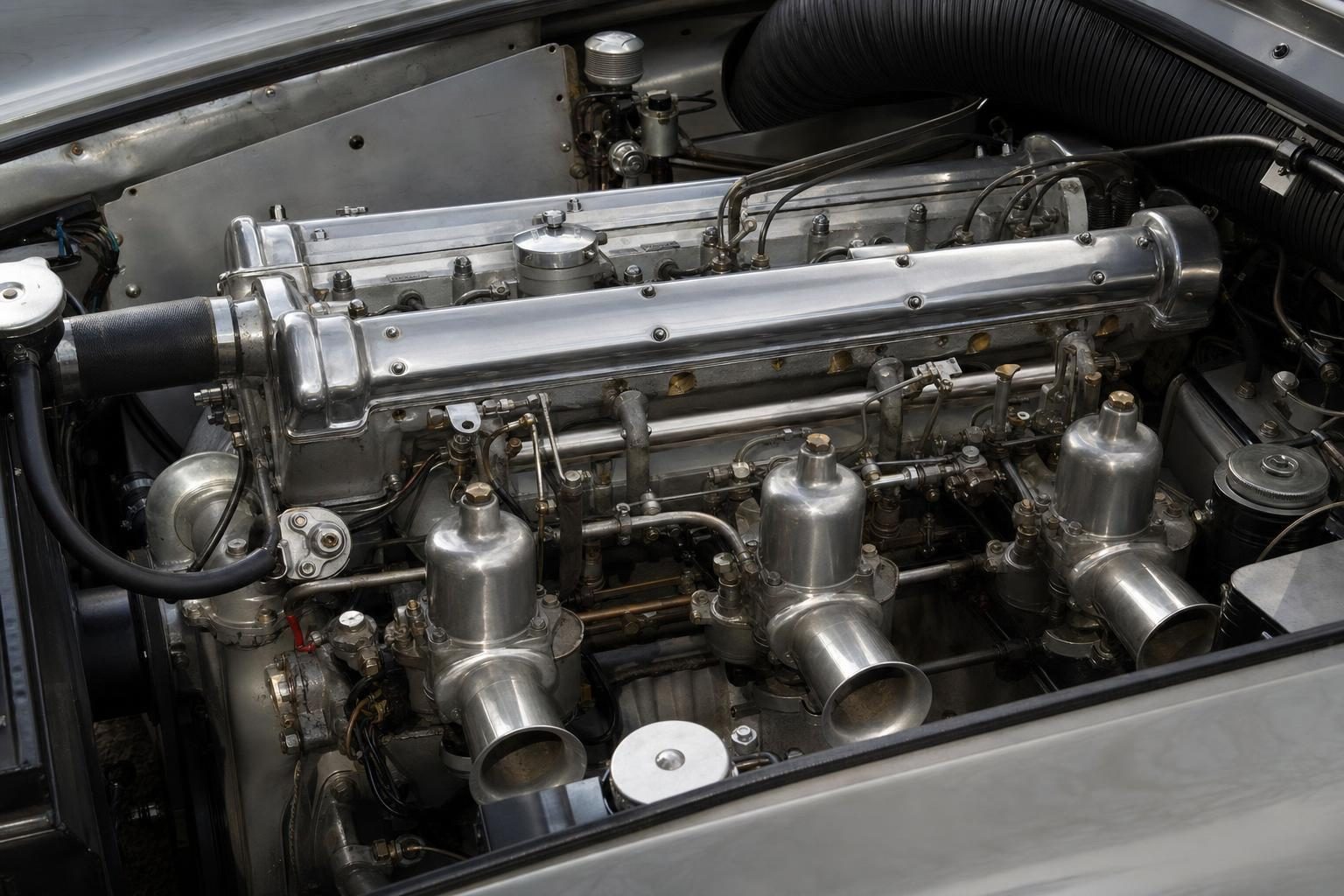
At the heart of the transformation, the 3,995 cc twin overhead-cam straight-six designed by Tadek Marek moved the grand tourer to a new level of flexibility. In standard configuration with SU carburettors, output is quoted at 282 PS, a figure cited by Aston Martin and confirmed by several contemporary data sheets.
The Vantage version, equipped with three Weber 45 DCOEs and a higher compression ratio, raised the claim to 314 PS according to Nicholas Mee. The divergence between these two figures does not reflect haziness, but the coexistence of two official mechanical states: 282 PS for the SU version, 314 PS for the Vantage. Period communications sometimes favoured the 282 PS value as a public benchmark, hence the occasional conflation that minimises the real gap between the two setups.
Beyond the numbers, the 4.0-litre’s contribution lies as much in the torque curve as in peak power. For a Europe-shaped grand tourer, crisper rev pick-up, mid-range flexibility and the proven reliability of the Marek unit form a decisive triptych. That’s what makes the DB5 more relaxing at a brisk pace than the DB4 Series V, without sacrificing reach.
ZF 5-speed gearbox, dual-circuit Girling brakes: two discreet innovations from competition
Another quiet yet decisive break: the transmission. The ZF 5-speed gearbox quickly replaced the David Brown 4-speed and became standard equipment, according to Aston Martin and Nicholas Mee. On a grand tourer, the fifth ratio is no gimmick: it lowers revs at cruising speed, reduces mechanical noise and allows better exploitation of the straight-six’s torque band, while offering more relevant gearing than on the DB4.
On braking, the adoption of Girling components with a dual circuit and dual servo marked a notable step forward over the Dunlop system of the DB4 GT. Modulation and fade resistance — two critical points on mountain roads or in energetic use — directly benefit from this competition-bred heritage. For a grand tourer, repeatability of performance matters at least as much as the absolute 0–100 km/h figure.
These two technical choices fit within a broader approach: reliability, endurance and dynamic serenity. They explain why the DB5, while staying true to the coachwork refinement and careful assembly of Newport Pagnell, established itself as an effective and discreet travelling machine. A trait the marque highlights in its retrospective communications marking 60 years of the model, in the official anniversary feature and the dedicated pressroom.
887 saloons, 123 convertibles, 12 shooting brakes: why these figures still spark debate
DB5 production volumes show remarkable convergence of sources: 887 saloons, 123 convertibles and 12 shooting brakes, or 1,022 cars in total, figures published by Aston Martin and confirmed by the marque’s pressroom. Nicholas Mee also cites a total of 1,022 units across all versions, tallying with Newport Pagnell’s counts.
Why, then, does debate persist? Because beyond the totals, several enthusiasts question the nomenclature and granularity of sub-series (options, conversions, late specifications). The DB5 grand tourer saw equipment variations over the course of production, and some later rebodyings maintain a slight statistical haze in private registers.
On the essentials, consensus remains: 1,022 cars for all body styles, placing the DB5 at an interesting balance point between rarity and availability. To trace the lineage and evolutions, our feature on the DB4 and its series provides useful markers, as does the transition to the DB6 and its longer wheelbase, which would shift the comfort cursor further on the 1960s grand tourer.
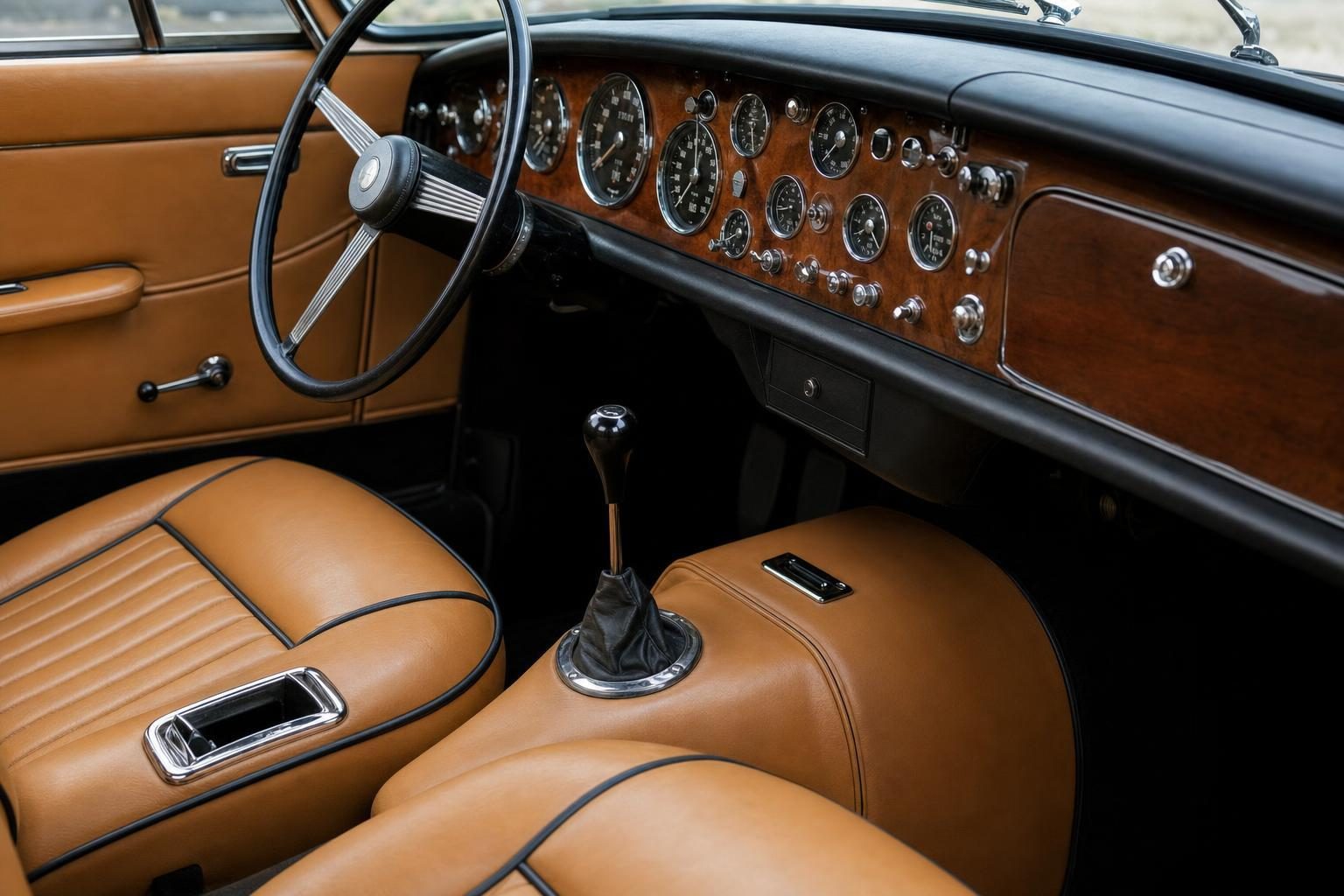
Current values: between discretion and tension, what the market reveals 60 years after first delivery
We can’t ignore the crux of the matter. Priced at £4,175 including tax in the UK at launch — roughly £92,000 in today’s money according to Nicholas Mee — the DB5 was already positioned as an exceptional grand tourer. Six decades on, the tension remains, expressed with the customary restraint of the British collectors’ market.
A recent marker illustrates it: in December 2025, a 1965 DB5 Vantage (one of 39 examples) was restored by Aston Martin in 2,500 hours for around £400,000, its value estimated at about £1 million after the work, according to the dedicated Wikipedia page. The figure is not a universal price guide, but it sheds light on the premium attached to Vantage versions, authentic specifications and factory restorations.
The market remains, indeed, selective: traceability, mechanical conformity (notably of the 4.0-litre and carburation) and assembly quality condition appetite. In this hushed hierarchy, a well-documented DB5 grand tourer, free of period excesses or over-modernisation, holds stable appeal in line with its status as a technical icon rather than a stage celebrity.
Conclusion — why the 1963 DB5 grand tourer remains a benchmark
If the DB5 redefined Newport Pagnell, it was less through the dazzle of its silhouette than through the coherence of its brief: a fuller 4.0-litre engine, a ZF 5-speed gearbox, sharpened Girling brakes and a compact range capped at 1,022 units. Choices that make this grand tourer as civilised as it is serious a travelling companion, where the DB4 Series V remained a little more “sporty by nature”.
Sixty years after Frankfurt, the essentials haven’t shifted: an Aston Martin grand tourer finds its balance in mechanical architecture, assembly rigour and endurance under strain. To delve into the lineage and its evolutions, browse our feature on the DB5 and its variants before stepping back to the DB4 or anticipating the DB6. The best definition of a myth sometimes lies in these quiet breaks that tip a grand tourer into posterity.