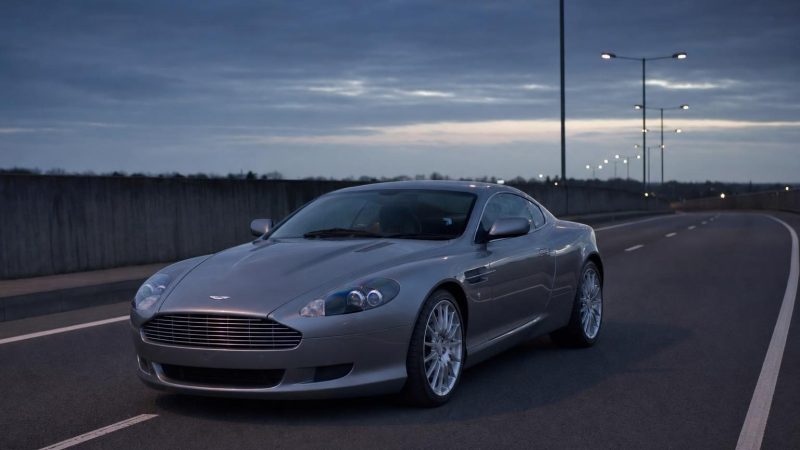
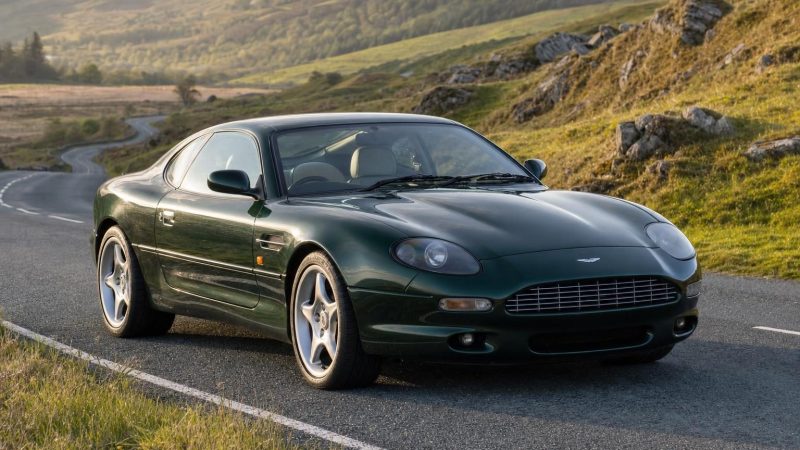
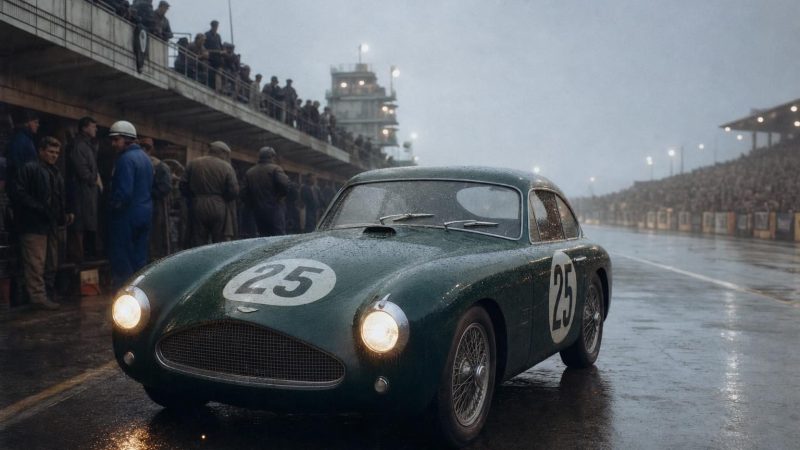
Virage 1988, quatre choix de conception majeurs, du concours de design au V8 dérivé AMR1, expliquent une décennie charnière à Newport Pagnell.
Virage 1988: here is the discreet milestone that redefined Aston Martin’s decade at Newport Pagnell. Often masked by the aura of its successors, this model nevertheless concentrated four foundational decisions — design, engine, derivatives and volumes — that set a new grammar for the brand. Drawing on official sources, we revisit a turning point where artisanal elegance met an engineering rigour inherited from racing.
A design contest won in three months by two unknowns
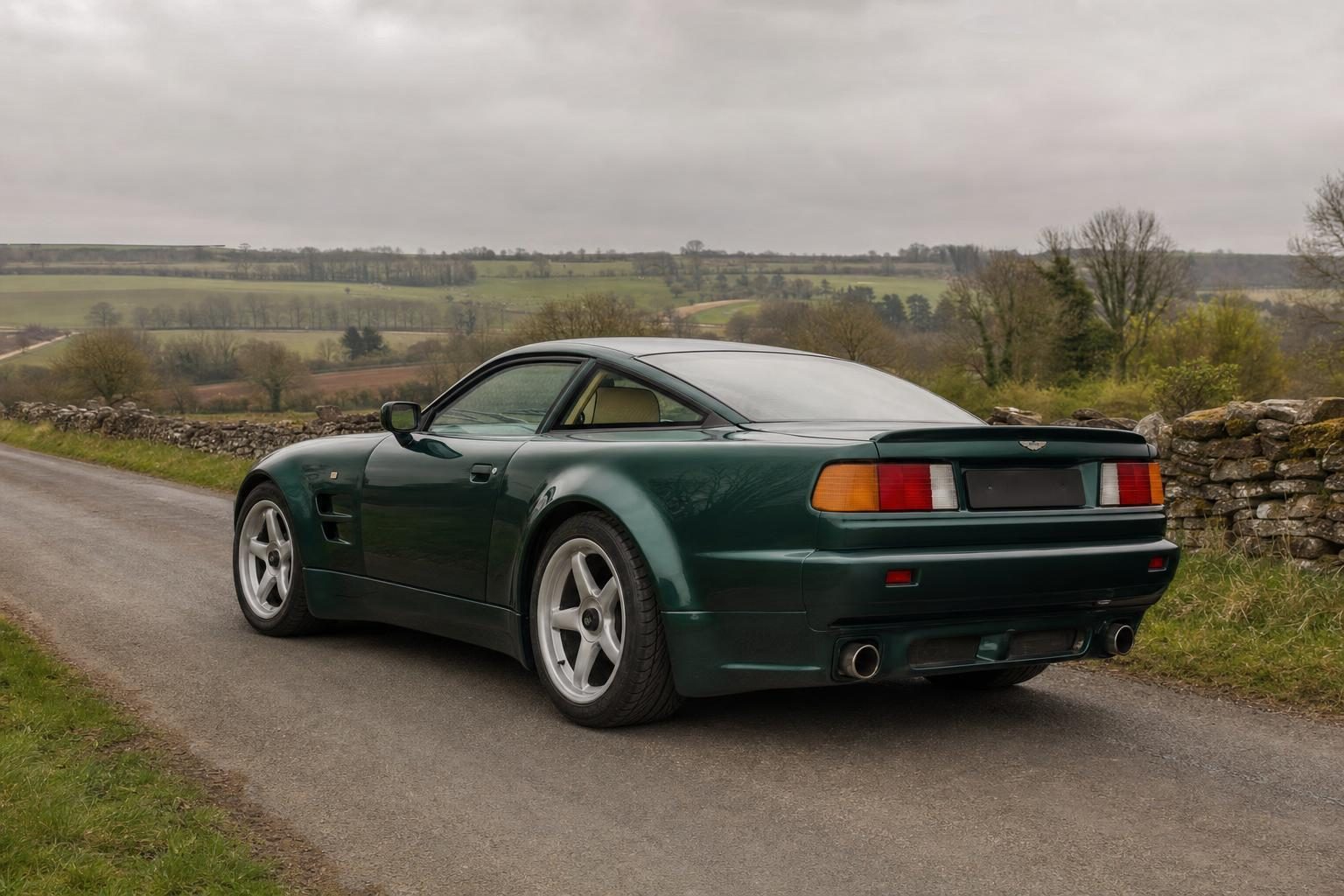
Unveiled at the British International Motor Show in Birmingham on 18 October 1988, the project took everyone by surprise. According to media.astonmartin.com, Aston Martin launched a fast-track design competition, wrapped up in three months, won by John Heffernan and Ken Greenley. Two names then almost unknown to the general public delivered a low, taut silhouette with a square tail and clean volumes — a very late-80s language that broke with earlier V8s without disowning them.
This contest-led choice is no anecdote. It established a method rather than a mere style: a clear brief, rapid decisions, production without dilution. The car revealed in 1988 looks restrained, almost understated, but it heralds the next decade: muscular proportions, reduced glazing, strong road presence. The historic Virage model also reinstates the grille as a structuring graphic signature, without retro pastiche.
As for the name, it came from within. Again per the official press room, Victor Gauntlett and his directors chose it from ideas proposed by employees and AMOC members. A “Virage” for a brand at a turning point: a French wink, just enough panache for an English coupé. For more, see our complete Virage file and its variants.
The four-valve V8: the discreet legacy of AMR1 competition
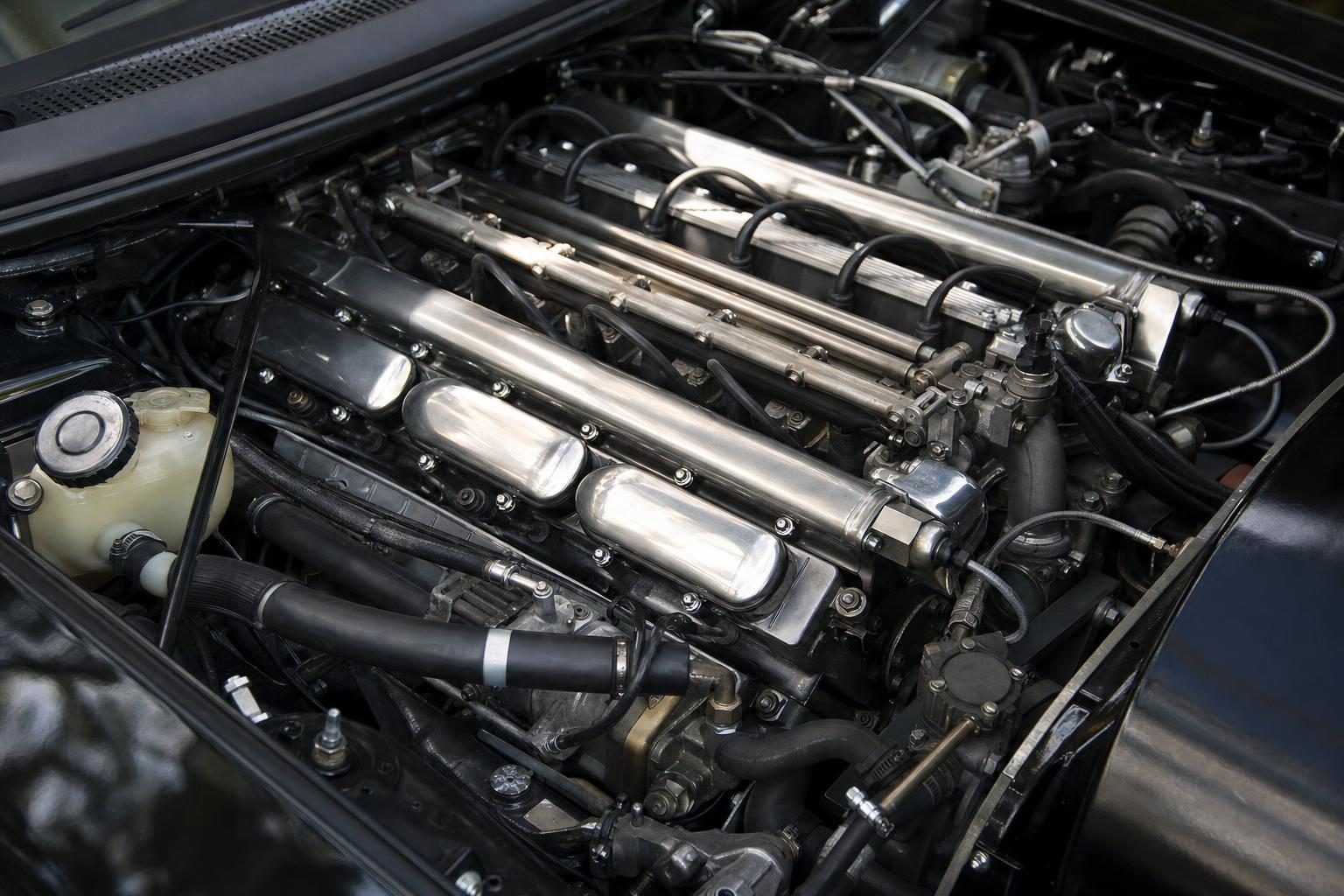
At launch, the 5.3-litre V8 received four-valve-per-cylinder heads, an advance documented by Aston Martin. The message is clear: refreshed aesthetics backed by modernised engineering. The architecture remained familiar to clients, but top-end breathing and cruising ease gained in clarity. The powertrain assumed its role as the decade’s backbone.
The most telling lineage would arrive in January 1992 with the 6.3-litre conversion. According to Wikipedia, this bored-and-stroked 6.3 traces its roots to the AMR1 racing car, an endurance runner. The quoted output varies by source compiled by the encyclopaedia, between 456 and 500 PS: a credible range reflecting evolutions and configurations. The essence lies elsewhere: a deliberate transfer of track-to-road know-how, serving a more authoritative grand tourer.
This technical link with the AMR1 makes the 1988 Virage a bridge. Without fanfare, it installed in series production the idea of a sharpened, exploitable V8, ready for more radical derivatives. To place this strategy in the long view, our history of the brand and its legend provides useful context.
Volante, 6.3 and 550 PS Vantage: three cars within one family
The programme’s strength is its plasticity. The initial coupé set the base, the Virage Volante distilled the open-air version, and mechanical evolutions redefined the hierarchy. In 1992, the 6.3 conversion amped up the DNA: more visual wheelbase, wider tracks, greater presence. According to Wikipedia, quoted outputs for these 6.3s vary, from 456 to 500 PS, a reminder that Aston Martin worked to order, in the Newport Pagnell spirit.
Then came the Vantage in 1993, again per Wikipedia, with a twin-supercharged 5.3-litre V8 peaking at 550 PS. It’s a different animal, more brutal, yet of the same lineage. The architecture, the principles, the chassis genes: the kinship is clear. The 1988 Virage is thus a family more than a single model, spanning a spectrum from hushed grand tourer to showpiece muscle car.
Rarity also works as a magnet. There are only 19 Virage Volante 6.3 “wide-body” according to specialist Nicholas Mee. A statistic that partly explains today’s appetite for unusual configurations and the diversity of values across body styles and specifications. For the parallel genealogy of road V8s, our overview of the AMV8 and its evolutions is a useful guide.
1,050 units in twelve years: deliberately contained production
Total volume remained measured: 1,050 units across all variants by end-2000, according to Wikipedia. At the scale of artisanal production, this figure is no accident. It reflects a deliberate scarcity strategy, aligned with the pace and capacities of Newport Pagnell. Build quality, meticulous assembly and personalisation explain the cadence.
Twelve years is long for a technical base, but coherent with house tradition. Mechanical evolutions (four-valve heads, 6.3, then 550 PS Vantage) punctuated the life cycle without a brutal break. Again, the 1988 Virage is less spectacular than influential: it carried a complete cycle, adapted, and eventually yielded to newer architectures, without ever straying from its backbone role.
This numerical frugality has two consequences. For collectors, each example becomes a piece with clear, traceable pedigree. In the market, the spread of configurations and power outputs creates very distinct sub-segments. The “Virage” label covers different realities, from the original coupé to the supercharged Vantage, which means assessing cars case by case.
Why the Virage remains the blind spot of the Aston classics market
In collecting, reputations can hinge on caricature. The 1988 Virage long paid for its “fin de siècle” style, less baroque than its elders and less techno than its juniors. Yet its strengths are tangible: restrained yet clean design, modernised engine, an explicit link to the AMR1, and a family of variants to suit all appetites. The official 1988 announcement indeed places this model as a pivot, not a parenthesis.
The market loves neat narratives. Here, everything is nuance. The four-valve 5.3 embodies classic grand touring; the 6.3 channels the racing legacy; the 550 PS Vantage speaks to thrill seekers. This plurality is the 1988 Virage’s richness, but it muddies the soundbites. Result: an image “blind spot” rather than a weakness of substance.
Finally, time-calibrated rarity (1,050 cars) sustains micro-markets. A Volante 6.3 wide-body — 19 units, per Nicholas Mee — is not comparable to an original 5.3 coupé. Usual metrics (production, power, silverware) are not enough; you must consider internal genealogy, condition and factory correctness. That is where the 1988 Virage reveals its virtues: a precisely storied piece, made to be understood as much as desired.
Conclusion — why the 1988 Virage truly changed the game
Placing the 1988 Virage back in its era clears up many misunderstandings. Selected by competition, named by the company itself, powered by a modernised four-valve V8 that would yield an AMR1-inspired 6.3, it then unfolded a coherent lineage through to the 550 PS Vantage. In twelve years and 1,050 cars, it imposed a method — and it is often method that shapes decades.
For the informed enthusiast, the lesser affection for the 1988 Virage is an invitation rather than a verdict. It opens doors to well-born examples, rare variants, and a compelling technical reading of the 1990s transition. All told, a “virage” that lives up to its name.
Reference sources: official past models page and encyclopaedic summary, complemented by the October 1988 presentation. For more, our Virage dossier and our brand history set the frame, alongside the AMV8 that precedes and dialogues with it.