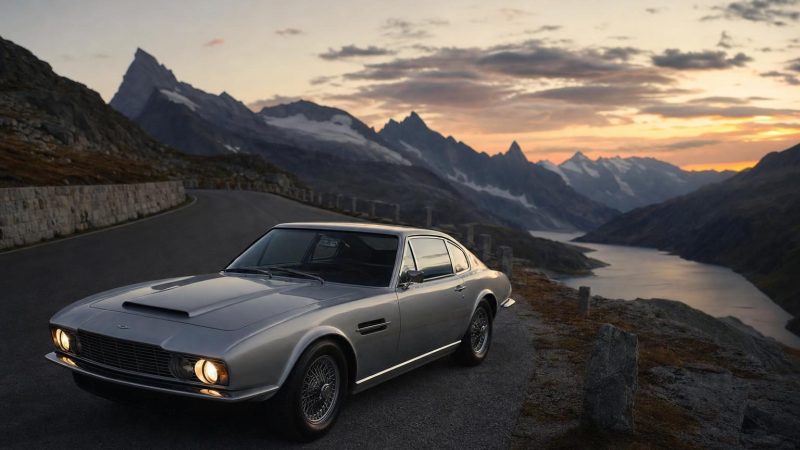
Henrik Fisker led Aston Martin design between 2001 and 2004: DB9, V8 Vantage and DB7 Zagato. Story of a decisive and discreet imprint
Henrik Fisker arrived at Aston Martin in the early 2000s with a clear mandate: to bring order and coherence to an aesthetic already revived by the DB7, yet still constrained by Ford heritage. Between 2001 and 2004, the Danish designer oversaw a quiet but pivotal shift from the last age of steel bodywork to modern aluminium architecture. Three models crystallised this passage: the DB9, the V8 Vantage and the DB7 Zagato. Here is how, without noise or fanfare, he laid the visual foundations for the following decade.
Fisker’s arrival in 2001: the context of the post-DB7 aesthetic renaissance
When he took the helm of design in 2001, Henrik Fisker followed in the wake of a DB7 redesigned by Ian Callum, who had cleverly capitalised on Ford elements to keep costs in check, according to encyclopaedic sources dedicated to the DB7. The stance was right, the charm undeniable, but the technical base remained dated and industrialisation, constrained. Fisker’s challenge: preserve the visual DNA while preparing the technological transition.
The industrial context then shifted up a gear. The marque was preparing a new era, as much stylistic as structural. The design director’s role was not only to draw beautiful lines: he had to orchestrate model-line coherence as a modular aluminium platform loomed. It was this tension between heritage and modernity that the Danish designer translated into crisp surfaces and more athletic volumes.
For those who mainly know the founder of Fisker Automotive, this spell at Gaydon is often underestimated. Yet he set a lasting brand language, as the portrait of Henrik Fisker recalls, and opened a technical trajectory of which the DB9 would be the first series-production embodiment.
DB9 2003: the grand tourer that breaks with the DB7’s steel bodywork
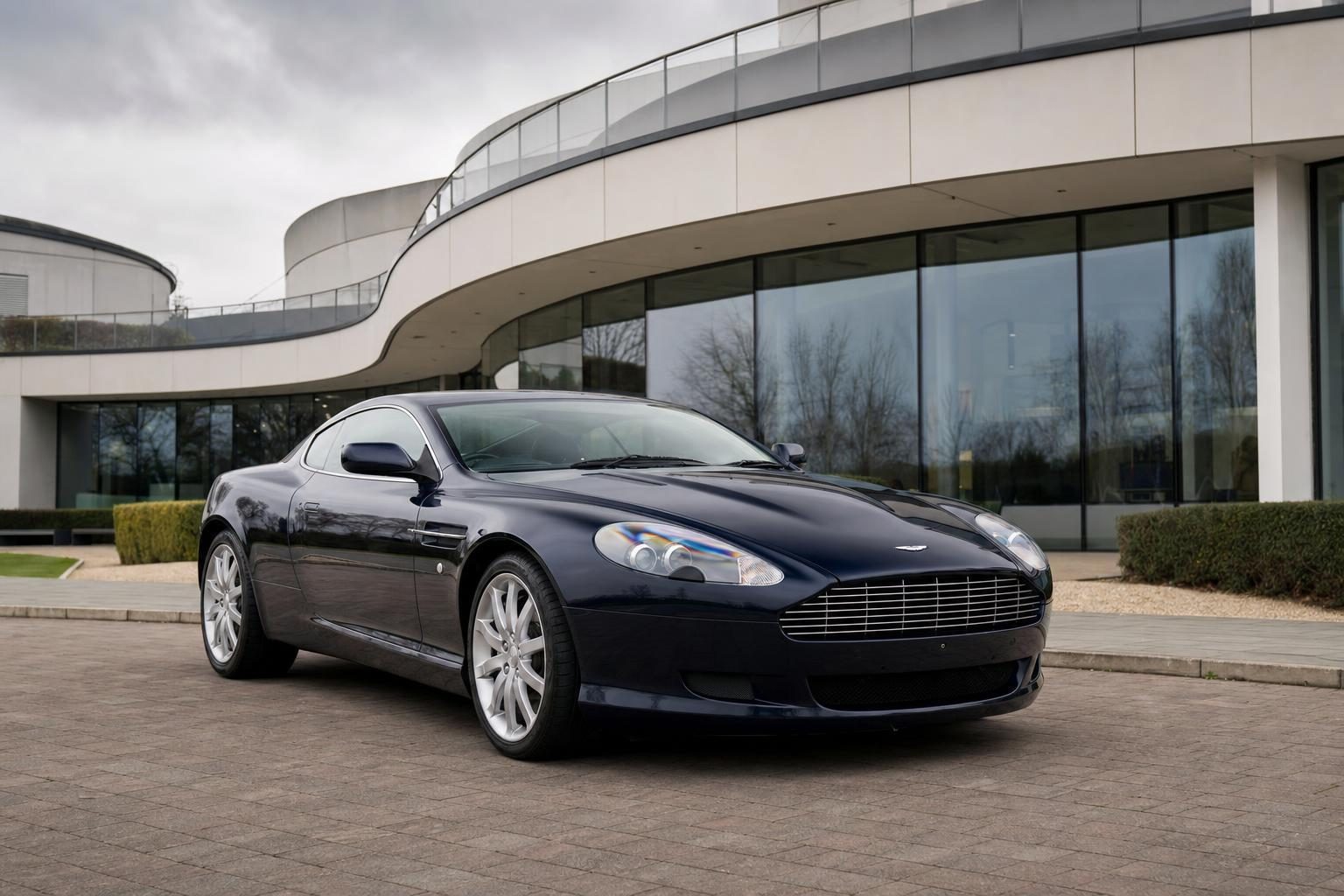
Unveiled in 2003, the DB9 inaugurated Aston Martin’s VH aluminium platform. Developed under Henrik Fisker’s design leadership, it broke with the steel architecture associated with the DB7 cycle. The result was a grand touring coupé with tauter lines, short overhangs and refined proportions, able to absorb the house DNA while gaining in structural modernity.
This technical shift can be read in the design: a more sculpted bonnet, a controlled waistline and volumes that favour continuity rather than ostentatious rupture. The precision of the lines served the platform, and vice versa. In short, form followed function… without denying British sangfroid. To gauge the magnitude of the turn, the official DB9 page and the DB9 media kit set out the industrial and aesthetic framework of this first VH.
The DB9 has since earned pivot status. It does not seek sleight-of-hand theatrics: it installs a lasting visual alphabet, picked up and sharpened over the years. Our detailed feature on the model covers its characteristics and career evolution: everything about the DB9 and its variants.

V8 Vantage 2005: the roadster that opened Aston Martin to a younger audience
Styled under Henrik Fisker’s supervision and unveiled in 2005, the V8 Vantage became, according to Aston Martin, the best-selling model in the marque’s history. This commercial success was no accident: a more compact footprint, more accessible positioning, an athletic silhouette without heaviness. The design distilled the house spirit into a compact format, with sharp lines and a planted stance.
Aesthetically, the car embraced more muscular surfacing, a tucked-in tail and an incisive gaze that spoke to a younger clientele without betraying the lineage. The whole sat within the language established with the DB9, proof that strong, coherent design direction can irrigate several segments without repeating itself.
To place this best-seller within the range and follow its evolutions, our dedicated guide reviews its specifics, from design to special editions: the 2005 V8 Vantage, milestones and legacy. Aston Martin also recalls this record status in its retrospective “113 Years in the Making”.
DB7 Zagato: overseeing a collaboration with Zagato as opening act
The DB7 Zagato was, in a way, the prologue to the Fisker cycle at Aston Martin. At the time of the project, he was design director and oversaw the internal team’s revision of the preliminary sketches signed by Nori Harada at Zagato, according to the marque’s official dossier. The collaboration with Andrea Zagato brought the historic relationship between the two badges back into the spotlight, with a more compact and muscular interpretation of the DB7.
The bodywork, blending steel and hand-beaten aluminium, testified to a rare artisanal exercise at a time when industrialisation was intensifying. This limited edition served as a laboratory: it reaffirmed Aston Martin’s taste for characterful collaborations, while consolidating the line discipline Henrik Fisker wished to impose on the regular range.
This opening act was not a simple heritage nod: it was a reveal. In it, laid bare, one could read the tension between artisanal tradition and the need for industrial coherence, which the design director would set out to resolve on the subsequent series models.
From Gaydon to Fisker Automotive: what this spell at Aston Martin built
Henrik Fisker left Aston Martin in 2004 to co-found Fisker Coachbuild, then Fisker Automotive in 2007. Between these two milestones, he took with him precious baggage: the practice of a coherent range, mastery of technological transitions (steel to aluminium) and the calibration of a desirable yet measured design. Three assets that would mark his trajectory as an entrepreneur and creator.
This spell at Gaydon above all clarified a key idea: strong design is not necessarily ostentatious. It can be a grammar of lines and proportions, stable enough to span product cycles. The DB9 set this grammar, the V8 Vantage democratised it, and the DB7 Zagato elegantly recalled the Italian roots of a certain audacity.
Finally, to place this chapter in Aston Martin’s recent history is to understand what his successors inherited. The continuity of the marque’s design owes much to these pivotal years, before the baton was later taken up by other design directors. On this subject, our portrait revisits the aesthetic choices that followed this period: Marek Reichman, continuity and inflections in Aston Martin design.
Conclusion: Henrik Fisker, the discreet imprint that redrew the course
In three clear markers — DB7 Zagato, DB9 and V8 Vantage — Henrik Fisker orchestrated the transition from steel to aluminium and installed a visual coherence that the marque would carry forward for years. No bombast or easy effects, but a sure hand and an eye for just-right proportions. To contextualise this role within his career, one can revisit the portrait of Henrik Fisker and compare the lines of the DB9 with what Gaydon was building at the time. A decisive page, written in sober ink, as it should be.