DB7 Zagato, du dîner de Pebble Beach au duo coupé/roadster, 99 + 99 exemplaires, V12 affûté et allègement ciblé : l’essentiel pour collectionner
DB7 Zagato, or how an idea born around a dinner table reshaped the DB7’s twilight years with Milanese precision. This article revisits, in five points and without folklore, what this short, feisty coupé truly brings over the ordinary DB7 GT: anecdotal genesis, measured weight saving, retuned power, tightly defined sales geography and its American alter ego, the DB AR1. Enough to guide collectors on the technical and cultural originality of this short series, and to place the DB7 Zagato among the Astons that matter.
The Pebble Beach accord: a dinner as the act of birth
At Pebble Beach in 2001, a dinner seals the idea: Ulrich Bez, then CEO, and Andrea Zagato agree to revive an Anglo-Italian lineage thought consigned to the archives. According to media.astonmartin.com (confirmed by Aston Martin news published in 2018), the conversation moves quickly from intent to project. The alliance is no whim: it reactivates a shared post-war design language, transposed onto the DB7’s V12 platform.
The official reveal comes at the 2002 Geneva Motor Show, where the project is announced. The preliminary drawings are by Nori Harada (Zagato), then revised by Henrik Fisker on the Aston side, again per media.astonmartin.com. The brief: condense the essence of the DB7 into a short coupé, instantly legible, with that signature double roof blister and a shortened tail, to create a clear visual break from the DB7 GT.
For the collector, context matters. The DB7 Zagato beautifully closes the DB7 decade, synthesising Aston Martin’s renewed ambition in the early 2000s and Zagato’s sculptural eye. The result goes beyond a mere special series: it is a variation in character, designed to be felt as much as seen.
Hand-formed steel bodywork: 60 kg less than the GT
Despite the headline evoking steel, the bodywork of this coupé was crafted mainly in aluminium at Carrozzeria Zagato in Milan. According to specialist Nicholas Mee, this specific skin lightens the car by around 60 kg compared with the DB7 GT, a key figure that changes how this Aston turns in, brakes and picks up. The Milanese intervention goes beyond style: it is a tactile rethink of the shell, tighter and shorter, in the service of dynamics.
This weight saving is not a throwaway number. It results from more artisanal construction and simplified volumes, with aluminium panels shaped by hand. In a world then dominated by excess weight, this Aston embraces a discreet yet effective “diet” approach. Again, far from a mere badge: the DB7 Zagato is lighter, shorter and, on the road, it shows.
Practical upshot: front-end response feels keener, and the more compact rear calls for a flowing yet engaged driving style. In collecting terms, these tangible differences — more than the badge on the wing — justify the DB7 Zagato’s distinct standing versus a well-kept GT.
440 PS and 6-speed manual: the most concentrated DB7
The DB7 Zagato’s 6.0-litre V12 is quoted at 440 PS by astonmartin.com, while other sources cite 435 ch (Nicholas Mee) or 441 PS (Wikipedia). The discrepancy comes down to units (French ch, metric PS) and rounding, but the intent is clear: the DB7 GT’s powertrain is sharpened here to deliver a crisper response, matching the shortened footprint.
The transmission sets the tone: 6-speed manual only for the coupé, a choice that roots this version in old-school purity. This stance, confirmed by astonmartin.com, contrasts with the DB7 GT’s versatility, often delivered as an automatic. On the road, the blend of contained weight and manual gearing heightens the “concentrated coupé” feel: less fat, more intent.
In use, the DB7 Zagato does not chase lap times; it seeks harmony between hands and machine. The engine suits a measured, rhythmic drive, and the 6-speed lever becomes the punctuation. That is where the DB7 Zagato truly diverges from the GT: same base mechanicals, but a purer, more involving interpretation.
99 examples in Europe, 99 DB AR1 in the United States: two separate markets
Rarity here is perfectly orchestrated. According to Wikipedia, 99 DB7 Zagato customer cars were built, with a 100th kept by Aston Martin for its museum. Availability was limited to the UK, Europe and South-East Asia, as also confirmed by official documentation.
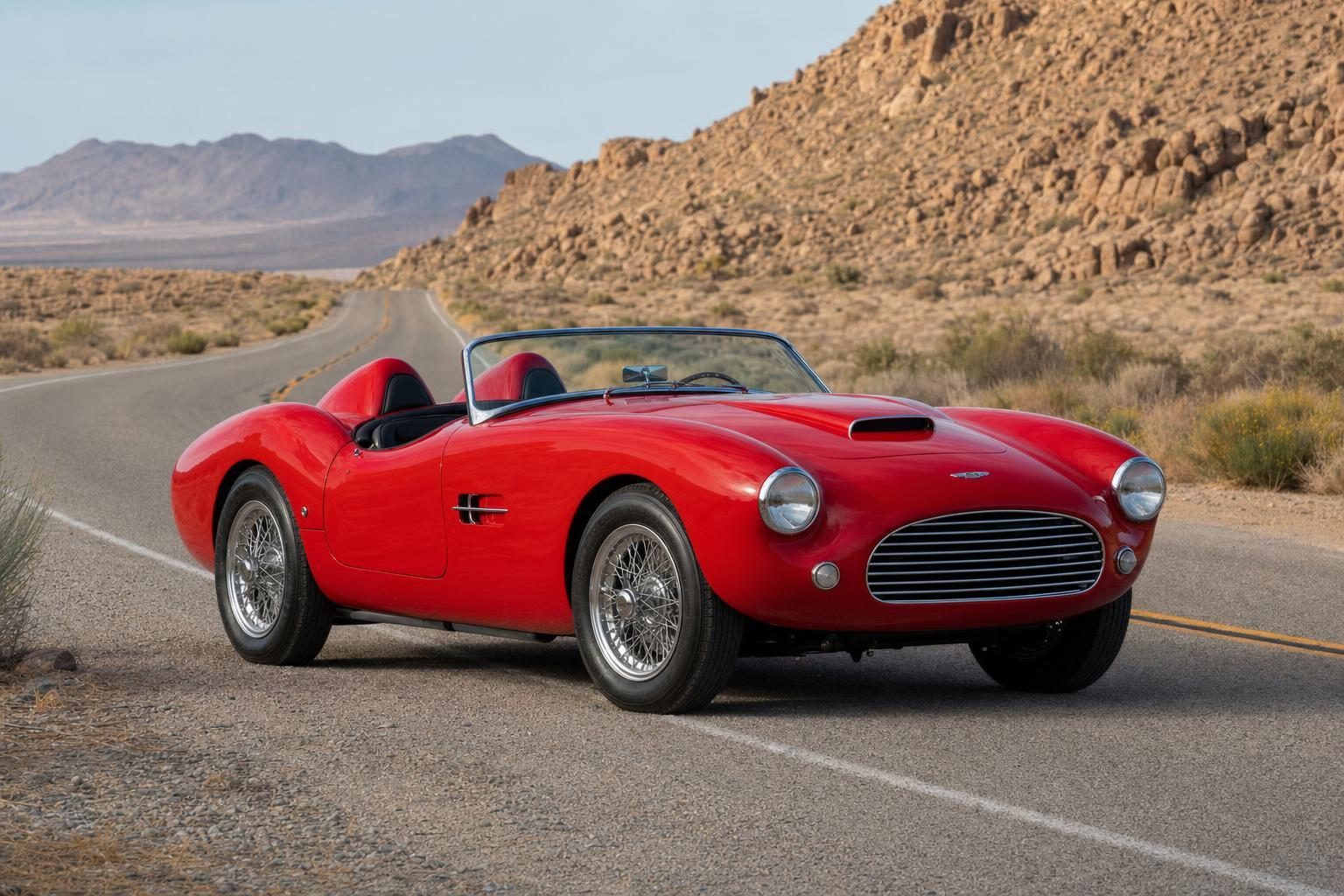
Across the Atlantic, the American Roadster 1 — DB AR1 — takes up the theme but offers a radically different reading: a roofless roadster with no weather protection, limited to 99 examples for the US market, as noted by astonmartin.com. Where the coupé is a short, dense blade, the AR1 is lived as a sun-soaked happening, unapologetic right down to the absence of a hood.
A final notable difference: the DB7 Zagato is manual; the AR1 prefers the Touchtronic automatic. Two temperaments, two continents, two experiences — and, for the collector, two distinct frameworks. This strict market separation still sustains each model’s identity today.
Values and today’s market: what DB7 Zagatos are worth now
The DB7 Zagato market remains narrow by design: 99 cars delivered, a network of informed buyers, and few public appearances. Values rest as much on the spec sheet as on the story: founding dinner at Pebble Beach, body shaped in Milan, exclusive manual gearbox and a deliberate contrast with the GT. These are the arguments that put the DB7 Zagato on a collector trajectory, beyond cyclical fluctuations.
To judge an example, look at body fit quality, the correctness of model-specific parts and the V12’s service history. A test drive beats a thousand words: the circa 60 kg saving, as reported by Nicholas Mee, should be felt in placement and pick-up. Original Zagato details and a complete photo file bolster desirability.
Lastly, the transatlantic DNA enriches the big picture. The 99 US-only DB AR1s, with Touchtronic gearbox and “open only” philosophy, do not compete head-on with the DB7 Zagato: they complement it. Together they define the 2002–2003 bracket, when Aston and Zagato signed a rare diptych, each carefully assigned to its audience.
Conclusion: why the DB7 Zagato remains an essential parenthesis
The DB7 Zagato is not a cosmetic tweak: it is a complete proposition, born at Pebble Beach, announced in Geneva in 2002, lightened in Milan and delivered in 99 coupés — while 99 AR1s basked in the American sun. Between 435 and 440 PS depending on sources, a 6-speed manual and a body shaped largely in aluminium make for a sharper portrait than the DB7 GT. For anyone seeking an Aston with character, the DB7 Zagato concentrates the essentials, with that blend of British understatement and Milanese line that ages well.
To go further, explore our in-depth file on the DB7 Zagato, its design and specifics, our panorama dedicated to the DB7 and its technical evolutions, and our retrospective history and production of the Aston Martin DB7. And to cross-check factory information, see the official pages Aston Martin media on the DB7 Zagato and the joint presentation DB7 Zagato and DB AR1, as well as the summary article on Wikipedia covering the DB7 line.