Ian Fleming linked James Bond to Aston Martin from the novels: DB Mark III in Goldfinger, then DB5. Back to the literary sources that preceded cinema.
Ian Fleming sealed, before cinema, the association between James Bond and Aston Martin. This article goes back to the novels to show how literature preceded the screen, why the DB Mark III (called “DB III”) paved the way, and how the DB5 then dominated the collective imagination. We follow the official chronology, distinguish text from image, and observe what the marque, long after, institutionalised.
‘Goldfinger’ 1959: the DB Mark III renamed ‘DB III’, first act
In the novel Goldfinger (1959), Aston Martin makes its first appearance in the world of agent 007, with Ian Fleming putting Bond at the wheel of a “DB III”. The wording became famous among readers, while the corresponding production model is the DB Mark III, unveiled in 1957 at the Geneva Motor Show. The marque’s press office highlights this range and timeline milestone, useful for understanding the transition from page to tarmac.
For the marque’s historian, the alignment is clear: the fictional “DB III” refers to the production DB Mark III. The official release records the model’s launch and sets the technical and stylistic context of the late 1950s. At this stage, everything plays out in the text, and the accord between author and manufacturer is nothing like a contract: the writer plants a symbol, the marque observes.
Useful, corroborated sources: Aston Martin’s official media for the DB Mark III dossier, and the page dedicated to the novel Goldfinger that establishes the first literary meeting between Bond and the Newport Pagnell house.
From novel to screen: how the DB5 supplanted the DB Mark III in the imagination
When Goldfinger reached cinemas in 1964, the DB5 took over on screen and, very quickly, in the collective memory. The DB Mark III, a pioneer on paper, thus yielded its place in the iconography to this coupé that became “Bond’s Aston” par excellence. Our feature on Daniel Craig’s Astons recalls how the DB5, recurring across the decades, exerts a magnetic pull.
The shift also owes much to spectacle: the filmed DB5’s gadgets were designed by Pinewood’s special effects department, not by Aston Martin. This on-set creativity, absent from Fleming’s pages, anchored the object in popular culture with a force no literary description could have matched in 1964.
Literature did not, however, vanish with celluloid. Wikipedia notes that the DB5 appears in Thunderball (1961), consolidating the association within Ian Fleming’s work itself, before and beyond adaptation. The loop is less a one-way trip than a to-and-fro between text and screen.
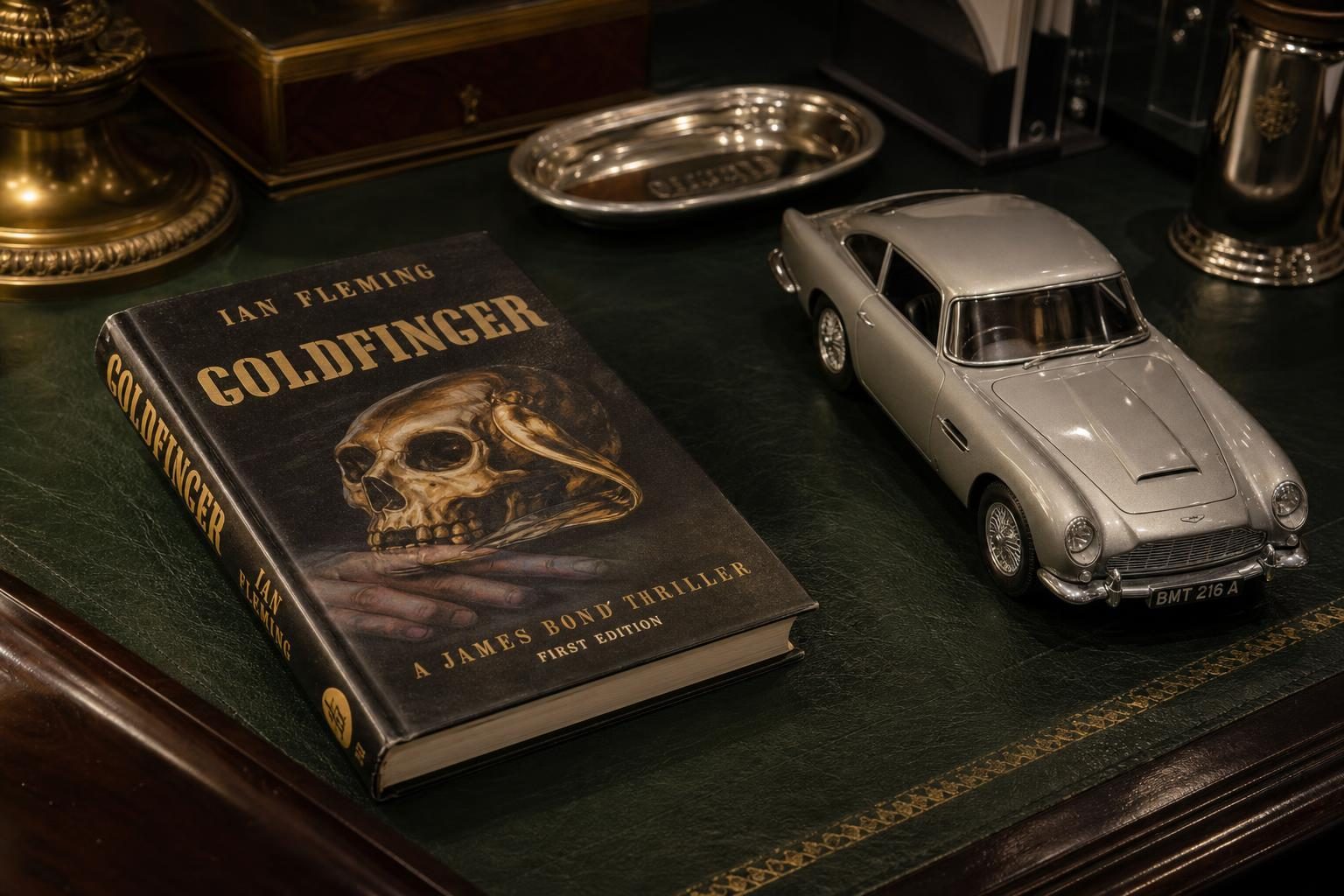
What Fleming really describes: colour, gadgets and spirited driving
Returning to the text reveals a restraint that cinema magnified differently. In Goldfinger, the firm element is the “DB III” designation. As for the rest, the contrivances that made the filmed DB5 a legend — the “Q” equipment — explicitly belong to Pinewood’s special effects workshops, not to Ian Fleming’s pen. The novel initiates the alliance, the adaptation amplifies the spectacle.
This distinction is central to understanding the myth’s genesis. Literature lays down a brand reference consistent with the product timeline (DB Mark III), while the film opts for visual resonance and novelty (DB5 + gadgets). This gap is not a betrayal, but a redistribution of roles: the author provides the grounding, the studios the conflagration.
Reading the work and then watching the film, one perceives how Ian Fleming establishes plausibility — a British grand tourer for a British agent — and how cinema, true to its codes, adds the extraordinary. Two forms of writing, one silhouette turned emblem.
An unpaid partnership: what the marque understood long after Fleming
When Ian Fleming died in 1964, the cultural shockwave was only just beginning. Official ties between Aston Martin and the Bond franchise would not be formalised until the 1990s, long after the foundational period. This is reminded by the reference page devoted to the manufacturer, which places contractualisation in the modern era of licensing.
This time lag tells a simple truth: the initial association was not a “deal” but a legacy. The marque, pragmatically, would later grasp the value of a presence already inscribed in the imagination, from novel to screen. In other words, the “involuntary” origins would, over time, become an avowed strategy.
For collectors, this chronology clarifies the cultural value of the earliest occurrences: the “DB III” of Goldfinger (1959) and the DB5, confirmed in Thunderball (1961), form the cornerstone of a symbolic capital that later agreements merely formalised.
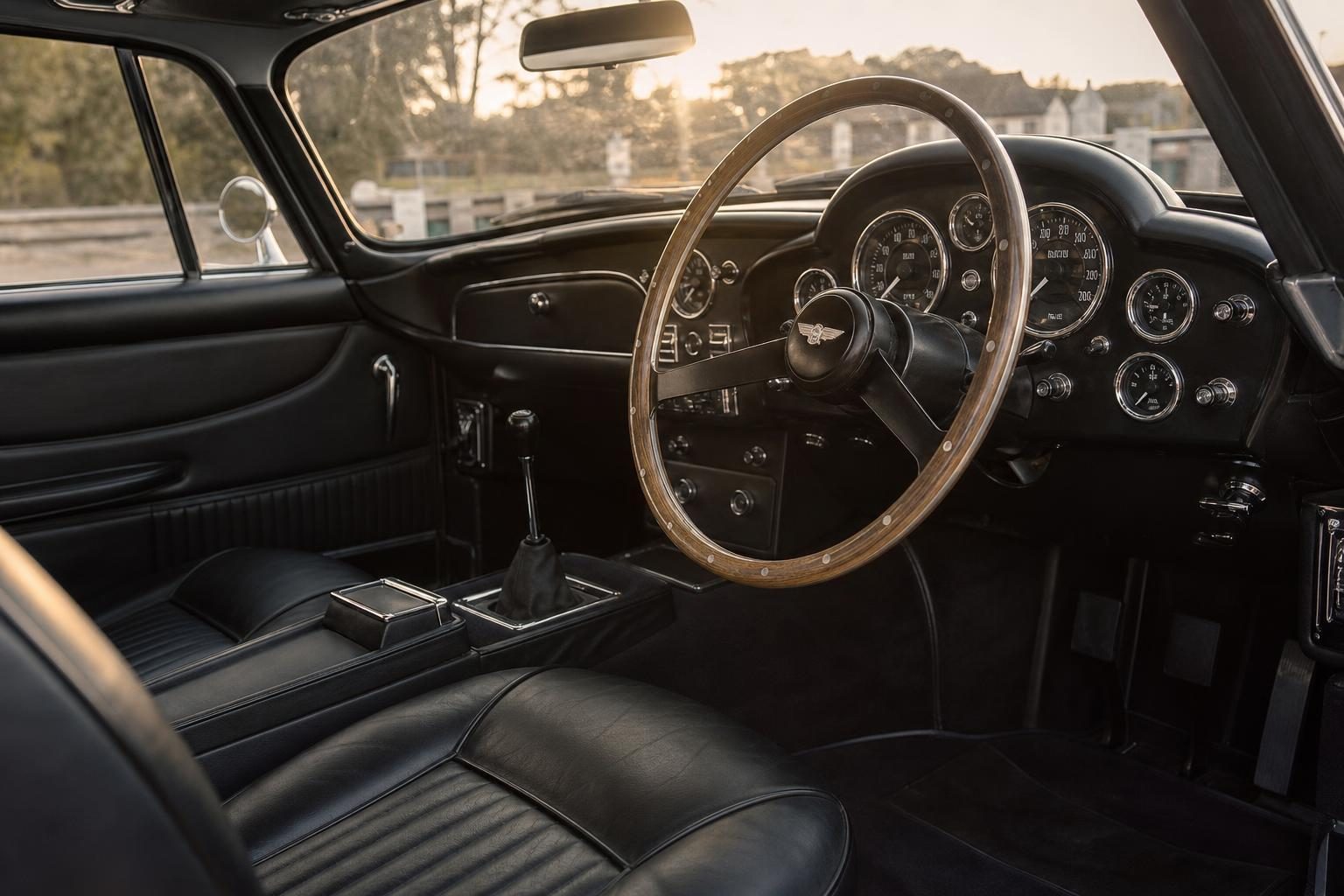
Literary heritage in the Aston Martin collection: from Bond Heritage to Q Branch
In garages and museums, the hierarchy of emotions often follows the thread laid by Ian Fleming and then reconfigured by cinema. The DB Mark III retains an erudite allure, that of the novelistic “first act”, while the DB5 commands the stage, both because it is the film icon and because the author integrated it into the universe as early as 1961. Two gateways, equal legitimacy.
Brand culture feeds on both: the literary weave reassures purists, the cinematic aura unites the wider public. Exhibitions, catalogues and, more simply, owners’ tales juggle these two registers — the heritage of the novels, the imagery of “Q Branch” — without the need to gild the lily. It is British understatement at its most effective.
At Aston Martin and among enthusiasts, this heritage translates into concrete reference points: a well-documented DB Mark III, a celebrated DB5, and an acute awareness of what the author set in motion. Rereading Fleming’s pages before rewatching the films offers, moreover, a richer perspective on the coherence of the whole.
Conclusion: why Ian Fleming remains the keystone
As we close the file, one obvious fact stands out: Ian Fleming created the playground. The “DB III” of Goldfinger (1959) brings Aston Martin into the Bondian canon, the DB5 fixes the icon on screen, and the agreements of the 1990s officialise an already long-standing link. To understand aficionados’ attachment and model values, start with the text, then watch the film. British understatement has rarely spoken so eloquently.
- For the genesis of the DB Mark III and its Geneva 1957 launch, see the dedicated press dossier.
- On the marque’s first literary appearance in Goldfinger (1959), consult the reference page for the novel.
- For the icon’s cinematic trajectory, the DB5 entry summarises the cultural milestones.
- On the formalisation of ties in the 1990s, a useful reminder appears on the encyclopaedic page for the manufacturer.
Further reading on AstonLegacy.fr
- Our retrospective of the 60 years of history between Aston Martin and James Bond to place each appearance in context.
- The technical and cultural portrait of the DB5, the icon shaped by cinema yet rooted in Fleming.
- The guide to the DB Mark III, 007’s novelistic pioneer.