Valhalla 2025: Aston Martin delivered 152 units last quarter. What this figure reveals about the ramp-up strategy for the brand’s first hybrid.
Valhalla is not just a codename for inspired engineers: with 152 units delivered in the fourth quarter of 2025, it becomes a leading indicator of Aston Martin’s recovery. Published on 25 February 2026, the FY 2025 results sketch a tight trajectory between product ambition, preserved cash and macroeconomic shocks. Here is exactly what these figures say — and what they don’t.
152 Valhallas in a quarter: what the FY 2025 results really reveal
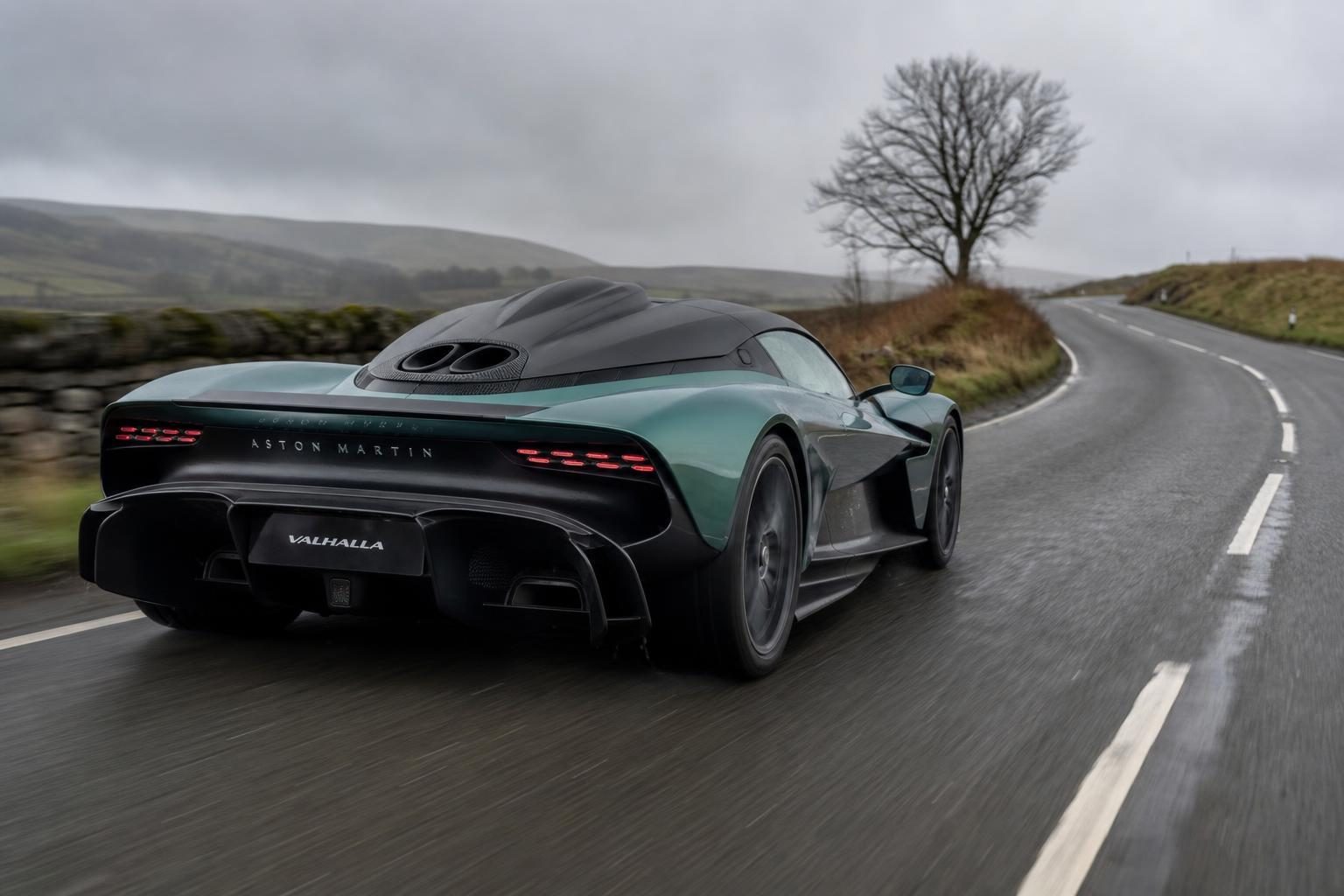
Delivering 152 Valhallas in three months is first and foremost an industrial signal. The ramp-up of this hybrid supercar was expected as a test of the supply chain and quality control. According to Aston Martin’s FY 2025 results presentation, this Q4 volume stands as a key milestone, more akin to a controlled stress test than a year-end firework display.
On the product front, the sports car plays the role of image and margin locomotive. The group highlights highly positive test feedback, including the “Valhalla is the best Aston Martin I’ve ever driven” attributed to PistonHeads and quoted in the FY 2025 presentation. In a line-up where DB12 and Vantage consolidate volumes, this halo model is meant to lift pricing power — without cannibalising the core range.
That 152 must, however, be read in context: it’s a cadence indicator, not an annual target. The brand is fine-tuning its trade-offs between selective deliveries, creating scarcity and maintaining perceived quality. In short, a good quarter for Valhalla is no promise of euphoria, but if confirmed, it supports the thesis of a return to industrial discipline.
The backdrop: US tariffs and a Chinese market under pressure
The quarter did not take place in a legal or commercial vacuum. The FY 2025 results explicitly mention three exogenous headwinds: tariffs and a quota mechanism in the United States, specific duties on luxury cars in China, and a persistent macroeconomic fog. When friction settles on two key markets, the slightest execution error costs more.
Practical consequence: the geographic mix becomes as strategic as the product mix. The brand must juggle import windows, a more capricious customs clearance schedule and differing price elasticity across North America, Europe and Asia. In this context, achieving Q4’s 152 Valhallas owes as much to logistical choreography as to a commercial victory.
This prudence is also evident in communications: no triumphalism, but a reminder of the headwinds. A British way of saying the performance is solid — and all the more respected for having been delivered against the tide.
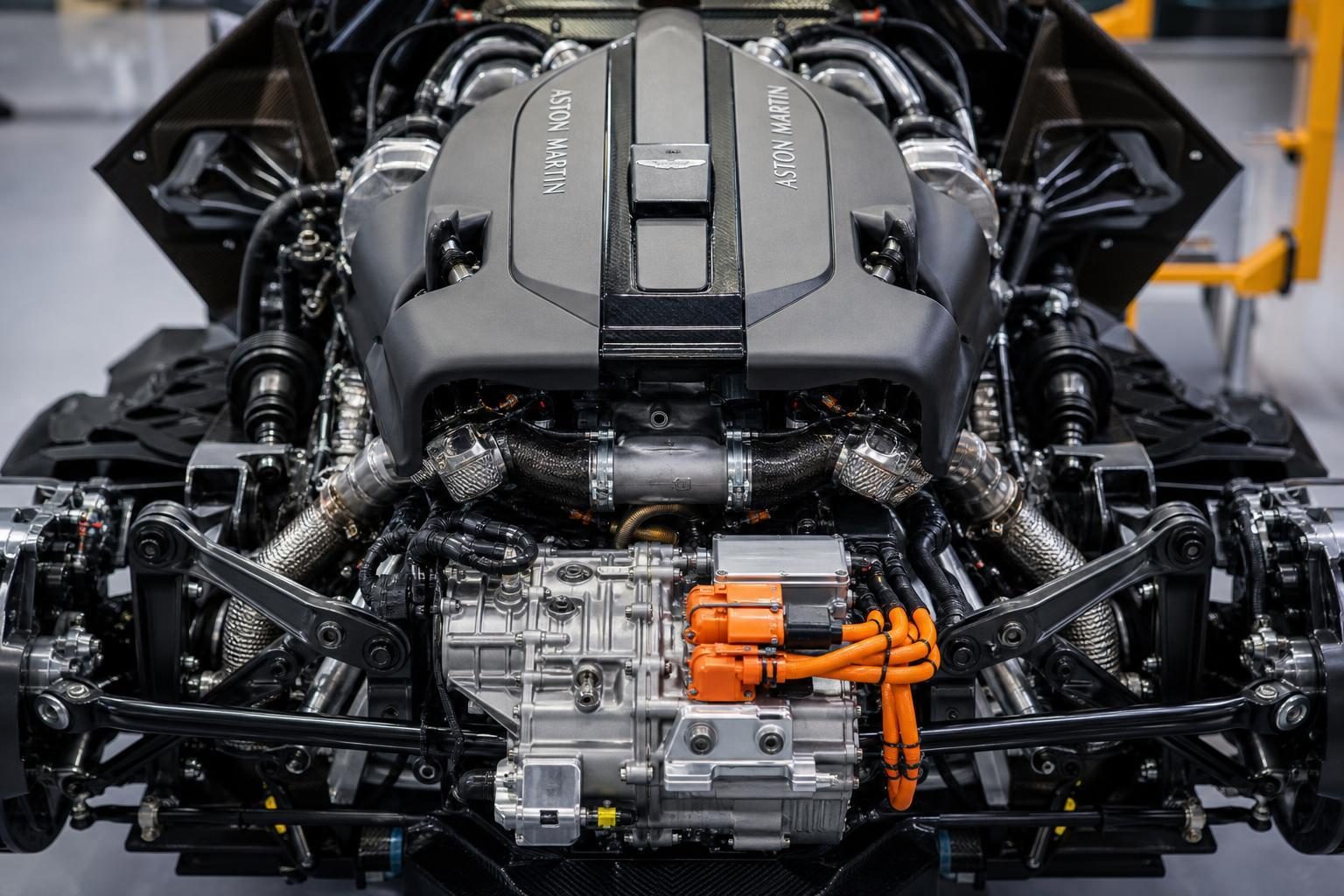
Valhalla, 4.0‑litre V8 hybrid: technical recap to frame the stakes
Mechanically, Valhalla relies on a 4.0‑litre twin‑turbo V8 paired with hybridisation, defined by the brand as its “first hybrid supercar”. The positioning is clear: electrified high performance without betraying the sonic signature or chassis precision expected of a modern Aston.
Beyond the spec sheet, this coupé embeds cross‑functional know‑how: e‑motor/gearbox integration, thermal management, software calibration and tight‑tolerance production. Every Valhalla delivered validates part of this architecture and prepares other models for measured electrification.
For those who want to dig into the spec and the project’s DNA, our dedicated piece on the hybrid supercar and its technical breakthroughs puts the engineering choices in perspective. And for an official view, Aston Martin’s model page details the programme’s ambition Valhalla in its context.
Cash at £250 million: solidity or strain?
At the end of 2025, total cash stood at £250 million. That’s a respectable lifeline for a niche manufacturer engaged in a range renewal and a demanding technology launch. It says one thing: cash prudence remains the priority while Valhalla settles into a cruising rhythm.
The plan to sell naming rights to AMR GP for £50 million follows the same logic: bolster the liquidity cushion without diluting product equity. Well deployed, this windfall optimises working capital needs around Valhalla’s crisp yet hungry production cycle.
Should this be read as a sign of strain? Rather, as active balance‑sheet management within a capex cycle referenced as optimised by the transformation programme. In other words, the company holds the pen on spending while giving the hybrid supercar the room it needs to turn desirability into cash flow.
What Aston Martin is signalling for 2026: new derivatives and ongoing transformation
Management speaks of continued transformation through 2026: cost reduction, capex and supply chain optimisation. The goal is simple, the execution less so: absorbing the complexity of a modernised portfolio while protecting unit margin. In this equation, Valhalla serves as laboratory as much as showcase.
Derivatives and range evolutions are announced for 2026, continuing the repositioning begun by DB12 and the new Vantage. To gauge this shift, our analysis on the return to the top with DB12 and Vantage sheds light on design, chassis and pricing strategy choices, which the current tech flagship complements.
On the commercial front, the challenge will be to orchestrate delivery windows in pressured markets while maintaining the pace of reserved Valhallas. Consistency, more than grand gestures, will be the arbiter of 2026.
Conclusion: what Valhalla really changes for 2026
By delivering 152 Valhallas in Q4 2025, Aston Martin proves its hybrid supercar can hold both cadence and promise, despite finicky tariffs and a less fluid China. The £250m in cash, backed by £50m expected via AMR GP naming, form a reasonable buffer provided operational discipline continues. If 2025 was the proof of concept, 2026 must be the proof of consistency — for Valhalla and the rest of the range.
To follow the consolidated financial communications, Aston Martin’s FY 2025 results presentation is available via the official investors’ page and its FY 2025 presentation document. And to place the model in the brand’s recent history, our page dedicated to Valhalla news helpfully completes the big picture.