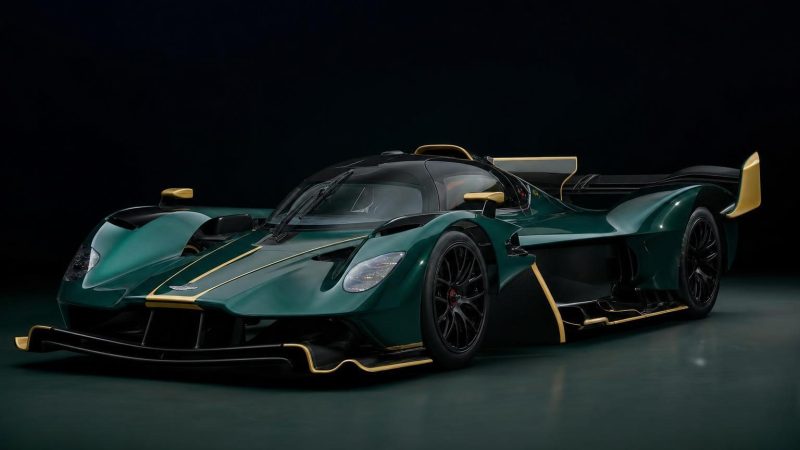
V12 Vanquish : coulisses du châssis collé Lotus, aluminium superformé, 8 semaines par voiture, production et Ultimate Edition à Newport Pagnell.
The V12 Vanquish didn’t just usher in a new design era for Aston Martin: behind the scenes, it redefined how to build a GT at Newport Pagnell. Here are five manufacturing anecdotes — an adhesive-bonded chassis developed with the support of Lotus and the University of Nottingham, processes refined in Cupertino, an interior reworked by Ulrich Bez, eight weeks per car — that tell the story of an industrial challenge as much as of a motor car.
The bonded chassis: why Aston Martin partnered with Lotus and the University of Nottingham
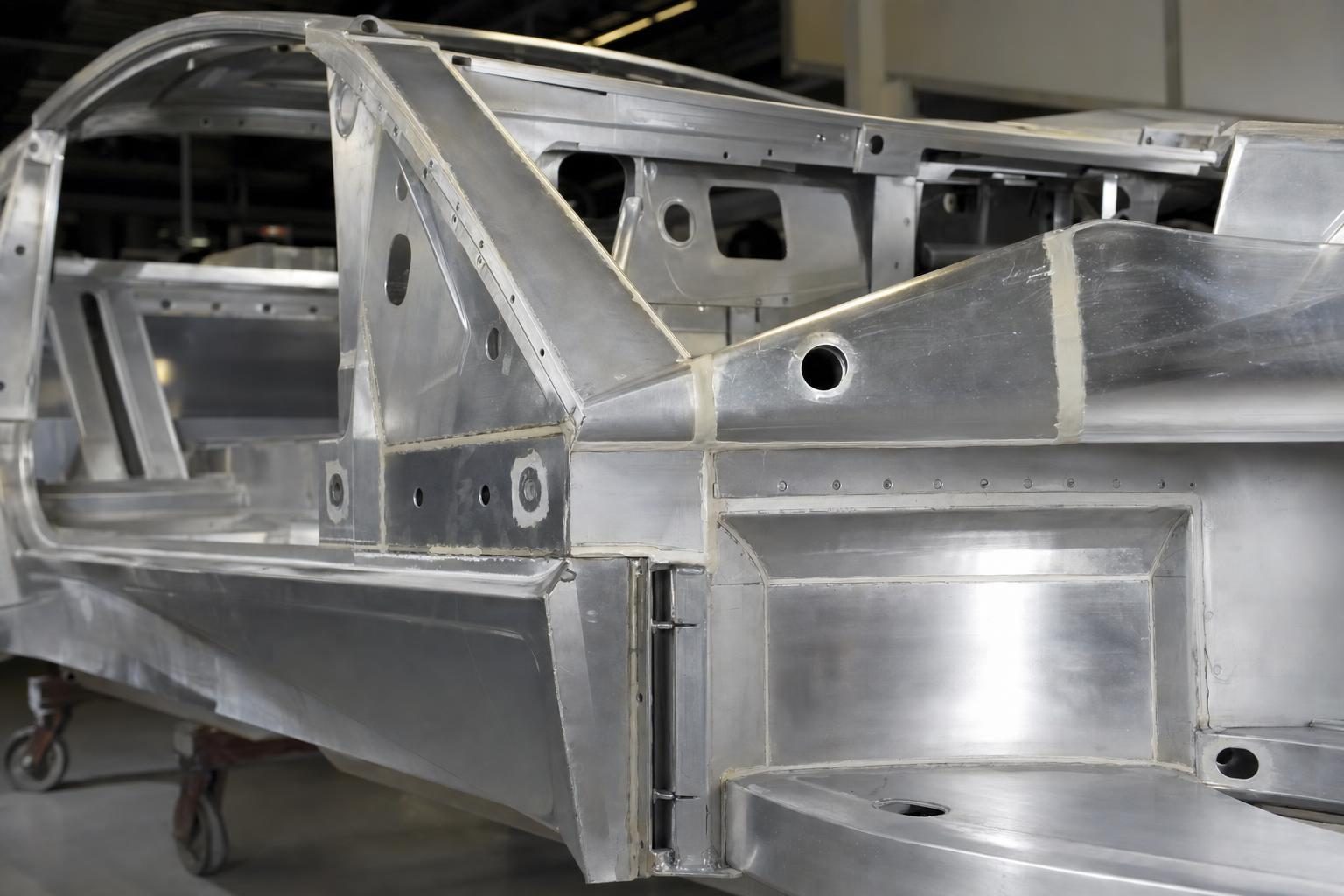
Behind the muscular silhouette, the V12 Vanquish’s technical heart lay in an aluminium and composite chassis bonded and riveted. To develop it, Aston Martin turned to Lotus — a British benchmark in lightweight architectures — and the University of Nottingham. According to the official 20th anniversary recap, the goal was clear: combine rigidity, assembly precision and low mass, without the investments of a large stamped-steel platform.
The project’s geography was the surprise. Part of the manufacturing processes was developed in Cupertino, California — a detour via Silicon Valley to validate aerospace-grade adhesion and quality-control protocols, before transfer to the historic production site. The University of Nottingham, for its part, supported the development of assembly and structural-bond testing methodologies, the nerve centre of an architecture that was new to the marque.
This choice of structural bonding, already proven at Lotus, delivered greater rigidity and an engineering finesse hard to achieve with traditional welds, while offering tooling flexibility compatible with limited volumes. Newport Pagnell found an intermediate path between craftsmanship and modern processes.
Superformed aluminium panels: an aerospace technique applied to a series-production GT
While the skeleton used bonded aluminium, the car’s skin told another workshop story. The V12 Vanquish’s outer panels were made from aluminium super-plastic-formed, a hot-blow technique inherited from aerospace. Again, per Aston Martin Media, these parts were then hand-fitted and bonded to the central structure.
The benefit? More complex shapes, crisp edges and optimised thickness where the skin needs stiffness. For a GT with an instantly recognisable profile, this process enabled a precision of surfacing rarely seen on such a low-volume production.
The flip side was throughput. Superforming demands time, stable temperature and costly dies, ill-suited to high industrial cadence. At Newport Pagnell, it was a conscious compromise: priority to exactness of form and fit, even if it meant running at a workshop rhythm.
Ulrich Bez’s intervention on the interior: the Ford Ka vents that almost stayed
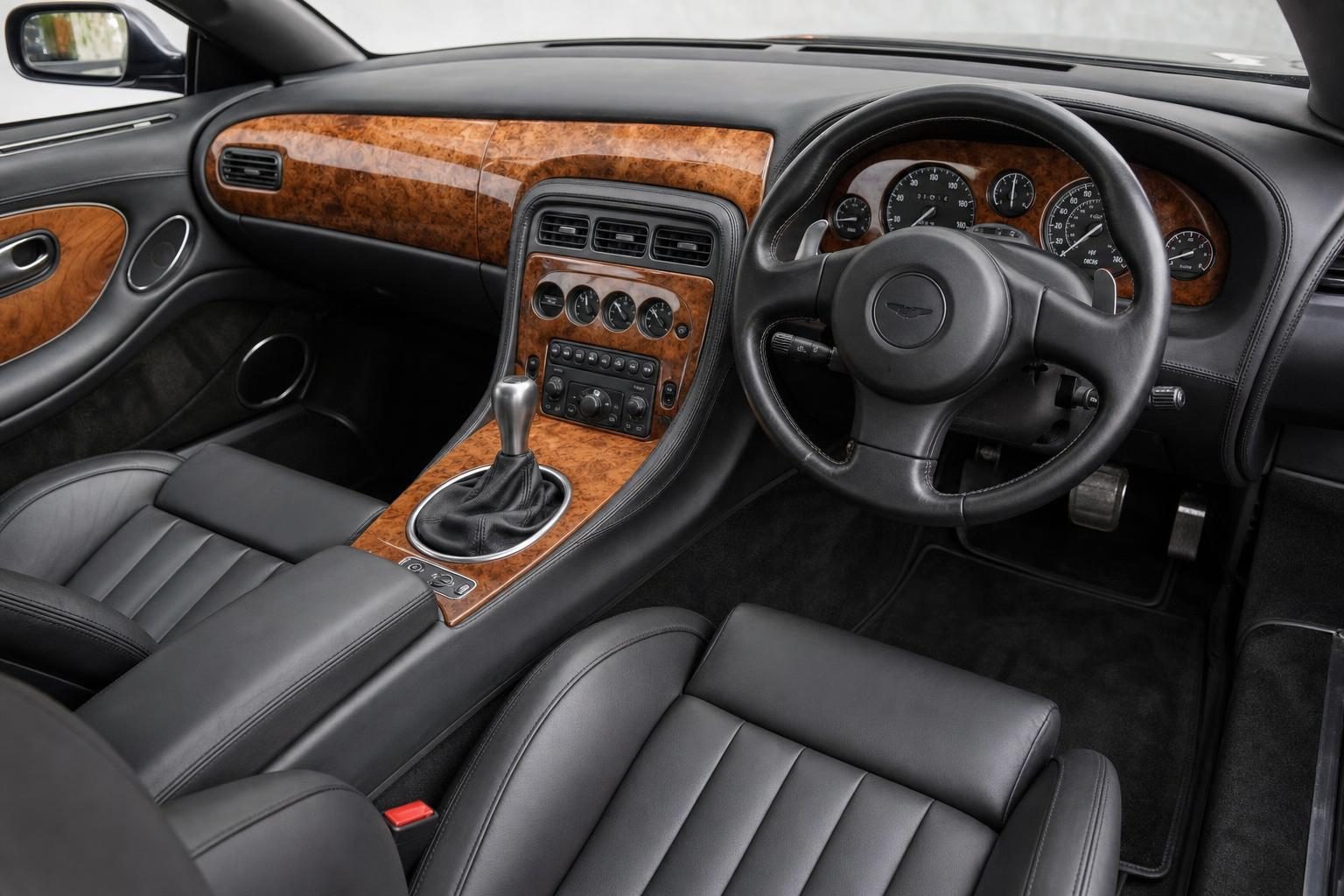
In 2000, during final sign-offs before launch, Ulrich Bez — newly appointed CEO — judged the cabin not quite aligned with the model’s ambition. According to CarJager, air vents from a Ford Ka were slated for the catalogue. They didn’t make the cut. The order was clear: streamline, upscale, and ban components too close to mass-market items.
This last-minute recalibration wasn’t cosmetic. It crystallised a demand: if the V12 Vanquish was to embody the renaissance, it couldn’t tolerate the slightest visible compromise. Adjustments focused on touchpoints, the vents, and the coherence of materials and their execution, in the spirit of English GTs that are as much to be touched as they are to be looked at.
The end result didn’t disown Newport Pagnell’s artisanal DNA; it polished it. A way of signalling, without fanfare, that technical modernity had to be accompanied by a premium feel — right down to the details you only notice when they jar.
Eight weeks per car: Newport Pagnell’s cadence and the 1,489 examples built
Far from automated lines, each V12 Vanquish required eight full weeks of work. The target cadence was around 300 units a year, again per the brand’s 20th anniversary dossier. This tempo reflects both the complexity of the processes (structural bonding, superforming, precision fitting) and the artisanal roots of the Buckinghamshire works.
As for total production, sources differ slightly. Aston Martin quotes 1,489 examples for the 460 PS version, while CarJager mentions 1,492 units. Three cars’ difference: enough to fuel paddock chats, not enough to alter the perception of a model that was rare by design.
This engineered rarity now feeds collectors’ interest, along with the model’s final anchorage at Newport Pagnell. For a detailed overview of the first generation’s specifics, see our feature on the Vanquish Mk1 and its evolutions.
End of an era: how the 2007 Ultimate Edition closed Newport Pagnell after 50 years
The circle closed in July 2007 with the V12 Vanquish S Ultimate Edition. Fifty cars, a specific black finish, and a symbolic role: to mark the end of half a century of cars assembled at Newport Pagnell. The official past models page pinpoints this swansong, as production moved to Gaydon and a new industrial set-up.
The Ultimate Edition was more than a paint chart. It formalised Aston Martin’s transition towards more industrialised processes, without disowning its heritage. An elegant way of acknowledging that the V12 Vanquish had served as a bridge: skilled craftsmanship on one side, modern methods mastered on the other.
To continue exploring the workshops, readers can discover our five well-kept secrets of the Newport Pagnell factory, and these anecdotes from the Vanquish Mk1’s final days.
Conclusion: what the V12 Vanquish says about the art of building a GT
Beyond the imagery, the V12 Vanquish embodies a rare industrial transition. A bonded chassis conceived with Lotus and refined in Nottingham, processes validated as far as Cupertino, superformed aluminium panels, eight weeks of assembly, and an interior elevated at the eleventh hour by Ulrich Bez: so many clues to a house reinventing itself without betrayal.
If production figures vary by source, the essence lies elsewhere: this Aston served as a laboratory, preparing the Gaydon era while signing off Newport Pagnell. To place these choices in the marque’s history, see the encyclopaedic page dedicated to the model and, more broadly, the official Aston Martin site. In filigree, the V12 Vanquish reminds us that a great GT is always a sum of compromises — at Aston Martin, they were simply resolved with tact.