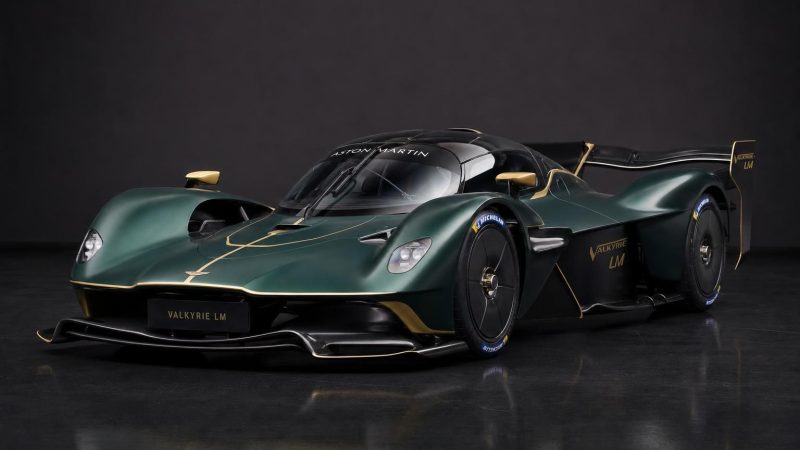
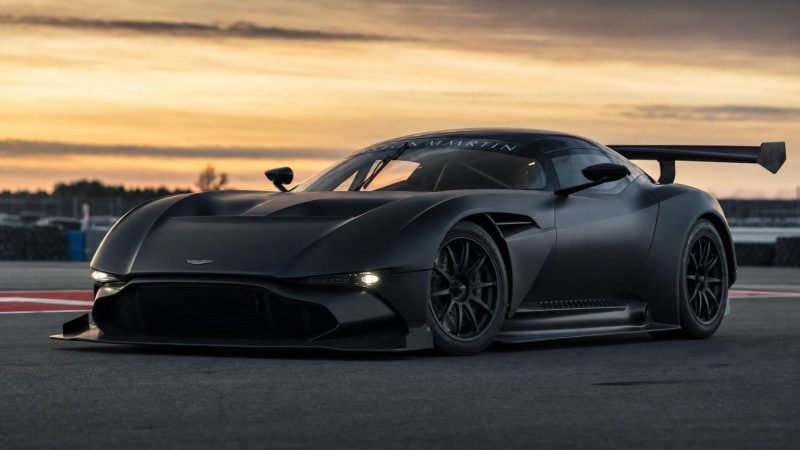
Vulcan, ses 24 exemplaires, son V12 réglable jusqu’à 820 ch, l’unique conversion route, le pack AMR Pro et l’héritage Multimatic DSSV expliqués sans folklore.
Vulcan is not just an eight‑figure price tag: it’s a build sheet full of technical nods and deliberate choices. Here are five details true aficionados value, from the 24 Hours of Le Mans calendar coded into production to the three‑step power selector, via the RML road conversion, the 2017 AMR Pro and the Multimatic DSSV imprint. The aim: to grasp what this model says about Gaydon when lap times and resale value aren’t enough.
Why 24 examples and not 25: the Le Mans calculation explained
The cap is no accident. Twenty‑four cars, one for each hour of Le Mans: the intent was explicit at launch, according to Wikipedia (Aston Martin Vulcan) and Aston Martin’s media site. This nod immediately places the car in the marque’s endurance tradition without locking it into a technical rulebook.
The figure comes with an entry ticket of $2.3m, and deliveries in 2016 (same sources). The gesture is not purely symbolic: it frames rarity and creates a shared language with those who know what 24 hours at 100% intensity represent. Rather than 25 for a “round series”, they chose the Le Mans rhythm.
This choice also explains the positioning: an ultra‑short, track‑focused run that does not take the route of batch homologation. The introduction to our dedicated dossier also recalls how Aston Martin reserved this project for a circle prepared for circuit running.
The 7.0‑litre naturally aspirated V12: three selectable power levels from 500 to 820 PS
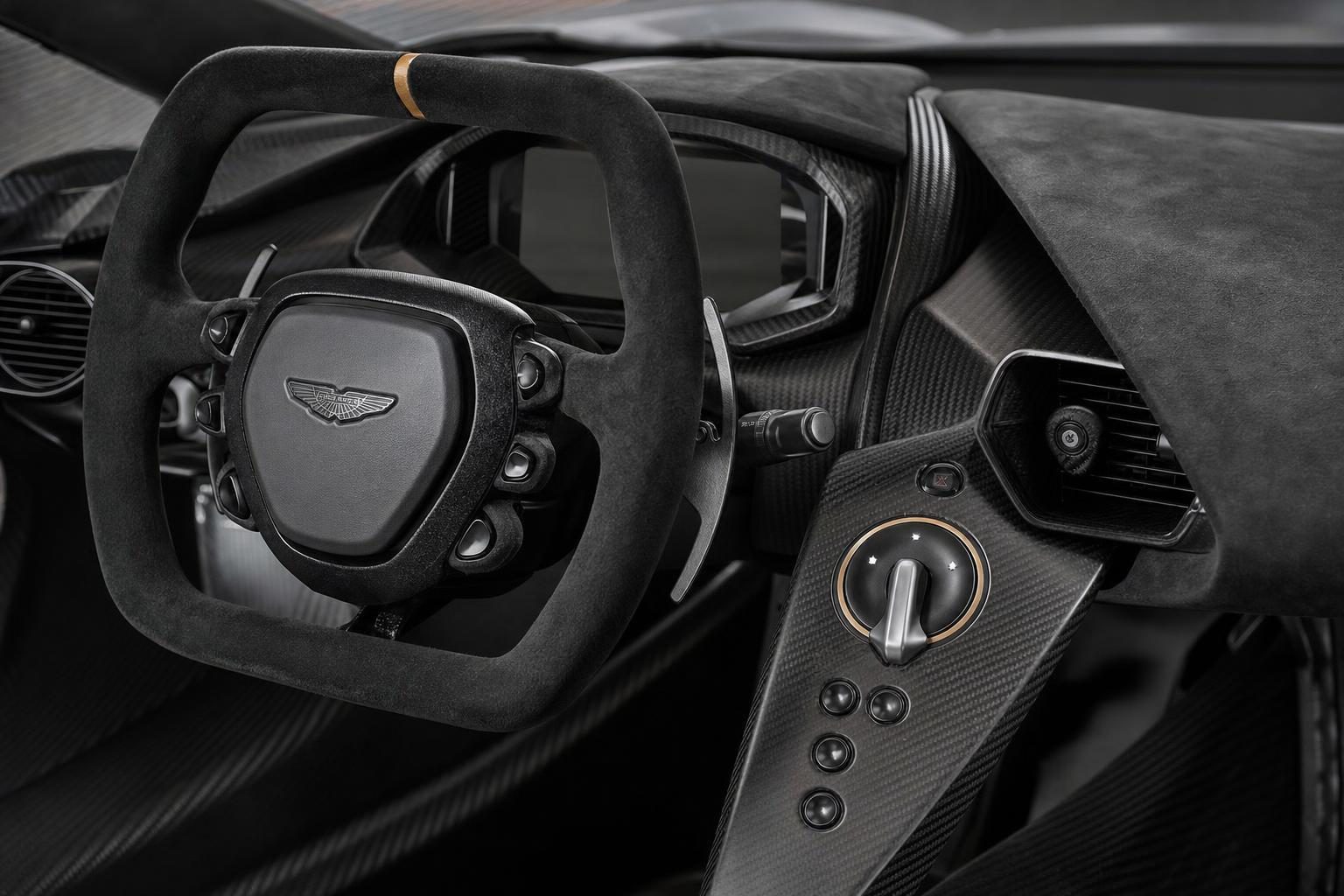
At its heart, a 7.0‑litre naturally aspirated V12 delivering 831 PS (820 ch) at 7,750 rpm, paired with a three‑position selector: 500 PS, 675 PS or 820 PS, according to Wikipedia. The idea is simple and rare: give an owner usable progression, from instructional running to full potential.
This graduation is no gimmick. It lets you learn a car with a razor‑sharp power‑to‑weight ratio before opening all the taps. On a cold track, when discovering a circuit or to keep tyres in the right window, the middle step becomes a tool. The press often fixated on peak output; the finesse lies more in the variometer than the summit.
The powertrain pairs with a 6‑speed Xtrac sequential gearbox and a magnesium torque tube, for a dry weight of 1,350 kg (Wikipedia). Specialist choices, closer to a serious customer‑racing programme than a styling exercise. Our analysis of the 820 PS track Vulcan sets them in the lineage of Aston’s great V12s.
The only road‑legal Vulcan: 18 months of work by RML Group
Only one example crossed the line: RML Group made a Vulcan road‑legal after 18 months of modifications, per Wikipedia. It remains the only case to date.
Why is this notable? Because converting an uncompromising track thoroughbred into a civilised machine entails packaging, ride height, visibility, noise and emissions work that is anything but trivial. The time invested speaks to the depth of the undertaking. The car remains what it is: a commitment machine. But the very existence of this example highlights the engineering quality of the original model.
It’s worth noting this exception does not distort the programme’s intent. Rather, it underlines the structural margin in the chassis and auxiliaries. As often at Aston Martin, the exception proves the rule and, in collecting terms, feeds a micro‑story within the Story.
The 2017 AMR Pro pack: from 3,150 N to 4,000 N of downforce at 160 km/h
Unveiled at the Goodwood Festival of Speed on 29 June 2017, the AMR Pro pack lifts aerodynamic downforce from 3,150 N to 4,000 N at 100 mph (around 160 km/h), according to the official release on media.astonmartin.com. For context, the 2017 Le Mans‑winning Vantage GTE is quoted at 3,104 N at the same reference point by the same source.
Beyond the figure, the message is clear: work usable load before chasing more horsepower. Wing, vanes, under‑body elements—every downforce piece serves consistency. Again, little fanfare, plenty of effectiveness. This evolution sits within the AMR ecosystem which, at the time, formalised the sharpest variants.
To place the whole within the brand’s communications, see the news page on astonmartin.com, which revisits the programme spirit and its track clientele.
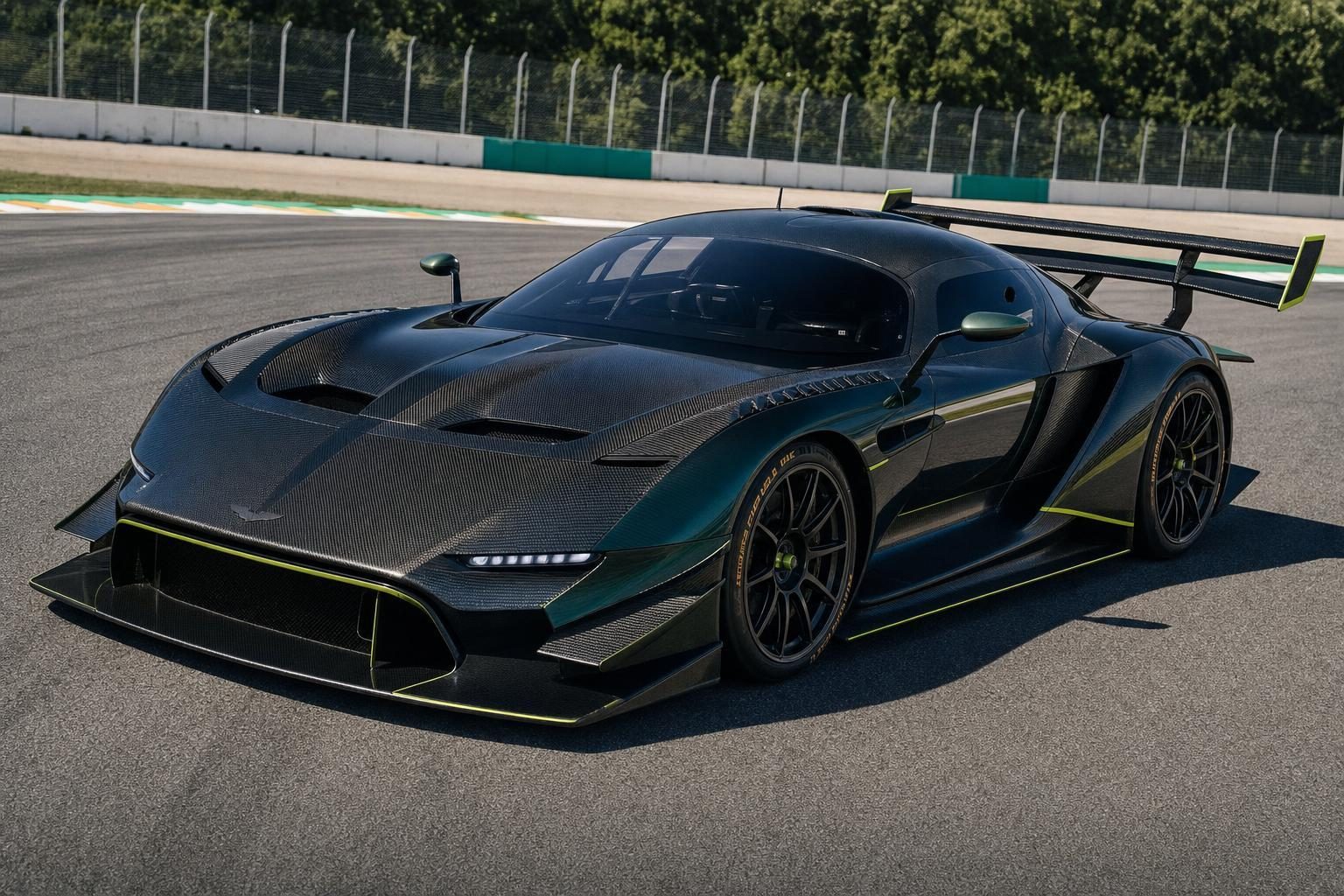
Marek Reichman, Multimatic DSSV and the choices that set Vulcan apart from a racing prototype
The design by Marek Reichman draws on the Vantage, the DB9 and the One‑77 (Wikipedia). You read Aston Martin’s design language at a glance, but turned up for the track. The volumes remain expressive without tipping into the aerodynamic anonymity of a prototype.
On the chassis side, the suspension uses adjustable Multimatic DSSV dampers (Wikipedia). Those who follow endurance racing know what this technology implies in precision and repeatability. Here it’s a statement of intent: approach racing methods without breaking the thread of a marque car.
The separation from a true prototype lies there: freedom of style, ergonomics an owner can live with, and a naturally aspirated V12 drivetrain that keeps a strong sensory link. The One‑77 heritage surfaces in stance and materials, while carefully chosen racing components plant credible technical markers.
Conclusion: what Vulcan says beyond the sticker
Vulcan is often reduced to its price and rarity; that misses five decisions that form the project’s substance: 24 examples for 24 hours, a modulable V12 from 500 to 820 PS, a unique road conversion by RML, an AMR Pro with 4,000 N at 100 mph, and the Multimatic DSSV imprint under Reichman’s pen. Taken together, these choices sketch a track Aston Martin that speaks of endurance, learning and development rather than speculation.
To go further, our Vulcan file and the detailed technical analysis complement this reading, while the One‑77 trajectory illuminates the lineage. In the end, Vulcan is not a formula: it’s a method. And, for an Aston conceived first for the track, that may be the finest compliment.