DB6 Volante : pourquoi ce cabriolet, plus abouti techniquement que le DB5, demeure rare et sous-coté. Châssis rallongé, Superleggera revue, 29 Vantage.
DB6 Volante, or the paradox of an open Aston that is both more accomplished and more discreet than its predecessor. Unveiled at the 1966 London Motor Show, this convertible remained in production until 1970 and, crucially, corrected several structural limits of the DB5. At a time when auction rooms readily sanctify the 1964 myth, this model deserves a fresh look: lengthened chassis, reworked Superleggera, performance variants and long-term royal use. Here’s why the astute collector should reassess this classic.
The cabriolet rigidity problem: what the DB6’s stretched chassis enabled that the DB5 convertible could not
Converting a coupé into a convertible confronts a stubborn reality: torsional rigidity drops when you remove a load‑bearing roof. The DB6 tackles this head‑on by stretching the wheelbase by 95 mm (3.75 inches) compared with the DB5. According to Wikipedia DB6, this structural gain is more than a space convenience: it stabilises the car at high speed and creates the volume needed to integrate a neatly engineered hood without compromising the framework. Where the DB5‑derived convertible had to make do, the new chassis provides technical headroom.
Practically, this extra wheelbase helps distribute loads better and reduce localised stresses that are critical on a convertible. The result: the hood mechanism and the placement of reinforcements sit on a calmer foundation. It’s one of the keys to the DB6 Volante’s maturity: fewer invisible compromises, greater rigour at the wheel.
Let’s add that the DB6’s “Kammback” tail, designed to improve aerodynamics, follows the same logic of efficiency. While conservative clientele greeted it coolly at its 1965 debut (source: Wikipedia DB6), this choice, together with the longer wheelbase, contributes to a more assertive grand touring stability than on the previous generation.
The modified Superleggera: variable‑section steel tubes and the £5 licence per car
The DB6 does not renounce the Superleggera philosophy, but it refines its execution. Still according to Wikipedia DB6, the tubular framework moves from uniform sections (DB4 and DB5) to variable‑section steel tubes depending on their position in the structure: slimmer where loads are lighter, more generous where stresses accumulate. This is targeted optimisation, of direct benefit to a convertible for which every reinforcement counts.
This evolution serves a dual aim: better‑distributed rigidity and contained mass. On a model without a fixed roof, fine‑tuning the sections reduces the yo‑yo effect of reinforcements added after the fact. The hood stows cleanly, the profile remains elegant, and the base gains in dynamic coherence: enough to make the DB6 Volante a more technical proposition than it appears.
Ethics of industry: Aston Martin paid Touring of Milan a £5 royalty per car for the use of the Superleggera licence. This often‑overlooked detail is a reminder that old‑world craftsmanship also relied on patents and intellectual‑property flows. On the official page devoted to the model, Aston Martin places the DB6 in the DB4–DB5 continuum with this evolved signature architecture (consulter la fiche historique du DB6).
140 Volantes including 29 Vantage: the rarity of the high‑performance convertible
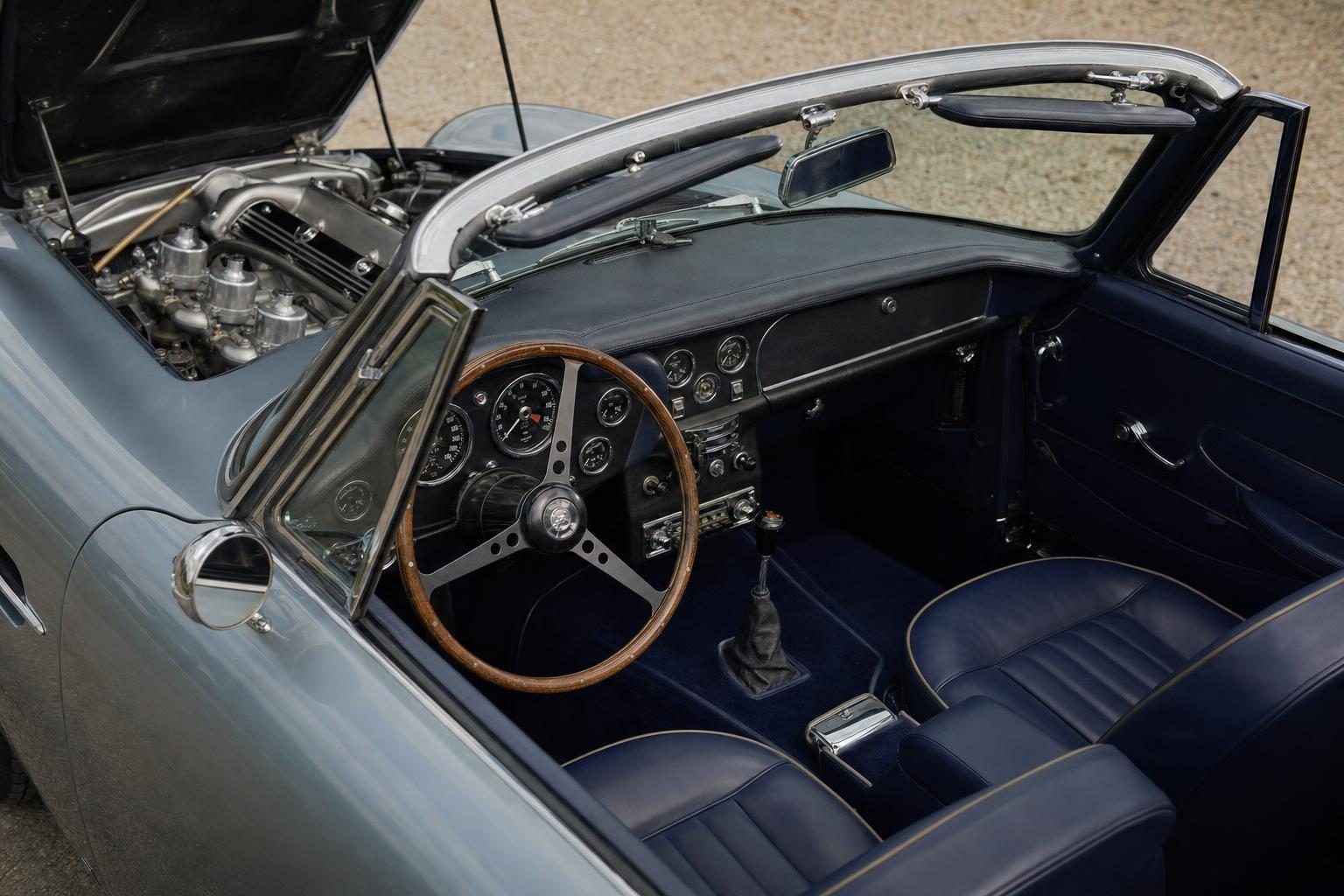
The numbers speak: 140 DB6 Volantes in total, of which 29 in Vantage high‑performance form, according to Wikipedia DB6. That’s few, and it’s precisely what makes the convertible rarer than its closed equivalent in overall DB6 production. The Vantage variant, credited with 325 hp (242 kW) versus 282 hp for the standard configuration, embodies the synthesis: open grand tourer, sharper engine, honed chassis and structure.
In a collectors’ market where storytelling weighs as much as engineering, these 29 Vantage cars offer a solid argument. They concentrate the model’s technical evolution and the appeal of sparse production. It’s easy to see why values may tighten as enthusiasts rediscover the mechanical virtues of this late‑series car.
To place the car in its period context and immediate genealogy, it’s worth revisiting the encyclopaedia entry (aperçu détaillé du DB6 sur Wikipedia) and Aston Martin’s press documentation (dossier média DB6).
The example owned by Charles III: E85 and the story of long royal use
Another chapter, more anecdotal but telling: Charles III owns a DB6 Volante Mk II, converted to E85 biofuel (source: Wikipedia DB6). Beyond the symbolism, one can see proof of real, prolonged use of a 1960s convertible. It’s not just a state trinket: it’s a car that is driven, and one that has found a compromise between heritage and contemporary concerns.
This royal detail illustrates the model’s technical flexibility. A sound base, a modernised fuel system: the team in charge managed to blend mechanical respect with new requirements. Without lapsing into society gossip, note that this visibility helps maintain the DB6 Volante’s profile in the collective imagination, beyond the inner circle of aficionados.
For the collector, it’s a useful reminder: when a historic car supports varied uses without betraying its character, it often means its original design was well conceived. The DB6, with its more settled chassis and optimised Superleggera, provides a royally publicised example.
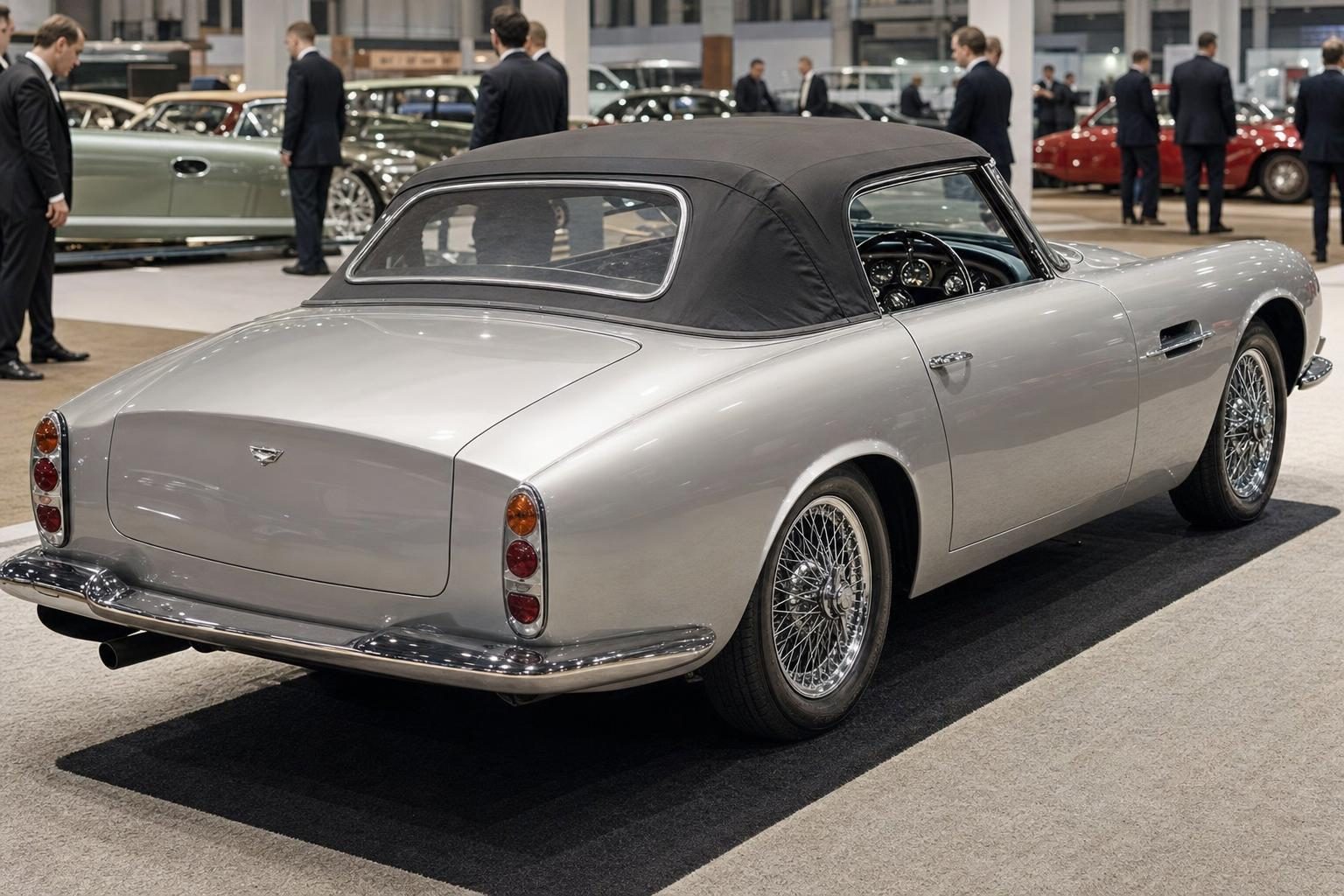
DB5 Volante versus DB6 Volante: auction values and a buyer’s argument
On the auction stage, the DB5 Volante naturally draws the spotlight, buoyed by cross‑over renown that transcends engineering. The DB6 Volante, meanwhile, is sometimes underestimated. Yet the facts are stubborn: wheelbase extended by 95 mm, hood integration without structural sacrifice, variable‑section Superleggera, more effective Kammback aerodynamics. In other words, the engineering moved on.
For a rational collector, the case holds water: fewer convertibles built than coupés, and within that total, only 29 Vantage. Add the improved high‑speed behaviour and the extra structural coherence, and you have a proposition that ticks decisive boxes without overplaying mythology.
Should one ignore the DB5’s charm? No. But acknowledging that the DB6 Volante embodies an engineering maturity often overlooked, yes. According to Wikipedia DB6, initial reception of the Kammback was mixed; a few decades on, its aerodynamic efficiency and discreet elegance read rather differently. Now is the time to buy with the head as much as the heart.
To delve deeper into the lineage and set this evolution in context, explore our dossier on the model (toutes nos analyses sur la DB6) and our dedicated technical overview (DB6 1965 : quatre raisons techniques). Bodywork fans can also discover a cross‑section of the marque’s convertibles in soixante ans de Volante.
Conclusion: why the DB6 Volante deserves a re‑evaluation
The brief is simple: the DB6 Volante was unveiled in 1966, enjoyed four years of production, totals 140 examples including 29 Vantage, and rests on an architecture more accomplished than the DB5 convertible’s. Stretched chassis, refined Superleggera, more developed aerodynamics: everything contributes to a more coherent convertible, without losing the British grace befitting the badge.
Whether in standard form or as a rare Vantage, this model combines rarity, technical rigour and living history — right up to Charles III’s E85‑converted example. For the informed buyer, it’s less an alternative to the myth than a connoisseur’s choice: an Aston with mature engineering, measured production, and heritage value quietly set to assert itself. In a word, the DB6 Volante no longer needs to shout to convince: you just have to listen.