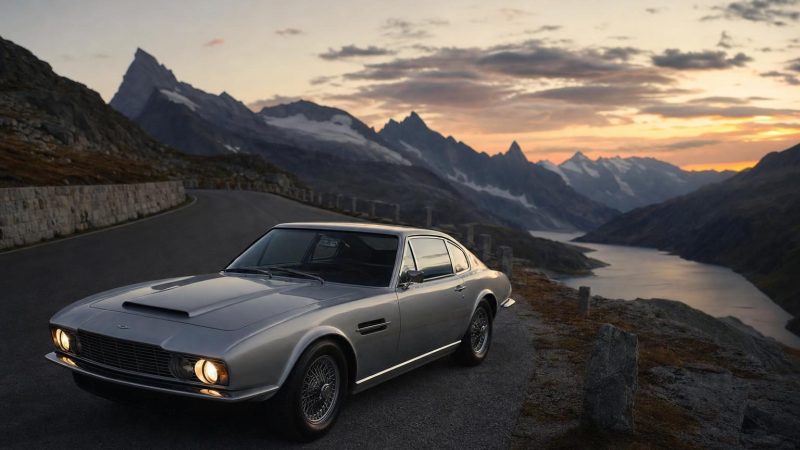
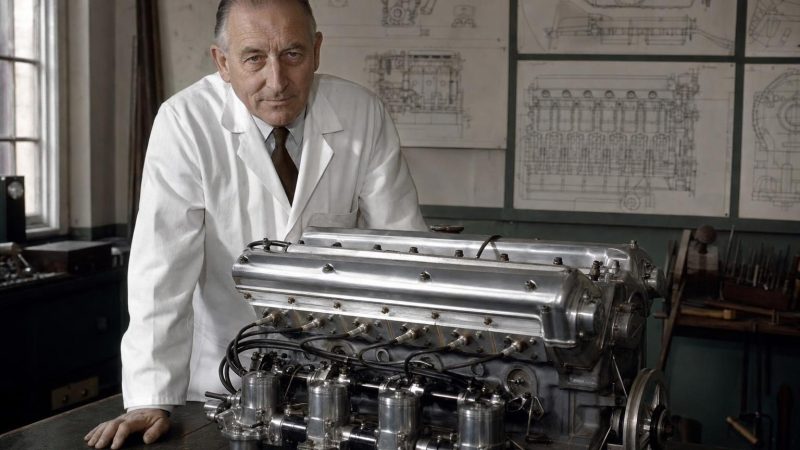
Marek Reichman has led Aston Martin's design since May 2005. A portrait of the Chief Creative Officer who signed the One-77, Vulcan, DB11, Valkyrie, and the first SUV DBX.
Marek Reichman embodies the discreet architect of a stylistic transformation that has reconfigured Aston Martin’s visual identity over nearly two decades. From Sheffield to Gaydon, his journey combines exceptional training and key experiences at Rover, BMW, and Ford, elevating the brand to a level of desirability and coherence rarely matched. Through iconic models like the One-77, DBS, DB11, and DBX, Marek Reichman has established a vocabulary of beauty, identity, and continuity that permeates the entire range, while cultivating a privileged dialogue with popular culture, from the road to the James Bond sets.
From Sheffield to Gaydon: A Journey Forged at Rover, BMW, and Ford
Born in Sheffield in 1966, Marek Reichman immersed himself in design early on, earning a first-class degree in industrial design from Teesside University, followed by a course in automotive design at the Royal College of Art in London. This academic foundation, cited by sources such as Wikipedia, provides him with a dual valuable skill set: an industrial engineering rigour and an automotive stylist’s sensitivity, two pillars that will support his trajectory towards Gaydon.
In 1991, Marek Reichman began at Rover Cars before joining BMW Designworks in California in 1995, where he led the design of the Range Rover (L322) launched in 2003. This position, reported notably by Wikipedia and Autocar, refines his understanding of proportions and the presence of a luxury SUV. For those observing Aston Martin’s subsequent evolution, this Californian stage is revealing: it confirms Marek Reichman’s ability to articulate elegance, functionality, and the desire for objects.
He joined Ford in 1999 and then moved to Aston Martin in May 2005 to take over the design direction. This journey through British and German schools, within major groups, builds a common grammar of beauty and efficiency in Marek Reichman. It foreshadows how he will embed Aston Martin’s style within a long-term coherence, cultivating a signature without freezing it.
2005: Arrival at Aston Martin and Foundational Projects
According to Aston Martin’s official notice, Marek Reichman became Director of Design in May 2005. His appointment, documented by a dedicated institutional page and by Wikipedia, immediately establishes an ambition: to consolidate the brand’s visual DNA while renewing its desirability. This period sees the emergence of projects that will become milestones, starting with the DBS, whose aura will quickly transcend the circle of insiders.
Marek Reichman’s first contact with James Bond occurs when Daniel Craig and Barbara Broccoli come to discover the DBS, the car that will become the one in Casino Royale. This connection, reported by magazine.astonmartin.com, seals a decisive cultural resonance: associating the cracked aesthetic of an iconic spy with the image of a sculptural English GT. It opens a narrative thread that Aston Martin will continue to pull, all the way to the DB10 designed for Spectre (2015).
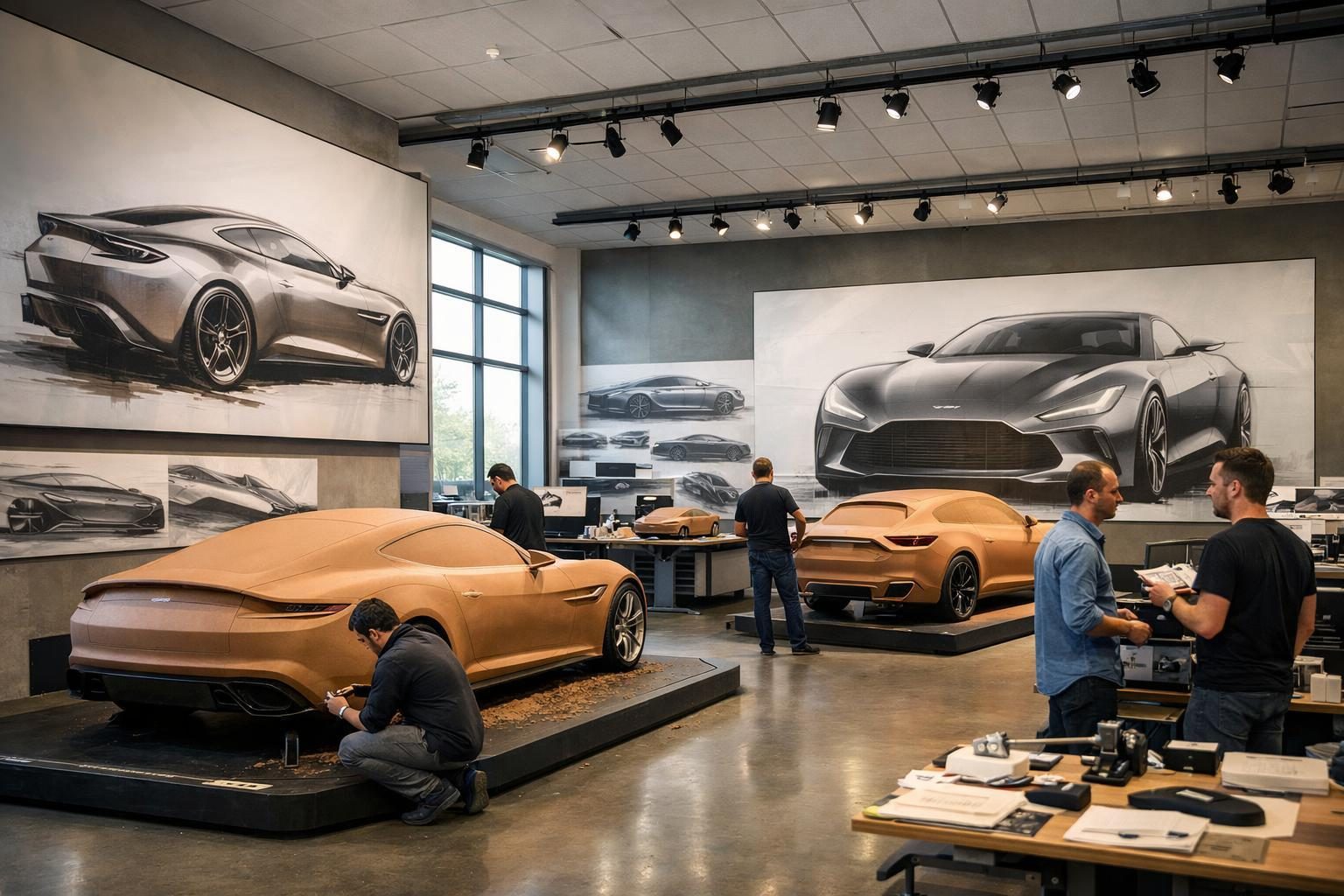
In December 2007, Marek Reichman inaugurates the new design studio at the Gaydon headquarters. The prefabricated wooden building will receive a RIBA Award in May 2008, according to luxuriousmagazine.com. By providing the brand with a space that matches its ambitions, he establishes an integrated creative process conducive to the maturation of a coherent range and special projects capable of enriching the overall image.
The Design Philosophy: Beauty, Identity, and Continuity
What one reads through the production signed by Marek Reichman is a synthesis of timeless beauty, clear identity, and evolutionary continuity. The One-77, DBS, Rapide, Vanquish (2012), Vulcan, DB10 for Spectre (2015), DB11, DBX, and Valkyrie trace a guiding line: aesthetics serve a brand narrative. The whole does not seek isolated effects but a common thread that connects the road, the track, and the collective imagination.
This continuity is expressed through Marek Reichman’s ability to align very different models around the same formal promise. Without locking himself into a unique motif, he maintains immediate recognition of the Aston Martin emblem while allowing each project its reason for being. Beauty is not a veneer but a structural mache that orders volumes and intentions.
According to Autocar, the challenge remains to “reinvent” Aston Martin’s design again, without breaking the thread. Their analysis, accessible via a reference article, sheds light on Marek Reichman’s stance: to hold together heritage and projection in a demanding industrial and cultural context. This is where his philosophy of beauty as a guarantor of identity and permanence emerges.
Notable Models: From One-77 to DBX, Including Bond’s DB10
Among the creations attributed to Marek Reichman are the One-77, DBS, Rapide, Vanquish (2012), Vulcan, the DB10 designed for the film Spectre (2015), DB11, DBX, and Valkyrie, according to the cited sources (Wikipedia, i-m-magazine.com). Each of these models occupies a specific place in the construction of a stylistic map: manifest hypercar, reference GT, four-door saloon, image SUV, radical track piece, or cinematic object.
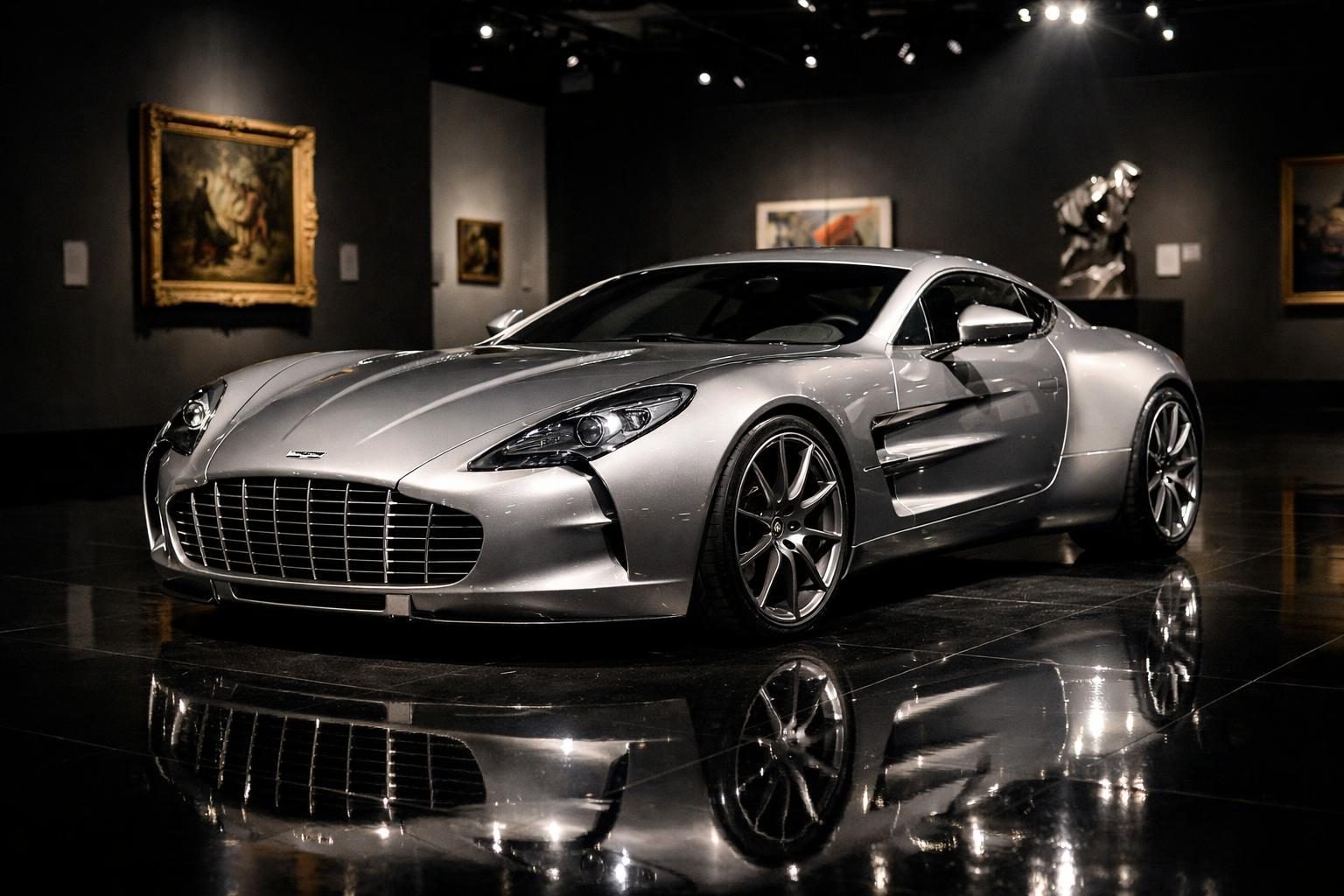
The One-77 acts as a totem, while the DB11 embodies the balance of a contemporary GT. To extend the exploration, consult our dedicated page on the One-77 and our complete sheet on the DB11. The James Bond arc, from DBS to DB10, has reinforced Aston Martin’s cultural resonance; our dossier on the history between Aston Martin and James Bond outlines the key stages.
This panorama speaks to both the breadth and coherence of Marek Reichman’s gesture. From the Vanquish (2012) to DBX, the field opens without diluting, proving that a clear compass guides the choices. Cinema amplifies the message, but it is the architecture of the ranges that, over time, establishes trust and desirability around the brand.
The New Studio in Gaydon and the Next Era of Aston Martin Design
The opening of the design studio in Gaydon in December 2007, under Marek Reichman’s impetus, was a turning point: a tailor-made tool to orchestrate research, creation, and decisions. The RIBA Award granted in May 2008 to the prefabricated wooden building, reported by luxuriousmagazine.com, validates the architectural quality of the whole and, beyond that, the desire to embed creation within a demanding and inspiring framework.
In 2024, Autocar awards Marek Reichman the Sturmey Award for Innovation for overseeing more than 50 Aston Martin and Lagonda models in 19 years. This figure, reported by Autocar, quantifies a visible reality: the consistency of a course and the richness of a creative portfolio. It also situates the era: nearly twenty years of iterations served by a readable stylistic direction.
As the brand prepares to enter a new phase, the equation remains the same for Marek Reichman: to evolve the expression of British sporting luxury without losing its essence. The methodological resources of the Gaydon studio and the synthesis of experiences accumulated at Rover, BMW, and Ford provide a solid lever to write this new chapter.
Conclusion — The Legacy of Marek Reichman at Aston Martin
Over time, Marek Reichman’s contribution is measured as much by the clarity of the visual DNA as by the ability to engage with culture, from the DB10 of Spectre (2015) to road icons like the DB11 or DBX. According to Autocar, he has overseen more than 50 models over 19 years in 2024, placing his contribution within a systemic perspective: a vision that transcends cycles and maintains focus on beauty and brand identity.
From Sheffield to the Gaydon studio, the coherence of Marek Reichman’s journey, supported by his studies at Teesside and the Royal College of Art and his stints at Rover, BMW, and Ford, has infused every project. To further explore, the biography on Wikipedia (en) and the notice from Aston Martin dedicated to Marek Reichman provide useful reference points. This trajectory reinforces the idea that a philosophy of beauty patiently cultivated can, in itself, redraw the aura of a brand.