V8 Zagato 1986: why adding a Volante after 52 coupes split owners and shaped values for the two series.
V8 Zagato: at Geneva 1986, a coupe by Aston Martin and Zagato sold the dream before the industrial reality, then saw a Volante derivative emerge that reshuffled the deck. Between orders placed on a drawing, fluctuating volumes, opposing mechanical choices and speculative fervour, this duo condensed into four decisions all the complexity of the 1980s at Aston Martin.
Geneva 1986: orders signed on a drawing, before the car itself
The starting gun was fired at the 1986 Geneva Motor Show, where the coupe was unveiled. According to Wikipedia, orders for this V8 Zagato were then taken on the basis of a drawing only. A gesture of trust — and desire — quite typical of Newport Pagnell’s clientele, accustomed to artisanal production and short runs.
This method had two consequences. First, it locked in strong demand for the compact, tautly profiled coupe just as Aston Martin was consolidating its image as a high-output grand tourer. Second, it set a high horizon of expectation from the outset: lead times, specifications and volumes became sensitive topics, because customer commitment preceded the production tooling.
In this context, the identity of this model — styled by Zagato, powered by the in-house V8, and delivered in dribs and drabs — took shape. What followed would show that commercial discipline would be tested by successive range choices, at times bewildering for the first signatories.
50 or 52 examples: why sources differ on the coupe
The coupe’s tally is not unanimous. Wikipedia lists 52 coupes produced between 1986 and 1990, whereas Aston Martin’s “past models” page mentions 50 “saloons” and 37 Volantes. The divergence should be clearly stated: according to Wikipedia (Aston Martin V8 Zagato), the total number of coupes is 52; while the official site, past models section, sets this number at 50.
Several hypotheses, without venturing beyond the sources, can explain the gap: counting of prototypes, rebuilt chassis, or terminology (“saloon” applied to the coupe). What matters for the perception of the V8 Zagato is that the order of magnitude remains very low — around fifty — and therefore conducive to rarity. This rarity, reinforced by the speculative wave of the late 1980s, sealed the coupe’s fate on the collectors’ market.
A symbol of the model’s instant appeal, the first production coupe (chassis 20013), delivered in July 1986 in Gladiator Red, was acquired by Rowan Atkinson, notes Nicholas Mee & Co. Later prepared for competition by Aston Martin Works (1998) and uprated to 482 PS, it embodies both the model’s singularity and, at the time, the permeability between road and track at Aston Martin.
The Volante decision: 25 planned slots, 37 built and unhappy coupe owners
Act two: opening up the body style. The prototype of the V8 Zagato Volante was presented at Geneva 1987, with a “sanction” of 25 cars, according to the Aston Martin pressroom. The marque indicates it had already sold 25 examples before production even began, ultimately bringing the total to 37 units delivered. In short, the second wave exceeded the announced limit.
From the coupe owners’ community perspective, this extension was not neutral. The “firsts” — who signed at Geneva 1986 on a drawing — saw a later, more open derivative appear, and ultimately more numerous than promised. This shift fuelled an unprecedented tension between the two camps: those who had bought the most radical and shortest-run line, and those who capitalised on the instant allure of the convertible, even if it unsettled the original rarity.
In the symbolic economy of a series announced as strictly limited, any overrun — even a measured one — weighs on the perception of exclusivity. The lasting consequence for the V8 Zagato would lie in this asymmetry: the coupe enjoys the status of a “first draft” sold on promise, while the Volante asserts itself through amenity and image, but must reckon with the long shadow of disgruntled coupe owners.
Two engines, two configurations: how the open body changed the mechanics
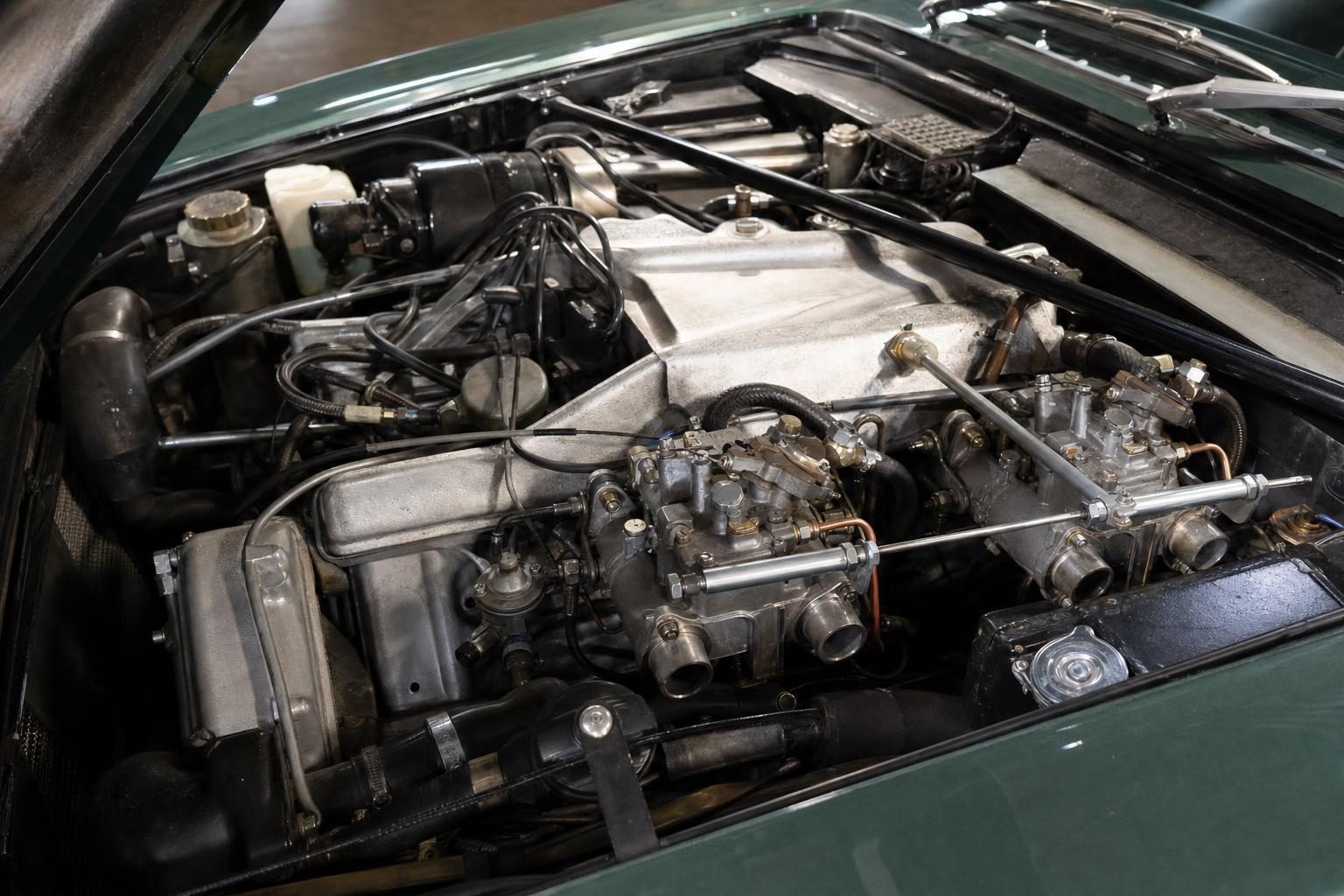
The distinction does not stop at the bodywork. The V8 Zagato coupe took the mechanical basis of the V8 Vantage “big bore” with twin-choke Weber carburettors, quoted at 432 PS according to Wikipedia (V8 Vantage 1977). This muscular configuration, close to the X-Pack, required a pronounced bonnet bulge, a visual as well as functional signature.
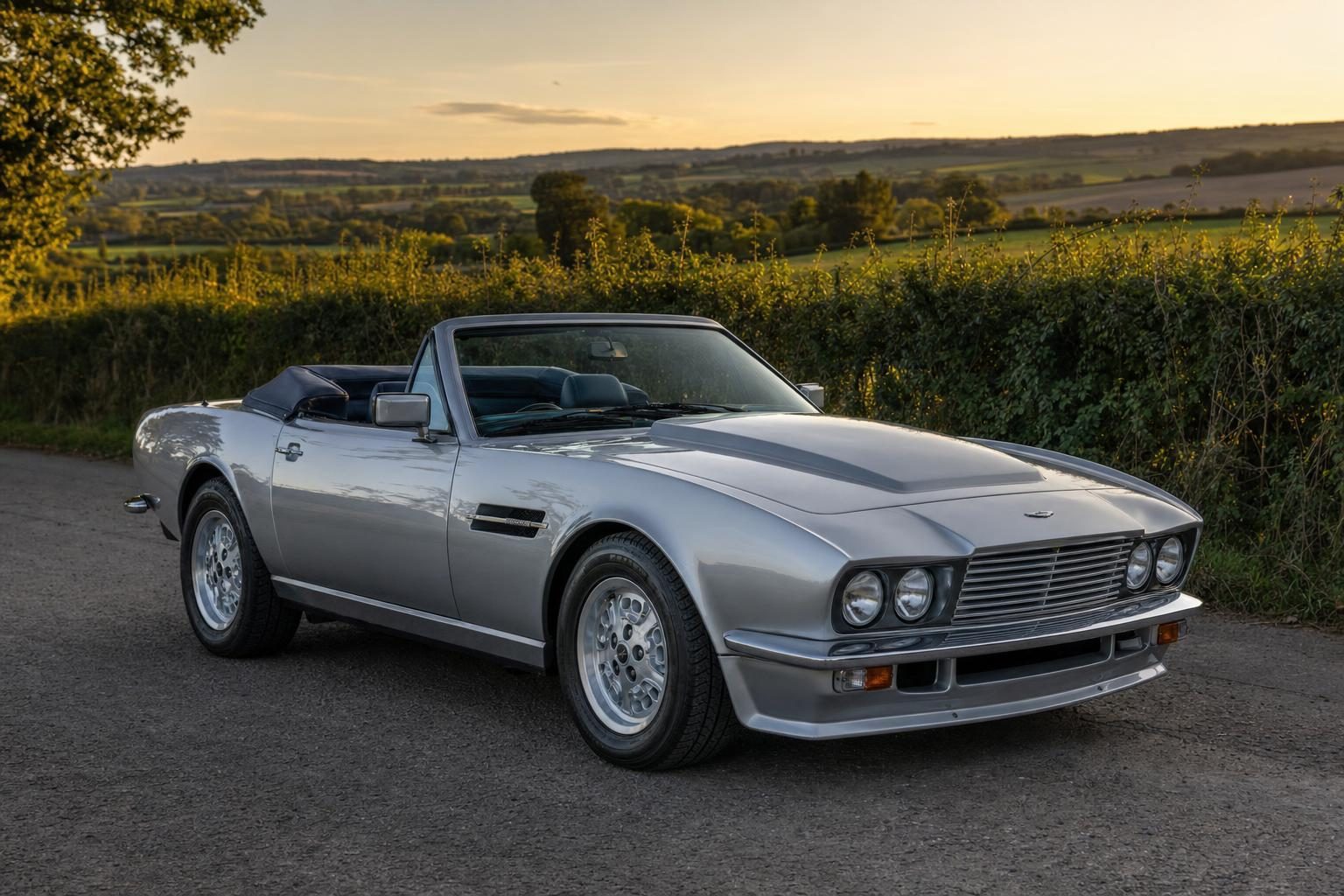
By contrast, the Aston Martin pressroom specifies that the Volante adopted naturally aspirated injection, allowing the bonnet bulge to be deleted. Beyond aesthetics, this difference shaped the convertible’s character: a smoother throttle response, thermal management and amenity in relaxed driving, in line with the intended use of an open-top model.
The coupe/convertible divide is thus read on the spec sheet as much as in the silhouette. The former addresses enthusiasts of sharp angles and vocal carburettors; the latter bets on fluidity, ease of use and a more grand touring presentation. Two philosophies, one badge — and, historically, two equally legitimate interpretations of Aston Martin’s period DNA.
Current values: coupe or Volante, which did history favour
Questions of value are fed first by memory. At the peak of the 1987–1990 bubble, some coupes changed hands at £450,000 against a list price of around $156,600, reports Wikipedia. This gap illustrates the volatility of a market then fascinated by short runs and coachbuilt signatures.
Over the long term, three parameters weigh in. First, chronology: the coupe, “first to arrive”, retains the aura of the initiative and the founding design. Second, the mechanics: carburettors and the “big bore” specification play the character card, where the Volante’s injection appeals through civility. Third, the governance of rarity: the convertible’s production extension beyond the announced 25 fuels, for some, a desirability differential in favour of the coupe.
In transactions, this generally translates into a structural advantage for the V8 Zagato coupe, especially when in original-conform specification with a clear history. The Volante, for its part, remains sought after for its versatility and its more restrained look (bonnet without bulge), with a clientele focused on use rather than a speculative totem. Two markets in dialogue, without always overlapping.
To place this tandem in the Aston Martin timeline, remember that the V8 Zagato sits within the lineage of the AM V8s of the 1970s–80s and, in aspects of style and positioning, foreshadows the following decade. In this respect, our guide to the Newport Pagnell AMV8 helpfully sheds light on the shared technical base, while the arrival of the 1990s would see a transition to other codes, detailed in our dossier Aston Martin Virage and evolutions.
Conclusion: V8 Zagato, two waves and one signature
The V8 Zagato sums up a time when stylistic audacity and commercial dynamism advanced in concert, sometimes at the risk of crossed wires. Sold on a drawing at Geneva 1986, produced in low numbers but disputed (50 or 52 coupes depending on sources), doubled as a Volante beyond the initial quota, it crystallised conflicting expectations and nurtured a discreet rivalry between owners.
The mechanics sealed this duality: “big bore” carburettors and bonnet bulge for the coupe, naturally aspirated injection and a smooth bonnet for the convertible. Thirty years on, the market has decided without denying nuance: the coupe holds the edge for conceptual purity and perceived rarity, while the Volante enjoys sustained esteem for its amenity and grand touring elegance.
Ultimately, if two variants complicated coexistence, one constant remains: the V8 Zagato stands as a pivotal piece of Aston Martin heritage. For further factory-side technical reading, see the V8 Vantage “past models” historical sheet, and for a concise overview, the dedicated page on Wikipedia for the Aston Martin V8 Zagato.