Valhalla piste: Aston Martin’s hybrid supercar at full charge on the Red Bull Ring. Powertrain, active aerodynamics and 4 keys to read it.
Valhalla piste: starting from the long take shot at Spielberg, we take the facts one by one to read, behind the staging, what the mid-engined supercar reveals in circuit conditions. Without extrapolating, but with the official figures, design elements and the Red Bull Ring context, the aim is simple: understand what the Aston truly promises on track, and what it already shows.
Spielberg, an unexpected setting for a first dynamic staging
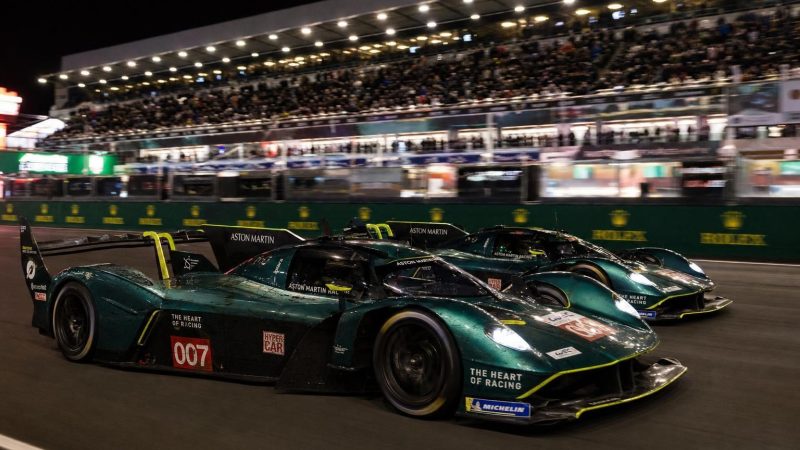
The setting chosen for the official video immediately places the Valhalla in a pure track situation. The long take at the Red Bull Ring, venue for the 2026 Austrian Grand Prix held on 28 June 2026, blends a narrative thread with visible accelerations and load phases, offering a credible reading of the Valhalla piste in dynamics. The video description and the page dedicated to the Austrian event confirm the setting and date, useful to place the exercise in a Formula 1 environment.
This circuit, short and flowing, emphasises traction zones, loaded braking and exits. In this context, the Valhalla piste is shown “at full charge”, a term that doesn’t imply a lap time, but indicates that the powertrain and aerodynamic systems are working in a high operating window. In other words, we’re not seeing a homologation run, but a targeted demonstration of its technical strengths.
Finally note the deep connection with F1 on home turf. With dynamic and aerodynamic development conducted with Aston Martin Performance Technologies (the consulting arm linked to the Aston Martin Aramco team), the choice of Spielberg is no aesthetic coincidence: it’s a signal. On this point, the official technical communication and the encyclopaedic summary align.
To revisit this setting and the single-take narrative, the Spielberg video is essential, while the associated event remains documented on the 2026 Austrian Grand Prix page. Enough to place the Valhalla piste in its natural environment, without superfluous commentary.
The PHEV powertrain: a flat-plane-crank V8 and three electric motors
The centrepiece lies in the hybridisation. According to media.astonmartin.com (11 December 2024), the PHEV pairs a 4.0-litre twin-turbo V8 with a flat-plane crankshaft delivering 828 PS to three electric motors adding 251 PS. Combined output reaches 1,079 PS (1,064 ch) and 1,100 Nm of torque. For the Valhalla piste, this means exits where combustion and electric share the effort: one for linear rev build and taut soundtrack, the other for instant off-corner response.
The quoted 0–100 km/h in 2.5 s and the electronically limited 350 km/h top speed (official brochure) don’t tell the whole story of a flying lap, but they validate two pillars of performance on the Valhalla piste: initial traction aided by the electric side and the reach to suit fast straights, like the Red Bull Ring’s. Set against the footage, these figures illuminate what we think we discern in the restart sequences and the fictional overtake.
The all-new 8‑speed dual-clutch gearbox, with integrated e-motor and a controlled rear differential, completes the picture. According to the spec sheet, reverse is provided exclusively by the front electric motors — a choice that frees gearbox architecture and underlines the central role of the front-axle e-drive. On the Valhalla piste, this powered front axle also contributes to mechanical agility at low and medium speed, where the Red Bull Ring punishes any latency.
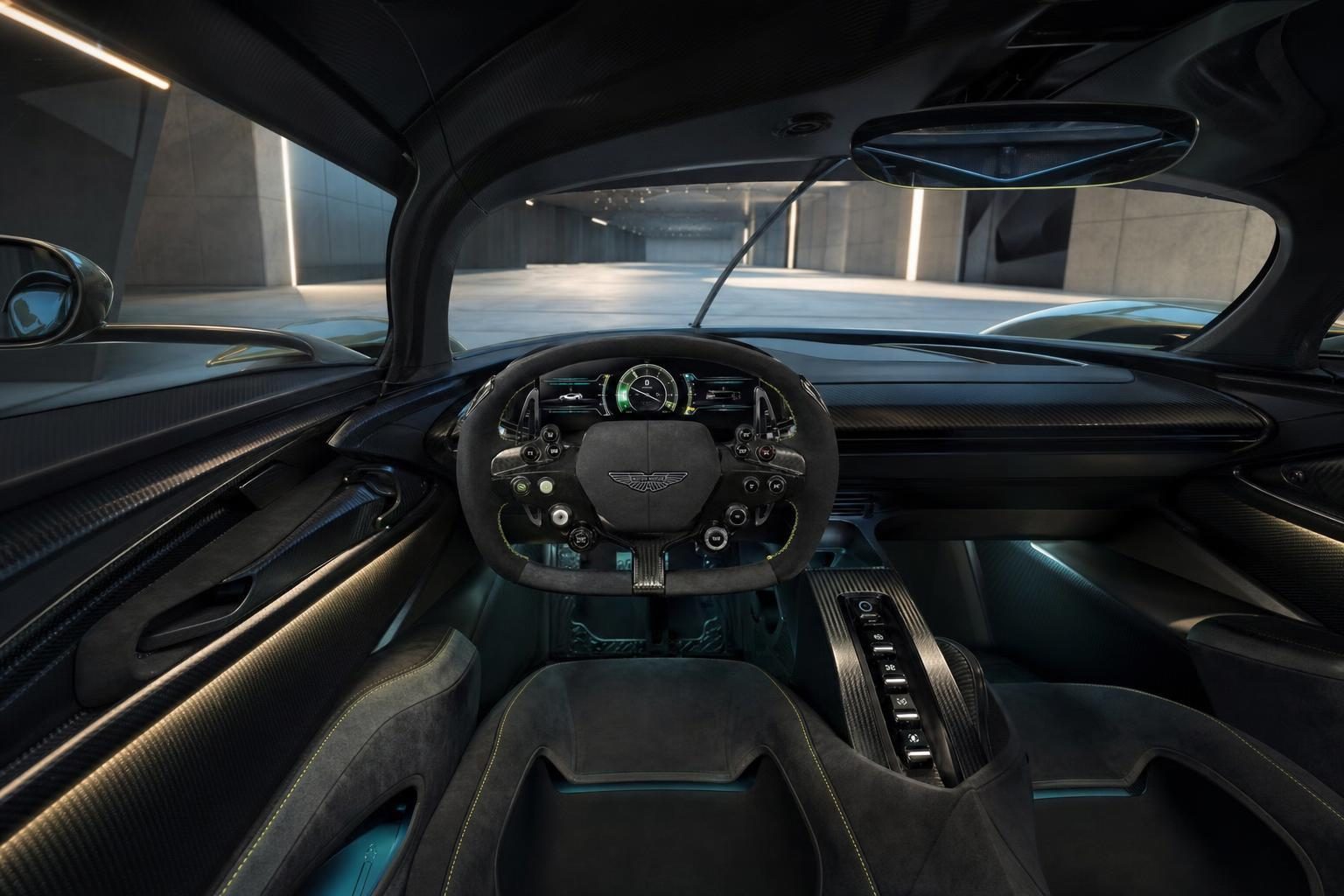
This hybridisation isn’t showroom theatre. It’s the brand’s first mid-engined production Aston Martin and the first plug-in hybrid from the marque to enter production, again per media.astonmartin.com. A context that explains the film’s focus: to show that the Valhalla piste isn’t a mere styling exercise, but a coherent system.
Active aerodynamics: 600 kg of downforce and a straight-line circuit logic as standard
On track, downforce is the lap’s currency. The official documentation (astonmartin.com) quotes over 600 kg of downforce sustained from 240 to 350 km/h, with integrated DRS and Air Brake functions. On the Valhalla piste, this translates into high-speed stability and the ability to shed drag on the straight before rearming downforce under braking. The continuity of load between 240 and 350 km/h is particularly telling for fast circuits.
This choice of active aerodynamics “as standard” shapes a clear reading of the Spielberg footage: we see top-speed phases where the car appears unshackled, then very crisp transitions on brake application, characteristic of an effective Air Brake. The Valhalla piste therefore targets layouts where running with variable aero states is acceptable, to extract the ultimate on the straight without sacrificing confidence in loaded corners.
Collaboration with Aston Martin Performance Technologies, born of the F1 environment, is the keystone here. Without over-interpreting, it’s consistent with set-up logics inherited from racing: exploiting downforce envelopes, DRS/braking interplay, high-speed balance. Concrete clues to understand the Valhalla piste beyond video editing.
Note, finally, that the Spielberg video highlights these aerodynamic state changes through sound and body motion, without resorting to heavy-handed technical commentary. A sober, effective, very “track” language.
Production limited to 999 units and deliveries already under way
Production is limited to 999 units. According to Wikipedia, the first customer delivery took place in December 2025 in the United Kingdom. These two elements set a context of rarity and industrial maturity: the Valhalla piste is no longer a distant promise; it is already with clients, while retaining limited-edition status.
This framework influences life on circuit. With a small fleet, technical support and software updates become strategic. The partnership with AMPT, mentioned by media.astonmartin.com, suggests a continuum between development and aftercare, useful when running a Valhalla piste at private track days or manufacturer events.
For an overview of the model, our dedicated Valhalla model file gathers the fundamentals, while the kinship with the Valkyrie and its extreme approach helps place this mid-engined Aston in the recent lineage. The “Valhalla piste” angle sits between production exclusivity and an assumed dynamic vocation.
Finally, for selected details on the hybridisation and daily life of this PHEV, see also our five plug-in hybrid anecdotes, useful for anyone considering pushing the Valhalla piste on a track day.
Valhalla and the track (Valhalla piste): a positioning halfway between road and Valballa LM
The question of positioning naturally arises after Spielberg: where does the Valhalla piste sit between road and intensive circuit use? The established facts describe a homologated production model, plug-in hybrid, with advanced active aerodynamics and development with AMPT. That clearly places it at the crossroads of both worlds: exploitable on the road, relevant on track, without posing as a race car.
The label “Valballa LM” mentioned here does not refer to any official source in the available facts. It is therefore appropriate to stick strictly to the documented model. In this framework, the Valhalla piste reads as a driver’s supercar, designed to tolerate a high, repeated pace, with systems (DRS, Air Brake, front e-axle) that ease the exploitation of a flying lap while preserving day-to-day amenity.
The choice of a limited top speed, a very competitive 0–100 km/h and high downforce over a wide speed range fits a “fast road / serious track” philosophy. On the Valhalla piste, hybridisation serves dynamic cohesion first — response, traction, energy management — more than the sole absolute number. That is exactly what the Spielberg staging lets transpire, without sector times, but with clear signs of exploitation.
In summary, the stated DNA is not that of a stripped-out track special: it’s a modern, technological Aston, filtered through AMPT. The Spielberg film was only a beginning because it establishes the vocabulary of the Valhalla piste — performance-oriented hybridisation, active aero, mid-engined architecture — set to express itself on other circuits, in customers’ hands.
Conclusion — Valhalla piste, from demonstration to ownership
Thanks to the Red Bull Ring, the Valhalla piste showed the essentials: a dynamically focused PHEV, credible active aerodynamics and a series base already delivered. The official sources — technical dossier, public references, Spielberg video — converge on these points. The rest is up to the owners, who will turn this demonstration into appropriation on track, with that blend of efficiency and restraint befitting an Aston.
Still, for those reading between the lines, Spielberg was only a beginning: the Valhalla piste has laid its markers, and the figures — along with AMPT’s set-up — point to the next flying lap.