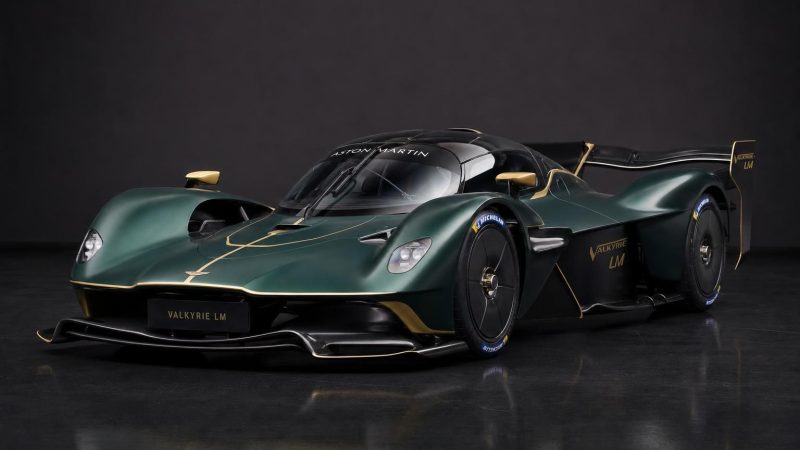
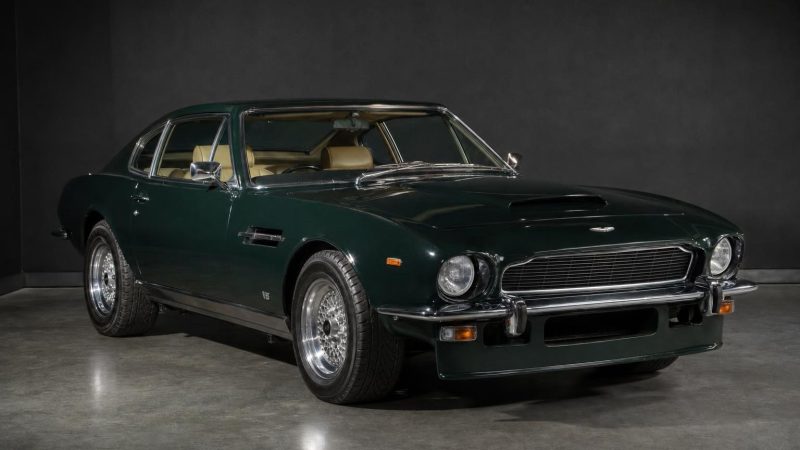
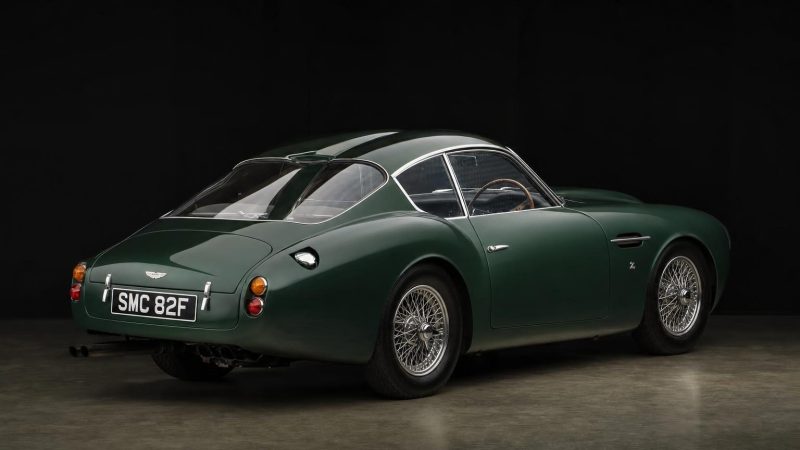
Valhalla: 5 development anecdotes, from three redesigns to the in-house V8, the RBAT touch, the accepted delays and the choice of 999 units.
The Valhalla walked a tightrope before reaching its production definition: five anecdotes, five decisive turns to understand how this mid-engined, plug-in hybrid Aston with around 1,000 PS made the leap from concept to reality. On the menu: the AMG mooted in 2019, the Red Bull Advanced Technologies touch, three technical reworks in three years, the final spec inherited from the Valkyrie and, finally, that production figure — 999 — which is anything but trivial.
2019: the announcement of a mid‑engine with an AMG powertrain — what the Valhalla was meant to be at the start
At the 2019 Geneva Motor Show, the AM-RB 003 project set the tone: a mid-engined coupé, conceived with the experience gained on the Valkyrie and announced with an AMG-sourced hybrid powertrain. According to media.astonmartin.com and as recalled in our technical feature, the initial roadmap banked on an engine partnership to speed up industrialisation and manage risk.
This first Valhalla aimed to balance radical intent with usability. The mid-engine layout was locked in from the outset and an AMG power unit was to provide a proven foundation. It promised a shorter development and a less vertiginous entry ticket for a niche programme.
Yet the brand’s vision quickly evolved. The desire to align the future coupé with the company’s philosophy — and to capitalise on the Valkyrie’s technical aura — opened the way to a refocus: more integration, more in-house control, and greater potential for the plug-in hybrid.
Red Bull Advanced Technologies in the loop: what this collaboration tangibly changed in the design
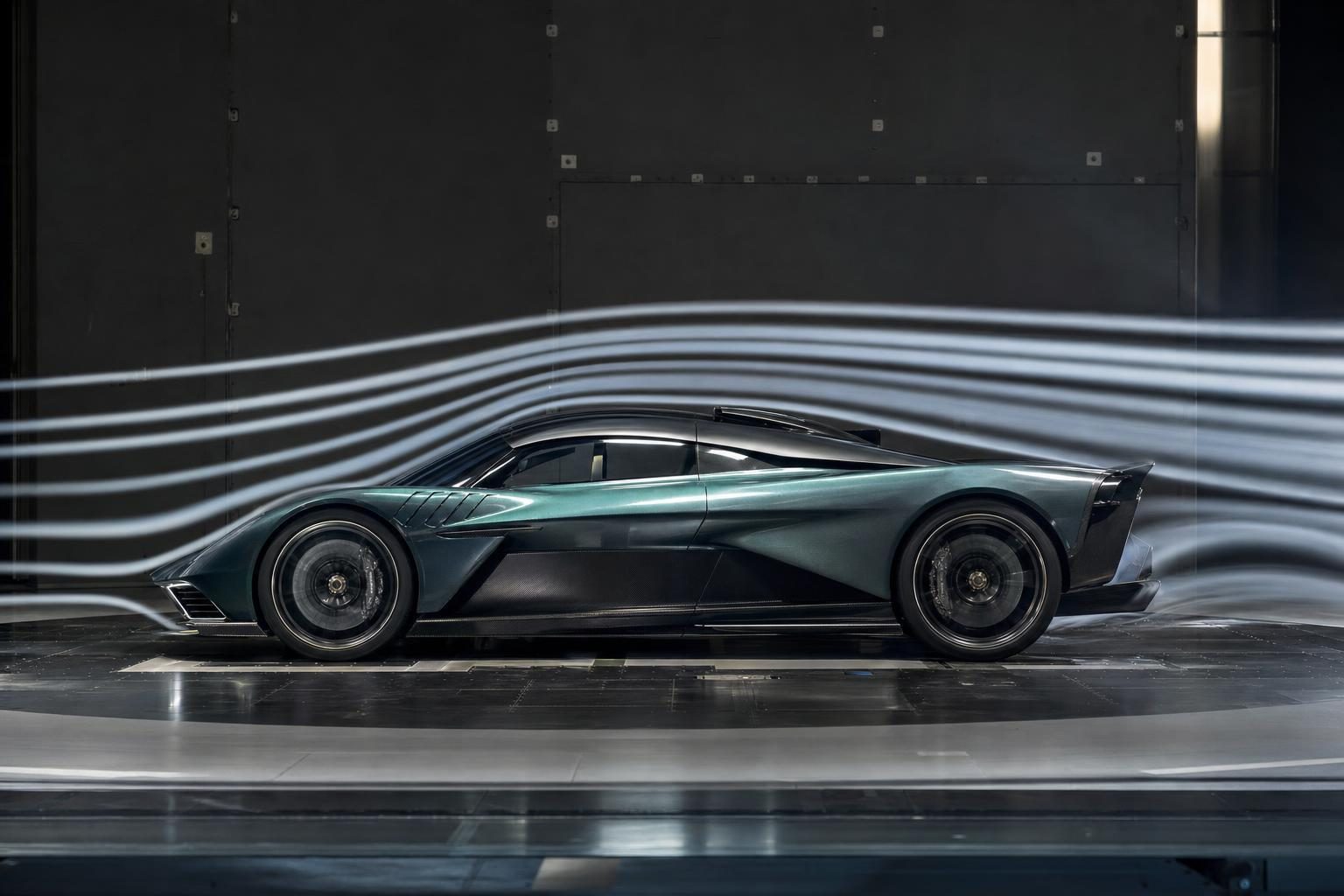
The presence of Red Bull Advanced Technologies (RBAT) left a deep imprint on the structure and aerodynamics. According to media.astonmartin.com, a competition-bred approach guided the search for useful aero load, flow management and mass–stiffness optimisation. In short: prioritise efficiency, not showboating.
In concrete terms, the collaboration shaped the Valhalla’s technical core. Carbon architecture, volume distribution, cooling and integrated aero channels all reflect an obsession with efficiency. The goal wasn’t to mimic the Valkyrie, but to distil its spirit where it matters: stability, precision and consistent performance.
This partnership also imposed development discipline. RBAT pushed for measurable choices and accepted compromises, rather than seductive promises on paper. Result: a more mature base, able to absorb the shift to a more ambitious plug-in hybrid.
Three reworks in three years: the technical and financial reasons behind a project that evolved but was never abandoned
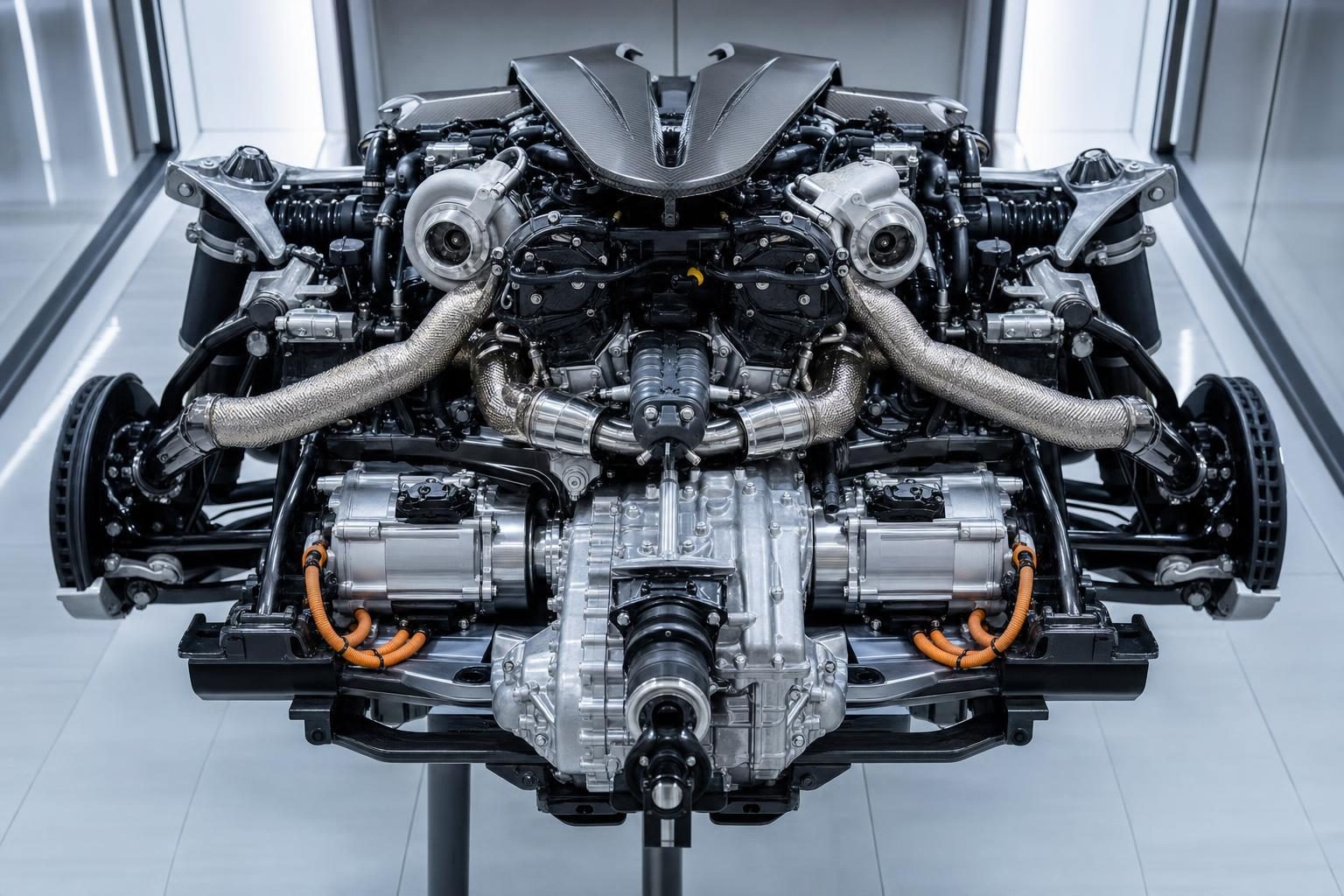
Between 2019 and 2022, the Valhalla underwent three major reworks. The reasons were both technical and financial. On the technical side, moving towards a more complete plug-in hybrid system led to revisions in packaging, power electronics and auxiliary integration. On the financial side, the context pushed to secure the return on investment of a costly programme while protecting the brand’s DNA.
These back-and-forths were not dithering but recalibration. According to our analysis and the materials gathered in our feature on the technical breakthroughs, the gradual move away from the AMG solution in favour of an in-house plug-in hybrid package delivered stronger brand coherence and greater optimisation latitude.
The timeline, however, slipped. Technical trade-offs and the ramp-up in hybrid ambition extended development, with deliveries finally kicking off in the fourth quarter of 2025, to the tune of 152 units according to our analysis of the first deliveries. A delay accepted to deliver a car worthy of the initial promises.
Plug‑in hybrid twin‑turbo V8, mid‑engine, 1,000 PS: the final specification and what it owes to the Valkyrie
The production definition is clear: mid-engine, twin-turbo V8 paired with a plug-in hybrid system, for a combined output of around 1,000 PS. It’s the synthesis of a vision: the agility of a mid-engine layout, the response of a modern V8 and the extra efficiency of electrification. A spec sheet that places the Valhalla among contemporary supercars without surrendering its distinctiveness.
The kinship with the Valkyrie is no footnote. According to Aston Martin, the two programmes share a philosophy of contained mass, structural rigidity and integrated aerodynamics. The goals aren’t identical, but the inspiration is tangible: channelling the Valkyrie’s extreme experience to extract a character exploitable on the road, with a level of engagement worthy of the track.
Beyond the numbers, the assembly is what counts. Thermal management, hybrid calibration, mass distribution strategy: as many areas where RBAT’s imprint and the Valkyrie’s lessons are evident without ostentation. The Valhalla reads as a controlled concentrate more than a radical manifesto.
999 units announced: why this figure and what it reveals about Aston Martin’s limited‑series strategy
Valhalla production is set at 999 units. A precise figure, just shy of the symbolic 1,000. According to public summaries and official communications, some see coincidence, others a calculated decision. This ceiling fuels desirability while framing the industrial complexity of a car with very high technological intensity.
In practice, 999 is also a signal to the collectors’ market. Limiting quantity protects value and focuses engineering attention on each chassis. It is, finally, a way to place the Valhalla within Aston Martin’s tradition of meaningful limited series, with rarity assumed and quantified.
The strategy here is clear: concentrate effort on a restricted volume, aligned with the programme’s industrialisation capacity and the learning curve of the in-house plug-in hybrid. A measured way to establish this model without diluting the heritage or forcing production’s hand.
Conclusion — why Valhalla has (finally) found its path
From the mooted AMG to the in-house plug-in hybrid V8, from RBAT’s pen-stroke to three successive reworks, Valhalla navigated its turbulence methodically. The result — mid-engined and around 1,000 PS — sits in a lineage where the Valkyrie’s shadow is visible without copying its excesses.
Rarity fixed at 999, deliveries starting in 2025 and a clarified technical identity: Valhalla now ticks the boxes that matter for a modern Aston. The underlying lesson is simple: better a longer, coherent development than a rushed arrival. And for those who want to trace the thread, our detailed Valhalla overview and the official pressroom offer a useful synopsis — to read before adding one’s name to the list, which will welcome only 999 signatures.