Vanquish Zagato in 5 clear numbers: 2016–2019 genesis, series limited to 99, specific design, 600 PS V12 and the Shooting Brake epilogue. Worth a read.
Vanquish Zagato is a series quite unlike the others at Aston Martin: four body styles, one spirit, and numbers that tell the essentials. Here, in five key data points, is how the collection born in 2016 was built around the 600 PS V12, between bodywork shaped in Italy and final assembly at Gaydon. We summarise the timeline, industrial logic, visible differences and the place of the Shooting Brake, without embellishing what the sources do not support.
October 2016, Villa d’Este: a presentation that signals four body styles, not one
At Villa d’Este 2016, it was the Vanquish Zagato Coupé that was unveiled first, in May 2016, according to Wikipedia. The rest did not follow immediately: the Volante was presented at Pebble Beach 2016, then the Speedster and the Shooting Brake arrived in 2017. In other words, the so‑called “quadruple” series came together in stages, not at a single curtain‑raiser.
This phased rhythm clarifies two points. First, Zagato makes the carbonfibre bodywork in Italy, while Gaydon integrates these skins onto the Vanquish S chassis that serves as the base. Second, each appearance sets the character of its variant while keeping the overall stylistic coherence.
Throughout these presentations, the technical brief remains constant. All four body styles rest on the same mechanical platform and the same power level. The focus is therefore on the coachwork gesture, the signature of the Anglo‑Italian collaboration, and on the commercial articulation of a limited series conceived as a whole.
99 Coupé, 99 Volante, 99 Speedster, 99 Shooting Brake: the Vanquish Zagato series logic and their price
The rules of the game are clear: 99 examples per body style, according to Wikipedia. This uniform limitation creates rarity both overall (396 cars) and granular (99 per silhouette). In the Aston Martin x Zagato universe, this short cadence echoes earlier, already‑limited collaborations, while leaving a rational industrial base.
On pricing, the specialist press in 2016 cited a starting price around 650,000 dollars for the Coupé (Car and Driver). This market signal clearly positions the series above the road‑going Vanquish S. The logic is that of a coachbuilder elevating an existing model through a coachbuilt execution, absorbing the extra cost of specific materials and tooling.
Value also lies in the industrial trajectory: carbon shaped in Milan at Zagato, integration at Gaydon. This symbolic dual location — Italy for the skin, England for the mechanical soul — feeds collector appeal. For lineage enthusiasts, the coherence of the volumes (99/99/99/99) organises a complete collection without dilution.
The 2016 Zagato silhouette versus the standard Vanquish S: the 3 visible differences
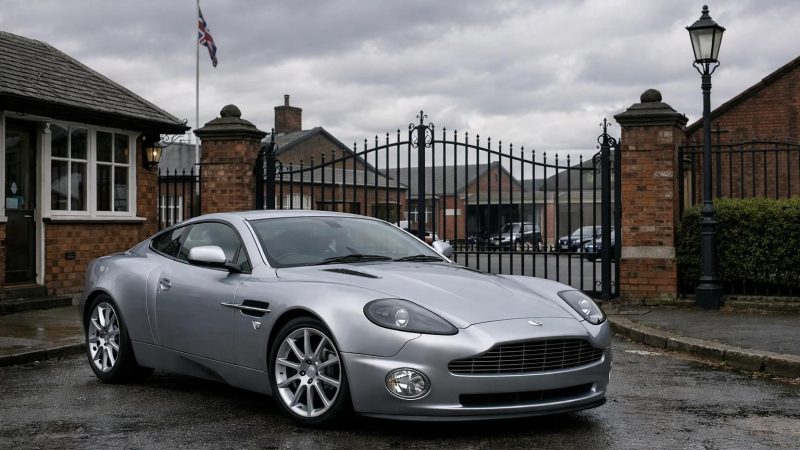
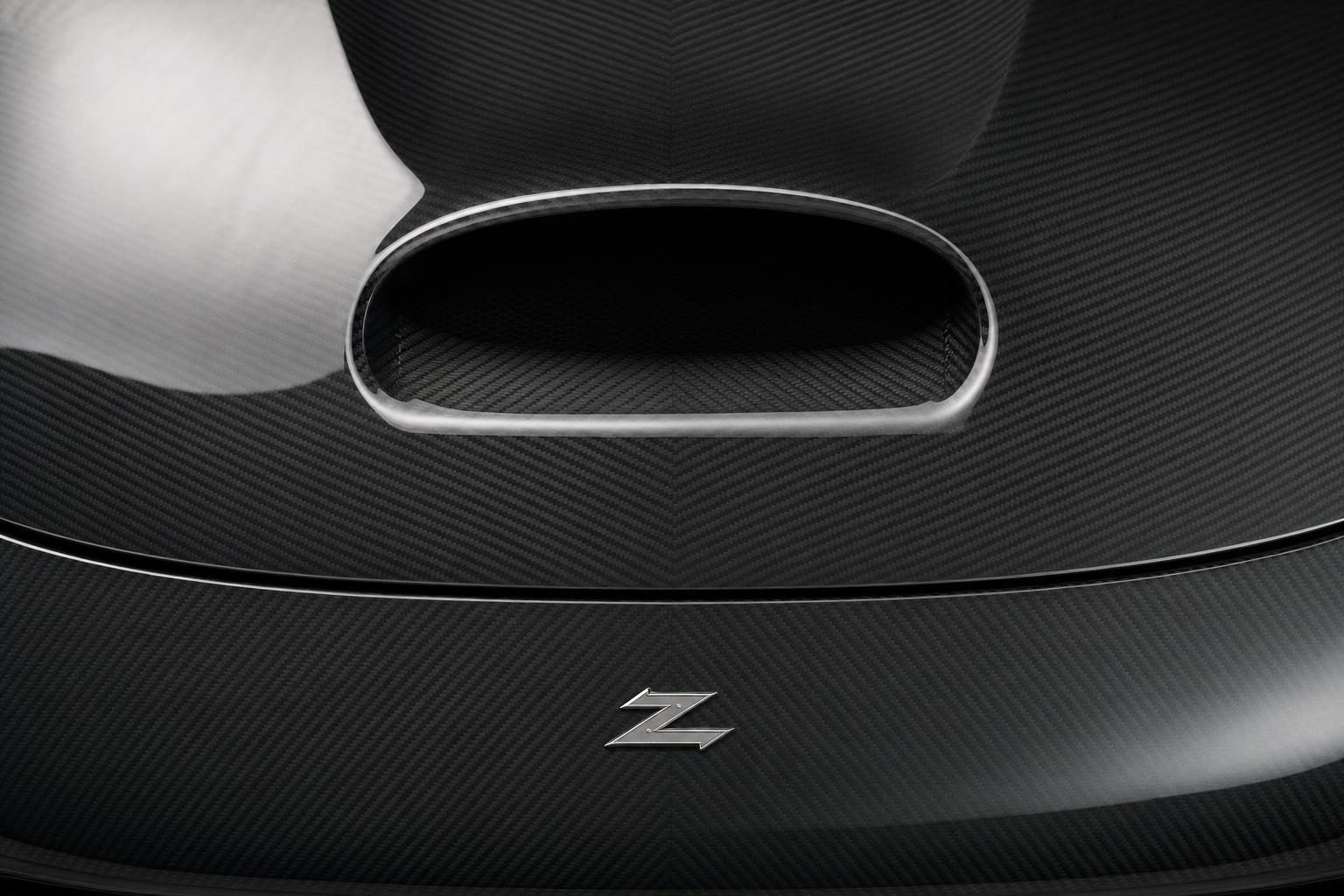
Officially, three stylistic signatures clearly distinguish the Zagato body from the standard Vanquish S, according to Wikipedia: the typical Zagato double‑bubble roof, the carbon bonnet with central intake, and full‑width rear lights. These elements are enough to establish a specific look, at once more sculptural and more graphic.
Could we list “seven”? The sources accessible and retained here confirm only three with certainty. The editorial task is therefore to prioritise certainty over overstatement. These three, attested, define the car’s identity: singular roofline, technical bonnet, continuous light signature.
The rest is about overall coherence: the carbonfibre treatment of the panels shapes crisper edges and cleaner volumes, without needing to enumerate unsourced details. The lesson here fits in a sentence: the Zagato body rewrites the visual stance of the Vanquish S without disguising its nature.
The 6.0‑litre V12, 600 PS: what the collaboration did not change
The mechanical base is that of the Vanquish S: a naturally aspirated 5.9‑litre V12 (often referred to as 6.0 L) delivering 600 PS, according to Wikipedia. It’s the common foundation to all four body styles, concentrating the transformation on the coachwork rather than the powertrain.
This choice has two virtues. First, it guarantees the dynamic coherence of the whole, with established mapping and acoustic signature. Second, it eases industrialisation: engine, transmissions and overall architecture remain mastered at Gaydon, where the body is integrated. The collaboration does not alter the mechanics that underpin the Vanquish S’s reputation.
For the collector, it’s a kind of technical reassurance. The series’ added value lies in coachbuilt design and rarity, not in a mechanical mutation. In short, the Vanquish Zagato is a Vanquish S in bespoke attire, and proudly so.
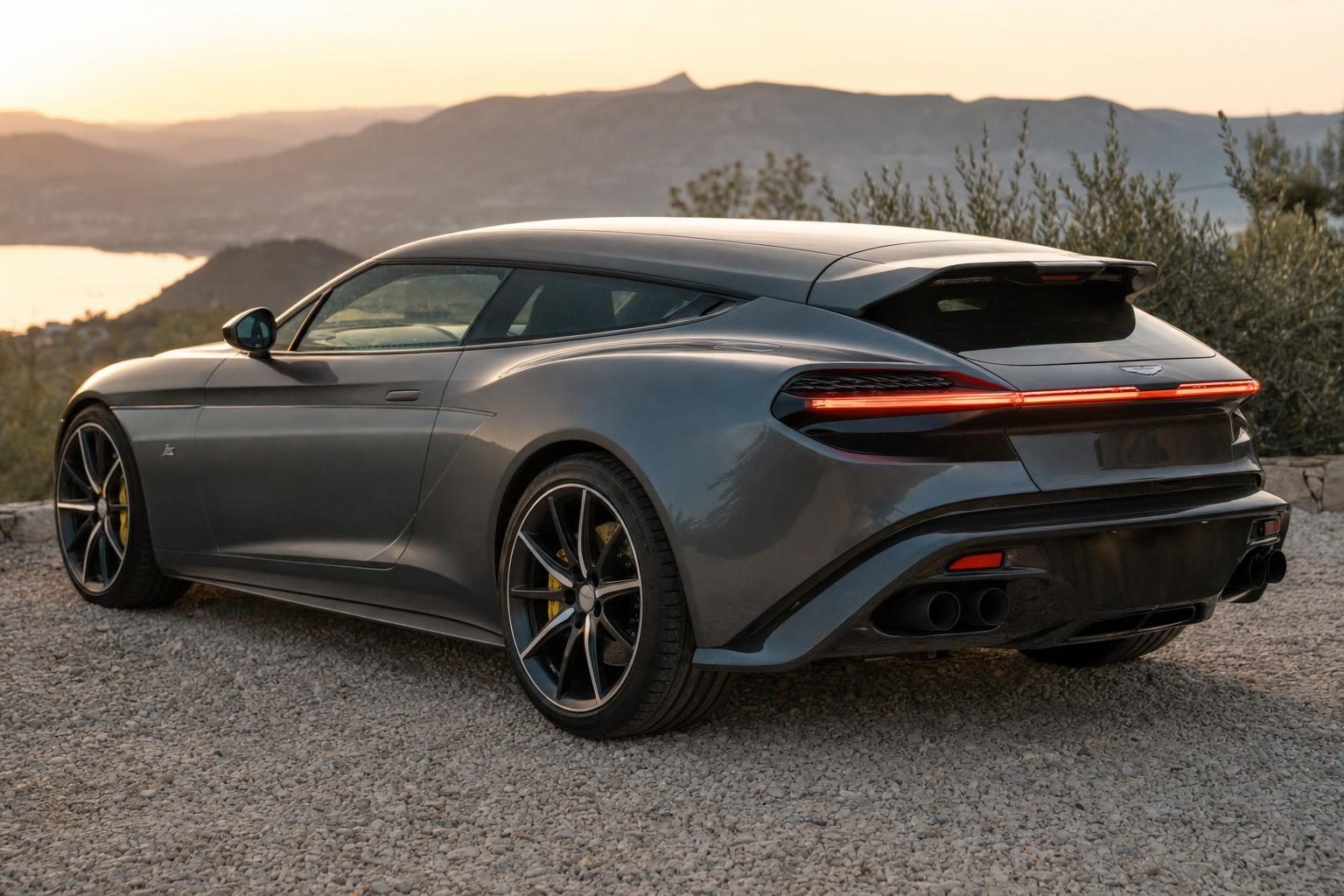
2017 Shooting Brake: why Zagato chose this format to close the series
The Shooting Brake was presented in 2017, last of the four Vanquish Zagato silhouettes to be revealed. According to Wikipedia, it uses the same technical base and the same limitation of 99 examples, with the carbon bodywork made by Zagato in Italy then mated to the chassis at Gaydon. It is the epilogue to a sequence that began in 2016.
Why this format to conclude? The sources consulted do not provide an official statement of intent. We can simply note that this two‑door shooting brake offers a fourth reading of the same stylistic theme, after the Coupé, Volante and Speedster. It rounds out the grammar of “classic” body styles dear to Europe’s coachbuilders.
By ending the series on this note, the collection keeps its balance: a fixed roof, a convertible, a speedster and a shooting brake. The Zagato gesture runs through these configurations without denying the Vanquish S base or the now‑enshrined double‑bubble signature in the silhouette.
Conclusion — Vanquish Zagato in five clear markers
At the end of this monograph, Vanquish Zagato can be read in five points: timeline (2016–2017 for the unveilings), limited series (99 per variant), carbon bodywork shaped by Zagato in Italy and integrated at Gaydon, distinctive design (double‑bubble, vented bonnet, full‑width rear lights), and unchanged mechanics (5.9‑litre V12/600 PS). The prices announced around 650,000 dollars for the Coupé, according to Car and Driver, place the series at its level.
To go further, set this tetralogy against the road‑going Vanquish Mk2 and its evolutions, but also within the continuity of Anglo‑Italian pairings: from the DB years to recent projects. In this respect, our features on the DB7 Zagato and its 99 examples and on the DBS GT Zagato within the DBZ packs offer useful points of comparison.
Useful sources: Wikipedia’s summary on the Vanquish Zagato and its variants, the Aston Martin past models page for range context, and the Car and Driver reference on launch pricing. When filing this series, facts matter more than hyperbole: here, they suffice.