Ultimate Valkyrie AMR-LMH: 5 Things to Know About Aston Martin’s Return to Hypercar at Le Mans 2025
The Valkyrie AMR-LMH embodies Aston Martin’s most ambitious bet in modern endurance, combining the extreme character of a road hypercar with the demands of the top category. Unique in the field, it symbolises a return to the summit focused on pure technique, endurance, and consistency, with a singular approach that refuses artifice in favour of overall coherence. In the following lines, we detail what the Valkyrie AMR-LMH represents, how it has been transformed for racing, why its atmospheric V12 has been retained without hybridisation, and how the programme structured between WEC and IMSA underpins Aston Martin’s sporting ambitions.
From Road Valkyrie to Race Car: A Unique Conversion to LMH
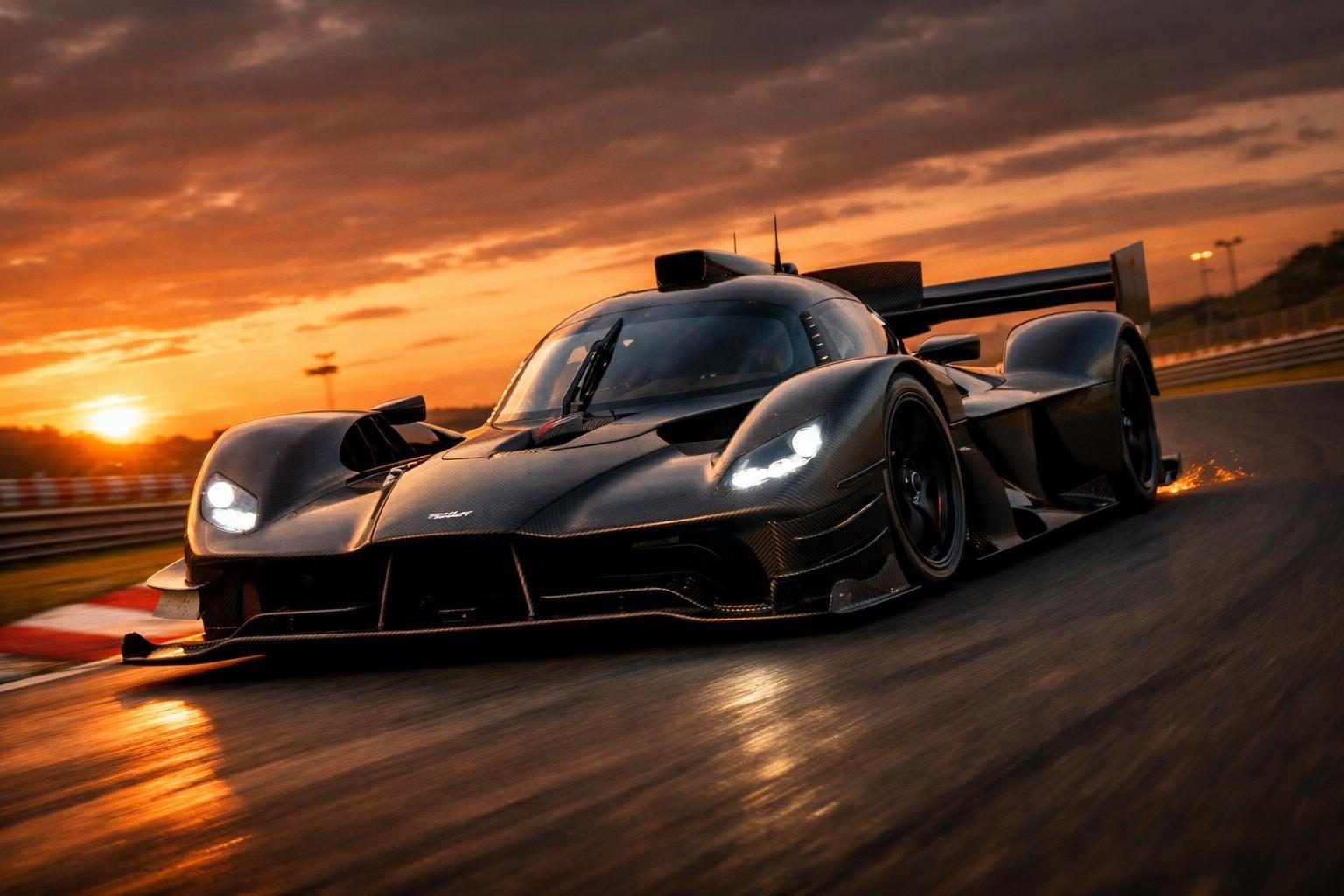
The Valkyrie AMR-LMH is the first LMH Hypercar produced by Aston Martin and, importantly, the only car in the WEC directly derived from a road-legal hypercar. This lineage influences everything: proportions, aerodynamic philosophy, and mechanical packaging logic. While many competitors are born as prototypes without road anchoring, the Valkyrie AMR-LMH capitalises on an extreme base derived from the series and then transposes it to endurance, aiming to preserve the DNA of the Valkyrie while meeting the demands of a 24-hour race. This uniqueness gives it an immediately recognisable identity and a clear link to the original hypercar, which enthusiasts can explore in detail via our dedicated page on the Road Valkyrie.
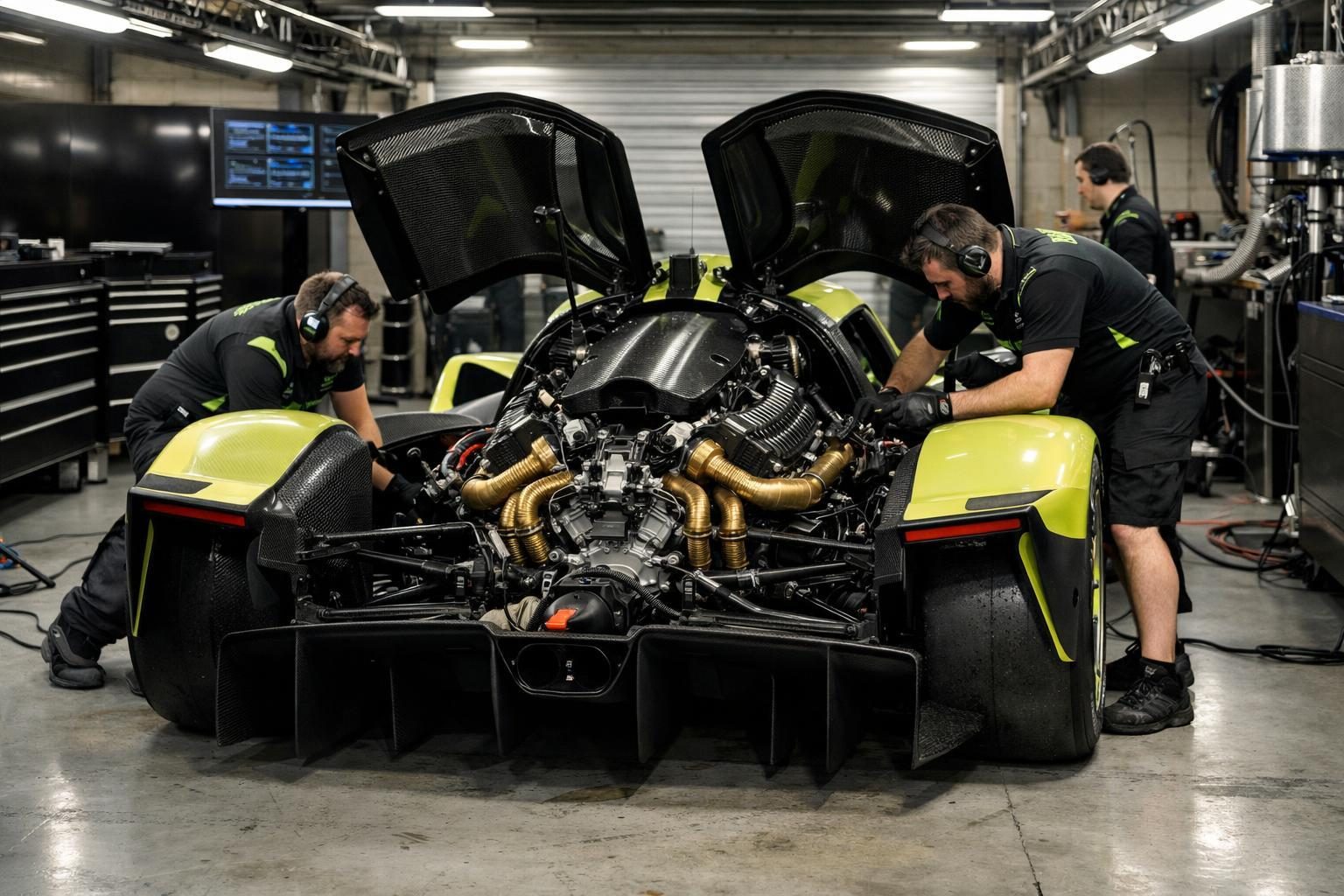
In practical terms, the race car retains the 6.5-litre atmospheric Cosworth RA V12 from the production Valkyrie, reconfigured for the reliability and consistency required in endurance racing. The transmission is handled by a 7-speed Xtrac sequential gearbox, designed to withstand the demands of a dual global programme. The Valkyrie AMR-LMH also incorporates a “starternator” system that allows for starting without dedicated engine power, a practical choice in endurance conditions to limit auxiliaries and optimise operational management in the pits. Together, these elements form a powertrain with a strong character, yet adapted for long and repeated stints.
The Hypercar regulations limit competition power to 500 kW (680 PS), which frames the raw performance of the Valkyrie AMR-LMH. Rather than relying on electronic or hybrid sophistication, Aston Martin has prioritised the exploitation of a coherent mechanical package, naturally expressive and very directly connected to the road-going Valkyrie, while accepting the discipline imposed by the regulations. It is this blend of authenticity and rigour that gives the race car its distinctive identity in the LMH landscape.
The 6.5 L Cosworth V12 Without Hybrid: A Deliberate Technical Choice
At the heart of the project, the 6.5-litre atmospheric Cosworth RA V12 embodies the backbone of the Valkyrie AMR-LMH. Reusing this iconic engine from the road version and then adapting it for endurance reflects a desire for technical continuity. With power capped at 500 kW (680 PS) in Hypercar, the pursuit of performance hinges as much on drivability, reliability, and consistency over time as on peak value. The V12 atmospheric architecture contributes to a linear and predictable response, which is advantageous for stints and traffic management, key elements in both WEC and IMSA.
Aston Martin has made the conscious choice not to use a hybrid system, citing its complexity and excess weight, particularly the need to move a rear system forward within this regulatory framework. According to reports, this renunciation of hybridisation stems from a logic of compromise: rather than adding components and thermal and packaging constraints, the Valkyrie AMR-LMH focuses on refining the V12 engine and the Xtrac 7-speed transmission, supported by the “starternator”. For a clear synthesis of the structural choices (including the Xtrac gearbox and the “starternator”), the dedicated Wikipedia page for the Valkyrie AMR-LMH provides a useful summary.
This technical stance, which contrasts with the hybrid solutions of some competitors, gives the Valkyrie AMR-LMH a unique mechanical personality. In an environment where the Balance of Performance sets boundaries, the challenge becomes fine optimisation: cooling, fuel management, mappings, durability of components, and efficiency of pit stops. The absence of hybridisation does not preclude innovation; it shifts it towards robustness, operational simplicity, and the ability to repeat performance over very long durations, at the heart of the endurance spirit.
Team THOR and WEC-IMSA Programme: A Two-Series Strategy
Aston Martin is the first LMH brand to compete simultaneously in WEC and IMSA, a uniqueness that structures the sporting season of the Valkyrie AMR-LMH. This dual presence multiplies learning environments – race formats, track profiles, types of traffic and sequences – and increases logistical, human, and technical demands. By placing the Valkyrie AMR-LMH at the centre of a two-speed programme with a common goal, the brand accelerates data collection and understanding of the chassis and powertrain behaviours in varied contexts.
Operationally, running WEC and IMSA concurrently allows for quicker validation of developments and broader reliability of processes: pit stop procedures, wear of consumables, driving comfort adjustments, grip gap management. To officially measure this and follow the ambition surrounding the dual commitment, the media release on the return to Le Mans with two Valkyrie LMH sheds light on the approach. The Valkyrie AMR-LMH thus fits into a comprehensive endurance strategy, where each race feeds into the next.
To place this dynamic within the continuity of Aston Martin’s presence at Le Mans and in the championship, our thematic dossier Aston Martin at Le Mans and in the World Championship gathers and contextualises the major milestones. Ahead of the 24 Hours, the technical and sporting orientation around the Valkyrie AMR-LMH is also detailed in the official announcement before the 24 Hours of Le Mans, which outlines the objectives and framework of the programme.
2025 Review: Challenging Debuts, Rising Power, and First Podium
The first tangible milestone in 2025 for the Valkyrie AMR-LMH occurs at the 24 Hours of Le Mans, where both cars, #007 and #009, complete the race without mechanical issues. They finish 12th and 14th respectively, marking Aston Martin’s first points in the Hypercar class. For such a unique machine, derived from a road hypercar, crossing the line after 24 hours represents a marker of solidity and an accelerator of learning, beyond just the finishing position.
These validated finishes highlight the relevance of the technical choice: a controlled atmospheric V12 within its performance range (limited to 500 kW/680 PS by regulations), a robust Xtrac 7-speed transmission, and simplified auxiliaries thanks to the “starternator”. The goal now is to transform the endurance born from consistency into pure pace over distance, capitalising on the dual WEC-IMSA exposure. In this light, every stint, every pit stop, and every series of laps in traffic becomes a building block for the Valkyrie AMR-LMH’s progress.
As for the prospect of a first podium, it naturally fits within the trajectory of rising power. The first points scored at Le Mans testify to a solid foundation, while the two-championship strategy creates opportunities for rapid adjustments. Following the Valkyrie AMR-LMH in this phase means observing how a concept born from the road gradually integrates into the Hypercar ecosystem, with increasingly consistent results on the horizon, step by step.
Valkyrie LM: The Track Version Limited to 10 Units for Owners
In June 2025, Aston Martin unveils the Valkyrie LM, a track version limited to 10 units, directly derived from the race car. This initiative extends the philosophy of the programme beyond the strict confines of competition, offering a select circle of owners an interpretation closely aligned with the Valkyrie AMR-LMH. This variant strengthens the link between the paddock and customers, helping to spread the spirit of the project to the most engaged community.
This Valkyrie LM retains the technical and stylistic DNA shaped by endurance, with the ambition of delivering a track experience faithful to the LMH reference. It continues the legacy of the road-going Valkyrie – the context and specifics of which you can find on our Valkyrie models page – while embodying a concrete bridge between competition and a reserved, very limited use. By extension, the Valkyrie AMR-LMH benefits from a coherent ecosystem that enhances its technology and sporting aura.
Conclusion – Valkyrie AMR-LMH, A Unique Ambition That Affirms Itself
Unique in its kind, the Valkyrie AMR-LMH embraces a clear technical path: the 6.5-litre atmospheric Cosworth V12, the 7-speed Xtrac gearbox, the “starternator”, and the absence of hybridisation by deliberate choice. As Aston Martin’s first LMH Hypercar and the only one in the WEC derived from a road hypercar, it unites a vision where effective simplicity and road lineage become assets in endurance. The finishes of #007 and #009 at Le Mans 2025, with the first points for Aston Martin in Hypercar, lay a concrete foundation for the future, while the concurrently run programme in WEC and IMSA accelerates learning.
As this architecture refines, the Valkyrie AMR-LMH expands its footprint: on the track, through continuous improvement of pace and consistency; around the track, with the limited series Valkyrie LM, which extends the spirit of racing. To delve into Aston Martin’s genealogy at Le Mans, our page on the DBR1 saga at Le Mans offers useful historical insight, while the official announcement before Le Mans and the media release allow you to follow the latest news. The course is set: to make the Valkyrie AMR-LMH a benchmark in endurance, at the intersection of road and racing.
Ultimate Lagonda Serie 2: 6 Reasons This 1976 Saloon Is a Vision of the Future
Lagonda Serie 2: from its debut, this wedge-shaped saloon imposed a radical vision of what an Aston Martin could be, blending an angular style by William Towns, an entirely digital dashboard, and a V8 engine that is both noble and unique. Unveiled at the London Motor Show at Earls Court in 1976, the Lagonda Serie 2 still stands today as the most audacious UFO ever to emerge from Newport Pagnell, a proposition that marries formal boldness with technological experimentation at a pivotal time for the brand.
1975-1976: The Renaissance of Aston Martin and the Bold Bet of the Lagonda Serie 2
The Lagonda Serie 2 was unveiled in 1976 at the London Motor Show at Earls Court, with the ambition of embodying a stylistic and technical renewal for Aston Martin. This London presentation formalised a rare industrial gamble: to turn a large luxury saloon into a futuristic manifesto, both through its ultra-angular silhouette and its fully digital cockpit. The Lagonda Serie 2 reflects a strong desire to challenge established codes and project the brand towards a new horizon.
This move is part of a sequence where Aston Martin seeks to redefine its trajectory. The previous Lagonda, known as Serie 1 and launched in 1974, had found only 7 buyers (source: Wikipedia), proving that the name Lagonda needed to regain meaning and a distinct identity. The Lagonda Serie 2 precisely addresses this challenge: to embrace a sharp stylistic line and claim an unprecedented driving experience, in line with the high-tech aspirations of the decade.
The technical positioning follows the same logic of affirmation. Under the bonnet, the saloon adopts a 5,341 cc DOHC V8, a mechanical heart that is both prestigious and refined. As for the industrial rollout, it would not commence until the end of 1978, confirming the scale of the challenge taken on by the Lagonda Serie 2 and the care taken in developing such a disruptive ensemble in the landscape of prestige saloons.
William Towns and the Wedge Design: A Total Break with the Past
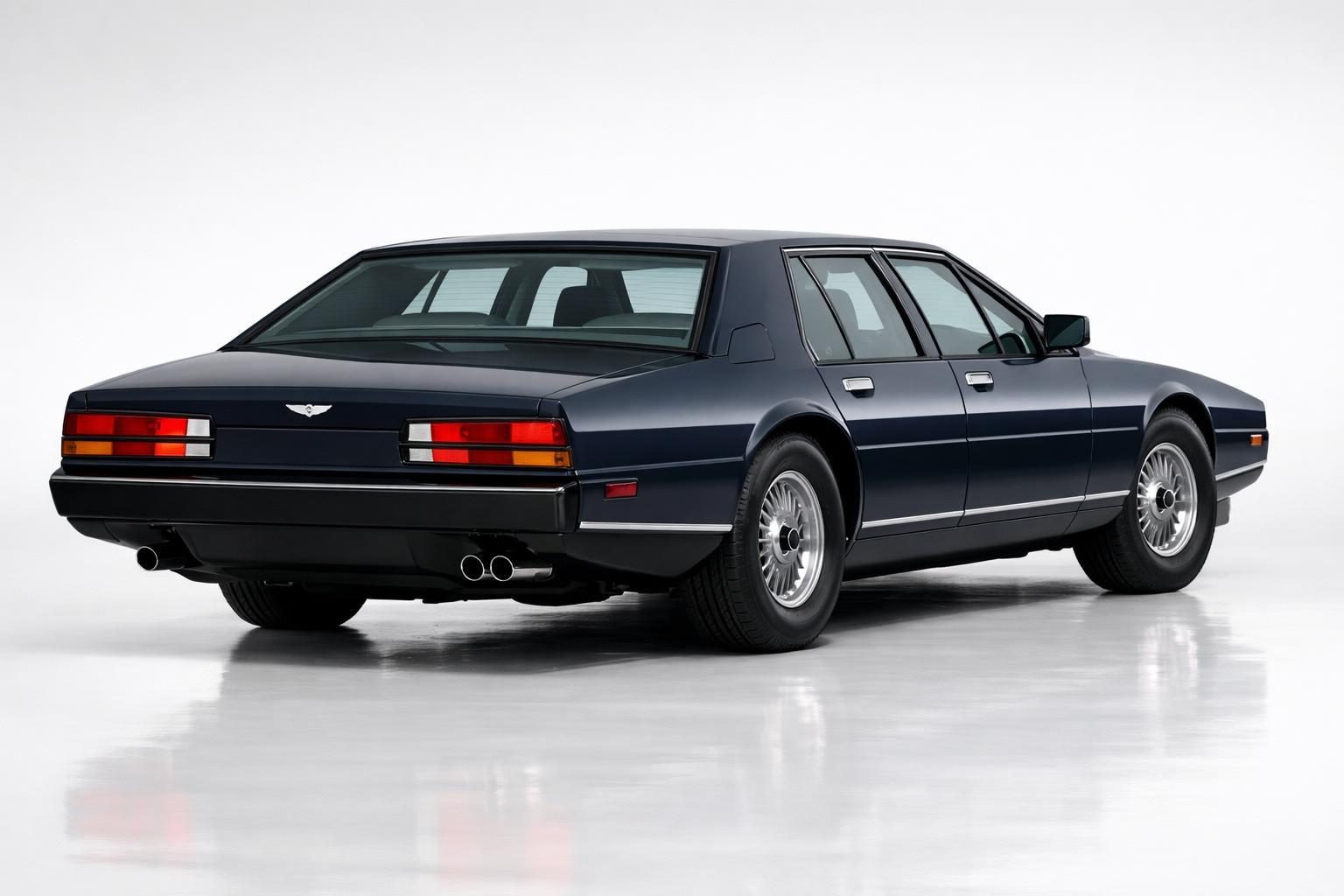
The visual signature of the Lagonda Serie 2 is the work of William Towns, who was also the designer of the Serie 1 from 1974 (source: Wikipedia). With this wedge-shaped, taut, and low body, Towns makes a clear break from the heritage of rounded and classic lines. The volumes are stripped to the extreme, the surfaces appear knife-edged, and the profile stretches forward in a deliberate geometric continuity. This approach gives the Lagonda Serie 2 an unstoppable stage presence.
The graphic purity of the whole serves a clear purpose: to make the Lagonda Serie 2 a rolling sculpture that embodies an era of precision and boldness. This design reflects a desire to align the exterior style with the interior revolution that accompanies it, notably the digital instrumentation and touch-sensitive interfaces. The immediately identifiable wedge architecture transforms every appearance into a visual statement.
This creative gesture can be rediscovered in our dedicated file, which details the genesis, silhouette, and specifics of the 1976 version: the Lagonda 1976 file. To extend the historical and official perspective, the Aston Martin press kit dedicated to the Lagonda Series 2 documents the role of William Towns and the significance of this unique stylistic choice.
Onboard Electronics: A Dashboard of the Future That Malfunctions
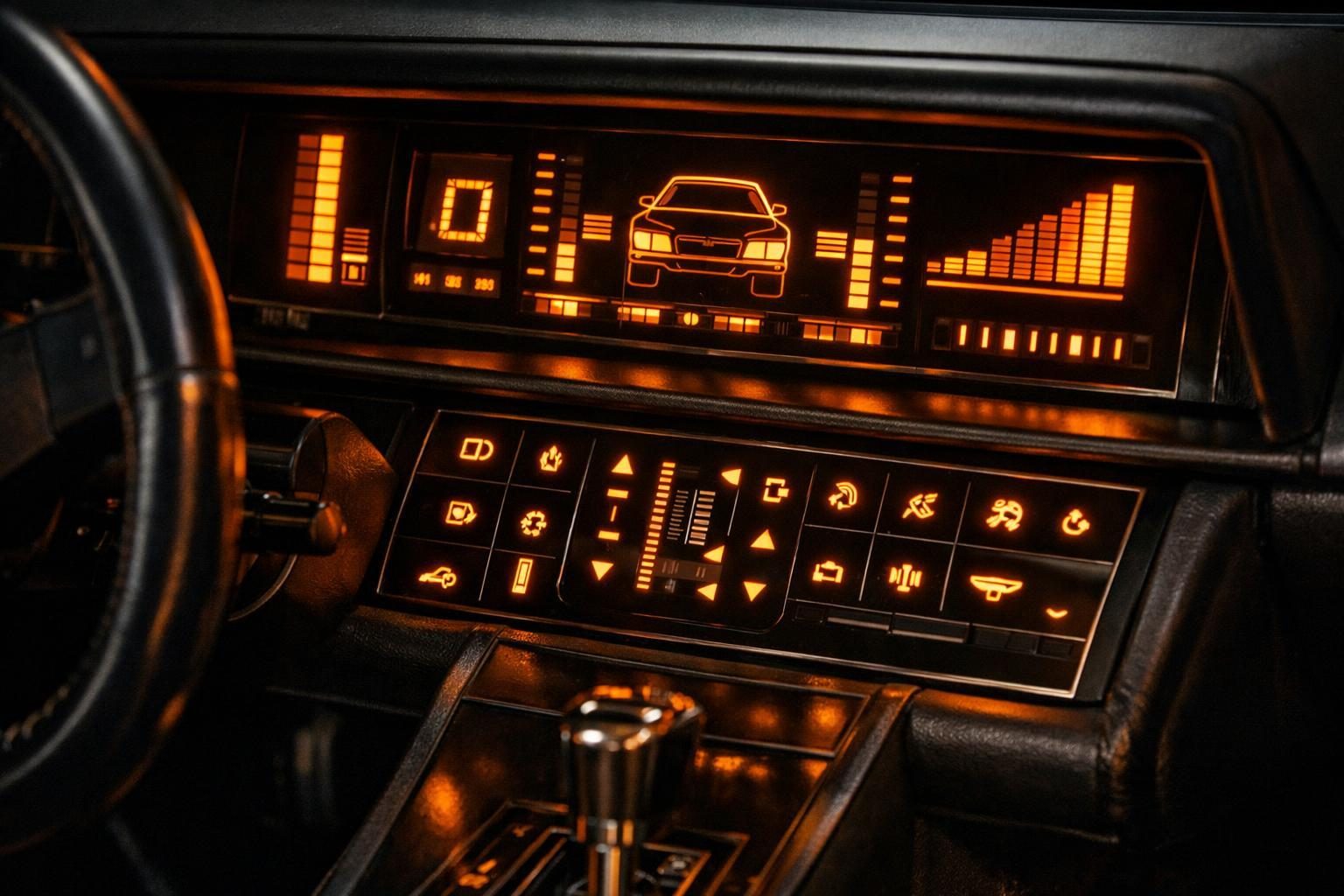
Inside, the Lagonda Serie 2 explores another frontier: a fully digital dashboard and touch-sensitive controls, developed under the influence of Peter Sprague, then director of Aston Martin and also involved with National Semiconductor (source: media.astonmartin.com). This ambition places the saloon at the forefront of automotive interfaces of its time and echoes the wedge aesthetic: technology as the heart of the project.
However, the implementation of a fully digital display and touch controls on a production car was a perilous undertaking. The sophistication of the systems, their pioneering nature, and the hardware/software integration made development particularly demanding. In this context, the Lagonda Serie 2 gained a reputation as a rolling laboratory: visionary in its intent, demanding due to the complexity it introduced into daily life.
This avant-garde vein remains one of the essential reasons why the Lagonda Serie 2 continues to fascinate: it materialises the moment when luxury automobiles attempt a significant technological leap. The synthesis of official and historical sources, notably the Aston Martin summary and the Wikipedia page (in English) dedicated to the Aston Martin Lagonda, sheds light on the catalytic role played by Peter Sprague and the spirit of experimentation of the time.
Difficult Production: 16 Cars in Two Years, Then an Increase in Cadence
Although the Lagonda Serie 2 was presented in 1976, actual production did not begin until the end of 1978 (sources: motorsdb.com; astonmartins.com). This delay illustrates the complexity of such a disruptive project, both in terms of electronics and in manufacturing an extraordinary body and interior. The result, during the first two years of production, reached only 16 units, a figure that reflects the scale of the industrial challenges faced.
Beyond this timid start, the pace subsequently increased, without ever diluting the uniqueness of the proposition. The total number of Lagonda series produced between 1974 and 1990 amounts to 645 units (source: Wikipedia), highlighting the rarity status attached to the model. In this context, the Lagonda Serie 2 occupies a central place: a showcase of craftsmanship, but also of a boldness that far exceeds the usual practices of the category.
For enthusiasts, the milestones of this ramp-up and the associated variants are detailed on the AstonMartins.com detailed file dedicated to the Lagonda Series 2. Here, one can measure how the Lagonda Serie 2 has structured the identity of the modern Lagonda lineage, between innovation and highly specialised craftsmanship.
Heritage and Current Value: From Beautiful Fixer to Retro-Futuristic Icon
The trajectory of the Lagonda Serie 2 illustrates a curious paradox: initially perceived as an offbeat proposition, it now stands as a retro-futuristic icon. Its rarity, radical design, and digital cockpit have transformed it, in the collective imagination, from an ambitious curiosity to a centrepiece of an era. This interpretation is corroborated by the total heritage of 645 units produced across all series (1974-1990, source: Wikipedia), an indication of lasting exclusivity.
On the mechanical side, the 5,341 cc DOHC V8 provides the Lagonda Serie 2 with the breath and nobility expected of an Aston Martin. In terms of power, sources diverge: guide-automobiles-anciennes.com mentions around 309 hp, while Wikipedia states 320 hp (324 PS). This difference is explained by the measurement method, but it also reminds us that the Lagonda Serie 2 combines electronic avant-garde with great engine tradition. To delve deeper into this mechanical aspect of the lineage, our page dedicated to the AM V8 of Aston Martin offers useful additional information.
Over the decades, the cultural footprint of the Lagonda Serie 2 has strengthened. Its alliance between an absolute wedge line and digital instrumentation makes it instantly recognisable, and its history reads like a manifesto of boldness. To place this adventure in the long timeline of the brand, consult our retrospective on the history of Aston Martin, which sheds light on how bets like the Lagonda Serie 2 have shaped the image of the manufacturer.
Conclusion – Lagonda Serie 2, a Vision That Transcends Eras
From its revelation at the London Motor Show in 1976 to its production launched at the end of 1978, the Lagonda Serie 2 synthesises the best of Aston Martin when the brand chooses boldness: wedge design by William Towns, digital cockpit with touch controls under the impetus of Peter Sprague, and a 5,341 cc DOHC V8 for the mechanical soul. The Lagonda Serie 2 embodies this rare articulation between experimentation and exclusivity, captured by limited production volumes and an aura that has continued to grow.
At a time when the founding visions of prestige automobiles are being rediscovered, the Lagonda Serie 2 remains a landmark. It proves that a saloon can be a work of engineering and style, a page turned towards the future. For a documented overview, combine our Lagonda 1976 file with external reference resources, including the official Aston Martin media site on the Series 2 and the encyclopaedic summary dedicated to the Lagonda – all points of reference to measure the lasting impact of this vision.
Marek Reichman: The Ultimate 20-Year Journey Redefining Aston Martin
Marek Reichman embodies the discreet architect of a stylistic transformation that has reconfigured Aston Martin’s visual identity over nearly two decades. From Sheffield to Gaydon, his journey combines exceptional training and key experiences at Rover, BMW, and Ford, elevating the brand to a level of desirability and coherence rarely matched. Through iconic models like the One-77, DBS, DB11, and DBX, Marek Reichman has established a vocabulary of beauty, identity, and continuity that permeates the entire range, while cultivating a privileged dialogue with popular culture, from the road to the James Bond sets.
From Sheffield to Gaydon: A Journey Forged at Rover, BMW, and Ford
Born in Sheffield in 1966, Marek Reichman immersed himself in design early on, earning a first-class degree in industrial design from Teesside University, followed by a course in automotive design at the Royal College of Art in London. This academic foundation, cited by sources such as Wikipedia, provides him with a dual valuable skill set: an industrial engineering rigour and an automotive stylist’s sensitivity, two pillars that will support his trajectory towards Gaydon.
In 1991, Marek Reichman began at Rover Cars before joining BMW Designworks in California in 1995, where he led the design of the Range Rover (L322) launched in 2003. This position, reported notably by Wikipedia and Autocar, refines his understanding of proportions and the presence of a luxury SUV. For those observing Aston Martin’s subsequent evolution, this Californian stage is revealing: it confirms Marek Reichman’s ability to articulate elegance, functionality, and the desire for objects.
He joined Ford in 1999 and then moved to Aston Martin in May 2005 to take over the design direction. This journey through British and German schools, within major groups, builds a common grammar of beauty and efficiency in Marek Reichman. It foreshadows how he will embed Aston Martin’s style within a long-term coherence, cultivating a signature without freezing it.
2005: Arrival at Aston Martin and Foundational Projects
According to Aston Martin’s official notice, Marek Reichman became Director of Design in May 2005. His appointment, documented by a dedicated institutional page and by Wikipedia, immediately establishes an ambition: to consolidate the brand’s visual DNA while renewing its desirability. This period sees the emergence of projects that will become milestones, starting with the DBS, whose aura will quickly transcend the circle of insiders.
Marek Reichman’s first contact with James Bond occurs when Daniel Craig and Barbara Broccoli come to discover the DBS, the car that will become the one in Casino Royale. This connection, reported by magazine.astonmartin.com, seals a decisive cultural resonance: associating the cracked aesthetic of an iconic spy with the image of a sculptural English GT. It opens a narrative thread that Aston Martin will continue to pull, all the way to the DB10 designed for Spectre (2015).
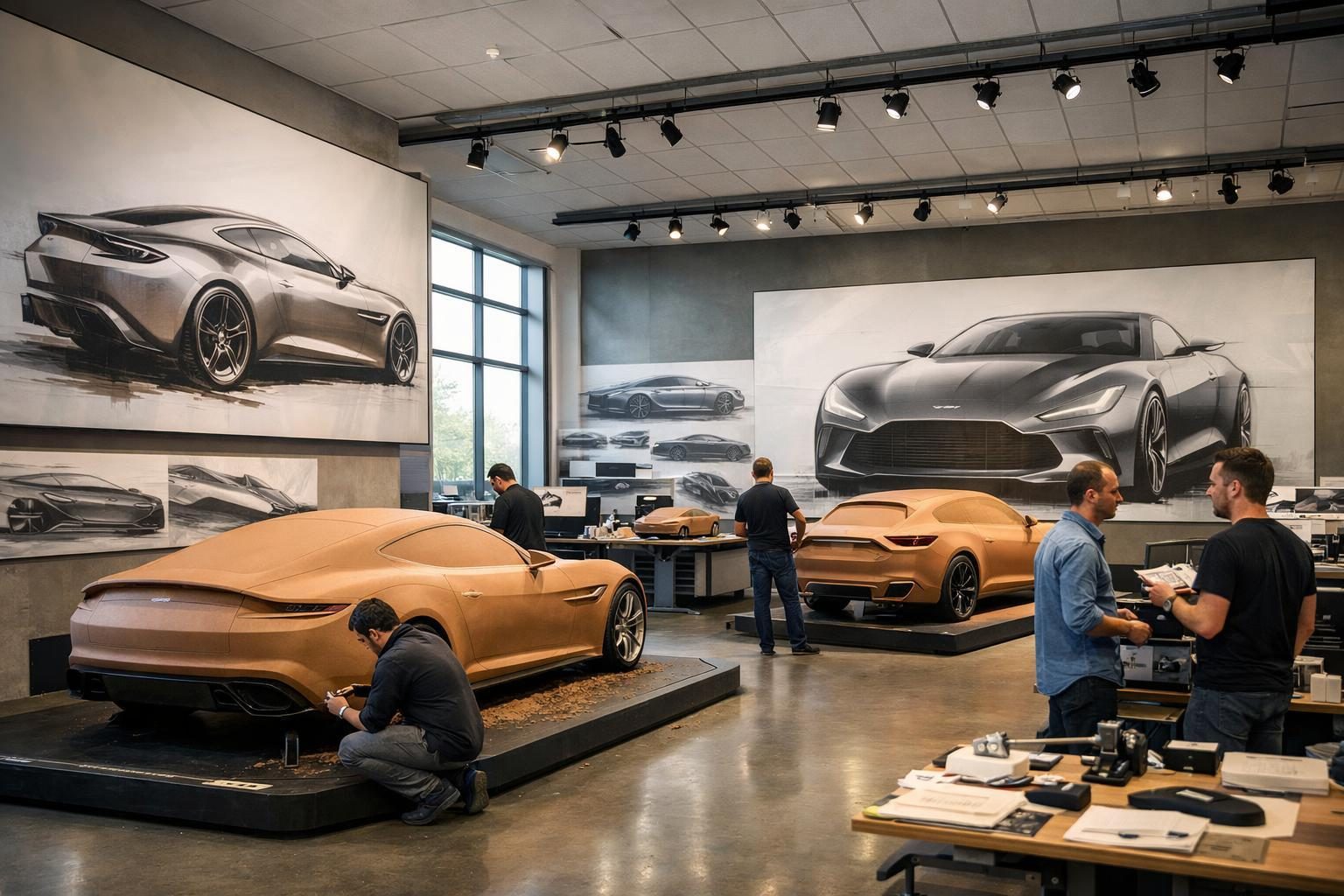
In December 2007, Marek Reichman inaugurates the new design studio at the Gaydon headquarters. The prefabricated wooden building will receive a RIBA Award in May 2008, according to luxuriousmagazine.com. By providing the brand with a space that matches its ambitions, he establishes an integrated creative process conducive to the maturation of a coherent range and special projects capable of enriching the overall image.
The Design Philosophy: Beauty, Identity, and Continuity
What one reads through the production signed by Marek Reichman is a synthesis of timeless beauty, clear identity, and evolutionary continuity. The One-77, DBS, Rapide, Vanquish (2012), Vulcan, DB10 for Spectre (2015), DB11, DBX, and Valkyrie trace a guiding line: aesthetics serve a brand narrative. The whole does not seek isolated effects but a common thread that connects the road, the track, and the collective imagination.
This continuity is expressed through Marek Reichman’s ability to align very different models around the same formal promise. Without locking himself into a unique motif, he maintains immediate recognition of the Aston Martin emblem while allowing each project its reason for being. Beauty is not a veneer but a structural mache that orders volumes and intentions.
According to Autocar, the challenge remains to “reinvent” Aston Martin’s design again, without breaking the thread. Their analysis, accessible via a reference article, sheds light on Marek Reichman’s stance: to hold together heritage and projection in a demanding industrial and cultural context. This is where his philosophy of beauty as a guarantor of identity and permanence emerges.
Notable Models: From One-77 to DBX, Including Bond’s DB10
Among the creations attributed to Marek Reichman are the One-77, DBS, Rapide, Vanquish (2012), Vulcan, the DB10 designed for the film Spectre (2015), DB11, DBX, and Valkyrie, according to the cited sources (Wikipedia, i-m-magazine.com). Each of these models occupies a specific place in the construction of a stylistic map: manifest hypercar, reference GT, four-door saloon, image SUV, radical track piece, or cinematic object.
This panorama speaks to both the breadth and coherence of Marek Reichman’s gesture. From the Vanquish (2012) to DBX, the field opens without diluting, proving that a clear compass guides the choices. Cinema amplifies the message, but it is the architecture of the ranges that, over time, establishes trust and desirability around the brand.
The New Studio in Gaydon and the Next Era of Aston Martin Design
The opening of the design studio in Gaydon in December 2007, under Marek Reichman’s impetus, was a turning point: a tailor-made tool to orchestrate research, creation, and decisions. The RIBA Award granted in May 2008 to the prefabricated wooden building, reported by luxuriousmagazine.com, validates the architectural quality of the whole and, beyond that, the desire to embed creation within a demanding and inspiring framework.
In 2024, Autocar awards Marek Reichman the Sturmey Award for Innovation for overseeing more than 50 Aston Martin and Lagonda models in 19 years. This figure, reported by Autocar, quantifies a visible reality: the consistency of a course and the richness of a creative portfolio. It also situates the era: nearly twenty years of iterations served by a readable stylistic direction.
As the brand prepares to enter a new phase, the equation remains the same for Marek Reichman: to evolve the expression of British sporting luxury without losing its essence. The methodological resources of the Gaydon studio and the synthesis of experiences accumulated at Rover, BMW, and Ford provide a solid lever to write this new chapter.
Conclusion — The Legacy of Marek Reichman at Aston Martin
Over time, Marek Reichman’s contribution is measured as much by the clarity of the visual DNA as by the ability to engage with culture, from the DB10 of Spectre (2015) to road icons like the DB11 or DBX. According to Autocar, he has overseen more than 50 models over 19 years in 2024, placing his contribution within a systemic perspective: a vision that transcends cycles and maintains focus on beauty and brand identity.
From Sheffield to the Gaydon studio, the coherence of Marek Reichman’s journey, supported by his studies at Teesside and the Royal College of Art and his stints at Rover, BMW, and Ford, has infused every project. To further explore, the biography on Wikipedia (en) and the notice from Aston Martin dedicated to Marek Reichman provide useful reference points. This trajectory reinforces the idea that a philosophy of beauty patiently cultivated can, in itself, redraw the aura of a brand.
Ultimate Vantage GTE: 9 Years of WEC Victories, from 2012 to Le Mans 2017 Triumph
The Vantage GTE is one of the most recognisable Aston Martin competition cars of the modern era, forged by the WEC and Le Mans between 2012 and 2017, with peaks of sporting drama and class triumphs validated by official sources. Born to race, the Vantage GTE debuted at Sebring in 2012 and quickly established itself as a reference in the LMGTE categories, becoming, according to astonmartin.com, the most decorated car in WEC history across all categories with 7 titles, before passing the baton to a new generation.
Genesis: from GT2 to GTE, a career of a born competitor
Emerging from the evolution of endurance GTs to GTE regulations, the V8 Vantage GTE first took to the track in WEC at Sebring in 2012 (astonmartin.com, Vantage Legacy Collection). In this metamorphosis, the DNA of Aston Martin Racing focused on consistency, stability, and precision, giving birth to a Vantage GTE designed for intensive stints, traffic duels, and long-distance reliability. From the outset, the platform demonstrated a sound technical base, conducive to setup adjustments and power increases against robust opposition.
One figure alone illustrates the rarity and demands of the programme: only 6 original V8 Vantage GTEs were built (astonmartin.com – Legacy Collection). This rarity has enhanced the aura of the Vantage GTE, concentrated in the hands of specialised crews and engineers experienced in endurance racing. The compact silhouette, mass balances, and the rigour of developments over the seasons have shaped a typical endurance machine: quickly exploitable, yet profoundly deep in terms of tuning.
The link between this competitive culture and the road range feeds the Aston Martin imagination. To place the Vantage GTE within the genealogy of the road sports car, one can usefully consult our model sheet dedicated to a key generation at the manufacturer, in the presentation of the Vantage MKII. Competition, in turn, is part of the long history of the brand at Le Mans, which can be explored through the story of the victorious DBR1 in 1959, a foundational landmark of Aston Martin’s commitment to endurance.
2012-2015: Establishment in WEC and first class victory at Le Mans
In 2012, the Vantage GTE discovered the WEC at Sebring and set about mastering the dual demands of the World Championship and the 24 Hours. These setup seasons refined the automatics: traffic management, precision of pit stops, exploitation of tyres and fuel windows. The Vantage GTE gained consistency, to the point of opening its account of major successes at Le Mans in the LMGTE Am category two years later.
In 2014, the turning point arrived: David Heinemeier Hansson, Kristian Poulsen, and Nicki Thiim secured the LMGTE Am class victory for the V8 Vantage GTE at the 24 Hours of Le Mans (astonmartin.com; 24h-lemans.com). This performance validated the Aston Martin Racing method, cemented the car as a reference in its category, and established the Vantage GTE among the regular podium contenders. It also confirmed the relevance of the chassis-team-driver trio, a cardinal logic in endurance racing.
This foundation of results is set within the framework of the WEC, whose stakes and organic link with Le Mans we describe in our dedicated overview: Aston Martin, Le Mans and the World Endurance Championship. For the Vantage GTE, these campaigns from 2012 to 2015 laid the groundwork for consistency and prepared the stage for a forthcoming sporting pinnacle.
2016-2017: Dominance and the legendary final turn
While the previous campaigns forged the robustness of the programme, the Vantage GTE reached a new level during the 2016-2017 period. The package sharpened, and confidence grew in the face of fierce competition. The team locked down its processes, and the car displayed a level of performance and reliability that would shine at the highest level, right down to the final moments of the greatest endurance race in the world.
In 2017, Jonny Adam, Daniel Serra, and Darren Turner triumphed in LMGTE Pro at the 24 Hours of Le Mans, after an epic battle with Jordan Taylor’s Corvette, with the decision falling in the final laps (sources: page 36 of Aston Martin Racing on Wikipedia; 24h-lemans.com). The Vantage GTE proved incisive, enduring, and unflappable under pressure, embodying the art of constructing a long-term victory to strike at the right moment. This nail-biting finish, which has become a defining scene of the modern era, etches the Vantage GTE into the pantheon of Le Mans GTs.
This triumph crystallises Aston Martin’s core idea in endurance: mastering the tempo and keeping resources for the final sequence. In the wake of this feat, the reputation of the Vantage GTE amplified, supported by official recognition from the 24 Hours and by the historical documentation of Aston Martin Racing. For a broader perspective on this recent epic, one can consult the summary from the Automobile Club de l’Ouest dedicated to the heritage of the Vantage, the Vantage Legacy dossier from the 24 Hours of Le Mans, and the overall overview of the team Aston Martin Racing on Wikipedia.
2018: The new generation with AMG engine takes over
Next comes a new generation: in 2018, the new Vantage GTE adopts the 4.0-litre twin-turbo V8 from Mercedes-AMG (24h-lemans.com; autoguide.com). This handover marks a major technical turning point, in line with the evolution of modern GTs and the needs of contemporary endurance racing. The Vantage GTE, in its new definition, extends Aston Martin’s strategy: capitalising on the solid foundation forged since 2012 while introducing a more compact, torquey, and efficient engine.
The victorious dynamic continues at Le Mans: in 2020, the new Vantage AMR won the LMGTE Pro category with Maxime Martin, Alex Lynn, and Harry Tincknell (endurance-info.com). Thus, the continuity between the original Vantage GTE and its AMG-powered descendant translates into concrete results, perpetuating Aston Martin’s footprint in the endurance GT category and reminding us that heritage is also measured by the ability to evolve without renouncing the fundamentals.
For an official perspective on the genesis and preservation of these chassis, the brand has gathered a collection of historic cars in the Aston Martin Vantage Legacy Collection, which highlights the rarity of the original V8 Vantage GTEs and their indelible mark in WEC and at Le Mans.
Heritage: 7 WEC titles and 40 class victories, a unique record — Vantage GTE
According to astonmartin.com, the V8 Vantage GTE is the most decorated car in WEC history across all categories, with 7 titles — a status that places the Vantage GTE at the pinnacle of endurance GTs of its time. This institutional recognition is based on solidly documented flagship results, such as the LMGTE Am victory at Le Mans 2014 (David Heinemeier Hansson, Kristian Poulsen, Nicki Thiim) and the LMGTE Pro epic of 2017 by Jonny Adam, Daniel Serra, and Darren Turner in the final laps against Jordan Taylor’s Corvette.
The question of cumulative class victories relates to how counting is done according to events and categories, but the essence lies in two factual pillars: the continuity of performance and the material rarity of the programme, with only 6 original V8 Vantage GTEs built. This duo of “sporting efficiency – limited series” nourishes a unique prestige, reinforced by the technical coherence of the Vantage GTE over the WEC seasons.
Over the long term, the footprint of the Vantage GTE extends Aston Martin’s tradition at Le Mans, from the glorious hours of the 1959 DBR1 to the contemporary battles in the GTE category. To place this trajectory within the overall commitments of the brand, our guide details Aston Martin in competition, from WEC to the 24 Hours and, on the road side, the Vantage MKII and its evolutions, to measure how the experience of the Vantage GTE informs the product culture and global reputation of Aston Martin.
Conclusion: Vantage GTE, the GT icon that changed Aston Martin’s endurance history
With its debut at Sebring in 2012, its class victories at Le Mans in 2014 (LMGTE Am) and 2017 (LMGTE Pro), and its status as the most decorated car in WEC history according to astonmartin.com, the Vantage GTE stands as a reference in endurance Grand Touring. Its limited production — 6 original chassis — and its consistent results forge a strong identity, which continues to inspire the AMG-powered generation.
The drama of the final laps in 2017 against Jordan Taylor’s Corvette has become one of the defining sequences of the modern GT era at Le Mans, recalling the strategic quality and operational serenity of the Vantage GTE and its drivers Jonny Adam, Daniel Serra, and Darren Turner. Over time, it is these gathered moments that elevate a car to the status of an icon.
The transition to the new generation, equipped with the 4.0-litre twin-turbo Mercedes-AMG engine, has shown that the DNA and method remain, with the Vantage GTE serving as a springboard for further successes, including the LMGTE Pro win at Le Mans 2020 (Maxime Martin, Alex Lynn, Harry Tincknell). To delve deeper into this heritage, one can refer to the official Vantage Legacy Collection and the account of the 24 Hours dedicated to the Vantage lineage, the Vantage heritage at Le Mans.
Thus, the Vantage GTE is not merely a record; it embodies a way of winning in endurance: build, endure, strike true. A lesson in teamwork and consistency that continues to inform Aston Martin Racing’s vision, as summarised on its reference page, and continues to inspire enthusiasts.
DB2: 7 Secrets That Make the 1950 Grand Tourer Foundational
DB2: from its name, the DB2 embodies the decisive shift made by David Brown after acquiring Lagonda in 1947. This strategic change, centred on the appropriation of an engine designed by W.O. Bentley, transformed the technical and commercial trajectory of Aston Martin and gave birth to a grand tourer that would define the brand for decades to come.
The Acquisition of Lagonda: The Engine Strategy
David Brown’s acquisition of Lagonda in 1947 was motivated by a specific technical reason: to acquire the 2.6-litre six-cylinder twin cam engine designed by W.O. Bentley. This engine would become the mechanical heart of the DB2 and dictate Aston Martin’s industrial choices after the Second World War.
David Brown did not just buy a body or a range; he bought an engine block and expertise. This acquisition allowed for the immediate integration of a high-performance engine into the catalogue and the industrialisation of a grand tourer designed around this engine.
The W.O. Bentley Six-Cylinder: The Technical DNA of the DB2
The heart of the DB2 is the 2.6-litre W.O. Bentley six-cylinder engine. In its standard version, this engine develops 105 bhp, but sources differ on the revs at which this power is measured: according to aston.co.uk, the figure is 105 bhp at 4,500 rpm, while Motorlegend cites 105 bhp at 5,000 rpm — a marginal difference attributed to measurement conditions.
The engine established the foundations of a clear offering: reliability, flexibility, and potential for competition and more powerful variants. It is on this same block that the Vantage version will be built, which raises the power to meet performance and image demands.
The Vantage version launched in 1950 raises the power to around 125 bhp, according to classicdriver.com, a figure also confirmed by Wikipedia which states 125 hp. This increase in power illustrates the flexibility of the W.O. Bentley engine and justifies David Brown’s strategic interest in Lagonda.
Frank Feeley’s Design: The Birth of DB Style
The silhouette of the DB2 owes much to Frank Feeley, who designed the aluminium body. Its lines combine British elegance with proportions designed for grand touring: long bonnet, compact cabin, understated yet assertive aerodynamics.
Feeley’s work on the DB2 lays the aesthetic foundations that will be seen in subsequent generations. The use of aluminium in body elements also contributes to weight reduction and efficiency, two qualities sought after in a car aimed at both the road and competition.
The DB2, through its design, shows how industrialisation and craftsmanship can coexist: a mechanical legacy from Lagonda, a refined body by Feeley, and a clear positioning in the post-war GT market.
Le Mans 1950 and Competition: Early Successes
The DB2 does not settle for commercial presence: it asserts itself on the racing scene as early as 1950. At the 24 Hours of Le Mans 1950, the factory cars achieved remarkable performance by securing 1st and 2nd place in their category, tangible proof of the reliability and competitiveness of the chassis and engine.
These results enhance the DB2’s aura and demonstrate that David Brown’s ambition — to use competition as a lever for image and technical development — quickly bore fruit. The endurance presence validates the choices of engine and highlights the design work done around the W.O. Bentley block.
Competition thus becomes a central element of the communication and technical evolution of the DB2, justifying variants like the Vantage and consolidating Aston Martin’s sporting legitimacy.
DB2 in Numbers and Heritage: 411 Units, A Legend
The total production of the DB2 remained limited: 411 units in total, according to classicdriver.com and Wikipedia. This low volume contributes to the rarity and legend of the DB2 name among enthusiasts and collectors.
In detail, the number of convertibles shows a slight discrepancy in counting: classicdriver.com mentions 98 convertibles, while Wikipedia states 102 convertibles. This minor divergence illustrates the difficulties of archiving and counting for post-war productions but does not detract from the exceptional status of the whole.
Some key figures summarise the impact of the DB2:
Series Presentation: New York Auto Show, April 1950, production from May 1950.
Engine: 2.6 L six-cylinder from W.O. Bentley, 105 bhp in standard version, approximately 125 bhp in Vantage.
Production: 411 units, convertibles ~98–102 according to sources.
Competition: 1st and 2nd place in category at Le Mans 1950 for factory cars.
The DB2 leaves a lasting legacy: through its engine adopted after the acquisition of Lagonda, its design by Frank Feeley, and early successes in competition. These elements have shaped Aston Martin’s trajectory and paved the way for subsequent models.
Conclusion: Why the DB2 Foundationally Defines Aston Martin Grand Touring
The DB2 is much more than an inaugural model: it symbolises David Brown’s winning strategy, who bought Lagonda in 1947 to acquire a W.O. Bentley engine capable of establishing a new technical identity. The marriage of the 2.6-litre block, Feeley’s style, and early competition victories laid the foundations for Aston Martin’s grand touring.
To learn more about related models and the aesthetic and technical lineage, find our detailed dossiers on the pages dedicated to related models: DB2: model sheet and history, DB4 and the continuation of the DB lineage, and the broader historical context on the history of Aston Martin. The DB2 remains a foundational piece: engine, style, and competition converge to make it a lasting legend.
Ultimate One-77: 8 Facts About the Hypercar That Redefined the Brand
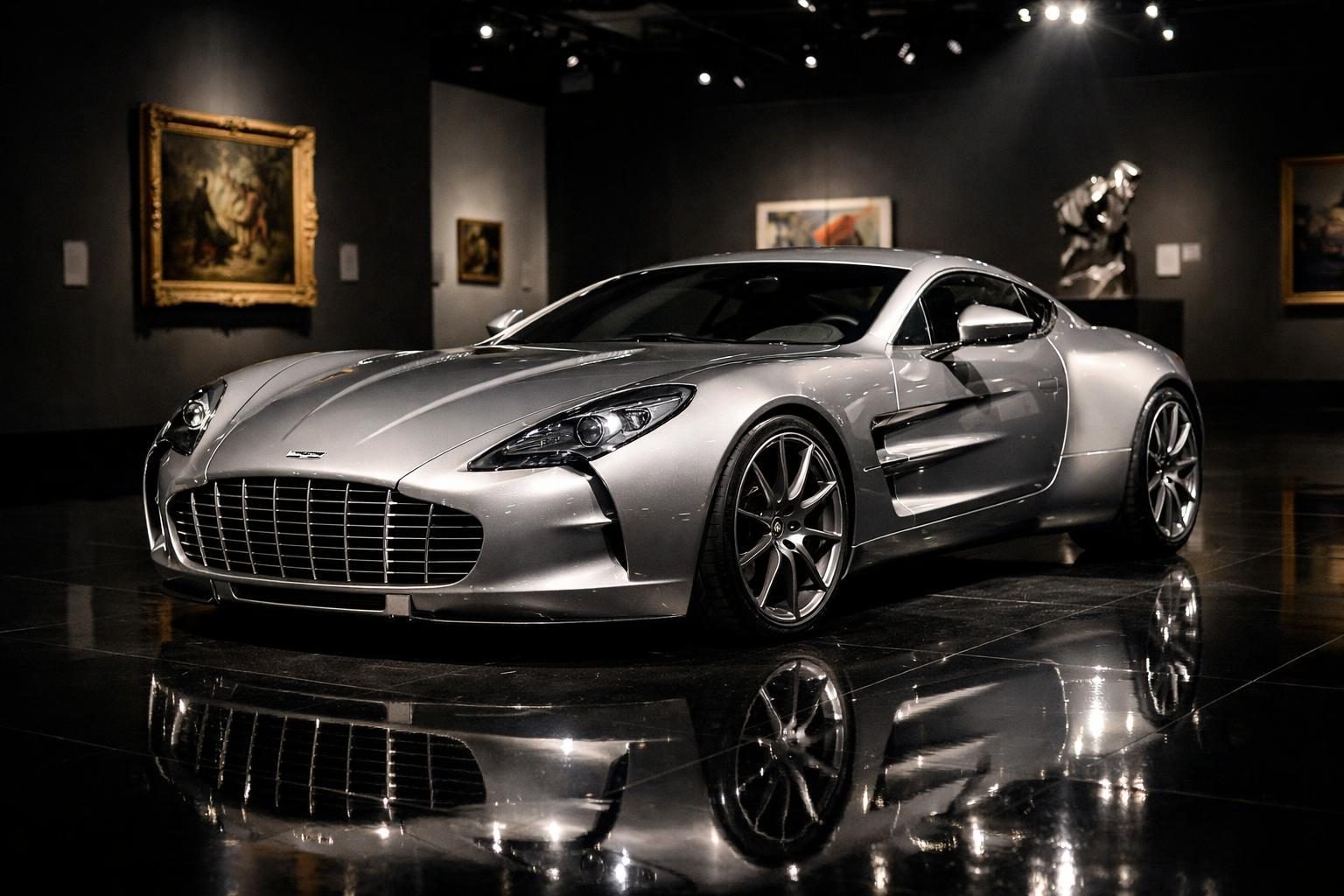
The One-77 stands out as the stylistic and technical turning point for Aston Martin: this hypercar has redefined the brand’s image and initiated the era of extreme machines such as the Vulcan and the Valkyrie. In this article, we analyse how the One-77 served as a laboratory for structural, mechanical, and aesthetic choices that shaped the future of the Aston catalogue.
Code BDX: the secret origin of the One-77 project
The One-77 project was conducted under a discreet envelope before its gradual presentation to the public. The car was partially revealed at the 2008 Paris Motor Show and then unveiled in full at the 2009 Geneva Motor Show, according to the car’s Wikipedia page.
This media build-up prepared the ground for deliveries that began in 2011. The gradual revelation underscores the ambition: the One-77 was intended to rewrite the narrative of Aston Martin, not just as luxury but as a technological laboratory.
The 7.3-litre V12 Cosworth: figures and discrepancies between sources
The One-77’s powertrain is based on a 7.3-litre V12 developed with Cosworth. The main sources agree on the engine size and technical partner, but differ regarding the power output.
According to Wikipedia and Garage Voltaire, the official power is 750 PS, while other sources such as Caradisiac and v12-gt.com mention 700 PS. This discrepancy is not resolved in the facts available here: it is therefore important to explicitly mention both figures and their sources.
The precision regarding the powertrain remains key to understanding the positioning of the One-77: a V12 prepared by Cosworth that has served as a reference for subsequent Aston hypercar powertrains.
Carbon monocoque and aluminium body: the paradox that creates lightness
The One-77 introduces an inversion of the usual scheme by combining a carbon monocoque chassis with a hand-formed aluminium body. This combination is documented both on Wikipedia and on 24h-lemans.com.
The paradox is suggestive: carbon for rigidity and structural safety, aluminium for artisanal finish and manual shaping. This technical choice allowed for a compromise between dynamic performance and a handcrafted aesthetic identity.
In practice, this architecture has served as a model for design practices at Aston: prioritising carbon for the structural core while retaining shaped panels for visual impact and customisation.
The Q-Series programme and one-offs: beyond the 77 units
The production of the One-77 was strictly limited to 77 units. Beyond that, Aston Martin produced 7 additional Q-Series units, according to Wikipedia and garagevoltaire.fr.
A development chassis identified (chassis #10711) has covered over 25,000 miles in testing, according to garagevoltaire.fr. This mileage attests to an intensive development programme before delivery to customers.
The combination of the limited series and one-offs demonstrates a clear strategy: exclusivity of institutional production, coupled with special variants through the Q department to meet the demands of the most discerning clients.
Direct heritage: One-77, Vulcan, Victor and the DNA of Aston hypercars
The One-77 occupies a pivotal place in Aston Martin’s recent history: Marek Reichman stated that the One-77 ensured the re-foundation of Aston Martin’s image and served as a genetic basis for subsequent hypercars, according to i-m-magazine.com.
This genetic link is visible in the trajectory leading from the One-77 to more extreme projects like the Vulcan and the Valkyrie: a philosophy of pure performance and refined craftsmanship. The One-77 thus embodied the transition from a GT brand to a house capable of producing top-tier hypercars.
In commercial and collectible terms, the One-77 has demonstrated its value: original sale price set at £1,150,000 excluding tax (sources Wikipedia, carjager.com, garagevoltaire.fr), and substantial resales, with one example sold at RM Sotheby’s for between $1.5 and $2 million in 2019 according to vintagecarmagazine.ch.
Conclusion: why the One-77 remains the pivot of Aston hypercars
The One-77 reads today as a technical and stylistic manifesto: the choice of the Cosworth V12, carbon monocoque, hand-shaped aluminium body, limited production, and Q-Series programme have set standards. These elements have directly influenced the Vulcan, Victor, and Valkyrie, reinforcing Marek Reichman’s thesis on its role in re-foundation.
Faced with discrepancies in figures — power claimed at 750 PS or 700 PS according to sources, top speeds measured differently — the One-77 remains a benchmark whose impact transcends mere numerical data. Its technical and aesthetic legacy continues to fuel Aston’s strategy towards hypercars.
Ultimate DB4 GT Zagato: 19 Examples That Redefined History
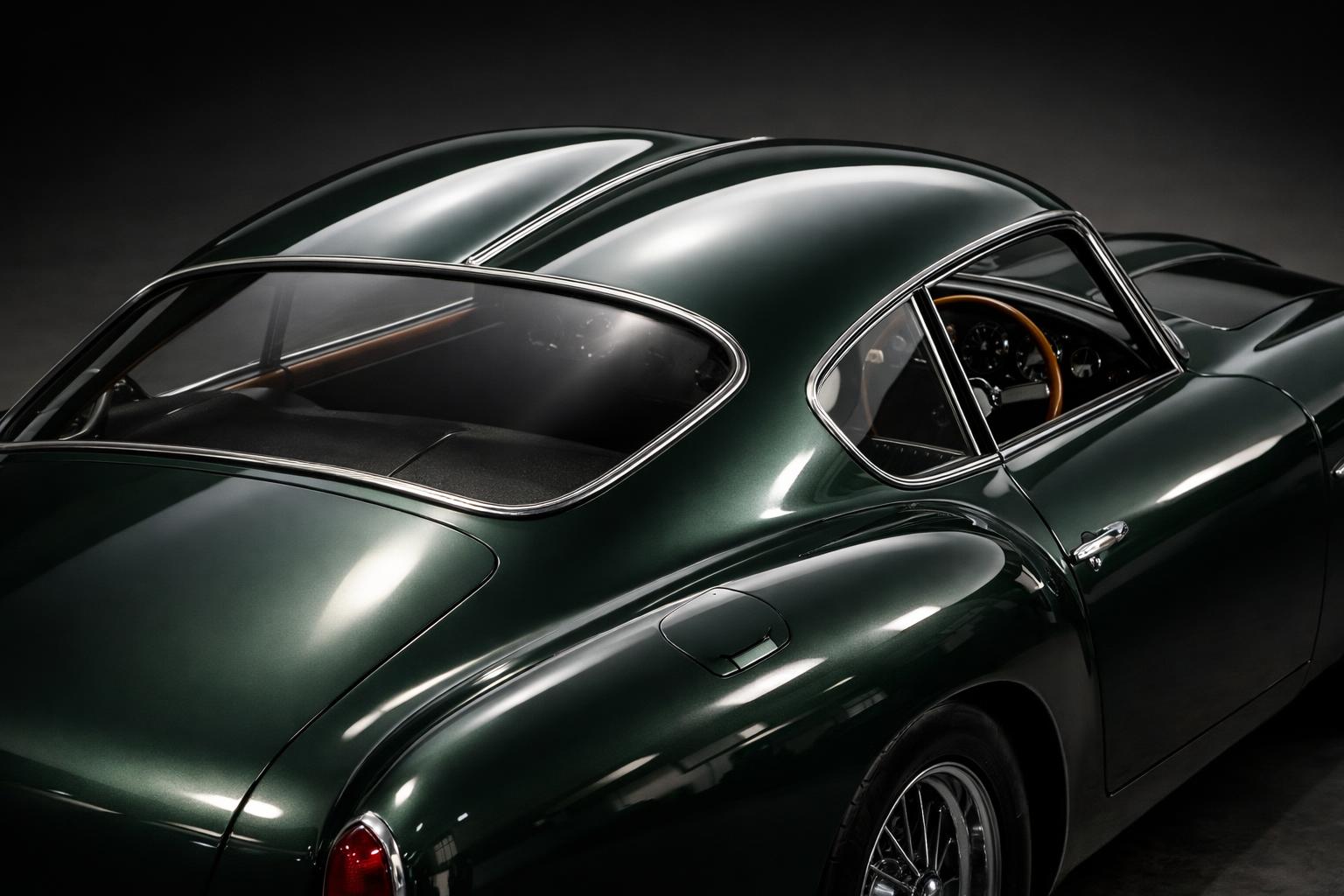
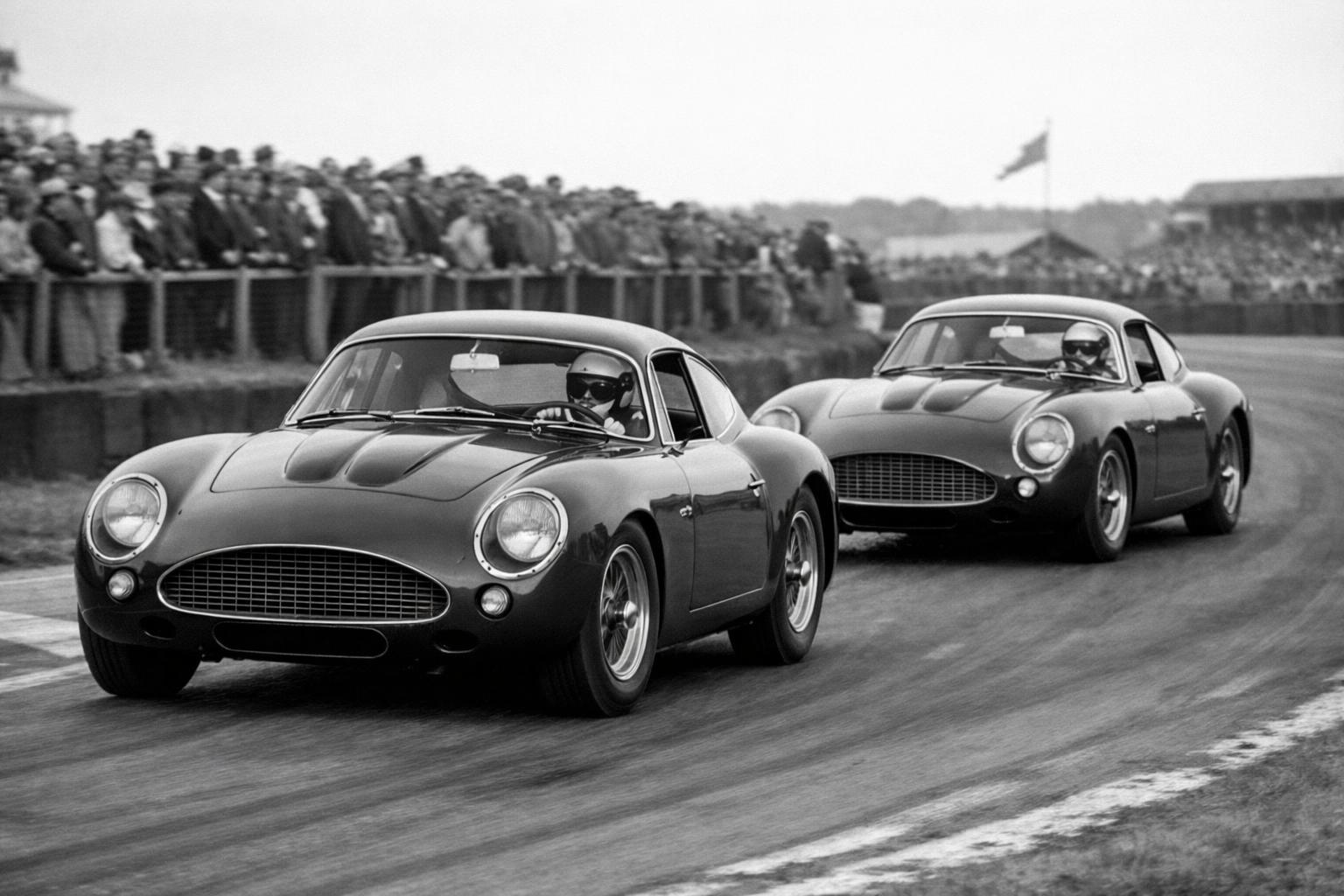
The Aston Martin DB4 GT Zagato is a remarkable vehicle that has left an indelible mark on automotive history. Only 19 examples were produced between 1960 and 1963, making it a rare gem among collectors.
Designed by the talented Ercole Spada, the DB4 GT Zagato was not just a beautiful car; it was also a formidable competitor on the racetrack. Its lightweight aluminium body and powerful engine allowed it to excel in various racing events, including the prestigious Le Mans.
However, the journey of the DB4 GT Zagato was not without its challenges. The car faced several sanctions, notably II and III, which impacted its racing career and the perception of its capabilities.
Today, the DB4 GT Zagato is celebrated not only for its performance but also for its stunning design and the legacy it has created in the world of motorsport.
With its unique blend of style and speed, the DB4 GT Zagato continues to captivate enthusiasts and collectors alike.
Aston Martin DB5: The Ultimate History of the World’s Most Famous Car
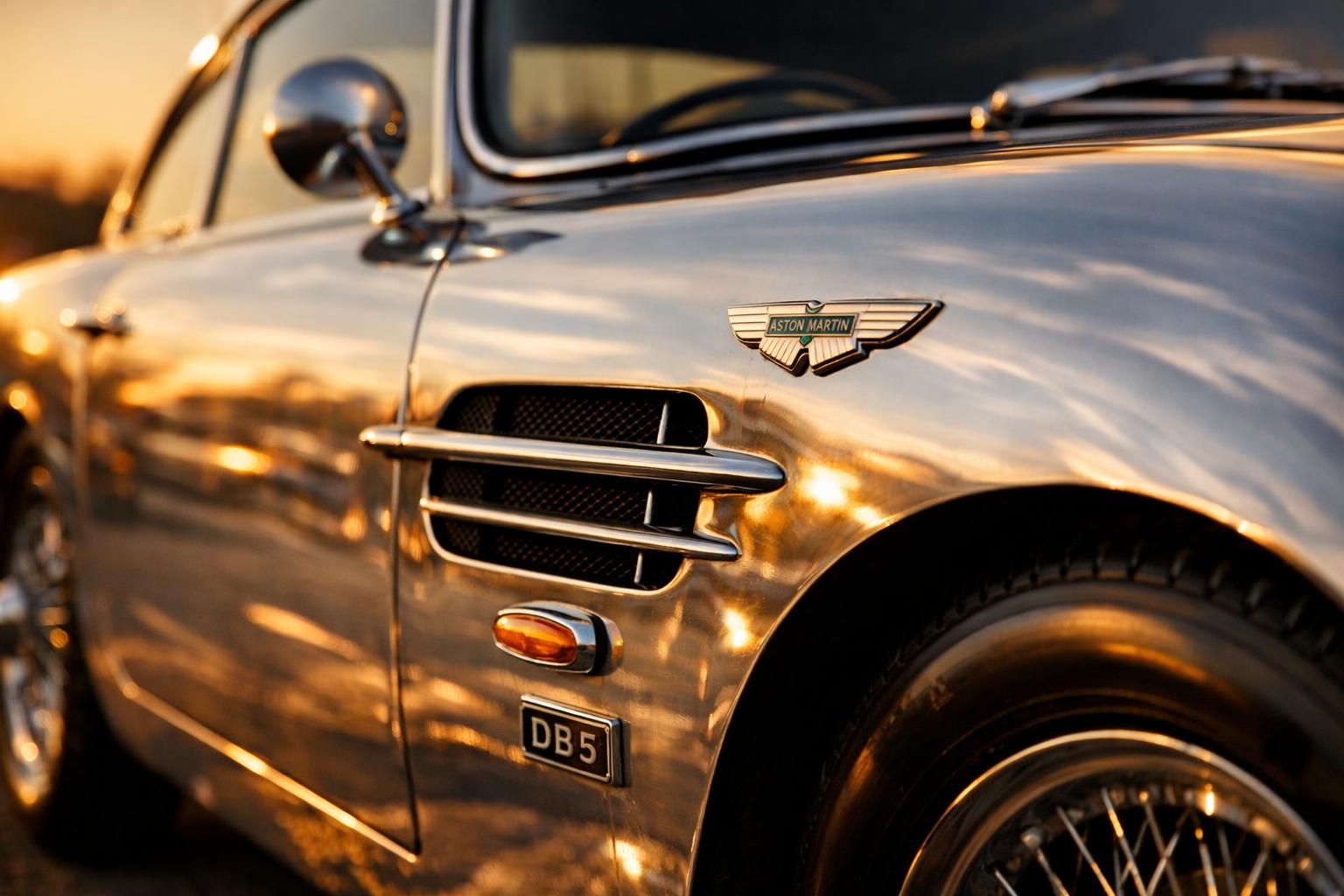
The Aston Martin DB5 embodies British sporting elegance and serves as a thread to trace the history of a car that has become an icon. This article outlines the industrial and stylistic genesis of the Aston Martin DB5, its mechanics, its connection with James Bond, and the spectacular rise in its value on the collector’s market.
Aston Martin DB5: Birth of an Icon (1963)
The production of the Aston Martin DB5 took place between 1963 and 1965 at the Newport Pagnell factory. David Brown, who had owned Aston Martin since 1947, saw in this sports saloon the continuation of a prestige strategy begun after his acquisition.
The iconic status of the Aston Martin DB5 is due as much to its quality of construction as to its exclusivity: the exact number of units varies according to sources. Aston Martin mentions fewer than 900 saloons (coupes), while the specialist Supercar Nostalgia counts 1,021 units (898 coupes and 123 convertibles), and Wikipedia suggests around 1,059 cars. Presenting these figures side by side highlights the rarity and enduring appeal of the Aston Martin DB5.
The Aston Martin DB5 was designed to combine refinement and performance, positioning the brand in the continuity of David Brown’s models inspired by the demand for quality and the selection of high-end components.
A Design by Carrozzeria Touring
The body design of the Aston Martin DB5 is the work of Federico Formenti from Carrozzeria Touring Superleggera. The construction adopts the Superleggera technique, which means a tubular frame clad in aluminium, giving lightness and elegance to the lines.
This marriage of Italian design and British mechanics has given the Aston Martin DB5 an immediately recognisable silhouette, slender and proportioned, which has traversed decades without losing its charm.
To delve deeper into the model, check out the detailed profile of the DB5 model on AstonLegacy: Aston Martin DB5 model profile.
The 4.0-Litre Six-Cylinder Engine
The mechanics of the Aston Martin DB5 are based on a 4.0-litre (3,995 cm3) DOHC inline six-cylinder engine. This engine delivers around 282 PS in standard configuration and can reach up to 325 PS in the Vantage variant.
The transmission is provided by a ZF 5-speed gearbox, a modern solution for the time and suited to the road and sporting vocation of the Aston Martin DB5. The engine-gearbox combination offered a refined and high-performing compromise, a key contributor to the model’s road reputation.
The precision of the chassis and the lightness provided by the Superleggera construction made the Aston Martin DB5 a pleasure to drive while maintaining an image of a very high-end grand tourer.
James Bond and the Goldfinger Legend
The first cinematic appearance of the Aston Martin DB5 occurs in Goldfinger (1964), a foundational moment of its legend. The DB5 of 007 later reappears in eight films of the series: Goldfinger (1964), Thunderball (1965), GoldenEye (1995), Tomorrow Never Dies (1997), Casino Royale (2006), Skyfall (2012), Spectre (2015), and No Time to Die (2020).
This repeated exposure has transformed the Aston Martin DB5 into a cultural symbol, associating its image with that of James Bond and a world of sophistication and adventure. The link between the brand and Agent 007 is now inseparable in the collective imagination.
For a dossier on the history of Aston Martin and James Bond, find our summary: Aston Martin and James Bond – 60 Years of History. Furthermore, the recent revival of special series shows how the Aston Martin DB5 retains a living status in contemporary production: Aston Martin has relaunched a Goldfinger Continuation series of 25 units starting from 2020 (Aston Martin Works press release).
A Soaring Value — Aston Martin DB5
The association with James Bond and rarity largely explain why the value of the Aston Martin DB5 is soaring in the collector car market. The divergent production figures accentuate the aura of rarity: fewer than 900 according to Aston Martin, 1,021 according to Supercar Nostalgia (with 898 coupes and 123 convertibles), and around 1,059 according to Wikipedia, which gives each unit a sought-after status.
Certified examples, Vantage versions, convertibles, and cars with a particular history (screen appearances, provenance, restorations) see their prices skyrocket, reinforcing the idea that the Aston Martin DB5 is both a work of art and a heritage asset.
For additional technical and historical documentation, consult the dedicated Wikipedia page for the Aston Martin DB5: Aston Martin DB5 — Wikipedia EN, and the numerical dossier from Supercar Nostalgia that lists the units: Supercar Nostalgia listing.
Conclusion
The Aston Martin DB5 remains an emblem: design by Carrozzeria Touring, Superleggera construction, a 4.0-litre six-cylinder engine, and a history linked to James Bond explain why it has become the most famous car in the world. Its limited production between 1963 and 1965 at Newport Pagnell, and the revival in limited Goldfinger Continuation series, further cement its status.
Whether a coupe or a convertible, each Aston Martin DB5 carries a part of automotive and cultural history, continuing to fuel the passion of collectors and enthusiasts of British grand touring.
To explore the history of the brand and its models further, also read our summary on Aston Martin: History of the Aston Martin Brand.
Aston Martin 2025: The Return to the Top
The Aston Martin 2025 lineup marks the culmination of a transformation that began at the start of the decade. Driven by new ownership and heavy investment, the Gaydon marque now fields one of the most powerful and coherent ranges in its history. Here is an overview of what makes Aston Martin 2025 a genuine return to the top.
A Range Renewed From Top to Bottom
At the heart of Aston Martin 2025 sits a completely modernised range. The new Vantage produces around 665 PS, the DB12 claims 680 PS and the title of the first Super Tourer, while the DBX707 SUV peaks at 707 PS. Every model has been reworked in design, chassis and electronics to take on Ferrari and Porsche head-on.
The V12 and the Hypercars at the Summit
The Aston Martin 2025 range is crowned by exceptional machines. The Vanquish Mk3 revives the in-house V12 with 835 PS, the Valhalla introduces a plug-in hybrid layout of more than 1,000 PS, and the Valkyrie remains the ultimate hypercar born from Formula 1. The top of the range has never been set so high.
Formula 1 as a Showcase
The Aston Martin 2025 project is not limited to the road. In Formula 1, the Aston Martin Aramco team continues its climb, backed by major resources and the arrival of renowned engineers such as Adrian Newey. The marque is also preparing a significant engine partnership for the seasons ahead. Formula 1 thus serves as a technological laboratory and a global showcase for the brand’s image.
A New Industrial Momentum
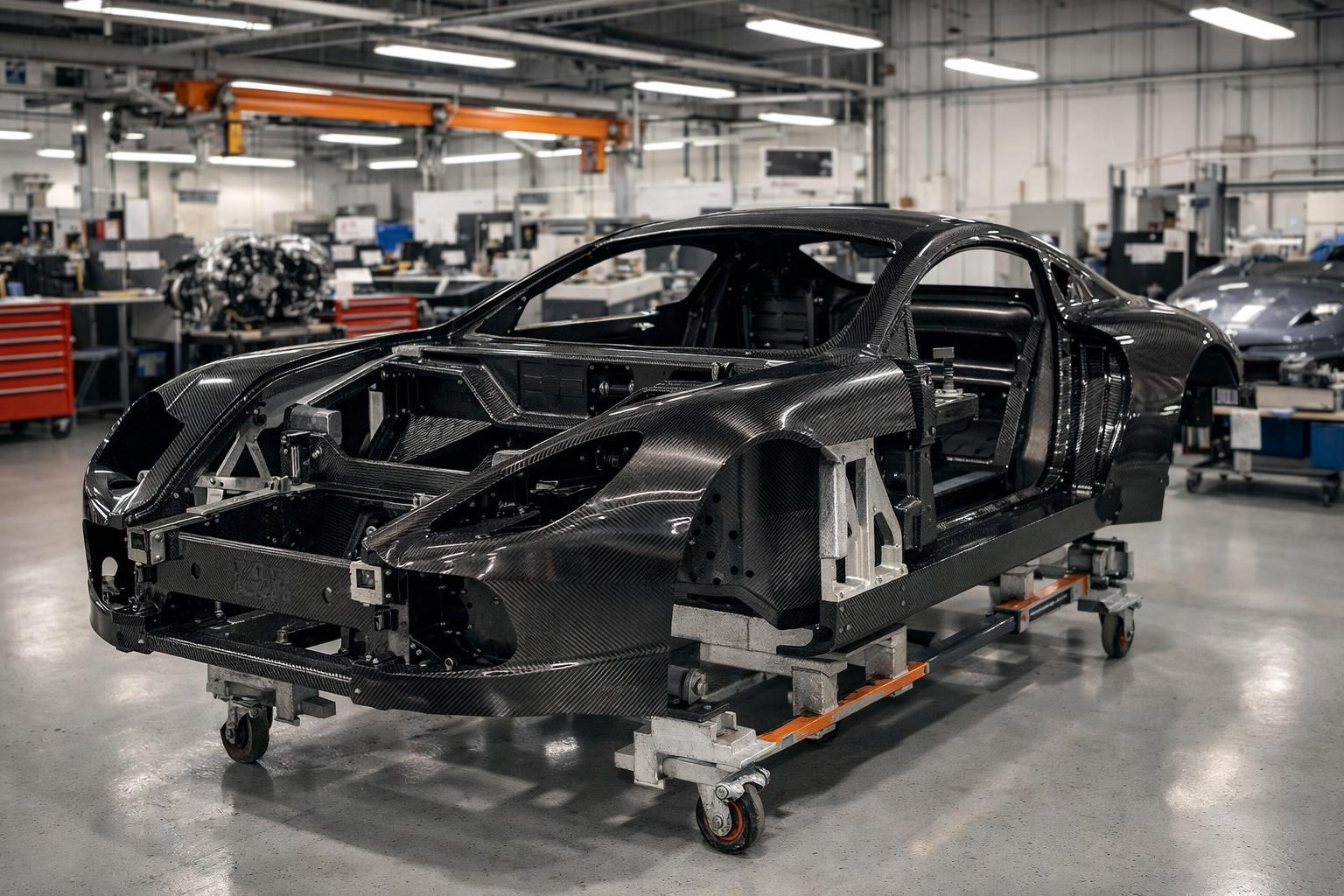
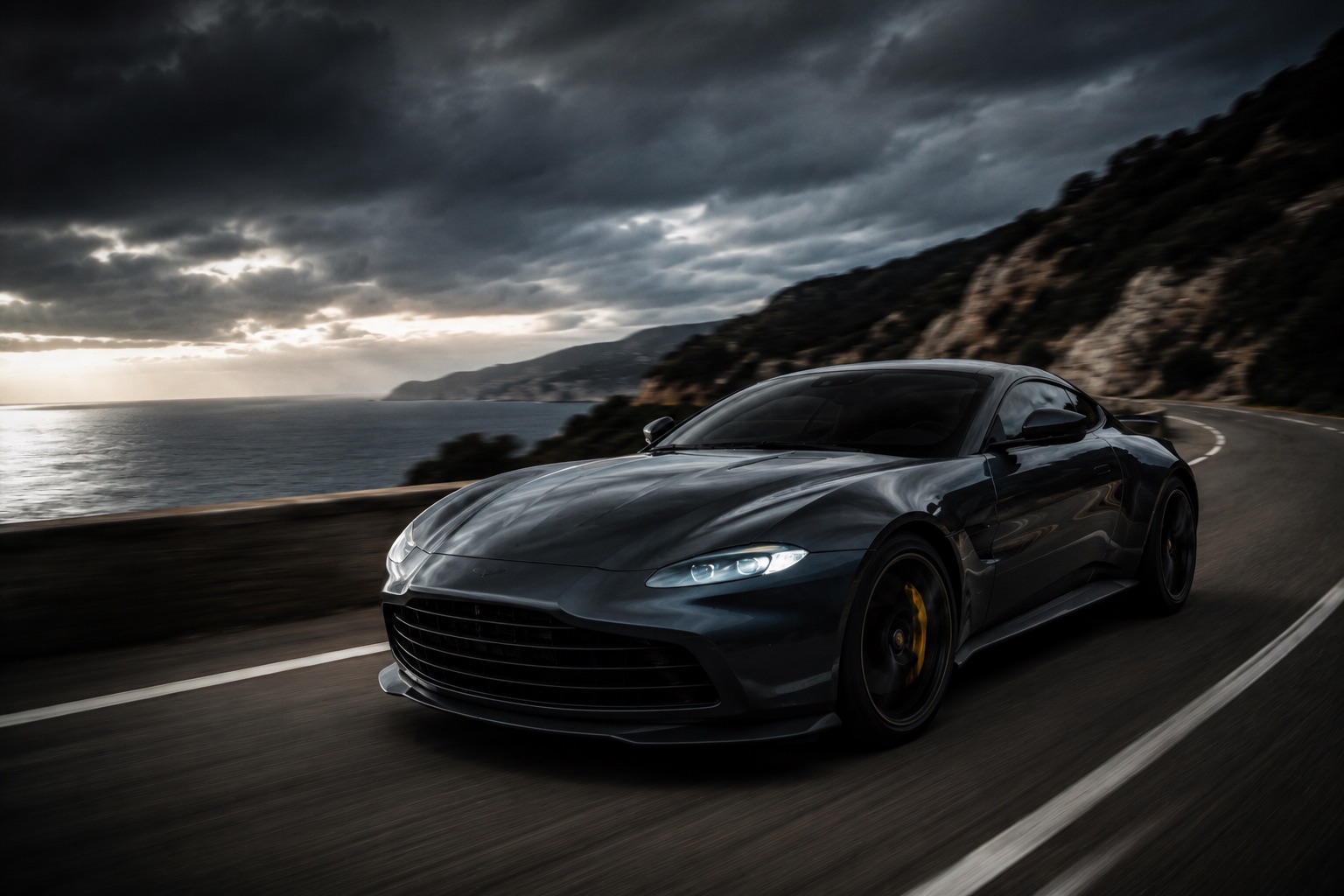
Behind Aston Martin 2025 lies a deeper strategy: ownership renewed since 2020, fresh capital and a financial discipline rare for a marque that was long fragile. The stated goal is clear: to secure the company’s future and establish it lastingly among the references of automotive luxury, without ever abandoning the craftsmanship of Gaydon.
A Reaffirmed Visual Identity
Beyond the figures, Aston Martin 2025 asserts a bolder aesthetic identity. A wider grille, slimmer lights and completely redesigned cabins, now fitted with in-house electronics after years of relying on borrowed systems, all signal a clear move upmarket. The design teams have modernised the brand’s styling language without breaking from its classic grand touring proportions, creating a family of instantly recognisable models.
Grand Touring as the Common Thread
While Aston Martin 2025 dazzles with its hypercars, the commercial heart of the marque remains grand touring. The DB12 and the Vantage embody that tradition: cars able to cover huge distances with absolute refinement while delivering supercar performance. It is in this segment, against Ferrari, Bentley and Porsche, that the company’s real profitability is decided, far more than in the ultra-limited series that grab the headlines.
Challenges That Remain Very Real
Nothing is guaranteed, however. Like many manufacturers, the marque must navigate electrification, unstable global markets and fierce competition. Aston Martin 2025 looks like a renaissance, but its success will depend on turning enthusiasm into steady sales and durable profitability. The recent history of ups and downs invites measured caution as much as optimism.
A Brand Reaching New Audiences
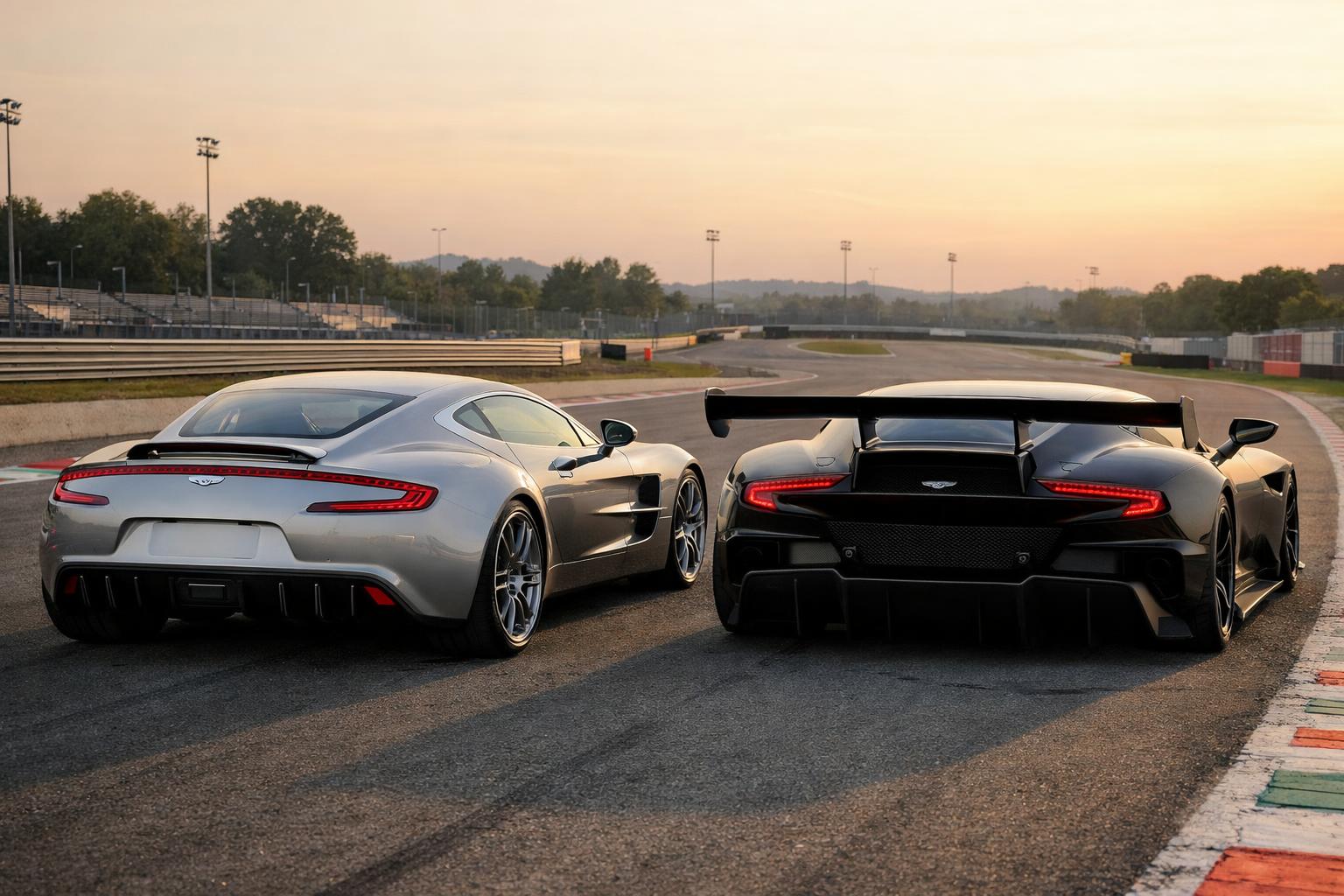
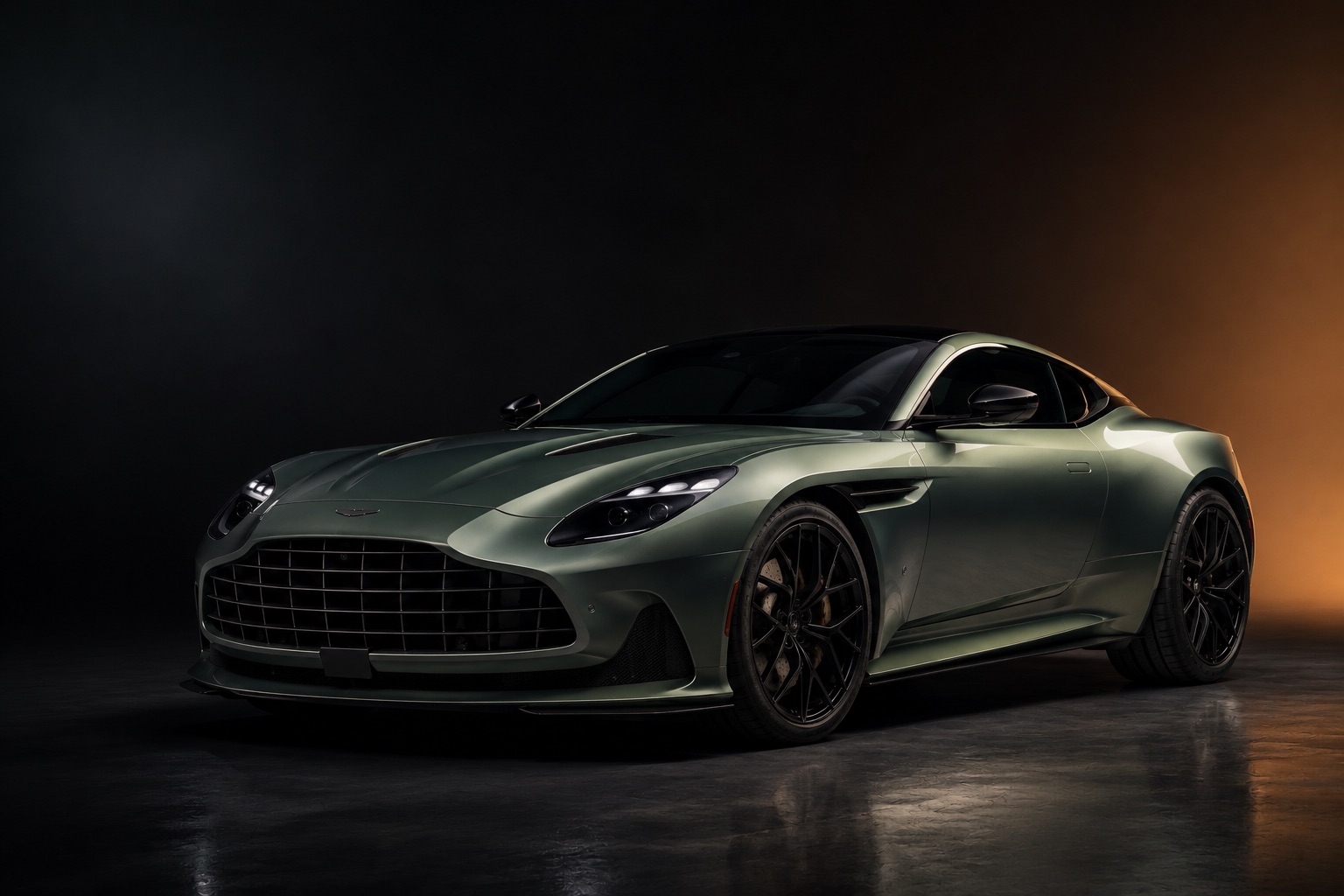
Aston Martin 2025 is also about reach. The DBX707 has opened the marque to buyers who would never have considered a two-door GT, while motorsport visibility keeps the badge in front of a global audience. Broadening the customer base without diluting exclusivity is one of the decade’s quiet but decisive battles for the brand.
Aston Martin 2025: A Renaissance at the Summit
With a record range, a revived V12, hybrid hypercars and clear ambition in Formula 1, Aston Martin 2025 embodies a true return to the top. The challenge now is to turn momentum into lasting results. To follow the news, visit the official Aston Martin website or the Aston Martin page on Wikipedia.
Aston Martin Facts: 5 Surprising Secrets Few Fans Know
Behind the glamour and the V12 soundtrack lie some genuinely surprising Aston Martin facts. The marque founded in 1913 has a history full of unexpected twists, near-bankruptcies and quirky decisions. Here are five of the most fascinating Aston Martin facts, from the origin of its name to a city car few enthusiasts like to remember.
1. The Name Comes From a Hillclimb
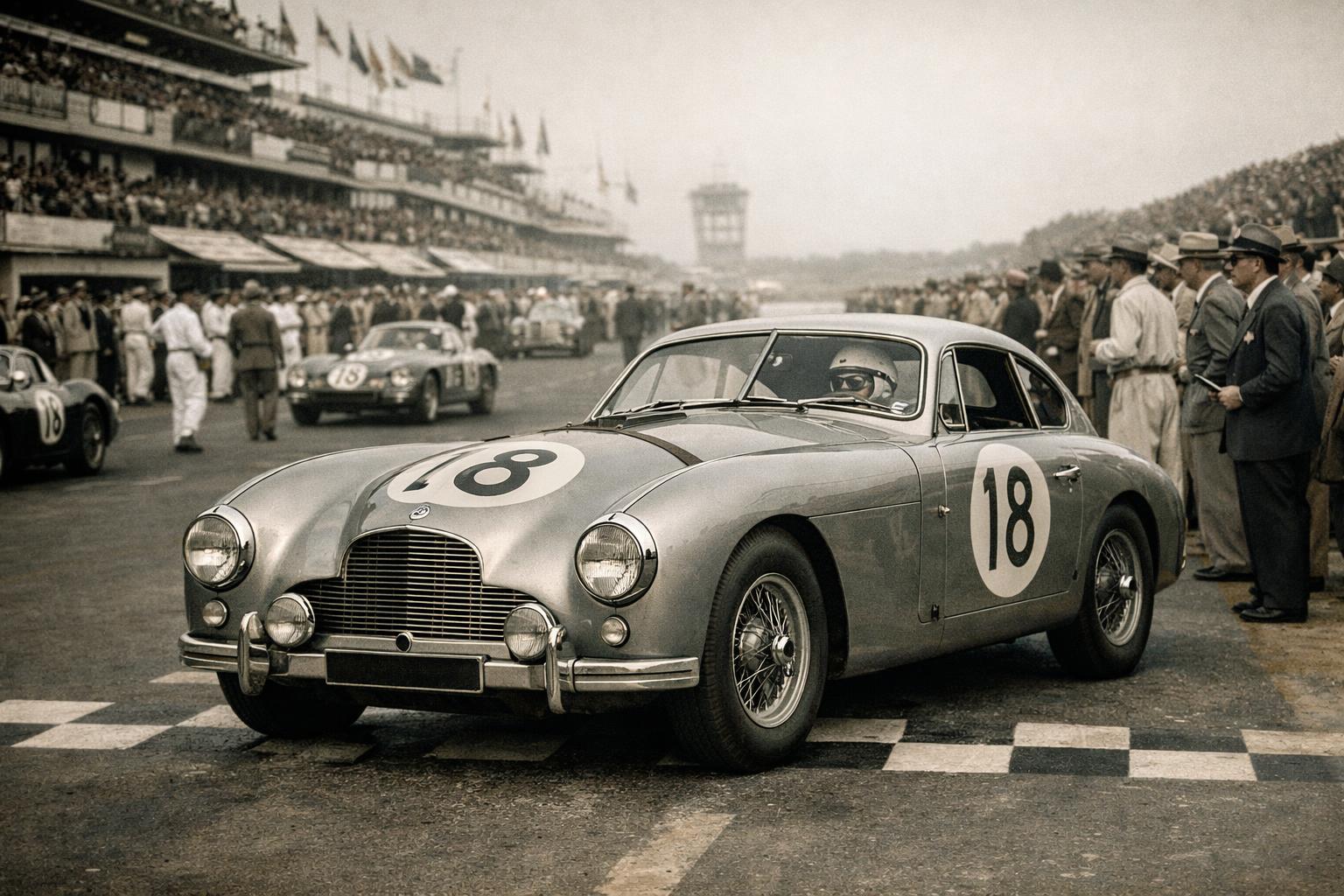
One of the best Aston Martin facts concerns the very name of the company. It combines Aston Clinton, a hillclimb in Buckinghamshire where co-founder Lionel Martin raced his cars before the First World War, with Martin’s own surname. From the outset, competition was literally built into the brand’s identity, long before its Le Mans triumphs.
2. The DB Stands for a Tractor Magnate
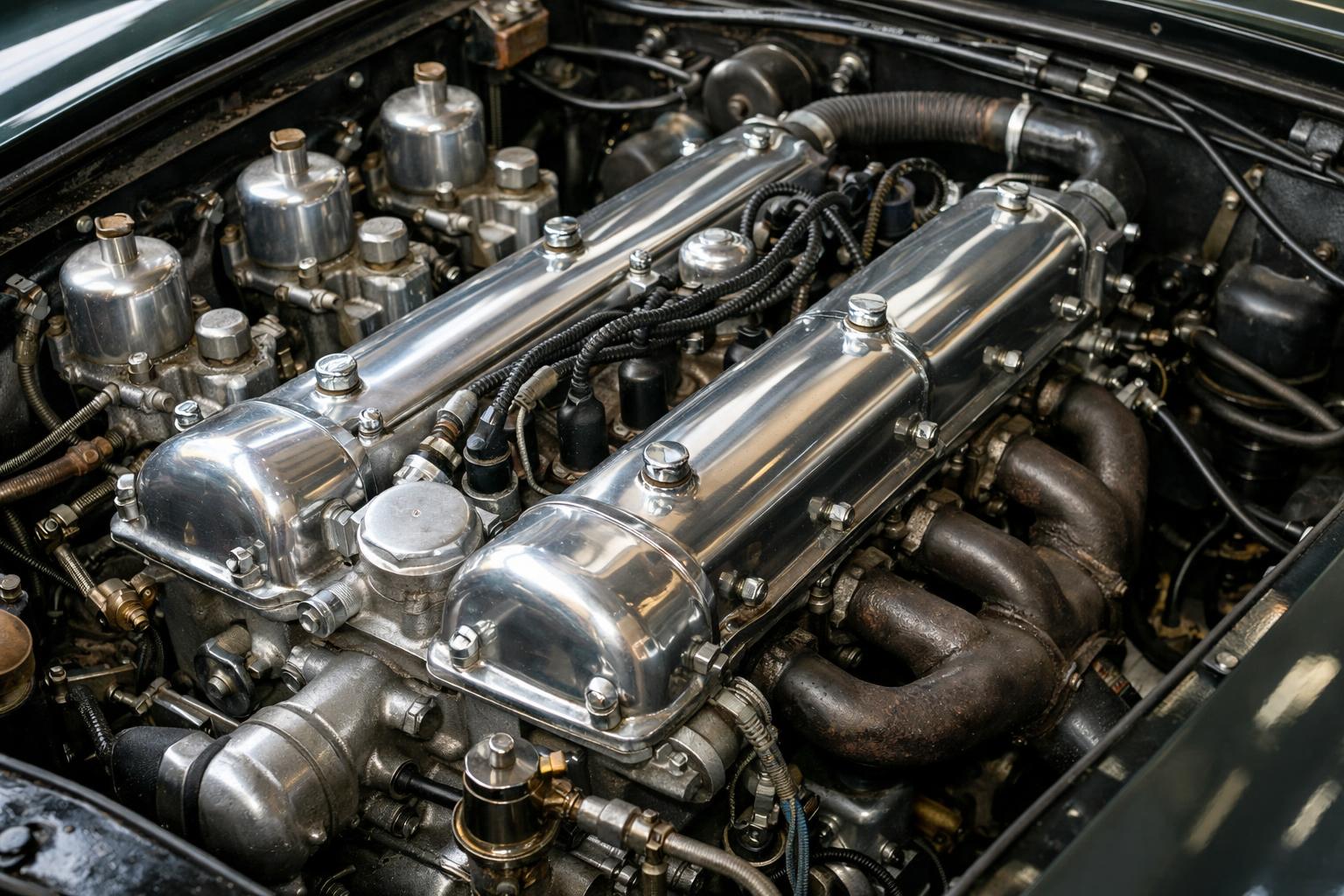
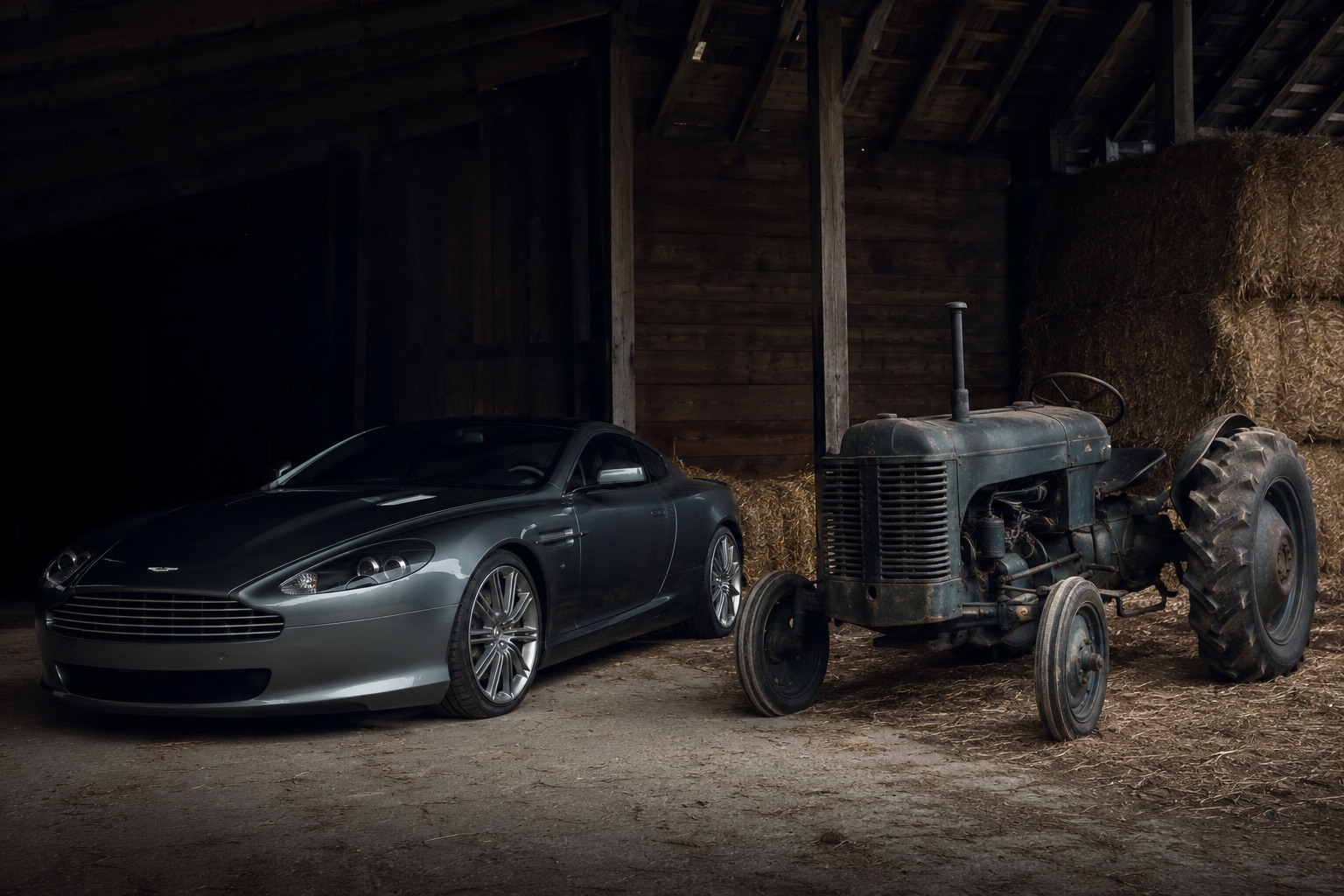
Among the most charming Aston Martin facts is the meaning of the famous DB prefix. It refers to David Brown, an industrialist who made his fortune building tractors and gears. He bought Aston Martin in 1947, reportedly for around 20,500 pounds, after answering a brief advertisement in The Times. His initials would go on to grace the most iconic models, from the DB5 to the DB12.
3. The Marque Nearly Went Bankrupt Many Times
Not all Aston Martin facts are glamorous. The company has flirted with bankruptcy on numerous occasions throughout its history, changing hands repeatedly between owners and investors. This financial fragility is part of what makes its survival so remarkable: against the odds, the marque has endured for more than a century while many rivals disappeared for good.
4. The Cygnet: A City Car in Disguise
Few Aston Martin facts surprise enthusiasts as much as the Cygnet. Launched in 2011, the Cygnet was a luxury reworking of the Toyota iQ city car, created largely to lower the brand’s average fleet CO2 emissions and meet European regulations. It remains one of the most unusual models the marque has ever put on sale.
5. The Lagonda Pioneered the Digital Dashboard
One of the most forward-looking Aston Martin facts dates back to 1976. The angular Lagonda, styled by William Towns, featured one of the earliest digital instrument panels in a production car. The technology was famously unreliable at first, but it pointed straight to the screen-filled cockpits we now take for granted.
Bonus: Two More Gems
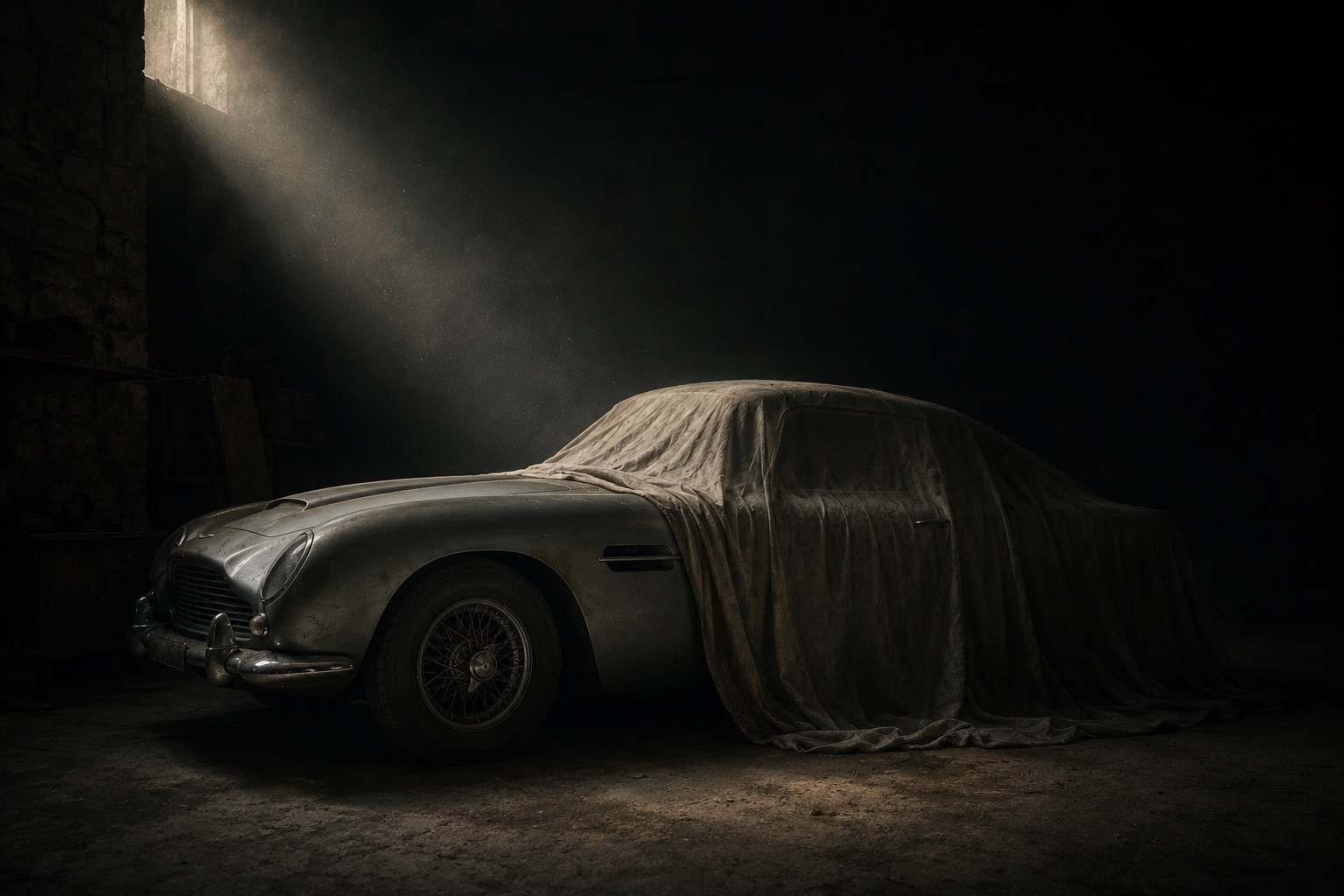
No round-up of Aston Martin facts would be complete without two final details. First, the winged badge: the marque’s famous wings, which appeared in the 1920s, have evolved continuously while keeping an instantly recognisable silhouette. Second, the V8 Vantage of 1977 is often described as Britain’s first supercar, with performance that could rival the Ferraris and Lamborghinis of its day.
A Century of Reinvention
What ties these Aston Martin facts together is a talent for reinvention. Each era brought a new owner, a new design language and a new flagship, yet the essential character of hand-built craftsmanship and understated power never changed. From the pre-war racers of Lionel Martin to the David Brown grand tourers and today’s hypercars, the marque has reinvented itself again and again without ever losing its soul.
Why These Stories Still Matter
Beyond trivia, these Aston Martin facts explain why the badge carries such weight today. A brand that survived repeated financial crises, that turned a humble city car into a curiosity and a tractor maker’s initials into a symbol of luxury, has truly earned its mythology. Knowing the stories behind the cars makes every single model far more compelling to drive and to own.
Aston Martin Facts That Build a Legend
These Aston Martin facts show that beyond the figures, the marque cultivates a taste for detail and panache that has fascinated collectors for more than a century. To explore further, visit the official Aston Martin website or the Aston Martin page on Wikipedia.
 A New Industrial Momentum
 A Brand Reaching New Audiences
 2. The DB Stands for a Tractor Magnate
 Bonus: Two More Gems