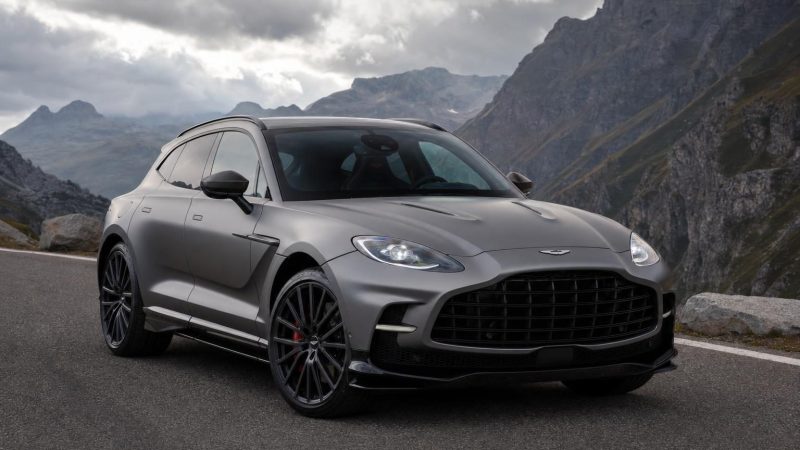
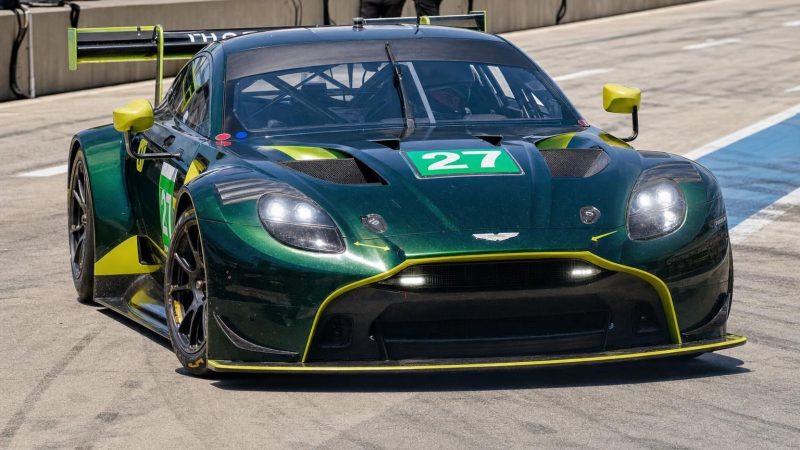
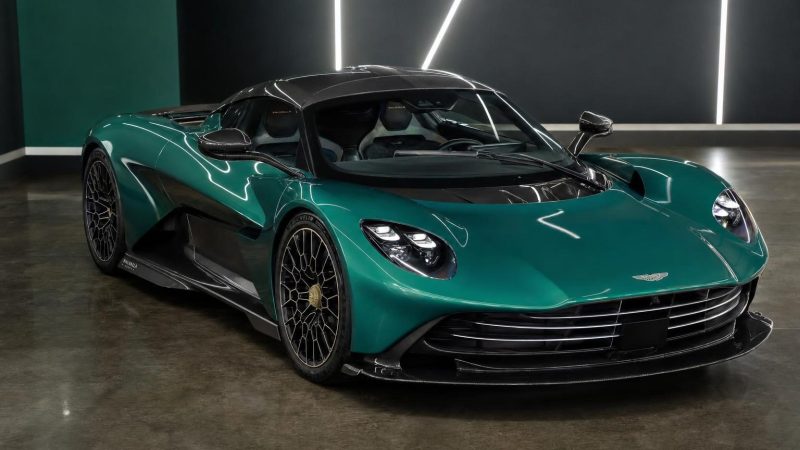
Vanquish V12 2024 under the microscope: figures, 5.2-litre biturbo V12, e-diff, extended chassis and limited production. Comparison of all three generations.
The 2024 Vanquish V12 resets the counters with a spec sheet that decisively breaks from its forebears, and that is precisely what we will measure: figures, architecture, electronic differential, extended wheelbase and production strategy. Without overstatement, the goal is clear: to place this new chapter against the 2001 and 2012 Vanquish models, using official data and open sources.
From Newport Pagnell 2001 to Gaydon 2024: three generations in numbers
Unveiled in Venice on 2 September 2024, the third generation marks the return of a major Gaydon name to an unprecedented level of performance, according to Aston Martin’s press release. The framework is set: V12, rear‑wheel drive, and a promise of enhanced rigour. This ceremonial launch at the Mostra is no mere society nod; it accompanies a deliberate technical upshift.
By way of reminder, the original 2001 V12 Vanquish claimed 460 PS and a 306 km/h top speed, while the second generation (2012) peaked at 595 PS and 324 km/h in S form, according to Wikipedia. These two milestones are enough to frame the marque’s progression: a continuous curve, with significant power increases and commensurate maximum speeds.
The newcomer claims 835 PS and 1,000 Nm, 0–100 km/h in 3.3 s and 345 km/h, per the model’s official page. HiConsumption cites 823.5 hp and 0–60 mph in 3.2 s: the discrepancy stems from PS/hp conversion and acceleration units, without contradicting the overall positioning. The essence lies in the near‑240 PS gap between the first and third generations, and in a top speed that crosses a new threshold.
Structurally, the 2024 chassis derives from DB12/Vantage underpinnings, with a wheelbase extended by over 80 mm to accommodate the V12, according to official documents and Wikipedia. A measured stretch, dictated by mechanical packaging, that points to increased high‑speed stability and steering that’s less twitchy but more readable.
The 5.2‑litre biturbo V12 of the third‑generation Vanquish V12: what has really changed
The heart of the matter is the 5.2‑litre biturbo V12 in its third in‑house iteration. Aston Martin announces a specific output of 160 PS per litre, a record for a series‑production V12 from the marque, which immediately places this engine at the summit of its lineage. The torque/power curve is not published in detail, but the 1,000 Nm peak indicates a tune aimed both at rev range reach and flexibility.
Versus the naturally aspirated V12s of 2001 and the 2012 evolutions, twin‑turbocharging changes the grammar: thermal management, transient response and traction control must be handled in concert. Here, the official figures (0–100 km/h in 3.3 s, 345 km/h) support the idea of a generous usable band, including at high revs, without sacrificing maximum speed—presumably assisted by aerodynamics and gearing, not detailed in the sources.
The key point is less a race to decimals than overall coherence. With a quoted 835 PS and an extended chassis, the car lays claim to a mechanical maturity the first two generations didn’t need to assume: with higher absolute power, engine‑gearbox‑rear‑axle integration becomes decisive. This is where the new‑generation driver aids step in.
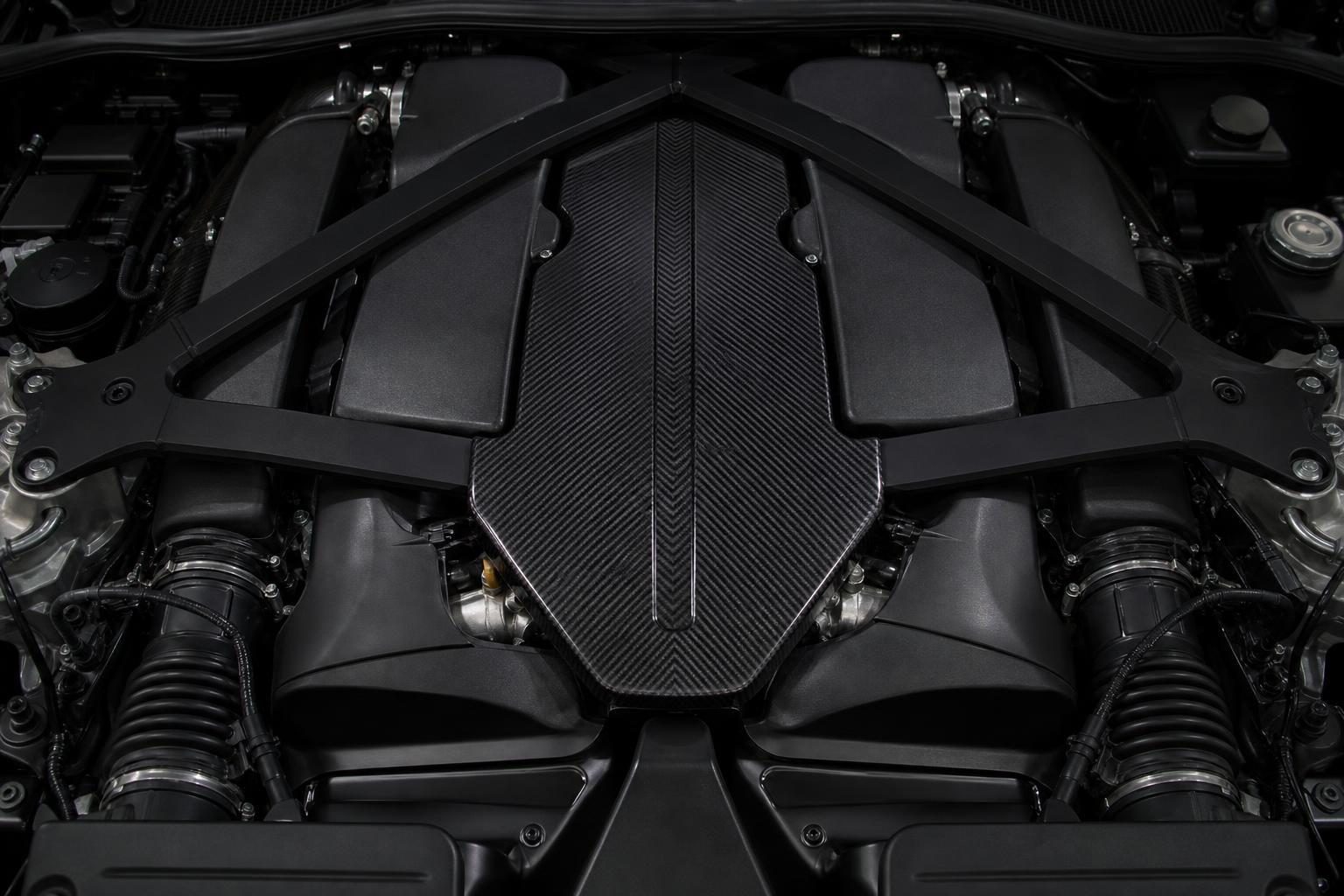
Boost Reserve: a turbo logic borrowed from cutting‑edge engineering
The notion of “Boost Reserve” refers, in the industry, to strategies for managing turbocharger flow that retain energy on tap for roll‑on response, anticipating torque demand. The official sources cited do not detail a system explicitly named as such for the 2024 Vanquish. It is therefore reasonable to recall the principles without speculating on this model’s exact calibration.
In practice, these logics often rely on preserving a favourable turbine speed, optimising bypass operation and mapping the throttle to limit perceived lag. On the road, this translates into crisper roll‑on and continuous acceleration, particularly between gears. The 0–100 km/h in 3.3 s, declared by Aston Martin, is compatible with advanced transient management, but is not proof of it per se.
Against the 2001 and 2012 Vanquish, both naturally aspirated, the challenge lies in mastering the boost: how to deliver 1,000 Nm with measure and repeatability, including on imperfect roads? Whatever the terminology, it is precisely this technical territory—fine control of boost, ignition and traction management—that separates the third generation from its predecessors.
Electronic rear differential: a first for a front‑engined Aston Martin V12
This is the other clean break. The 2024 Vanquish integrates, for the first time on a front‑engined Aston Martin V12, an electronic rear differential (e‑diff). According to the model spec sheet, it can go from fully open to 100% locked in 135 milliseconds. This figure conveys the reactivity available during load transfer in a bend or on throttle application.
On road and track alike, the benefit is twofold: traction and steering. By modulating lock‑up, the e‑diff shapes the rear axle—from discreet stabiliser to rotation partner—according to steering angle, load and torque. Compared with earlier generations, which relied on mechanical differentials and ESP, you gain finesse and continuity of action.
This technical building block aligns with the 2024 Vanquish V12’s philosophy: high power, extended chassis, and the need for proactive torque management. It will likely do as much for driver confidence on corner exit as for outright acceleration numbers, and that is often where the pleasure of a very fast GT is decided.
Production capped below 1,000 units per year: positioning strategy
Aston Martin announces intentionally limited production to fewer than 1,000 units per year. According to the official release and Wikipedia, this is a positioning choice rather than a stated industrial constraint. Organised scarcity supports residual values and protects the halo car within the range.
Compared with the more open cadences of the DB or Vantage, this Vanquish V12 plays another score: focusing attention on a technical showcase and a brand standard‑bearer. Implicitly, it also underscores the level of attention required by a 160 PS‑per‑litre V12 and an actively controlled rear axle—two elements that demand uncompromising tuning and quality control.
This strategy also answers to the badge’s history: the first Vanquish, built at Newport Pagnell, forged its reputation on reasoned exclusivity; the second, at Gaydon, extended it through performance. Limiting volumes in 2024, at the moment the car spectacularly raises its figures, continues this red thread with distinctly British coherence.
Conclusion: where does the Vanquish V12 sit in the lineage?
Let’s recap. With its 835 PS, 1,000 Nm and record specific output, the 2024 Vanquish V12 stands well apart from the 2001 and 2012 milestones. The chassis stretched by over 80 mm, the ultra‑responsive e‑diff, and cutting‑edge turbocharging engineering form an unprecedented triptych at Aston Martin for a front‑engined GT. Without fanfare, the figures and technical choices suffice: this third generation cuts deep, not just in surface.
To continue reading, dive into our in‑depth feature on the third generation in the Vanquish MK3 spec sheet, and step back in time with our Vanquish MK2 recap and the essentials of the first Vanquish. As for sources, the official Venice launch press release, the model page on Aston Martin’s site and the Wikipedia overview provide the factual markers to place this Vanquish V12 in its history.