Vantage Nürburgring 2026: Ultimate 3rd Overall After 20 Years
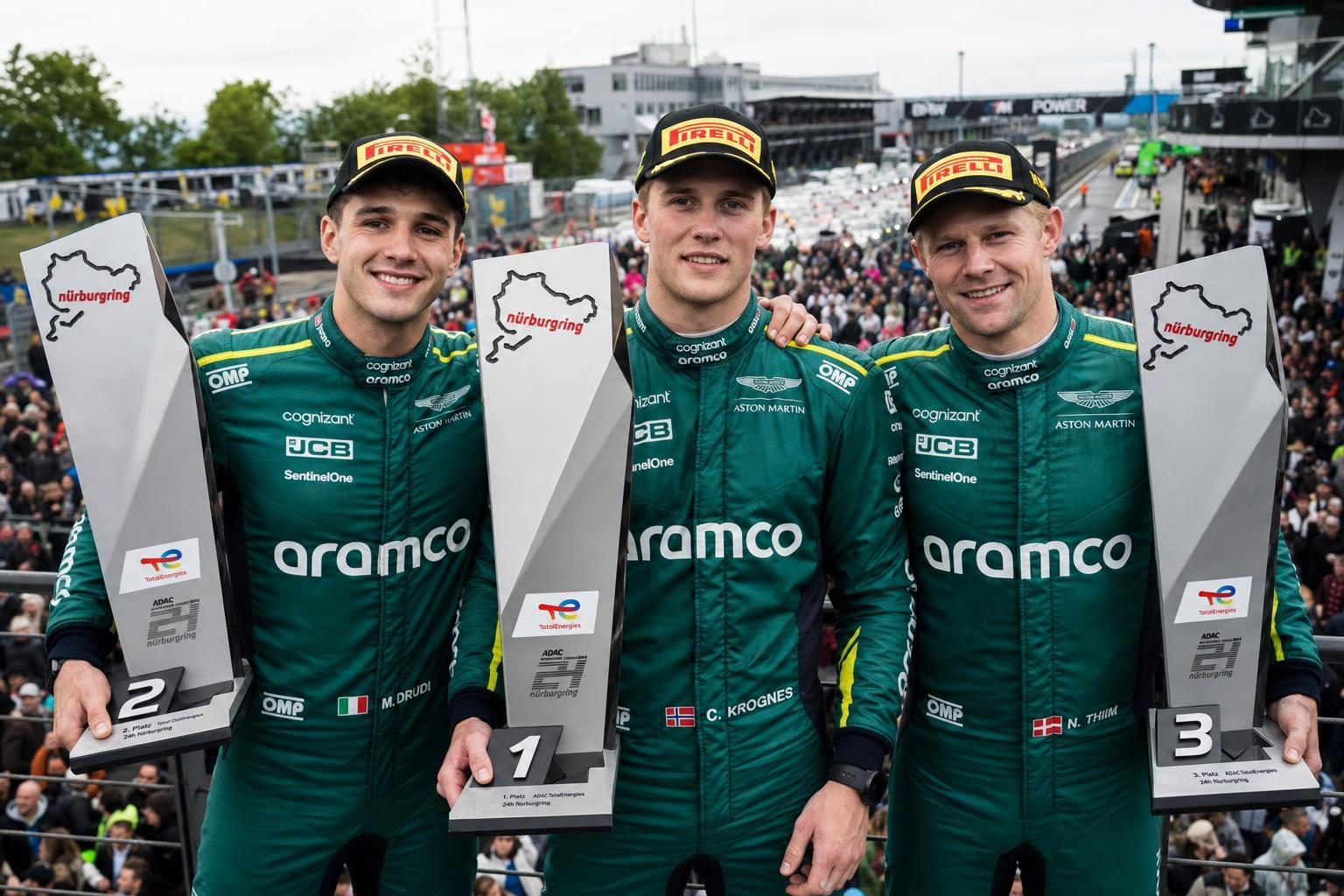
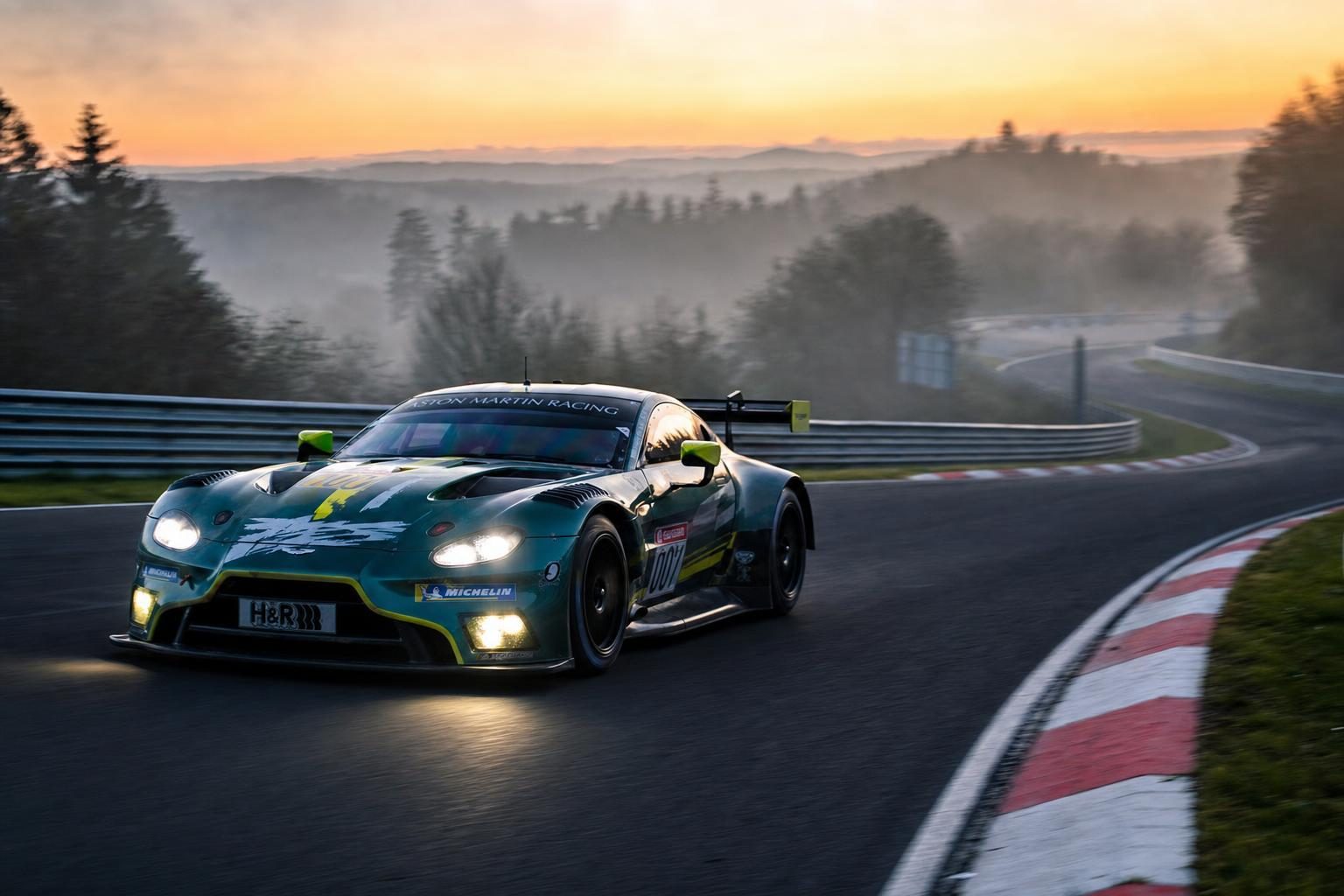
Vantage Nürburgring, and a milestone that matters: on 17 May 2026, Walkenhorst Motorsport’s Vantage GT3 secured 3rd overall at the 24 Hours of the Nürburgring, Aston Martin’s first ever overall podium in the event’s history. We look back at the mechanics of this performance — strategy, weather, drivers — and what it says about the GT3’s and the brand’s form, twenty years after their Nordschleife debut.
Nürburgring 2026: how Walkenhorst and Aston Martin built a 24-hour result
Over 24 hours and 15.8 miles per lap of the Nordschleife, nothing is improvised. According to the team’s official release, the Walkenhorst Motorsport Vantage GT3 finished the 2026 (54th) edition in 3rd overall, the brand’s and team’s best overall result at this race. It’s a richer reading than a simple classification: consistent stints, disciplined traffic management and a tempo aligned to the weather window made the difference.
The context played its own score. Ambient temperatures of 3 to 5 °C shaped the race, narrowing the tyres’ operating window and making pressure management decisive. In these conditions, the Pirelli tyres fitted to the Aston found a favourable performance zone, a point underlined in Aston Martin’s communications. The Vantage Nürburgring was thus able to convert a solid baseline pace into tangible time in hand.
Finally, the 20th anniversary of Aston’s debut in the event lent special weight to this podium, highlighted in the official presentation of the result. Beyond the symbolism, this 3rd place validates a method: run your plan, and turn rigour into an advantage. The Walkenhorst approach, applied to this Vantage GT3, illustrates it.
Mattia Drudi, Christian Krognes, Nicki Thiim: three complementary profiles on the ‘Green Hell’
The trio of Mattia Drudi, Christian Krognes and Nicki Thiim offers the balance characteristic of the teams that count on the Nordschleife: outright speed, mental endurance, traffic management. According to Aston Martin’s summary, each contributed to the average pace without needless peaks or dips, the signature of crews that perform over 24 hours.
Nicki Thiim’s stint at the heart of the strategy was particularly visible: placed in the right window thanks to early stops, he turned the opportunity into concrete progress into the top five. Krognes, an expert of the track, provided the glue in the trickiest nighttime phases. Drudi, very assured in cool conditions, helped stabilise wear and preserve the Vantage Nürburgring’s consistency during long green-flag stretches.
This mesh of skills only matters if it translates into waste-free exploitation of the car. That was the case here: no overdriving, few errors, and an ability to “make the average” when the track punishes excess. Podiums are often won first by not losing them.
The early refuelling strategy that changed everything in the opening hours
Walkenhorst chose to pit two laps earlier than most rivals for their opening stops. This decision, documented by Aston Martin, put the Vantage into more favourable traffic and opened clear air on the Nordschleife’s densest sections. In plain terms, lose less in traffic to gain more on the average.
This “invisible” lead allowed a progressive ramp-up. When the race neutralised, the Vantage Nürburgring found itself well placed to capitalise: reinserted in the heart of the lead group, it gave Thiim the springboard into the top five. The anticipation also reduced the risk of stacking during “natural” pit windows, common after Full Course Yellows or local yellows.
The cold amplified the value of this approach. By optimising the out-lap and avoiding the need to relight the tyres in a compact pack, the Aston limited penalising thermal cycles. Added up over full stints, this micro-economy turned into minutes gained. Less spectacular than a pass at Schwedenkreuz, but often more rewarding.
20 years at the Nürburgring: 10 class wins and 30 podiums before 2026
Twenty years after Aston Martin’s first start at the 24 Hours of the Nürburgring, the tally already stood at 10 class victories and over 30 podiums before 2026, according to the official recap. This year’s result extends that continuity with a first: the overall podium. A box that was still unticked despite high-level consistency in the classes.
This 2026 milestone also followed a strong signal: the Vantage GT3’s victory at the 2024 24 Hours of Spa, the benchmark event for the GT3 category. Cited by Aston Martin, it highlights the model’s technical progression on the most demanding endurance circuits. The Vantage Nürburgring confirms this trajectory on a track of a different nature, more abrupt and sensitive to managing variables.
In the brand’s memory, this overall podium therefore holds a dual value: historical, for the symbolism, and operational, for what it reveals about the maturity of the car-tyre-team package. Add enough experience, and results like this follow when execution does.
What this result says about the Vantage GT3 heading to Le Mans
What does this performance teach us about the Vantage GT3’s current competitiveness? First, that it can turn a constrained weather window into an advantage, thanks to a set-up suited to low temperatures and the exploitation of the Pirellis. Next, that strategic management — here, early stops — can rely on consumption, stability and reliability at the level required to fight for victory over 24 hours.
Comparison with other battlegrounds supports the analysis. The 2024 24 Hours of Spa win attests to a strong base over long GT3 stints. And the 2026 momentum, visible also in IMSA with a run of Vantage GT3 podiums, feeds measured ambitions ahead of world endurance fixtures. For an overview of this campaign, see our analysis of the four podiums in the United States in the Vantage GT3’s IMSA season.
The crux remains: turning this consistency into results at the headline rendezvous. In this respect, the Vantage Nürburgring podium is not an end but an indicator: the Aston has the pace, operating window and execution to matter over the distance. The road-car evolutions of the range, starting with the Vantage MkII, testify to a technical continuum that bolsters the GT3’s credibility with customers and teams.
To place this step in the context of the 24 Hours of Le Mans and the brand’s broader endurance programme, our feature retraces recent entries and objectives: Aston Martin in competition and at Le Mans. The Vantage Nürburgring 2026 delivers a simple message: at the highest level, precision pays.
Conclusion — Vantage Nürburgring, a podium built to the nearest degree
In 2026, the Vantage Nürburgring reached a first overall podium thanks to a controlled sum of parameters: pit stops brought forward by two laps, Pirelli tyres in the cold, and a well-matched trio of drivers. It is Aston Martin’s best overall result in the event, twenty years after its Nordschleife debut, and the logical extension of a performance curve inaugurated at Spa 2024. What follows, at Le Mans and beyond, will confirm whether this method — precise, patient — remains the safest strategy.
Casino Royale 2006: 4 Ultimate reasons the film redefined the Bond–Aston Martin bond
Casino Royale changed the visual and narrative grammar of the Bond–Aston Martin duo. Rather than a catalogue of gadgets, the 2006 film establishes a more intimate, rough-edged relationship between the spy and his car: a DB5 as a won – and therefore weighted – memory, and a 2007 DBS as a raw tool for survival. As Aston Martin prepares a dedicated celebration for the 20th anniversary in 2026, here are four directorial choices that reshaped the landscape for good.
The DB5 in Casino Royale: a car won at cards, not handed over by Q
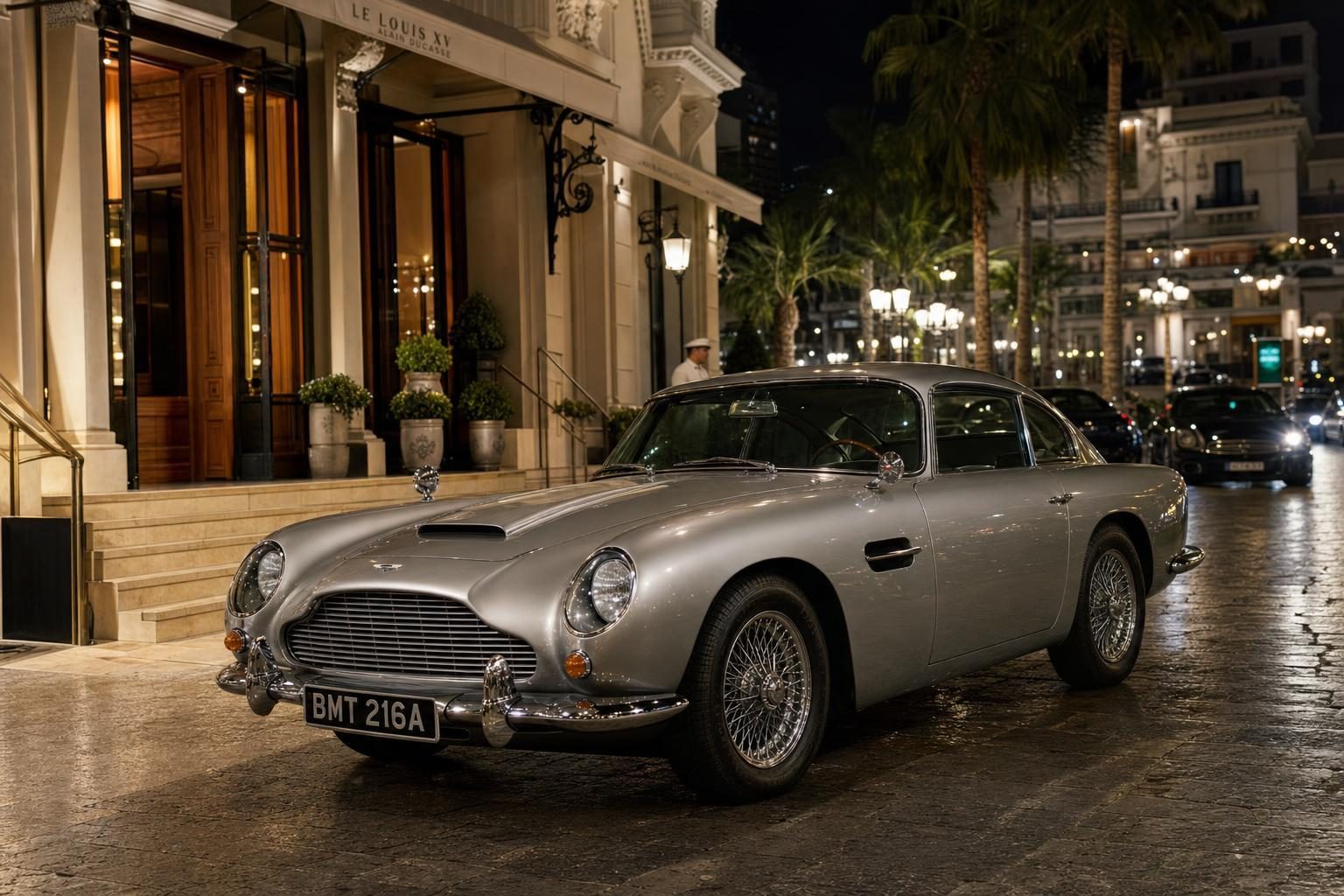
In Casino Royale, the DB5 does not arrive via the lab: it is won at cards by Bond, in a scene set in a fictional Montenegro. It is a fully documented plot point, backed by production notes and verifiable through the film’s reference resources. This choice breaks with the habit of MI6-issued kit and repositions the DB5 as a personal trophy, the opposite of a standard-issue tool.
Winning the DB5 also reinscribes the icon within the hero’s emotional arc. At this stage of the story, Bond forges his legend at the cost of bluff and pain: the car becomes a sign of this personal risk-taking, more than a mere equipment upgrade. The direction thus allows a subtext: the DB5 is not just beautiful; it carries the full weight of a decision and a gaze cast upon the world.
This reading, more narrative than gadget-led, sheds light on Aston Martin’s choice to officially list the presence of the DB5 and DBS in the Daniel Craig era, while distinguishing the roles of each model. You can revisit the context of the Aston Martins of the Craig era via our in-house feature the Daniel Craig era, from the DB5 to the DB10, without rehashing the full history here.
The 2007 DBS: grand tourer turned survival tool without gadgets
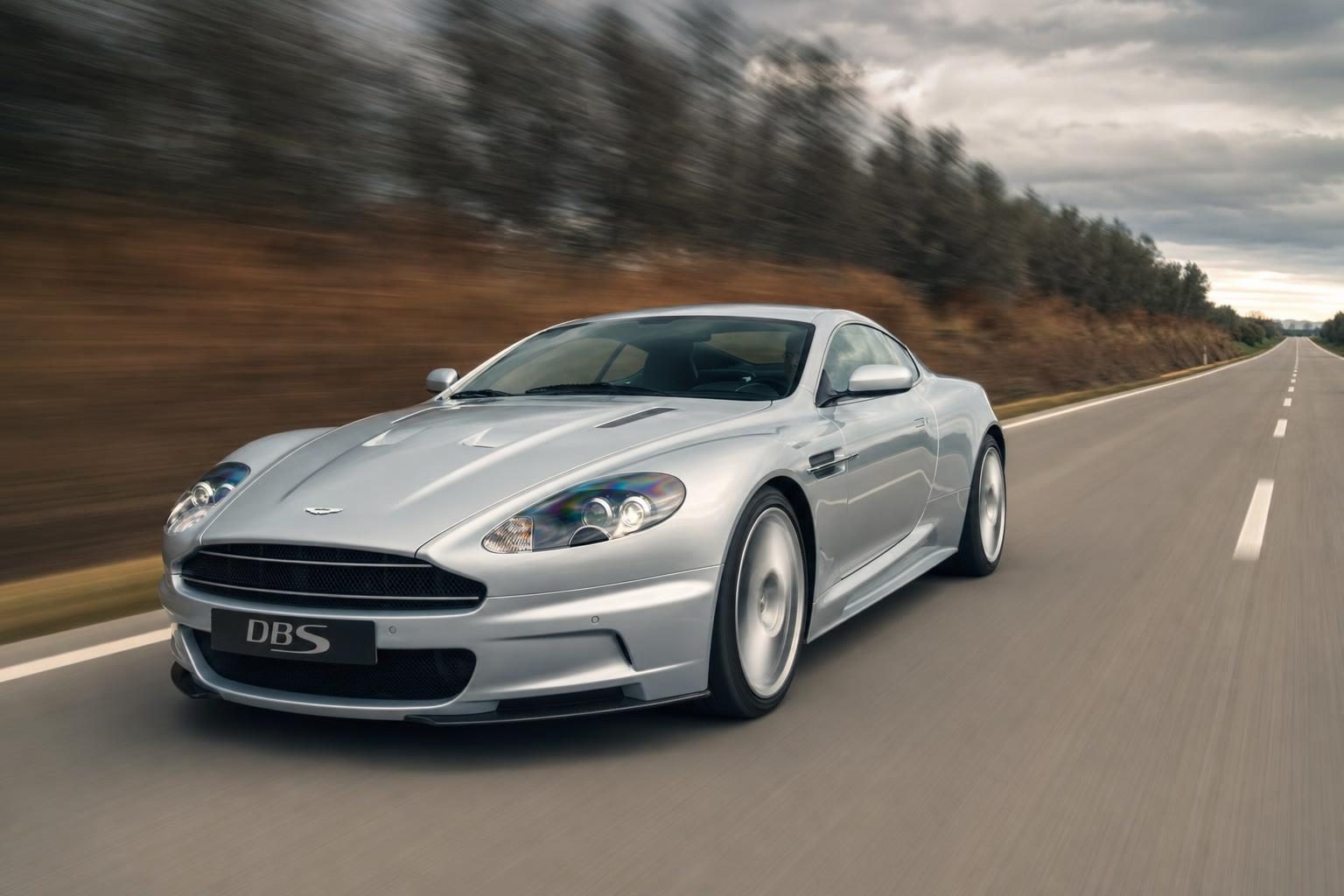
Making its big-screen debut in Casino Royale, the 2007-model DBS marks a turning point: fewer tricks and more substance. According to the manufacturer’s official model documentation, the DBS is Bond’s car in Casino Royale and then Quantum of Solace. It is less a gadget-laden jewel box than a GT honed for urgency, framed close, brutal when needed.
The film-making dwells on kinetics: tight shots of acceleration, gravel spattering, braking that jolts the camera. The sports car is no longer a polished extension, but the tool of an agent still in the making, exposed, fallible, physical. That aligns with Aston’s aesthetic proposition for the 2007 DBS, which you can rediscover via our detailed profile Aston Martin DBS 2007: spec sheet, context and evolution.
This deliberate stripping-back serves the story: we leave the logic of demonstration for that of survival. And the car, suddenly, tells the same tale as its driver.
The vineyard barrel roll: the scene that reignited DBS sales
The most discussed stunt in Casino Royale remains the spectacular DBS barrel roll, filmed at night on a road lined with vines. Specialist press sources have often mentioned a Guinness World Record of seven consecutive rolls for the film; this figure circulates widely, but it is worth noting that Aston Martin does not officially claim it in its releases. The key, in any case, lies elsewhere: the scene’s impact on the collective imagination.
Aesthetically, the moment is foundational. A modern GT, credible, vulnerable, destroyed to save a life: the exact opposite of gadget objectification. This reading mattered greatly for the aura of the 2007 DBS. Without citing numbers that do not exist in the manufacturer’s communications, it’s fair to say the scene cemented the car’s image among enthusiasts: an instrument both noble and sacrificial, whose value owes not to a hidden button, but to the driver’s skill.
To place the film in perspective, the reference summary of Casino Royale (2006) on Wikipedia recalls the central place of this sequence within the dramatic arc. The stunt, more than any other, crystallised the Bond–Aston aesthetic of the Craig era.
20 years on: how Aston Martin is celebrating the 2026 anniversary and what it reveals
In 2026, for the 20th anniversary of Casino Royale, Aston Martin announced an exclusive experience titled The Ultimate James Bond Experience: Italy, scheduled for September. The announcement appears in the marque’s official communication on its 2026 experiences. It signals a desire to root the celebration in reality: places, driving, immersion — in other words, to extend the film’s “material” approach, far from static museography.
The programme is part of the ASCEND 2026 initiative, presented by Aston Martin as a new era of experiences. For details and official confirmation, see the marque’s announcements: presentation of the 2026 experiences and the associated media release. The message is crystal clear: to celebrate Casino Royale is to relive a driving dynamic, not polish a display case.
This full-scale staging neatly closes the loop: in 2006, the film shifted the Aston Martin icon from gadget to gesture. In 2026, the marque chooses the road rather than the plinth to mark the anniversary. You could not be more coherent.
Casino Royale in the collection: original on-screen and stunt DBS and DB5 cars and their current value
Collectors often ask: what became of the on-screen and stunt DBS and DB5 cars, and how should their value be judged today? Caution is essential here. There are hero cars and stunt cars, sometimes multiple, modified, rebuilt. Value depends on documented provenance (chassis, precise on-set role, condition) and the traceability of production work.
What can be stated publicly concerns identification of the models themselves. The 2007 DBS is Bond’s car in Casino Royale and in Quantum of Solace, as summarised in Aston Martin’s official model documentation. To delve into the specifics of the 2007 DBS on the road and in popular culture, our profile DBS 2007 offers technical and historical context.
As for the DB5, the icon spans the eras and regains in Casino Royale a singular status — that of a car won, and thus “appropriated” by the hero. To set this myth within the range and its variants, our guide DB5: history, variants and culture provides useful markers. On value, a simple principle prevails: provenance, authenticity, condition. Auction results vary, but without irrefutable documents, the estimate remains a hypothesis.
Conclusion: why Casino Royale permanently redefined the Bond–Aston duo
By the end of Casino Royale, the bond between the spy and his car is no longer a list of gadgets. It is a script: a DB5 won and thus laden with meaning, a 2007 DBS filmed as a survival tool, a stunt that shapes the imagination, and, twenty years later, a road celebration that extends that momentum. In other words, Casino Royale put the Aston back at the heart of the narrative, where emotion, decision and material reality rule. And that is precisely what the marque is set to honour in 2026.
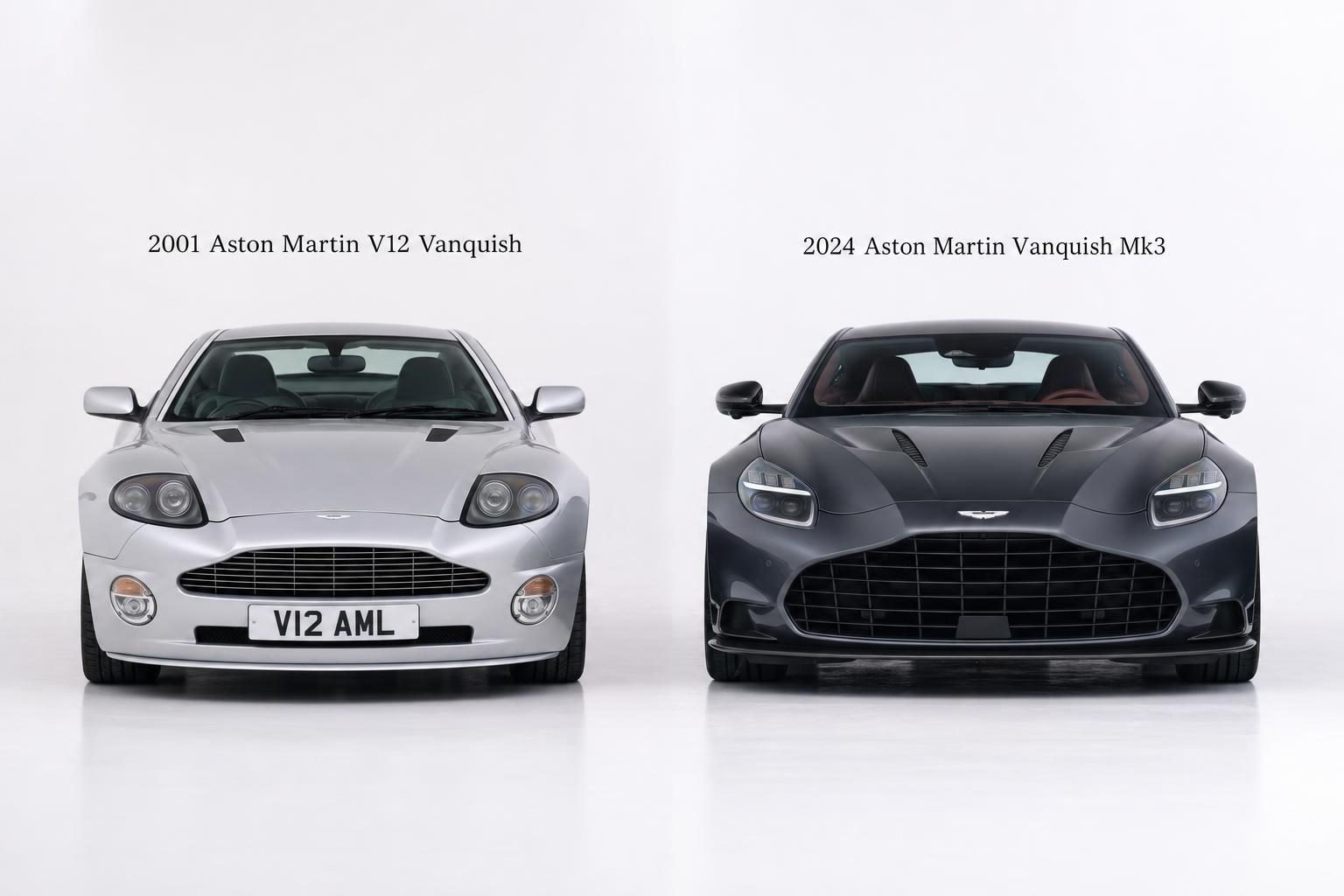
Vanquish 25 years, or how a name became a compass for Aston Martin: three generations, three V12s, and a single guiding idea of high-intensity grand touring. Marking the March 2026 announcement of the model’s 25th anniversary, we set the technique and culture of this lineage in perspective without repeating monographs, to illuminate the continuity of a constructive philosophy — from Newport Pagnell to Gaydon, from aluminium chassis to carbon skins, from naturally aspirated to twin-turbo.
March 2001, Geneva: why this name and architecture changed Newport Pagnell
The first V12 Vanquish was unveiled at the Geneva Motor Show in March 2001. The name “Vanquish” — to defeat, to dominate — sets the tone, but it is the architecture that fixes the trajectory. According to Aston Martin’s official communications in March 2026, this coupé designed by Ian Callum is the last model built at Newport Pagnell before the move to Gaydon, a major industrial and cultural handover. The choice of an aluminium structure and composite bodywork heralds a modern way to make an Aston: controlled craftsmanship, tooled by engineering.
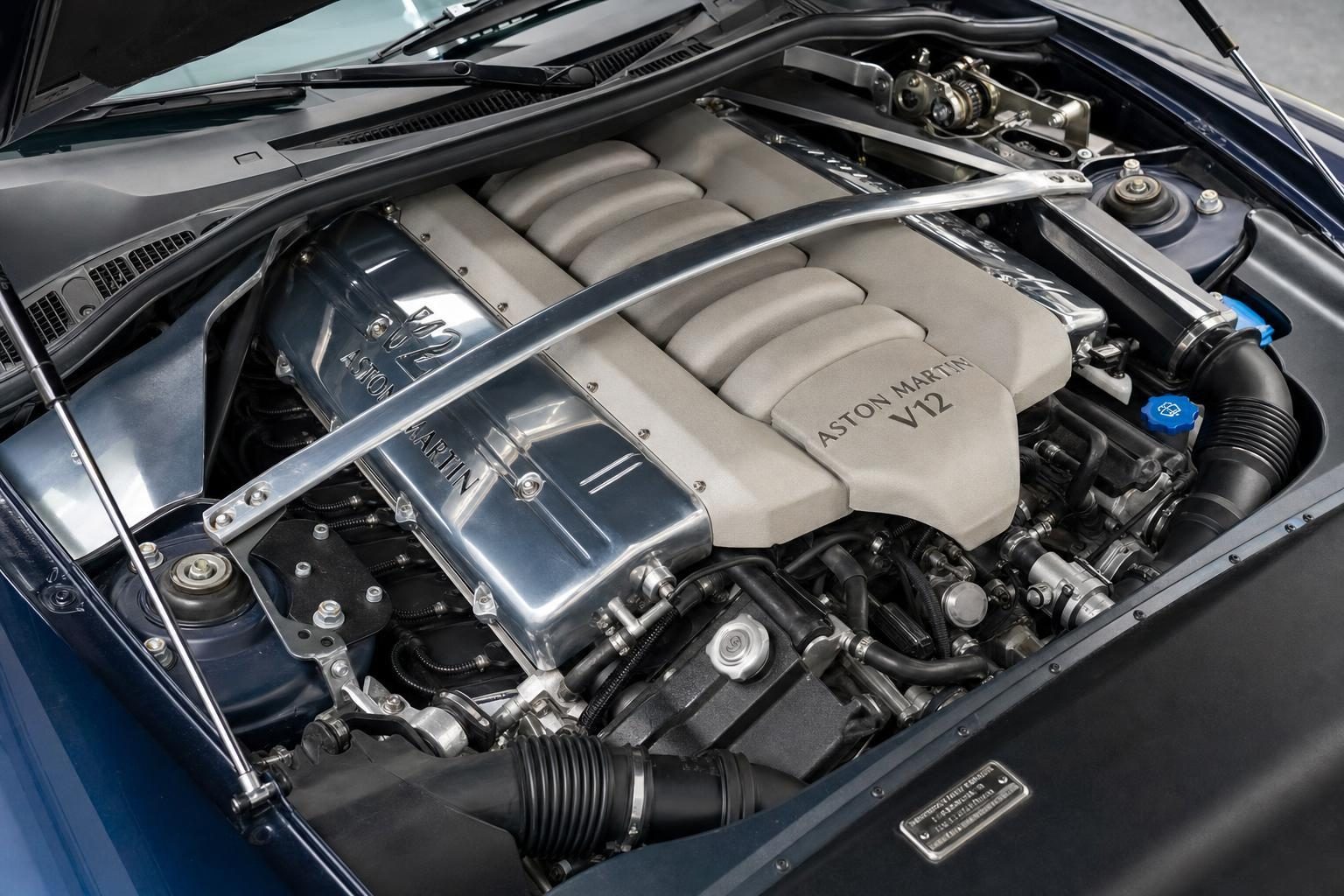
At its heart, a 6.0-litre V12 with 460 PS, lifted to 520 PS on the Vanquish S. This engine, initially naturally aspirated, sets the ambition: to deliver high speed with ample torque in reserve and a muted, long-legged surge, while keeping a line both muscular and restrained. The architecture mattered as much as the power: increased rigidity, proportions tailored for the long bonnet, and a driver-oriented cockpit, almost classical in spirit, contemporary in execution.
This original Vanquish also propelled Aston Martin into the popular imagination: painted Tungsten Silver, it took a role in Die Another Day (2002), with a few Q-Branch options. A nod that didn’t make the car, but sealed its silhouette in the memory of a whole generation.
For a deeper look at the specifics of this first opus, see our complete Vanquish Mk1 feature, a useful complement to this transgenerational perspective.
2,589 first-generation cars: production figures and place in time
The numbers tell a story of controlled production. According to media.astonmartin.com (Aston Martin Works), the first generation (Vanquish and Vanquish S) totals 2,589 units. The astonmartin.com site states 1,489 units for the 460 PS Vanquish before the arrival of the S, which continued until 2007. This dual reading neatly illuminates the reality: a relatively limited base of “460” Vanquish, then a qualitative ramp-up with the S, in a tightly managed lifecycle.
In time, the Mk1 sits at a crossroads: the last “great” Aston from Newport Pagnell, the first truly modern Aston conceived for the Gaydon era. Its reach targeted connoisseurs rather than volumes which, 25 years later, underpins its cultural value. It is the starting point of a lineage defined less by horsepower than by the way it is served: precise chassis, long wheelbase, endless bonnet, and a V12 at the core of the promise.
Second generation 2012: the Vanquish Mk2 and the One-77’s influence on its carbon bodywork
In 2012, the name returns, the era changes. Under Marek Reichman’s direction, the new Vanquish adopts 100% carbon-fibre body panels — aerospace grade — and draws on the One-77’s sculptural DNA. Surfaces gain tension, the shoulders are more deeply carved, the tail is sharpened: aerodynamics becomes a language. This bodywork is not a styling trick; it is a method. It allows more exact forms and precise mass control, in keeping with the lineage’s logic.
The ideological framework remains the same: a GT with a V12 placed at the heart of the experience. Industrialisation at Gaydon refines perceived quality and repeatability without smothering singularity. The Vanquish Mk2 is not a revolution in philosophy; it is a consolidation: better use of materials, aerodynamic integration, modernised ergonomics. The name endures because it describes less a number than a brief.
On the market, this Mk2 marks Aston Martin’s alignment with contemporary standards of “visible carbon” and assembly rigour, while retaining a grand touring stance. Again, continuity: stance, proportions and mission remain, the material changes — to the benefit of precision and expression.
For a numerical overview and our analysis of the most recent generation, the Vanquish Mk3 spec sheet offers a useful techno-historical counterpoint.
Third generation 2024: 835 PS, 1,000 Nm and the announced end of the naturally aspirated V12
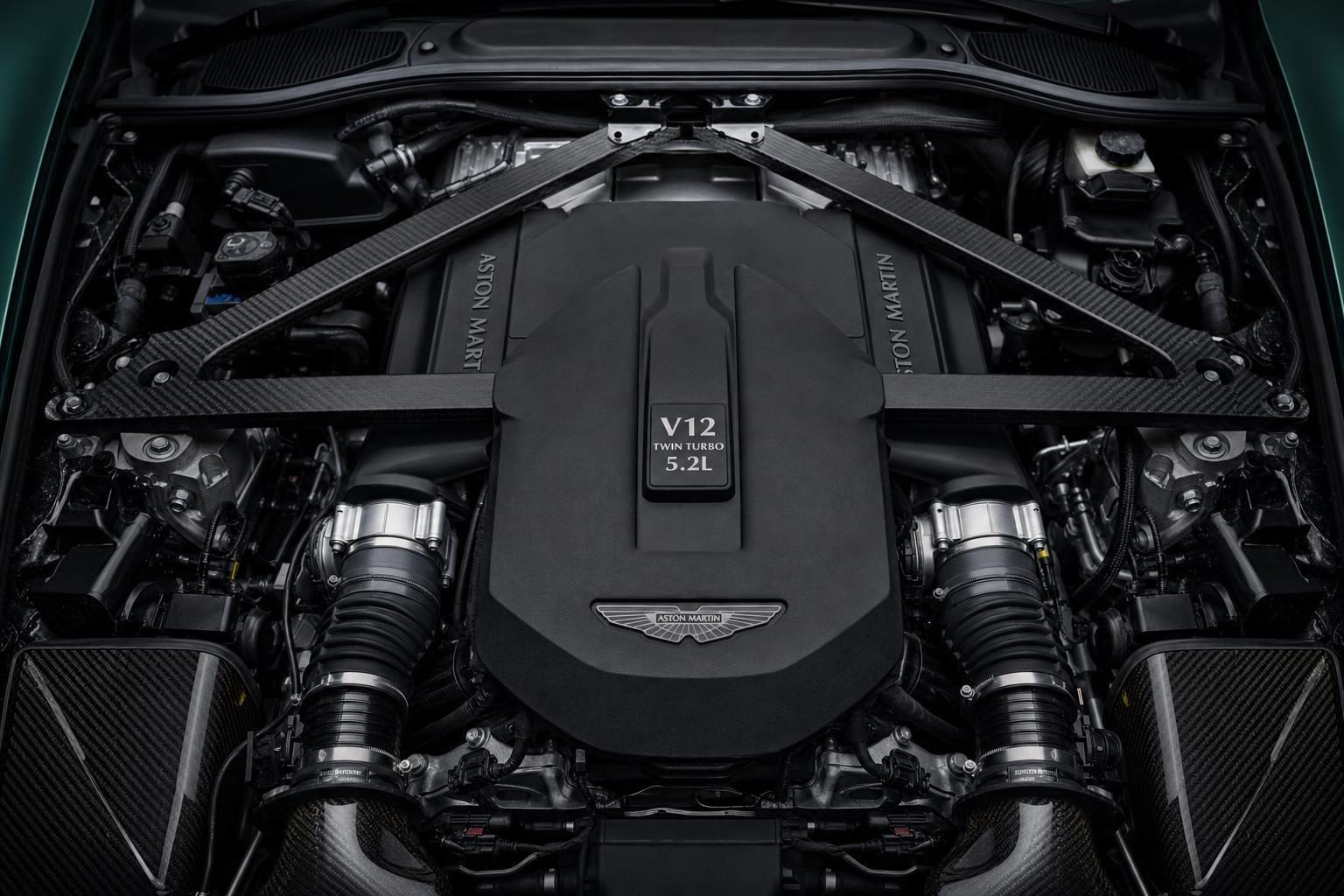
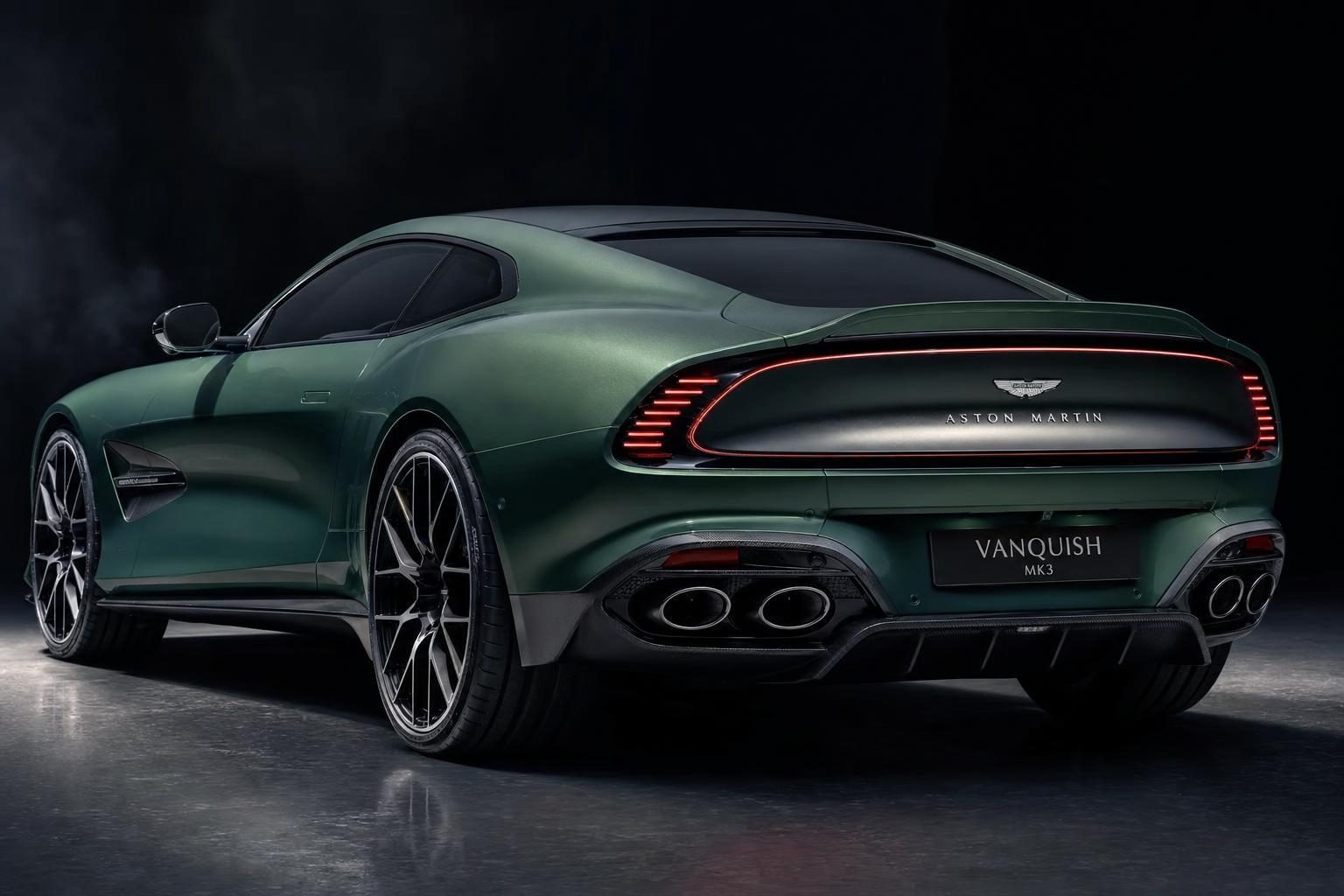
In 2024, the third iteration brings the mechanical argument to its numerical peak: 835 PS, 1,000 Nm, a 5.2-litre twin-turbo V12, 0–60 mph in 3.3 s and 214 mph flat out (figures supplied by Aston Martin, March 2026). The engine’s temperament changes — forced induction replaces the infinite smoothness of natural aspiration — but the spirit persists: to provide abundant, immediate thrust in a crisply sculpted envelope.
Aesthetically and structurally, Marek Reichman’s signature continues: athletic volumes, clean surfaces, mastery of airflow. Carbon is no longer a discourse; it is the daily grammar. The 2024 Vanquish illustrates maturity: the industrial tool has absorbed artisanal exacting standards and puts them at the service of performance, without a stylistic rupture from its forebears.
Culturally, this third generation chiefly confirms the end of the naturally aspirated V12 era in the Vanquish line. It is a page turned with elegance: forced induction does not deny the heritage; it reinterprets it. For purists, the song changes; for the philosophy, the essence remains — a cutting-edge GT, centred on a twelve-cylinder as the backbone of the experience.
For targeted technical reading, see our 5 technical innovations of the 2024 V12, to gauge what twin-turbocharging brings in efficiency, packaging and character.
Collecting a Vanquish in 2026: what the three generations exchange on the market
In collecting, a Vanquish’s value is not judged by the odometer alone. The Mk1 concentrates the charm of the Newport Pagnell–Gaydon transition and the popular aura of cinema. Early examples, the Tungsten Silver “Bond echo” configuration and well-kept S versions embody this measured rarity. Mechanical coherence (maintenance, history) carries weight, as often with a first-of-line whose total volume is contained.
The Mk2 (2012–2018) trades its collectible argument on material sophistication: carbon bodywork, series production build quality, and a style that has aged well thanks to the One-77’s influence. Buyers see in it a modern Aston “to wear every day” without denying the ritual, which supports demand for understated configurations and well-documented special series.
The 2024 Vanquish, for its part, mobilises the argument of absolute performance within a GT canvas. Its very powerful twin-turbo V12, canonical figures and status as witness to the end of natural aspiration already lay the foundations of a future classic. Markets value technical ruptures when stylistic continuity keeps them legible — and the Vanquish excels precisely at this exercise.
From generation to generation, it’s the same conversation between high performance, understated elegance and meticulous material execution. It is this dialogue — more than the chase for the last tenth — that forms the core of demand, yesterday as today.
Conclusion — Vanquish 25 years, or the constancy of a right idea
Twenty-five years after Geneva 2001, Vanquish 25 years boils down to fidelity: a GT coupé with a V12 at the centre of the experience, an evolving architecture serving precision, and a design that prefers rightness over noise. From Newport Pagnell to Gaydon, from aluminium to carbon, from naturally aspirated to twin-turbo, the lineage hasn’t changed its DNA: it has simply learned to express it better.
While the numbers evolve — 2,589 units for the Mk1 according to Aston Martin Works, 835 PS and 1,000 Nm for the 2024 — the promise endures. And it is this continuity that gives an emblematic Aston its strength: a grand tourer that yields nothing on elegance and that, three generations on, still speaks to the driver as much as to the collector.
Vantage Le Mans 2026: 11 Podiums and the Ultimate 3rd-Place Consistency
Vantage Le Mans is now as much a telling statistic as it is a long-form story. On 14 June 2026, Heart of Racing / THOR’s Vantage #23 clinched 3rd in the LMGT3 class at the 24 Hours of Le Mans, a result that adds to ten other class podiums already earned by the Vantage and confirms a momentum set well before the Sarthe. Here we revisit the race unfold, the crew line-up, the role of the 2026 IMSA season, the case of the unconverted pole position, and the technical architecture that makes this record possible.
The result on 14 June 2026: how Vantage #23 secured the podium
Heart of Racing / THOR’s #23 completed the 2026 24 Hours of Le Mans in 3rd place in LMGT3, after a clean final stint with no excessive caution. According to media.astonmartin.com (14 June 2026), this brings the number of class podiums achieved by the Vantage at Le Mans to 11. Consistency, rather than fireworks, set the tempo: tidy stints, penalty-free pit stops, and tight management of double and triple tyre stints.
In a dense LMGT3 field punctuated by neutralisations, the British car stayed on the right train. Changing conditions were handled methodically: pit windows aligned with slow zones, rational tyre choices, and no reckless gambles under safety car. The crux came at night, when the Vantage settled into the top five before converting the opportunity at daybreak.
This podium also carries symbolism. Prodrive, a historic partner of the programme, celebrates 25 years at Le Mans and signs its 19th podium at the Sarthe (media.astonmartin.com, 14 June 2026). A statistic that underlines how, in endurance, well-worn habits often yield a few tenths a lap.
Gray Newell, Dudu Barrichello, Jonny Adam: a crew built for consistency
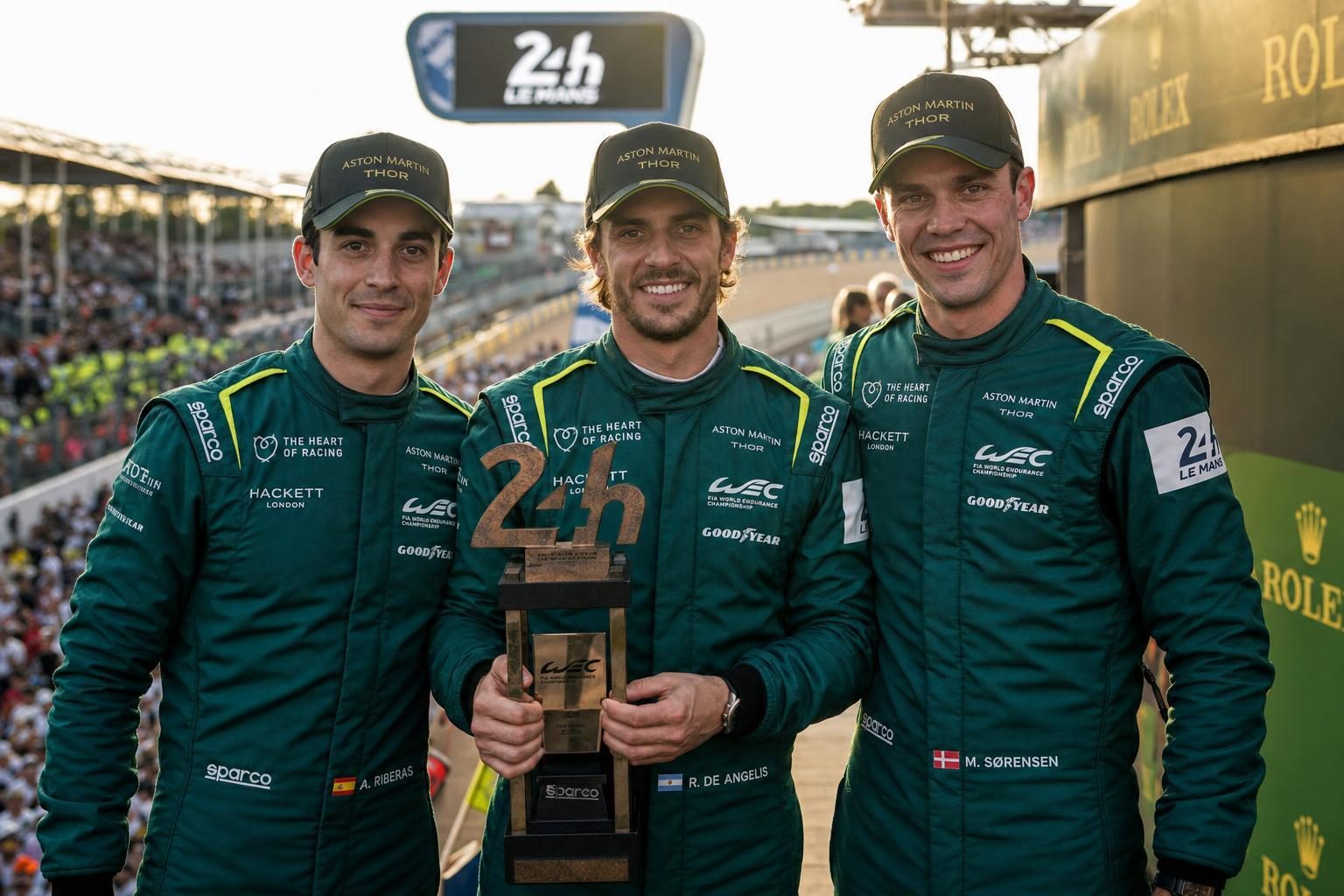
You don’t improvise on the gearbox late on a Sunday morning. Gray Newell delivered solid opening stints without draining the mechanical capital. Dudu Barrichello, in fine form this season, set the pace as the track evolved, particularly at stint ends where gaps hinge on steadiness. And Jonny Adam fulfilled his role as closer, as he has demonstrated in the past.
Jonny Adam’s pedigree matters. A double class winner at Le Mans, he took GTE Pro in 2017 alongside Darren Turner (media.astonmartin.com). That experience shows in the details: calibrating double tyre stints, reading Full Course Yellow phases, and sticking to the run plan set with engineering.
Newell and Barrichello, for their part, bring a clear upward curve. The former strings together clean stints, the latter arrived at the Sarthe leading IMSA GTD. Together, they draw a clear line: a crew structured for consistency, rather than a single headline lap.
4 IMSA podiums before Le Mans: a 2026 season that primes the Sarthe
The Le Mans 3rd place didn’t fall from a capricious sky. Before Le Mans, the Vantage amassed four IMSA 2026 podiums, with Dudu Barrichello leading GTD on 54 points (source Aston Martin, Laguna Seca release, April 2026). These results embed valuable automatisms: handling neutralisations, executing pit stops, and frictionless communication.
IMSA meetings served as a full-scale testbed for the British GT3. Long runs, refining fuel window strategies, and pitlane discipline translate effectively to Le Mans. This foundation converts a good qualifying into a complete race and explains a podium achieved without spectacle but with method.
This documented progression illuminates the story: Le Mans 2026 is no one-off. It is also reflected in our detailed analyses of the North American campaign, to be found in our recap of the Vantage GT3’s four IMSA podiums in 2026, where performance-building week after week clearly emerges.
The pole paradox: #27 starts up front but misses the podium
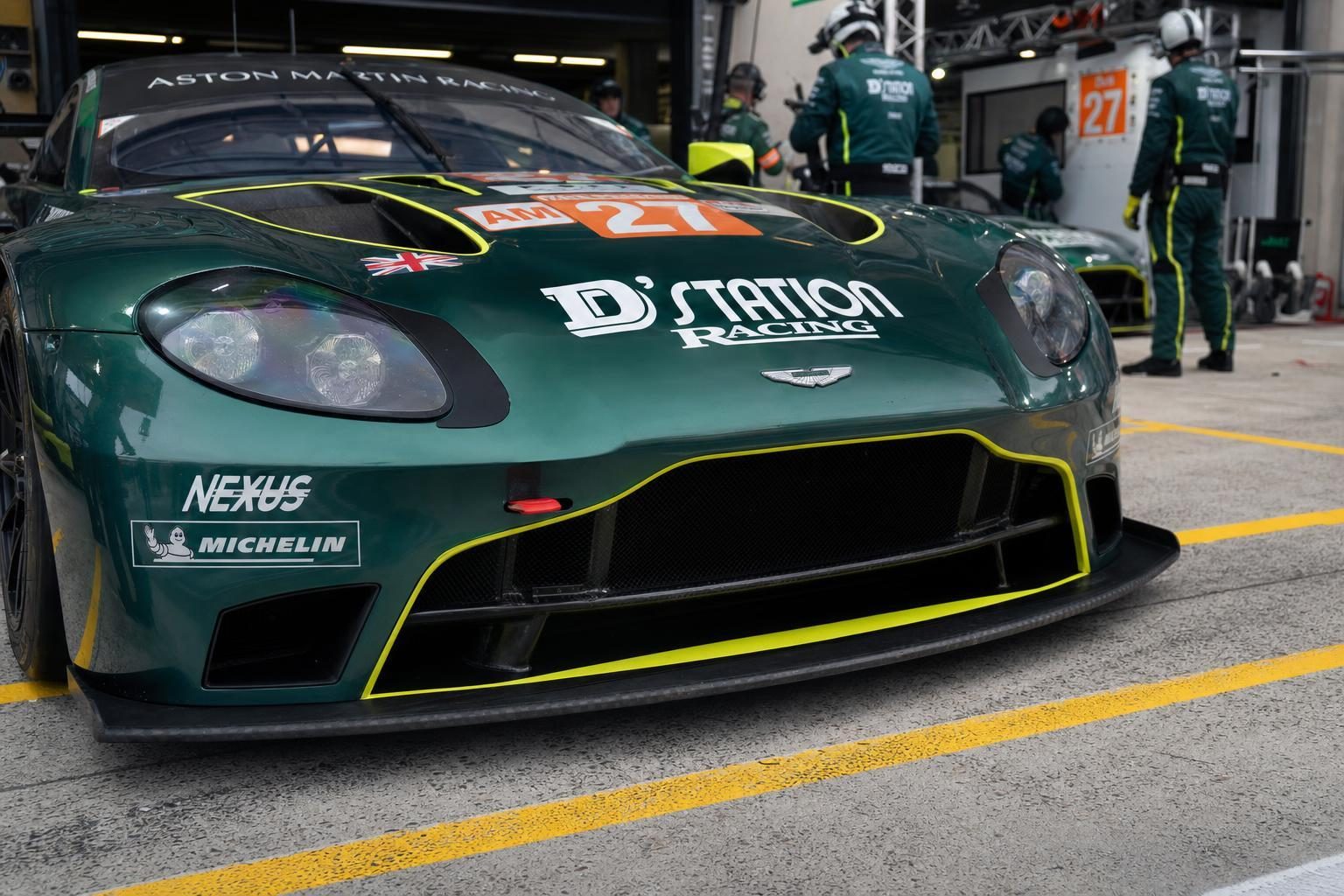
The Vantage #27 of Ian James, Zacharie Robichon and Mattia Drudi took LMGT3 pole, but did not convert it into a podium (media.astonmartin.com). It’s the classic endurance paradox: starting ahead does not immunise you against twists of fate. Traffic, neutralisations and pit sequencing reshuffled the deck.
Over 24 hours, average pace, mechanical frugality and error-free running count more than the perfect lap. The #27 showed outright speed; the #23 capitalised on consistency. Together they paint a faithful picture of the house philosophy: prioritising the exploitable performance window without forcing it.
To place this result in the context of the event, a factual summary of the 94th edition is available on the 2026 24 Hours of Le Mans page, useful to revisit the chronology of neutralisations that influenced LMGT3.
Vantage GT3 and its 4.0-litre twin-turbo V8: the architecture that makes it all possible
The technical base partly explains the consistency. The Vantage LMGT3 is built around a 4.0-litre twin-turbo V8 and a bonded aluminium chassis, a package described by Aston Martin in its Laguna Seca release. It offers an exploitable torque curve and stiffness beneficial to trail-braking phases and loading the car into the corner, two hallmarks of GT3 performance.
The choice of a twin-turbo V8, backed by endurance-honed electronics and refined traction control maps, favours repeatable lap times at the end of stints. Over a Le Mans night, that’s a guarantee of consistency on worn tyres and a light fuel load. The bonded aluminium architecture also aids camber precision and stability under aerodynamic load.
This technical foundation sits in continuity with the competition Vantages that have built the marque’s record at the Sarthe. For a wider view of the bloodline and GTE successes at LM, revisit our feature on the history and victories of the Vantage GTE, and for the road-going bridge, the Vantage MkII page highlights shared architectural choices.
The official manufacturer sheet also provides useful pointers on the GT3 and its road-going kin. See the Aston Martin website, alongside the detailed race report published by media.astonmartin.com.
Conclusion: Vantage Le Mans, proof through continuity
Beyond the immediate satisfaction of an LMGT3 podium, the message is clear: Vantage Le Mans advances by continuity. The #23’s 3rd place on 14 June 2026 adds to ten other class podiums to form a trajectory rather than an isolated fact. It rests on four IMSA podiums already banked this year and on proven hardware — 4.0-litre twin-turbo V8 and bonded aluminium — that favours repeatability.
In endurance, nuance often makes the difference. Between the #27’s unconverted pole and the #23’s rewarded consistency, Aston Martin reminds us that victory is sometimes prepared more in the workshop than in qualifying. The 2026 edition confirms it with restraint: Vantage Le Mans has chosen the patient path, and it knows where it’s going.
DB Mark III 1957: 4 Ultimate Decisions That Shaped Aston Martin
The DB Mark III is not a mere refinement of the DB2/4 line: it is the moment when Aston Martin comes together, visually and technically. On the menu: a two-stage launch between Europe and America, a six-cylinder reinterpreted by Tadek Marek, the first “signature” grille devised by Bert Thickpenny, and the progressive adoption of disc brakes. Behind these understated choices lies a strategic shift often eclipsed by the flamboyant DB4. Here is why this pivotal model deserves a front-row place.
Geneva and New York, March 1957: a launch across two hemispheres
Unveiled simultaneously at the Geneva Motor Show and in the United States in March 1957, the DB Mark III immediately chose an international career. According to media.astonmartin.com, this coordinated launch preceded an opening of the British market only in October 1957, at the London Motor Show. In other words: for several months, this Aston was “export only”, a clear symbol of the marque’s ambitions in the major transatlantic markets.
This unusual timetable suggests a clear-sighted strategy: consolidate reputation in the United States while nurturing desire in Europe. The DB Mark III then addresses an audience already attuned by racing and the DB reputation, but in need of a stronger signature. It would get it, starting with its front end and through targeted technical evolutions.
The double unveiling also placed this model at the heart of a transatlantic narrative: the same coupé, the same silhouette, presented to different car cultures, yet with an identical message: Aston Martin now plays on equal terms on the world stage, with a confident identity.
Tadek Marek and the reworked six-cylinder: more than fine-tuning
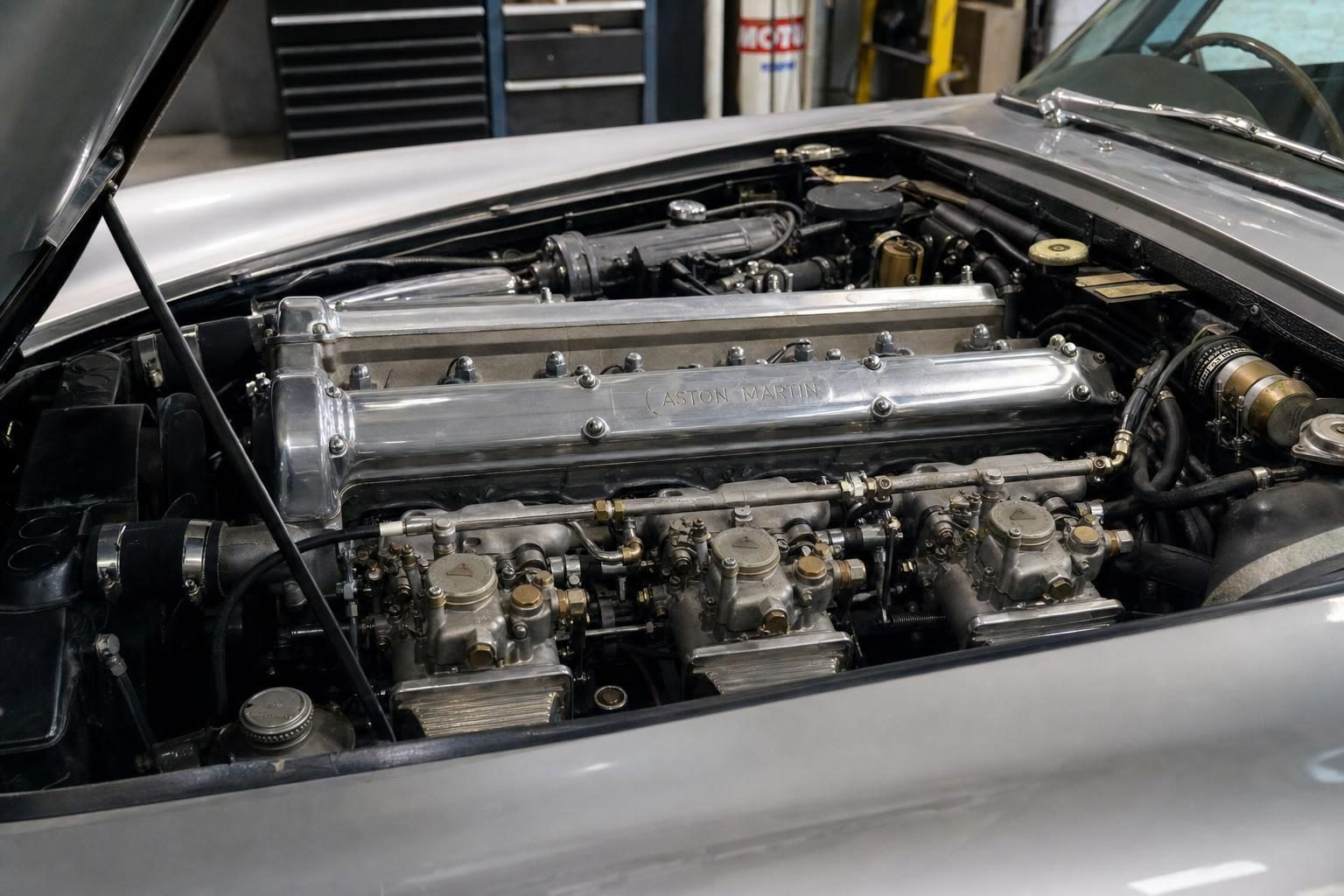
The 3-litre inline “twin-cam” six is not simply tweaked: it is fundamentally redrawn by Polish engineer Tadek Marek. According to astonmartin.com (news 2018), this work is not a matter of detail but a mechanical refoundation, while extending the original Lagonda architecture. The DB Mark III thus becomes the last DB model powered by this Lagonda-lineage six-cylinder, a hinge between heritage and renewal.
This reworked engine anchors the car in a logic of lasting optimisation: better breathing, increased efficiency and preparation of the ground for the generations to come. In the workshop, no talk of a noisy revolution, but of exacting continuity. That is the art of Aston Martin at this time: improving without denaturing, clarifying without brutalising.
At the other end of the chassis, the DB Mark III also marks an end of cycle. It is the last model to use the chassis designed by Claude Hill, notes media.astonmartin.com. Here again we touch a symbolic threshold: a technical stronghold closes just as the style and handling identity becomes firmer. The page is about to turn, and not only for the mechanics.
Bert Thickpenny’s grille: the birth of a face that has lasted 70 years
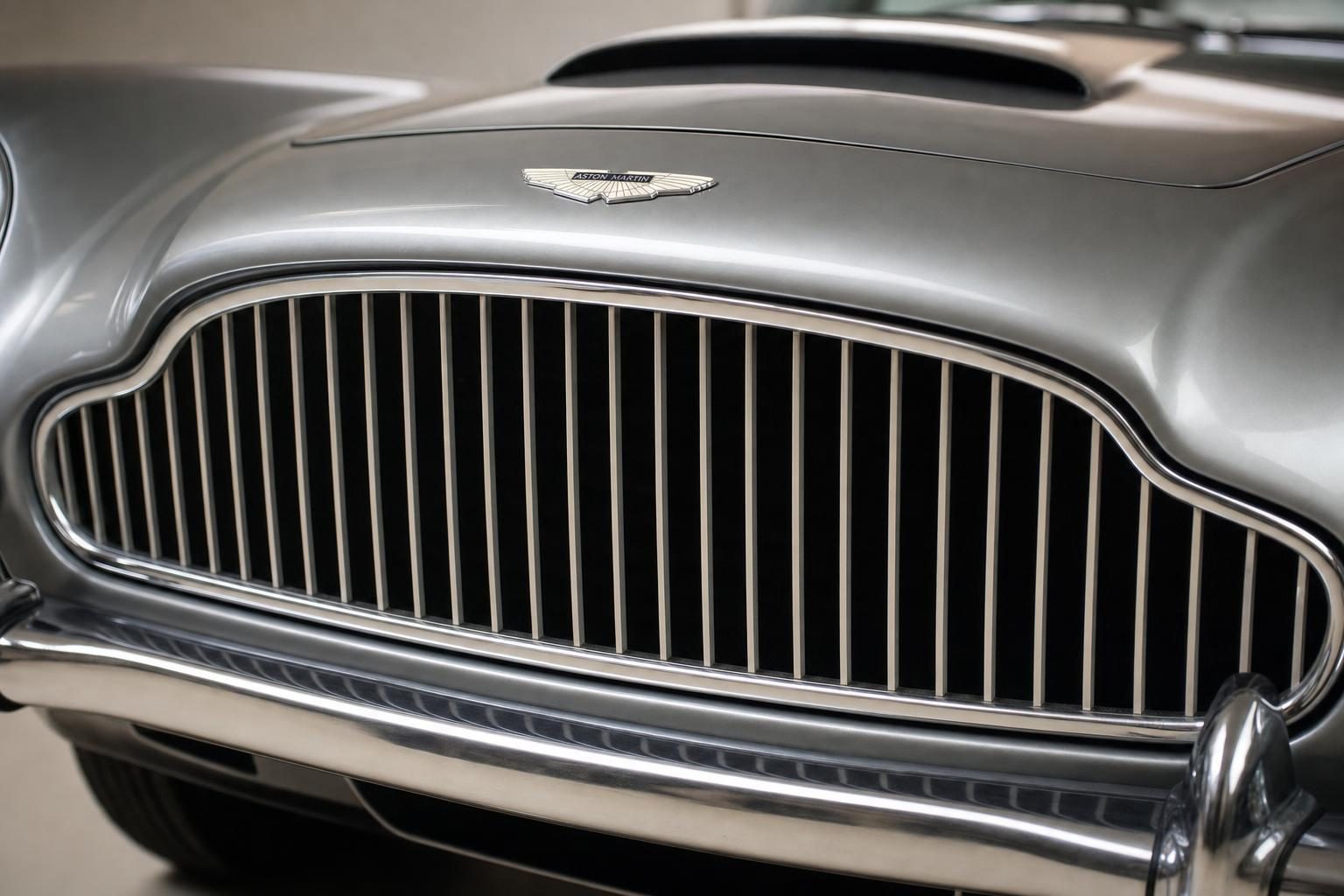
The DB Mark III inaugurates the radiator grille that would become the marque’s signature. Designed by Bert Thickpenny, it is, according to Wikipedia and media.astonmartin.com, the first appearance of a “face” adopted on all subsequent road models. In a single styling decision, Aston Martin gained what many seek for decades: an identity legible at first glance.
This grille is not a mere ornament. It structures perception: width, curvature, proportion, everything contributes to a formal language that would set the tone to this day. On the DB Mark III, the design pairs with a slender bonnet and understated wings. Discretion does not preclude imprint. It makes it last.
In an industry where fashions turn quickly, this stylistic continuity amounts to brand capital. The front end inaugurated here would become a cultural marker, from the DB4 to the moderns, and a motif instantly associated with the hushed performance dear to Newport Pagnell. The DB Mark III is its template.
Girling disc brakes: optional, then mandatory after 100 cars
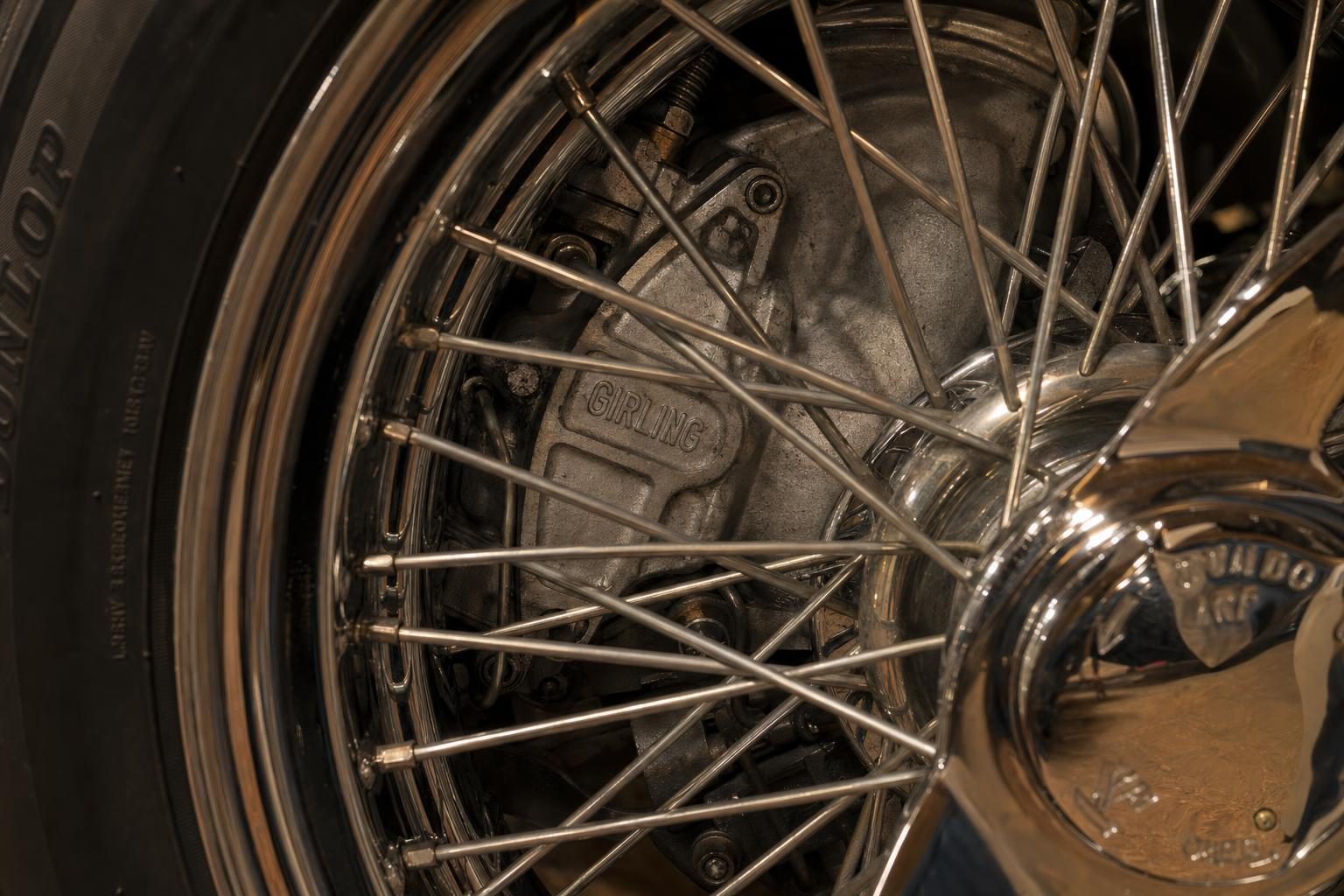
Another structuring decision: the adoption of Girling disc brakes. According to media.astonmartin.com and Wikipedia, they were initially optional on the first 100 cars, then became standard. This cautious phasing illustrates the Aston Martin method: validate in real-world conditions before universalising.
Such a technical evolution changes everyday use. Brake consistency, resistance to fade and the confidence it inspires transform the high-speed experience. The coupé becomes more homogeneous: Marek-honed engine up front, Girling discs at all four corners thereafter, the whole gains modernity without breaking with the house balance.
One can see here a synthesis of the DB Mark III spirit: progress by measured touches. First the option, then generalisation. Neither fad nor stubborn conservatism: a controlled ramp-up that anchors this model as a technical milestone.
551 cars built at Feltham: production figures and rare variants
The DB Mark III was produced in 551 examples, according to Wikipedia. Among them, 84 Drophead Coupés, and only 5 Fixed Head Coupés: discreet volumes that speak to the model’s intrinsic rarity. Built at Feltham, this Aston belongs more to artisan series than mass production, which does nothing to harm its aura today.
This measured diffusion also illuminates the strategy: aiming for rightness rather than profusion. The collector reads distinct variants, most discreet in appearance but significant in the marque’s chronology. The Drophead Coupés bring open-air elegance to the same technical framework; the ultra-rare Fixed Head Coupés embody an even more specialised choice.
Cultural posterity plays its part: in Ian Fleming’s novel Goldfinger, James Bond drives a DB Mark III, the only car in the novels to feature gadgets, recalls Wikipedia. Before cinema and the DB5, literature had already sealed the link between the British spy and this lineage. A further symbolic validation for this model too often relegated behind its famous junior.
Conclusion — why the DB Mark III has all the hallmarks of an Aston Martin milestone
In many respects, the DB Mark III is the crucible where Aston Martin’s modern fundamentals are expressed. A confident transatlantic launch, a six-cylinder reworked by Tadek Marek while closing the Lagonda era, the first grille signed by Bert Thickpenny and Girling brakes initially optional then generalised: the sequence is clear and coherent.
Faced with the DB4, which would grab the spotlight, the DB Mark III establishes the grammar. It asserts a lasting visual identity and prepares, mechanically, what follows. Its limited production (551 cars, including 84 Drophead Coupés and 5 Fixed Head Coupés) and its cultural imprint — all the way to James Bond in Goldfinger — finish setting it apart.
This model is therefore not a mere perfected DB2/4: the DB Mark III charts a path, discreet but decisive. To understand where the modern Aston comes from, this is where you must begin.
DBX S 2026: Ultimate 5 Innovations Over DBX707, Most Powerful Combustion SUV
DBX S: Aston Martin’s new combustion pinnacle, crowned Super SUV of the Year 2026 by Top Gear and presented as the most powerful combustion SUV on the market. Here is, in concrete and quantified terms, what sets it apart from the DBX707 it directly replaces: five technical and styling innovations validated by the manufacturer, and what they change both on the road and within the range.
Turbos borrowed from Valhalla: an unexpected tech transfer between SUV and supercar
The first difference lies within the V8: according to Aston Martin, the DBX S turbochargers come directly from the Valhalla programme. This is no mere detail. The brand claims a gain of 20 PS over the DBX707, with all else being equal. The message is clear: the in‑development supercar is now infusing the SUV’s powertrain.
This technology transfer confirms Aston Martin’s strategy to converge its performance platforms. In practice, sharper turbines mean a crisper response and a torque plateau that may be better sustained. Without additional figures disclosed here, the interest lies in the smoothness and consistency at high revs, attributes that are inevitably noticeable on a vehicle of this size.
For the brand, it is also an industrialisation milestone. The manufacturer is standardising its technical building blocks between supercar and SUV, allowing development and reliability to be optimised. To place this movement within the family, you can follow the supercar’s evolution in our dedicated file on the Valhalla and its model sheet.
23-inch magnesium wheels: a first in the luxury SUV segment and mass reduction
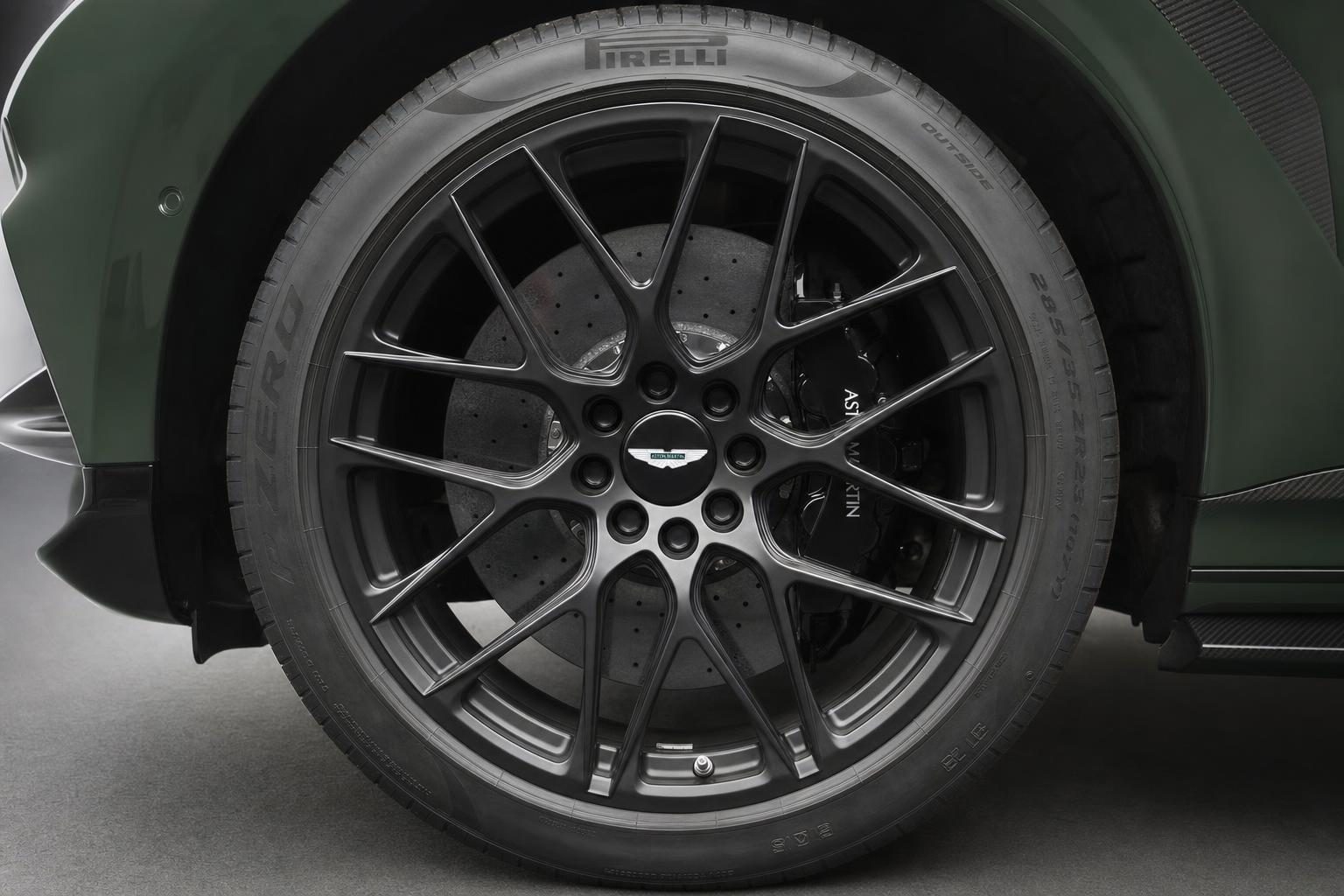
The second innovation, this time highly visible: 23-inch magnesium wheels, touted as a first in the luxury SUV segment. According to Aston Martin, they remove up to 42 pounds of unsprung mass. That is a rare figure at this level: reducing mass at all four corners has a direct effect on suspension agility, steering precision and ride comfort.
Magnesium is not just for show. It combines rigidity and lightness, two qualities that help the chassis follow the road’s profile more faithfully and preserve grip. On a SUV this quick, the reduction in rotational inertia translates into sharper wheel acceleration and deceleration, hence improved traction and more consistent braking.
To gauge the scope of this change versus the previous iteration, our benchmark road test of the earlier model remains accessible in the section dedicated to the DBX707 put to the test. The new DBX S wheels fit squarely within this programme to slim down unsprung mass.
Single-weave carbon roof: 40 pounds removed at the highest point
The third innovation, also focused on mass and dynamics: an optional single‑weave carbon roof, defined by Aston Martin as the largest carbon surface ever fitted to a roof by the brand. The claimed saving reaches 40 pounds, taken from the very highest point of the car. The centre of gravity is therefore directly lowered.
On the road, this reduction up high limits roll and improves responsiveness during rapid weight transfers. It is not just a matter of figures, but of balance. Moving a few dozen pounds in a high‑performance SUV from high to low is felt more keenly than removing them elsewhere. With equivalent equipment, the DBX S gains extra agility, discreet yet real.
This single‑imprint roof adds to the array of lightweight components, benefiting behaviour that is less constrained by mass. Within the range, the styling stroke remains true to Aston Martin’s DNA, which can be set within the lineage of the DBX and its various iterations.
Polycarbonate honeycomb grille and rear diffuser: aerodynamics thoroughly revised
The fourth major difference: a polycarbonate honeycomb grille with more than 25,000 individual facets. Beyond the visual effect, Aston Martin says it helps shift mass distribution rearwards. Aerodynamics here goes hand in hand with lightweight front‑end architecture, still with the aim of a sharper nose and increased stability.
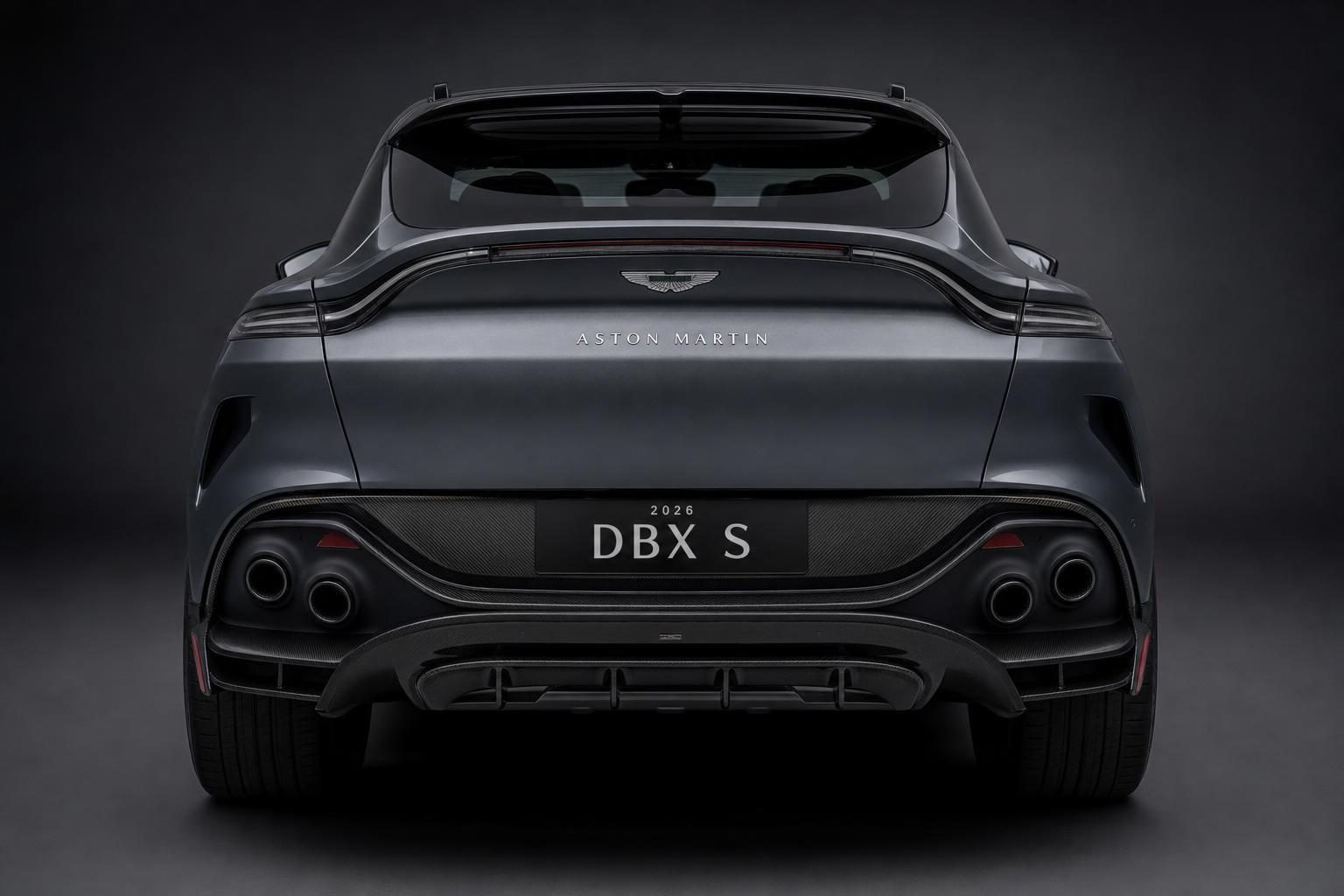
The reworked rear diffuser follows the same pursuit of efficiency. Without quoted downforce figures, the intention stands out: stabilise the attitude, optimise flow extraction and ensure clean airflow. For a SUV at very high cruising speeds, these are cardinal points.
Aesthetically, the ensemble embodies the marque’s cherished “functional beauty”: elements designed to work first, ultimately lending a more assertive stance. The DBX S gains its own identity, distinguishable from the DBX707 without denying its lineage.
DBX S versus DBX707: power, weight and position in the 2026 range
The comparison opens with power. Aston Martin announces an extra 20 PS for the DBX S over the DBX707, enabling it to claim the title of the world’s most powerful combustion SUV. This point is reinforced by the “Super SUV of the Year 2026” distinction awarded by Top Gear, as relayed by the manufacturer.
On mass, the newcomer scores concrete points: up to 42 pounds saved with the magnesium wheels, a further 40 pounds via the carbon roof, and a redistribution effort with the polycarbonate grille. Without disclosing an official total weight here, the sum of these reductions and the lowered centre of gravity creates a dynamic advantage over the DBX707, with comparable equipment.
Within the 2026 line-up, the positioning aligns with the widening of the “S” family. After the DBX S tested in 2025 and the DB12 S, the Vantage S has joined the lineage according to the specialist press (Carjager, June 2026). The product message is clear: “S” embodies the sharpened performance tier, keener without tipping into extreme radicality, and is establishing itself as Aston Martin’s transversal reference.
At the end of this head‑to‑head, the DBX S stands apart from the DBX707 through targeted, measurable gains: Valhalla‑sourced turbos for an extra 20 PS, 23‑inch magnesium wheels shedding up to 42 pounds of unsprung mass, a unique carbon roof removing 40 pounds at the highest point, and revised aerodynamics/front‑end architecture via a polycarbonate grille with more than 25,000 facets. The result is a combustion SUV claimed to be the world’s most powerful and sharper in its responses.
Rather than escalation, Aston Martin opts for effective engineering levers that feed dynamic coherence. In this, the DBX S confirms the maturation of the “S” family within the 2026 range. A technically understated, decidedly British approach that speaks for itself.
Vanquish 25 years old, or how a name establishes itself as the yardstick for a flagship V12 at Aston Martin, despite three very distinct chapters. We revisit the Geneva debut, pioneering aluminium–carbon engineering, the imprint of the One-77 and the contemporary redefinition of the super-GT with 835 PS. On the agenda: clear continuities, decisive breaks, and that mechanical throughline that keeps the promise.
Geneva 2001: the first Vanquish and the break with Newport Pagnell
The first Vanquish V12 appeared at the 2001 Geneva Motor Show. According to Aston Martin, it marked a major turning point as the last model assembled at Newport Pagnell before production shifted to Gaydon. This move was more than a new address: it sealed an era and prepared the brand’s modern industrialisation.
In the marque’s history, the sports car ushered in a resolutely contemporary technical approach while honouring the noble V12 architecture. This coexistence between traditional powertrain and modern structure set the tone. From the outset, the Vanquish asserted itself as the flagship, a role it would retain—albeit in different forms—across generations.
Twenty-five years on, the evocation of Geneva 2001 remains foundational. The initial promise — a big-breathing coupé, stately yet sharp — still runs through the lineage. That is precisely the focus of our Vanquish 25 years angle: what held firm, and what evolved, without needless folklore.
Aluminium–carbon structure and F1-inspired paddle-shift: first-generation innovations
The first generation made its mark with its framework. It combined a floor and bulkheads in extruded aluminium, bolted and bonded, around a carbon transmission tunnel. This development, carried out with the University of Nottingham and a centre in California (Cupertino), represented a rare engineering advance at the time, conceived for rigidity and assembly precision.
Under the bonnet, the 6.0-litre V12 with 460 bhp was paired with an F1-inspired paddle-shift gearbox. Together they gave the GT a head start, with more immediate mechanical response and torque management worthy of the badge. Composite body panels completed the light, technical approach, benefiting inertia and surface quality.
Beyond the figures, the first iteration set a vocabulary: mixed aluminium–carbon structure, steering wheel-mounted transmission controls, and the V12 as the beating heart. Viewed through the Vanquish 25 years lens, these choices were anything but a one-off. They opened a path that would bring coherence to the lineage, while leaving room for future revolutions in style and powertrain.
The 2012 Vanquish: One-77 influence and widespread exterior carbon
The second generation, unveiled in 2012 (production from 2013), clearly drew inspiration from the One-77. According to Aston Martin, it pushed carbon use even further, with aerospace-grade panels across the entire outer body. The message was clear: the GT now carried, as standard, solutions previously reserved for the hypercar.
This widespread visible carbon reshaped the car’s perception. The skin became structural in spirit and delivered superior fit precision, serving aerodynamics and high-speed stability. The Vanquish thus became the bridge between the exclusivity of the One-77 and the brand’s road-going DNA, a finely calibrated balance.
On the Vanquish 25 years map, this phase confirmed the model’s stylistic and material maturity. The aluminium architecture remained in the background, but the omnipresent carbon skin established a modern, visible and technical flagship signature. A choice that cemented its place at the top, without betraying the discreet elegance so dear to Aston Martin.
Vanquish MK3 in 2024: 835 PS, 5.2-litre twin-turbo and a super-GT redefined
Act three in 2024: the Vanquish MK3 introduces a 5.2-litre twin-turbo V12 and claims 835 PS plus 1,000 Nm of torque. According to Aston Martin, it is the most powerful production model in the marque’s history, cementing the standard-bearing role of this nameplate as it celebrates its quarter-century.
The move to twin-turbocharging changes the engine’s response grammar. The plentiful low- and mid-range torque reinforces grand touring ability, while the peak power places the coupé among the most serious super-GTs. The expression is different, the intention remains: mechanical sovereignty and contemporary efficiency.
In the Vanquish 25 years perspective, this generation is not mere continuity. It is a redefinition of the range summit through the force of its numbers and the evolution of V12 architecture. The heart remains twelve cylinders, but the playing field has changed: optimisation through forced induction takes over from sheer displacement.
Thread across three generations: what hasn’t changed in 25 years
Running through all three chapters is a constant: the V12 at the top of the range. Naturally aspirated 6.0 litres at the outset, then 5.2 litres twin-turbo, it remains the symbol of Aston Martin’s mechanical sovereignty. This is the core of the Vanquish 25 years promise: to embody, unequivocally, the production flagship.
A second constant is the pursuit of a light, rigid structure. Extruded aluminium and carbon elements form a conceptual backbone that spans generations. From joint engineering with the University of Nottingham and the Cupertino team to the aerospace carbon panels of 2012, the line is clear: reduce inertia, increase precision.
Finally, positioning. In every iteration, the coupé sits above the rest of the range through its technical ambition and road presence. The aesthetics evolve, the tooling is refined, but the intent does not waver. Vanquish at 25 is the constancy of a role — that of the flagship — performed to different scores.
Conclusion — Vanquish at 25, three acts and one fixed idea
Twenty-five years after Geneva 2001, the story reads in chiaroscuro: visible breaks, assumed continuities. Mixed structure, composite materials, then widespread carbon and, today, a 5.2-litre twin-turbo V12 with 835 PS and 1,000 Nm: each chapter refines the idea of an authoritative super-GT without abandoning elegance. That is, at heart, the essence of Vanquish at 25.
The first opus defined the framework and F1-inspired paddle shift, the second democratised the carbon rigour inherited from the One-77, the third redraws the summit through the might of its twin-turbo V12. Three genealogies in one, united by the same badge. And a simple conclusion: as long as the V12 reigns at the top of the range, the Vanquish 25 years promise will be kept.
Volante 2026: 60-Year Legend of a Signature Body Style
Volante is a word that has slipped from a simple denomination to a brand signature. In 2026, Aston Martin celebrates sixty years of this convertible body style with 60th Anniversary editions, and the moment is ideal to look back, without needless nostalgia, at what this open silhouette says about Aston Martin’s identity, from the original DB6 Volante to today’s standard-bearer, the DB12.
The first Volante in 1965: DB6 Volante and the birth of a name
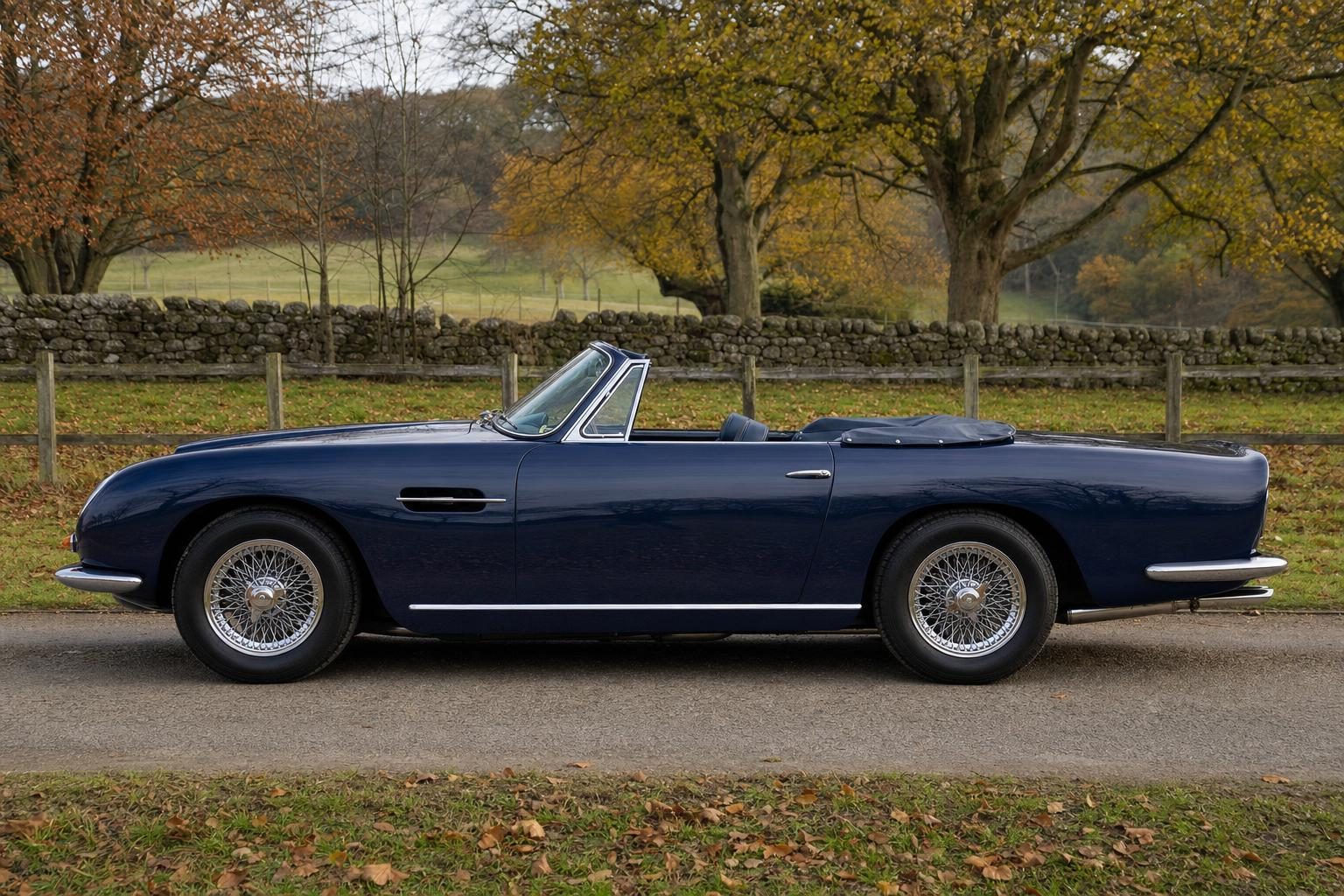
It all officially begins in 1965 with the DB6 Volante, the first model to carry this name in the range. The decision to christen the convertible version this way anchors the idea that Volante is not an opportunistic variant, but a fully fledged stylistic expression. According to the DB6’s historical record, this label immediately refers to a hushed convertible designed for travelling, rather than a fleeting coachwork exercise.
Recognition of the DB6 Volante as the starting point also seals a certain British vision of grand touring: an open Aston that favours elegant lines and open-air conversation. To set this milestone in context, one can usefully consult the historical reference dedicated to the DB6, including in specialist literature and the online resources devoted to it.
This first iteration legitimises the word Volante beyond lexical anecdote. The convertible gains its autonomy, moving away from the rudimentary “roadster”. Aston Martin thus laid the foundations for a grand touring convertible with its own character, destined to span the decades.
From DB6 to DB9: how the Volante became a range signature
Over the generations, the Volante has established itself as a constant. In Aston Martin’s hierarchy, the open body is not a late spin-off but a pillar of the range, clearly distinguished from a stripped-back roadster. The brand itself reminds us that Volante is a fully fledged convertible body style, with its own design and usage specifics.
From DB6 to DB9, the open silhouette gradually defined an art of living: the same noble wheelbase, a flush-fitting hood, carefully tuned acoustics and dynamics set for rapid touring. With each generation, the Volante aligns with the corresponding coupé while preserving settings specific to open-air driving. In other words, the experience is not a compromise: it is a deliberate preference.
This signature status has shaped the reading of the range itself. The buyer does not choose a compromise, but a vision: to capture more of the landscape and retain the GT spirit. Implicitly, it is also industrial and heritage coherence, made possible by specific tuning of the structure and the hood.
The Volante and the off-road temptation: an option that did not survive
Over its history, the Volante has occasionally brushed against the temptation of off-road adventure, in step with broader trends. But the proposition never really took root. The grand touring convertible, by essence, serves the road, the light and the mechanical soundtrack more than the trails. The idea existed; it did not endure.
The reason is almost self-evident: the Volante thrives on hood quality, controlled rigidity and ride comfort that tolerates neither excess weight nor chassis compromises. Off-road demands different priorities. Preserving the GT brief therefore prevailed, confirming the core mission of Aston Martin’s convertible: elegance, speed, and conversation without shouting into the wind.
This refocus explains why the open body remains first and foremost an art of travel. Off-road ambitions belong to other silhouettes in the brand; the Volante remains faithful to its natural territory.
DB12 Volante 60th Anniversary Edition 2026: what Aston Martin chose to celebrate
For 2026, Aston Martin marks the anniversary with a DB12 Volante 60th Anniversary Edition. The message is clear: to celebrate six decades of a body style that has become emblematic, and to recall its cardinal place in the range. The brand highlights the idea of a fully accomplished convertible, heir to an uninterrupted continuity since the DB6.
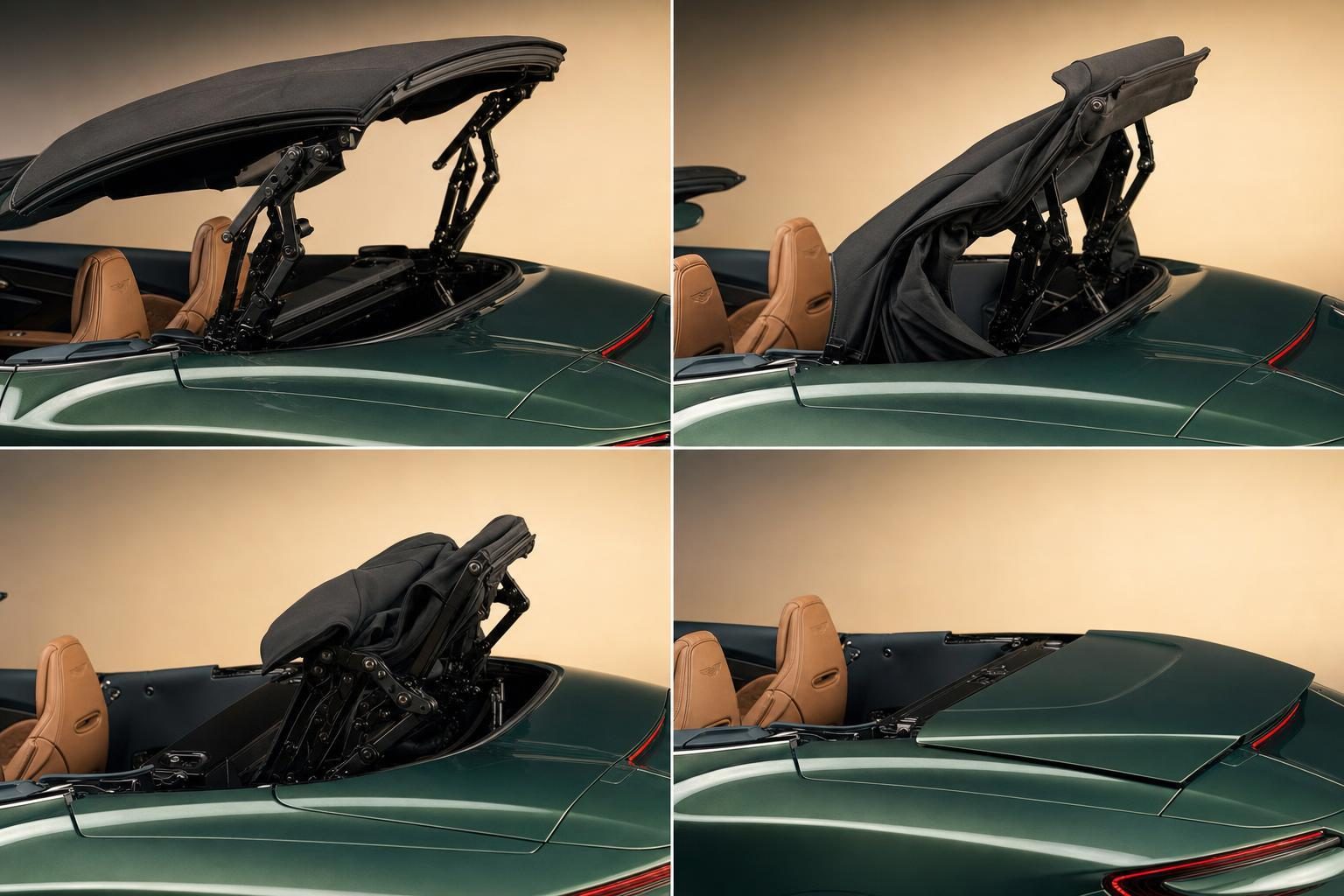
The open DB12 also recalls the attention paid to real-world use. While the official spec sheet concerns the Vantage Roadster, Aston Martin quotes a hood opening time of 6.8 seconds for that mechanism, cited here by way of mechanical analogy. The idea is not to set a stopwatch record, but to underline the precision of engineering which, on a Volante, counts every day: a fluid gesture, and the sky arrives on cue.
The anniversary model is not alone. In 2026, the brand also announces a Vanquish Volante 60th Anniversary Edition, and notes that the Vanquish Volante stands as the fastest and most powerful series-production convertible ever produced by Aston Martin. The signal is twofold: heritage homage and performance intent, united under the Volante banner.
Owning a Volante today: practical differences versus the Coupé for an owner
Living with a Volante means first accepting a different grammar from the coupé. The convertible comes into its own at a fiscally reasonable pace as a long-distance machine, thanks to a carefully designed hood and refined soundproofing. The roof operations, quick and natural, transform the car’s character in an instant. On the road, the perception of torque and exhaust timbre gains an almost tactile dimension.
Practically speaking, the hood requires attentive care and considered parking. The boot can be a little more constrained, depending on the roof-stowage architecture. Conversely, the access and top-down rearward visibility play in the Volante’s favour for leisure use. Passengers enjoy a sensory experience that the coupé, however gifted, simply cannot offer.
Chassis tuning remains specific: reinforced rigidity, well-judged damping and adaptive calibration. For the owner, this means behaviour that is slightly more hushed, with that supple grand tourer poise. The Volante is not the coupé’s radical alter ego: it is its hedonistic brother, true to Aston Martin’s GT DNA.
Conclusion: sixty years of Volante, a useful permanence
Sixty years after the DB6 Volante, the lineage remains self-evident: a convertible that asserts its own definition at the heart of the range, far from a mere derivative. In 2026, between the DB12 Volante 60th Anniversary Edition and the benchmark Vanquish Volante, Aston Martin reminds us that a body style can be a fixed idea – in the best sense. The Volante has not merely endured: over time it has proved its very reason for being.
DB4 GT 1959: Ultimate road-racing legend with 302 hp and 153 mph
The DB4 GT is the Aston Martin that, in October 1959, shifted the goalposts: shortened chassis, three Weber carburettors and a clear promise to go faster and further than the standard DB4. At the London Motor Show, this crisply honed coupé asserted itself as a fully fledged model, poised between sharpened grand tourer and circuit campaigner. Here’s what we know, with figures to hand, about its engineering, its 75 examples, its racing campaign against Ferrari, and what it passed on to the DB5.
DB4 GT unveiled in October 1959: short chassis and supercharged intent
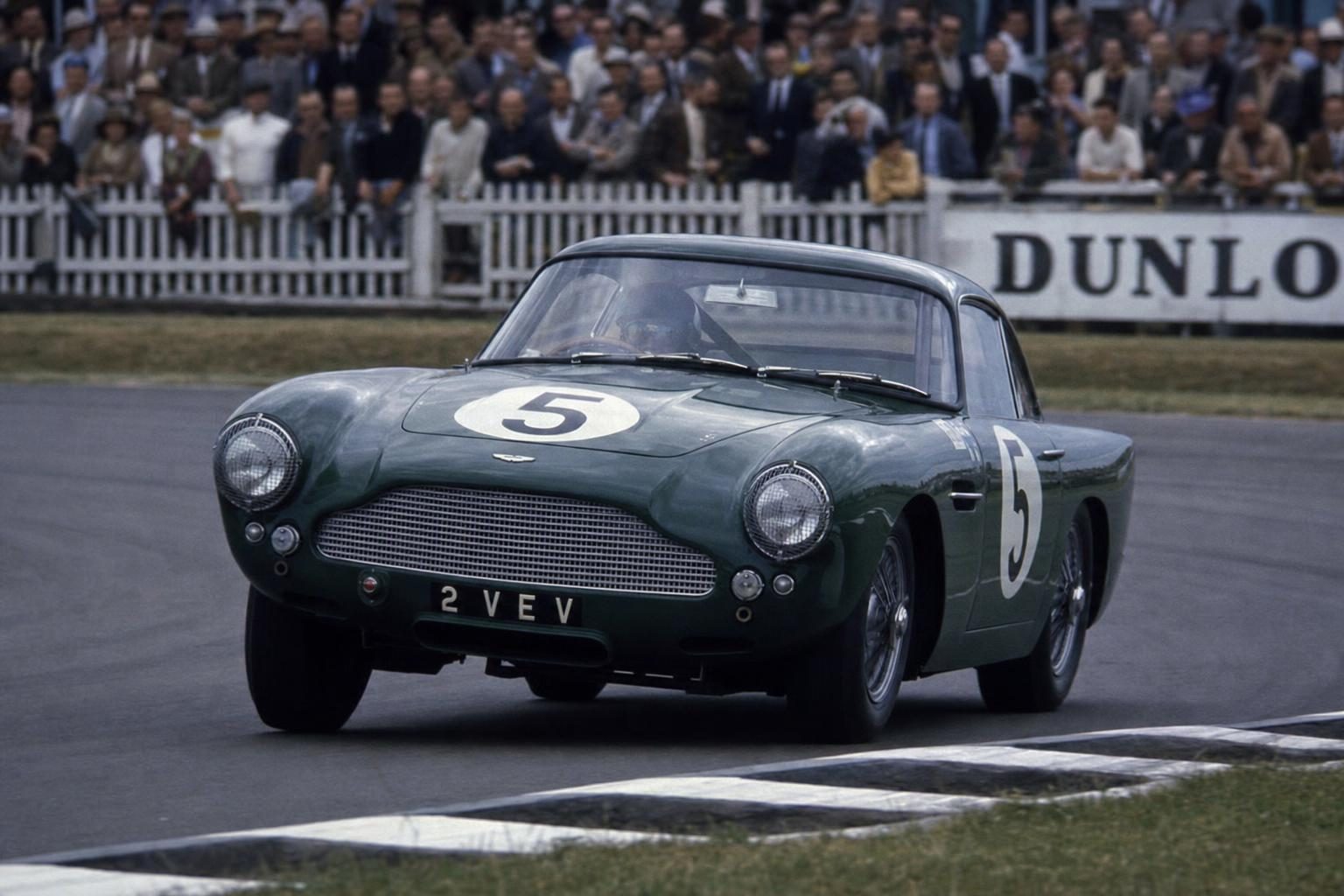
Revealed at the October 1959 London Motor Show, the DB4 GT cemented a simple, effective strategy: lighten, shorten, hone. According to Aston Martin, it adopted a shortened chassis, faired headlamps and a beefed-up evolution of Tadek Marek’s twin-cam straight-six fed by three Webers. The aim was crystal clear: to offer a livelier, more competitive version than the road-going DB4, without abandoning Touring’s elegance.
This shortening of the wheelbase is anything but anecdotal: it tightens the car around its driver, makes the steering more direct and improves response in loaded corners. Aerodynamics also progressed with the faired lamps, a detail at once aesthetic and functional, reflecting a pursuit of performance that goes beyond mere styling exercise.
The factory also detailed a substantial weight saving. Compared with the standard DB4, the coupé shed 85 kg, a diet that changes everything in acceleration and braking. The result, as we’ll see below, catapulted the DB4 GT to the status of reference of its era.
On the engine front, the base is familiar: the 3.7-litre twin overhead cam designed by Tadek Marek. But the specific preparation, triple Weber induction and dedicated tuning endowed the unit with elasticity and verve that made the difference on road and track alike.
Three Weber carburettors and 302 hp: what that meant on the road in 1959
According to data compiled by Wikipedia, the DB4 GT claimed 302 hp, a top speed of 153 mph (246 km/h) and 0–60 mph in 6.1 s. At the end of 1959, these figures were no technical frippery: they put the car, as standard and road legal, at the summit of the period’s hierarchy. The symbolic 150 mph barrier placed the Aston in a very rare club where, at the time, it set the pace.
The three Weber carburettors did more than inflate a power figure. They sharpened throttle response, stabilised fuelling at high revs and contributed to the stopwatch. Road manners benefited: more punch at mid-range, less inertia on pickup and, when needed, an unprecedented cruising speed for a grand tourer.
The 85 kg saving over the standard DB4 is the other pillar of performance. Lighter, the car stopped shorter, turned in more cleanly and spared the drivetrain needless effort. This weight-to-power alchemy, combined with the more compact chassis, explains why the DB4 GT became an instant benchmark for testers and gentlemen drivers alike.
Symbolically, being “the fastest in the world by its own figures” in 1959 is no boast: it is a promise kept by engineering. The DB4 GT thus asserted itself not as a mere sporty variant, but as the synthesis of a clear programme focused on real, measurable performance.
75 examples built, including several lightweight racers
The series remained deliberately limited. According to the manufacturer and Wikipedia records, 75 DB4 GTs bodied by Touring were produced. Within that total, several lightweight competition versions were created, with the explicit goal of optimising the car for Goodwood, Le Mans and continental jousts against Italian rivals.
This rarity, far from being today’s collector’s ploy, is explained by the model’s very vocation. The car is an instrument: on track, a few fewer kilos or a sharper induction setting can decide a grid position. The “lightweight” variants fully embraced this stance while preserving the road coupé’s DNA.
In the workshop, pragmatism prevailed: remove weight where it counts, make reliable what must be, and keep the looks. The Touring bodies, of rare finesse, offered that compromise between elegance and efficiency that would be seen elsewhere in the DB lineage.
This measured production still contributes to the model’s historical value today. Not by an artificial scarcity effect, but because it attests to a clearly targeted project: to make the DB4 GT a credible weapon on the circuits, without divorcing it from the open road.
DB4 GT on track: Goodwood, Le Mans and the Ferrari showdown
The DB4 GT’s calling is heard as much in the paddocks as on the Mall in London. If we speak of Goodwood and Le Mans, it’s not for folklore: it was indeed on these tracks and other European stages that the lightweight versions came into their own. The confrontation with Ferrari is a leitmotif of the 1959–1963 period, each camp refining its take on the sporting grand tourer.
Against the Maranello contenders, the Aston countered with increased rigidity, weight saving and the availability of its straight-six. The sometimes fierce duel validated the technical choices: short wheelbase, braking and Weber induction were all weapons to hold the pace in competition.
Beyond precise results, which we won’t settle here for lack of further quantified sources, the essence lies elsewhere: the DB4 GT proved that one could design a genuinely competitive road car without renouncing minimal comfort and elegance. This typically British synthesis is anything but theoretical; it is measured by the stopwatch as much as by the full-beam drive home.
Lineage between DB4 GT and DB5: what carried over and what did not
Between the DB4 GT and the DB5, the thread is more than narrative. According to the manufacturer, these two models play a foundational role in contemporary Aston Martin design codes. Grille, proportions, clean flanks and overall stance: on the DB5 we find an elegant continuation of this grammar, refined without being denatured.
What carries from one to the other is the idea of a fast grand tourer capable of holding its own in competition while remaining civilised. Tadek Marek’s imprint continued mechanically, the twin-cam straight-six architecture remaining at the heart of the driving experience. For a detailed look at the most famous descendant, see our page dedicated to the DB5 and its heritage.
What, by contrast, did not transfer wholesale is the short-wheelbase radicalism and the weight paring of the lightweights. The DB5 took the spirit, not the letter. It consolidated comfort and equipment, leaning further into its role as a road icon. The DB4 GT remains the purest expression of that late-1950s sporting temptation.
Design, stance and dynamic credibility: the transmission is intact. Radical wheelbase, relative austerity of racing versions: these remain specific to the GT. This discernment likely explains the longevity of the house style, able to reconcile presence and performance without lapsing into one-upmanship.
Conclusion — why the DB4 GT remains a pivot
Ultimately, the DB4 GT combines three rarely united virtues: sharp yet coherent engineering, limited production conceived for effectiveness, and a stylistic influence acknowledged by the marque itself. The figures published by Wikipedia — 302 hp, 153 mph, 6.1 s — put it on top in 1959, while the short chassis and weight saving from Aston Martin made the difference on track.
Between the standard DB4 and the future DB5, this model forged its own furrow, faithful to the GT spirit yet resolutely focused on measurable performance. That’s doubtless why the DB4 GT still speaks to enthusiasts: because it matches words with deeds, from the Goodwood pitlane to the drive home, with elegance that never overreaches.
AMR26 2026: 5 Ultimate Tech Shifts in Newey’s First Aston Martin
AMR26 is the name of the first Aston Martin designed by Adrian Newey and the rolling laboratory where the 2026 regulations take very concrete shape. Beyond the slogans, this single-seater stands out for five technical breaks that redraw the engineering scope of the Silverstone team: an in-house designed gearbox, Honda power, active aerodynamics without DRS, Aramco sustainable fuel and sometimes bruising learning on track. Here is what changes, and why it matters.
The AMR26’s in-house gearbox: a first at Silverstone since 2004
It is a discreet but structuring fact: the AMR26’s 8-speed semi-automatic gearbox is the first transmission developed in-house at Silverstone since 2004, according to Aston Martin. In short, the team is repatriating a critical organ to the heart of its chassis architecture, with control over the design, materials and packaging around the rear suspension.
This homecoming also means a shorter iteration loop between aerodynamicists, designers and the track. A tightly sized casing offers gains in aerodynamic efficiency and local rigidity, while the 2026 era demands finer management of the flows towards the diffuser. By making its transmission both compact and integrated, the AMR26 gives itself extra levers of balance.
The choice has cultural weight: after two decades of more outsourced approaches, Silverstone is once again taking charge of a sub-assembly where reliability and shift precision dictate performance. The risk is real, the potential reward too, especially in combination with the new power unit.
The Honda RA626H engine: a first-of-its-kind partnership for Aston Martin
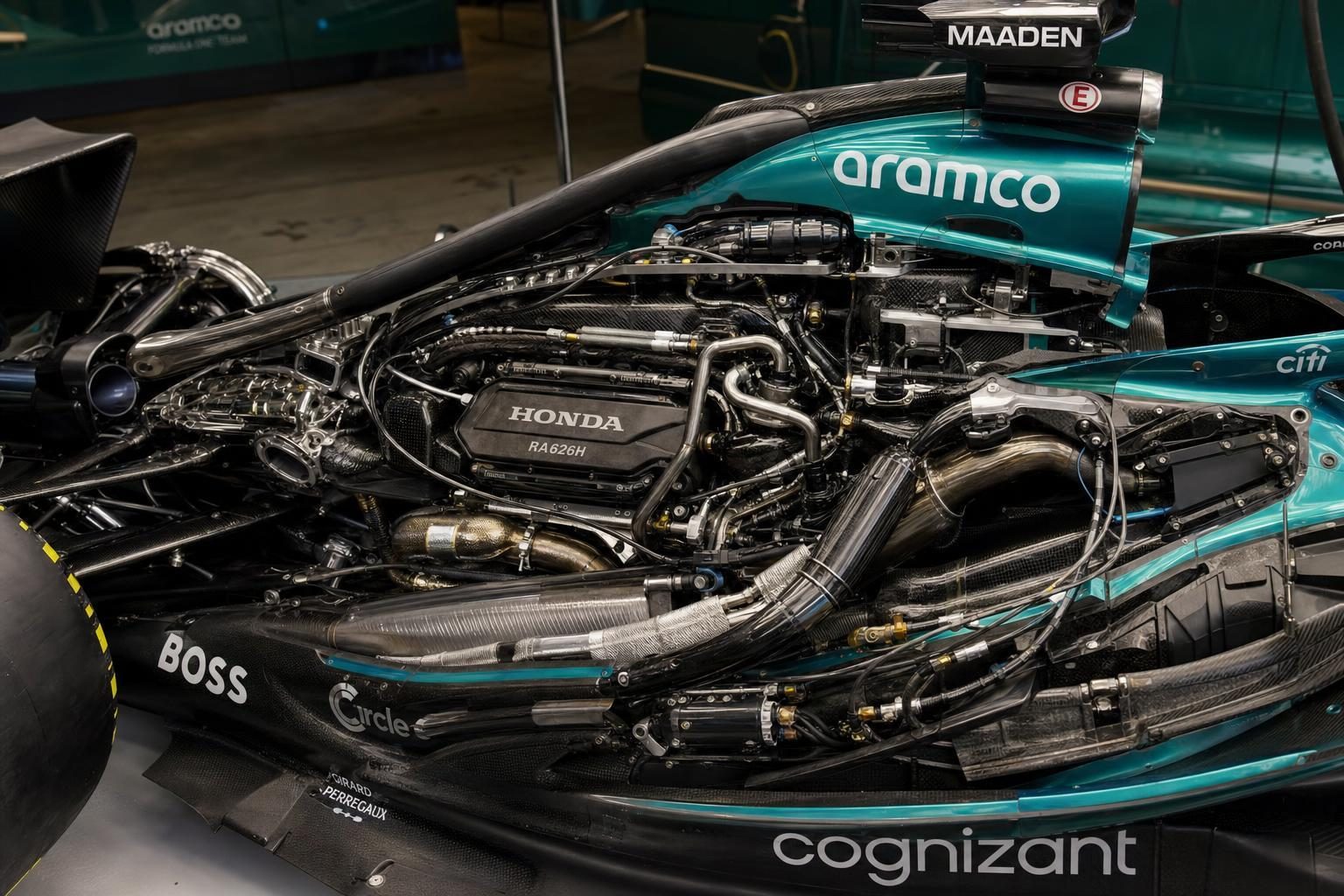
For the first time, a Grand Prix Aston Martin is powered by a Honda engine: the RA626H equips the AMR26, as Wikipedia notes. It is also the first Japanese-engined single-seater from Silverstone since the Toyota-powered Midland M16 in 2006. One page turns, another opens, with chassis–power unit integration conceived from the outset.
This partnership is not a simple badge swap: it requires aligning packaging, cooling and energy management with the balances of 2026. The in-house gearbox mentioned above makes full sense here: by tightening the rear, the team seeks to exploit the RA626H’s compactness and cooling requirements while preserving accessibility for track operations.
The duo of Adrian Newey at the drawing board and Honda on the test bench imposes an overall discipline: CFD–wind tunnel correlations, maps and hybrid strategies must speak the same language. Fernando Alonso and Lance Stroll, in their fourth and sixth seasons with the team respectively, embody continuity at the wheel, while the technology scales up.
Active wings in 2026: Corner Mode, Straight Mode and the end of DRS
The 2026 regulations introduce active wings that operate continuously in two states: Corner Mode and Straight Mode, with no DRS zones, around an entire lap, according to Aston Martin. The AMR26 therefore adopts a logic of downforce and drag variation that is no longer occasional but systemic, serving overall efficiency.
In practice, the car modulates its aero elements to generate more downforce in corners and reduce drag on the straights, without zone triggers. This redefines balance management and the tyre operating window, with a chassis that “breathes” differently over the lap. The driver’s role also evolves: anticipation and confidence in transitions become essential.
For aerodynamicists, removing DRS zones shifts the optimisation focus towards a “living” aero package coordinated with the mechanics. The AMR26 expresses this philosophy through tight integration of actuators and the pursuit of a cleaner wake, in line with the pack-racing objectives set by the regulations.
Aramco ProForce+ sustainable fuel: regulatory constraint or competitive edge
The Aramco ProForce+ fuel used by the AMR26 is billed as 100% sustainable, derived from non-food sources and compliant with FIA 2026 standards, supplied exclusively to Aston Martin Aramco, according to Aston Martin. The stakes go beyond symbolism: the chemistry of this fuel and its lot-to-lot consistency influence combustion strategies, calibration and reliability.
Such a fuel imposes specific ignition and mixture windows. For the RA626H, it is an opportunity to optimise the synergy between compressor, injection and mappings, provided the chassis accepts cooling and weight adjustments. The AMR26 serves here as a full-scale test bench, with potential gains in efficiency.
Advantage or constraint? In the short term, the uniqueness of ProForce+ can increase the correlation workload on the dyno and on track. In the medium term, a stable formulation and a fine-tuned understanding between Honda, Aramco and the design office can generate cumulative benefits. A calculated technical bet.
Tough beginnings: vibrations, test failures and the season’s opening races
The track laid down its law. During pre-season testing in Bahrain, the team suffered three engine failures, and vibration issues marred the first runs, according to Wikipedia. The vibrations were declared resolved at the Japanese Grand Prix, a first reassuring milestone in a demanding development phase.
In Japan, Fernando Alonso recorded the team’s first finish of 2026, 18th, again per Wikipedia. The raw result is nothing spectacular, but it marks a step: making the AMR26 reliable while learning to exploit its active systems, in-house gearbox and new energy chain. The foundations are laid in silence, far from the podiums.
In this context, it makes sense to set the season within a broader cycle. The switch to Honda and ProForce+ fuel, combined with active wings, is not just about “parts”: it is an architectural change. Teams that capitalise on it fastest reap dividends later in the year. Patience is often part of the brief.
Conclusion: why the AMR26 already matters to Aston Martin
The AMR26 concentrates five breaks that redefine Silverstone: an in-house developed gearbox, Honda RA626H engine, continuous active aero, Aramco ProForce+ fuel and real-world learning. Together they sketch a clear intention: to take back control of strategic components and synchronise chassis, power unit and aerodynamics through the lens of 2026.
Quietly, this Aston is sowing the seeds of a more integrated technical identity. The bruising start does not cancel the project’s scope; it reveals its level of ambition. To read further, our season file gathers the context and first images of the Newey-signed AMR26 with Honda, while our endurance section puts into perspective the transfer of know-how from road to race with Valkyrie in the WEC and tracks the Aston Martin programmes at Le Mans and in the World Championship. As the 2026 regulations bed in, the trajectory set by the AMR26 could well be a landmark.