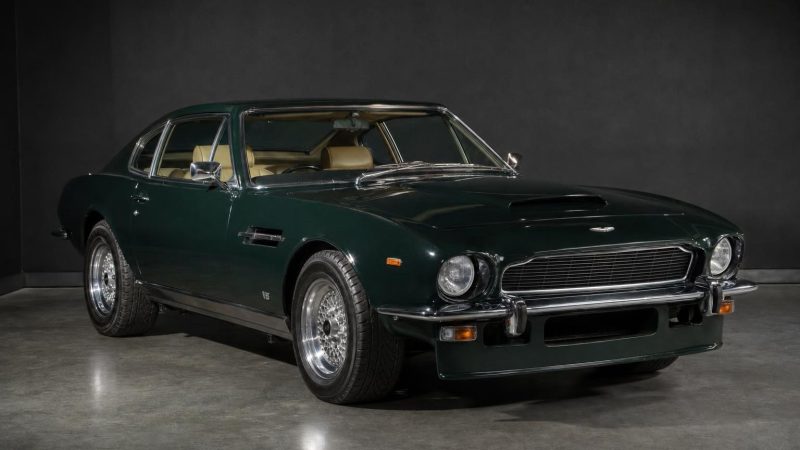
DB4 GT: 75 exemplars produced from 1959 to 1963 with 302 PS and 153 mph top speed. A portrait of a competition GT that battled the Ferrari 250 SWB.
DB4 GT: from its first public appearance in 1959, this British competition berlinetta claimed a radical approach characterised by lightness, power, and aerodynamic efficiency, with the young GT category of the early 1960s as its stage. By relying on a shortened chassis, a stiffened inline six-cylinder engine, and a track-focused setup, the DB4 GT quickly forged a solid reputation, supported by top-tier performance and limited production that today grants it the status of a rare icon.
1. Birth in 1959: the recipe for lightness and power
Introduced in September 1959, the DB4 GT is based on the road-going DB4 but distinguishes itself through a pursuit of agility and performance gains. Its wheelbase is shortened by 127 mm compared to the standard DB4, a decisive choice to sharpen chassis responses and aim for structural lightness. This sporty orientation is accompanied by dedicated engine tuning, while the whole retains the refinement that has built the reputation of the DB4 lineage.
These technical choices translate into measured and documented performance: the DB4 GT reaches a top speed of 153 mph, or 246 km/h according to Wikipedia, and achieves 0 to 60 mph in 6.1 seconds. These figures, placed in the context of the late 1950s, illustrate the ambition of the DB4 GT and explain its central place in Aston Martin’s history. For a perspective on the original model, our dedicated file on the DB4 road car sheds light on the evolution that led to this sharpened version.
2. Tadek Marek engine with dual ignition and three Weber carbs: the technique
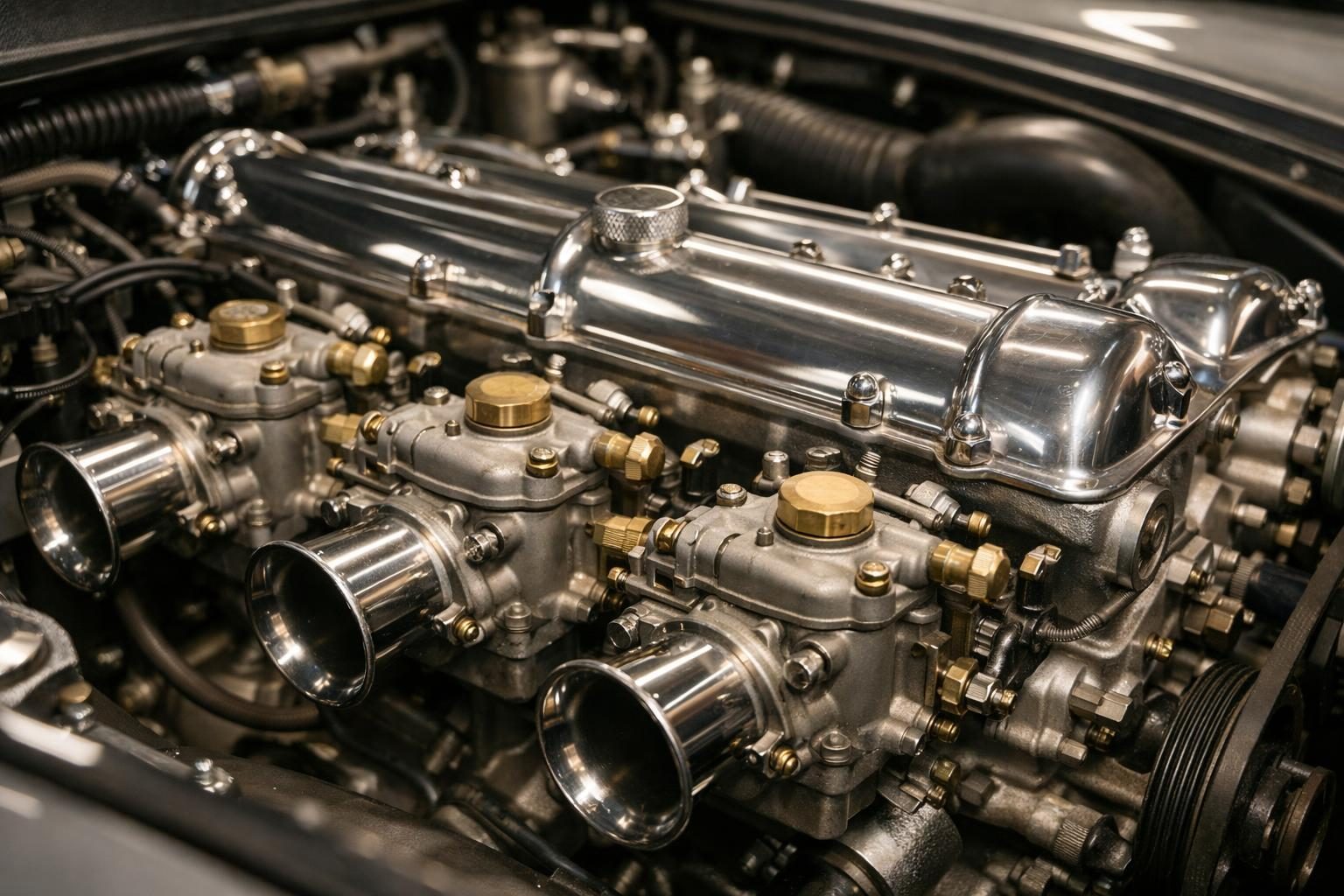
At the heart of the DB4 GT lies the 3.7-litre inline six-cylinder engine designed by Tadek Marek, here producing 302 PS at 6,000 rpm. This substantial gain is explained by two major axes: a dual ignition system, with two spark plugs per cylinder, and the adoption of three twin-choke Weber carburettors. This setup enhances combustion, mechanical breathing, and throttle response, all essential assets for a GT engaged in customer competition.
These specifications, established by consistent sources (Wikipedia and Artcurial), outline the mechanical identity of the DB4 GT. They mirror the timed performance figures mentioned above and align with the shortened chassis to deliver a coherent package. To delve deeper into the technical sheet and history, the dedicated page on Wikipedia for the DB4 GT and the detailed entry from Artcurial on the DB4 GT are useful references.
3. Silverstone 1959, Tourist Trophy 1960: the highlights in racing
The first strong signal comes even before the official introduction: on May 2, 1959, the DB4 GT prototype wins its first race at Silverstone in the hands of Stirling Moss, according to Wikipedia. This founding moment anchors the DB4 GT in a credible sporting trajectory, immediately demonstrating the relevance of the shortened chassis and the optimised Marek mechanics. The DB4 GT, from its inception, thus validates its design on the track.
The title of this section also references the 1960 Tourist Trophy, but the information provided here does not offer quantified details or documented results for this event. In this context, it is more rigorous to stick to the verified elements: the victory of the prototype at Silverstone in 1959. To place 1959 within the Aston Martin competition ecosystem, one can consult our thematic file dedicated to the DBR1 in 1959, keeping in mind that this article focuses on the specific trajectory of the DB4 GT.
4. DB4 GT Zagato: 19 exemplars even above the GT
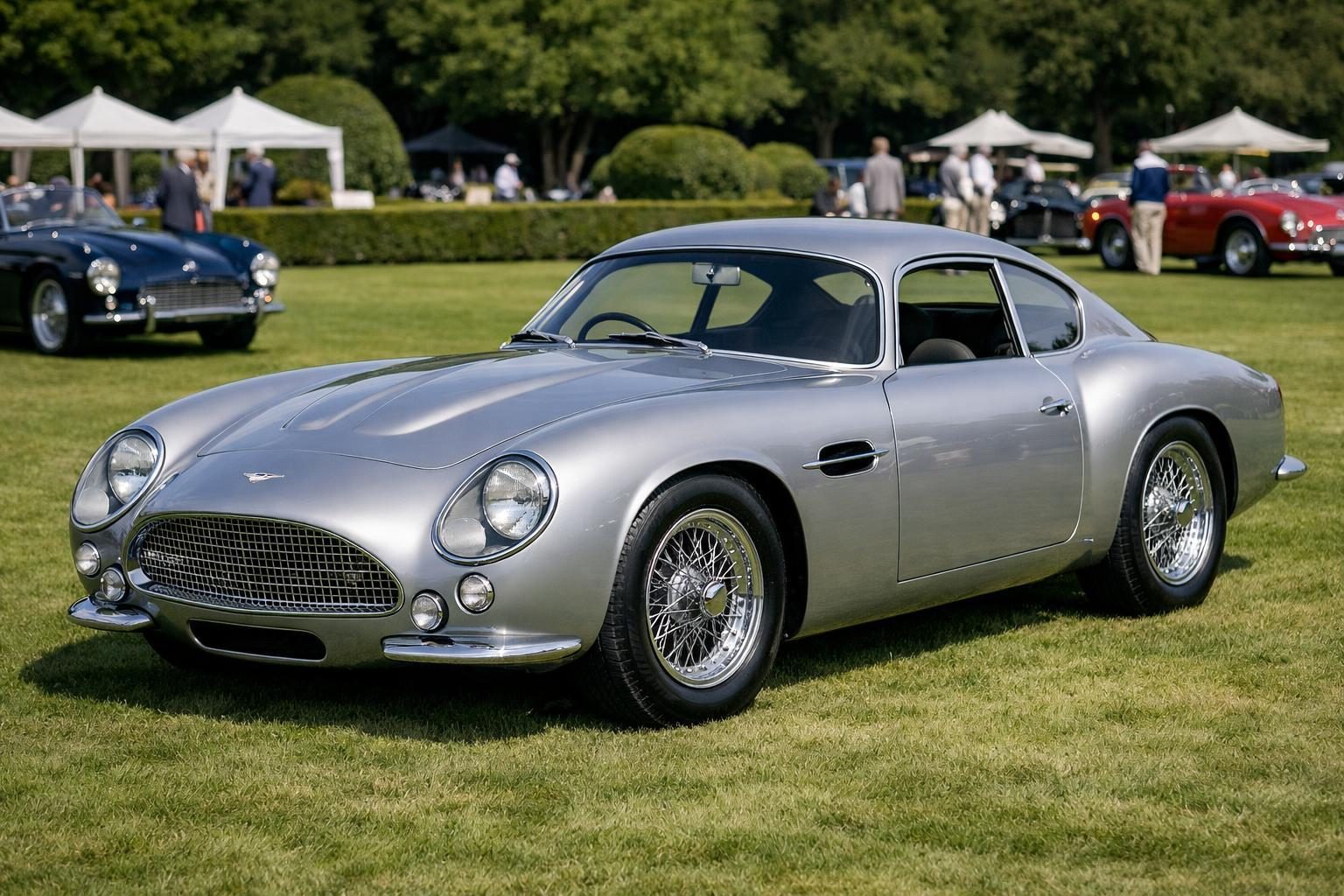
Above the DB4 GT, history notes the extreme rarity of the DB4 GT Zagato: only 19 original exemplars were produced between 1960 and 1963, according to Wikipedia. This very limited series, styled by Zagato, reflects an even more exclusive approach, in line with the spirit of customer competition and the demand for efficiency of the time. Again, the figures are clear and convergent: 19 pieces that set the historical value of this pinnacle of the lineage.
To explore this exceptional variant in detail, our comprehensive guide on DB4 GT Zagato revisits the essential milestones and specifics of these 19 cars. The lineage with the DB4 GT, which amplifies its rarity and aura, contributes to making the entire DB4 programme a major pivot in the Aston Martin landscape of the turn of the 1960s.
5. 75 exemplars and the Continuation series: an almost living lineage
The confirmed production volumes position the DB4 GT among the most desirable Aston Martins of the era: 75 exemplars were produced between 1959 and 1963. On this point, sources converge, whether it be the English Wikipedia page dedicated to the DB4, the Artcurial sheet, or the notice from Video-auto.com mentioned in the literature: all refer to the figure of 75. It combines rarity with a burgeoning record from 1959, a duo of factors that explains its status.
Proof of the model’s enduring aura, Aston Martin Works announced in 2016 a Continuation series of 25 exemplars, based on the lightweight specification of 1959, with deliveries planned for late 2017, according to the English Wikipedia sheet on the DB4. This structured reinterpretation extends the DNA of the DB4 GT, reminding us of the technical coherence of the original concept. For historical context and cross-referenced data, one can also consult the English Wikipedia sheet for the DB4 and the analysis from Artcurial dedicated to a DB4 GT exemplar.
Conclusion — DB4 GT, the essence of the GT spirit according to Aston Martin
By combining a shortened chassis of 127 mm, a 3.7-litre Tadek Marek six-cylinder engine boosted to 302 PS through dual ignition and three Weber carbs, and performance figures of 246 km/h and 6.1 seconds for 0-60 mph, the DB4 GT emerges as a brilliant synthesis of the GT requirements of the late 1950s. Its inaugural victory on May 2, 1959, at Silverstone, in the hands of Stirling Moss, grants the model immediate sporting legitimacy, in line with its positioning as a customer competition car.
The rarity of the DB4 GT (75 exemplars produced between 1959 and 1963), the pinnacle embodied by the 19 Zagato, and the modern revival through the Continuation series in 2016, reinforce a legacy that is both precise and alive. To complete this overview, the resources from Wikipedia on the DB4 GT and our overview of the origins of the DB4 will help trace, step by step, the thread of a story where the DB4 GT remains one of the most iconic Aston Martins of its time.